Our contributor, Summer Stone-Polzel of Cake Paper Party, unravels a core baking mystery in today’s deep dive into baking science.
The Secret to Perfect Cake Texture: Why Room Temperature Ingredients Are Crucial
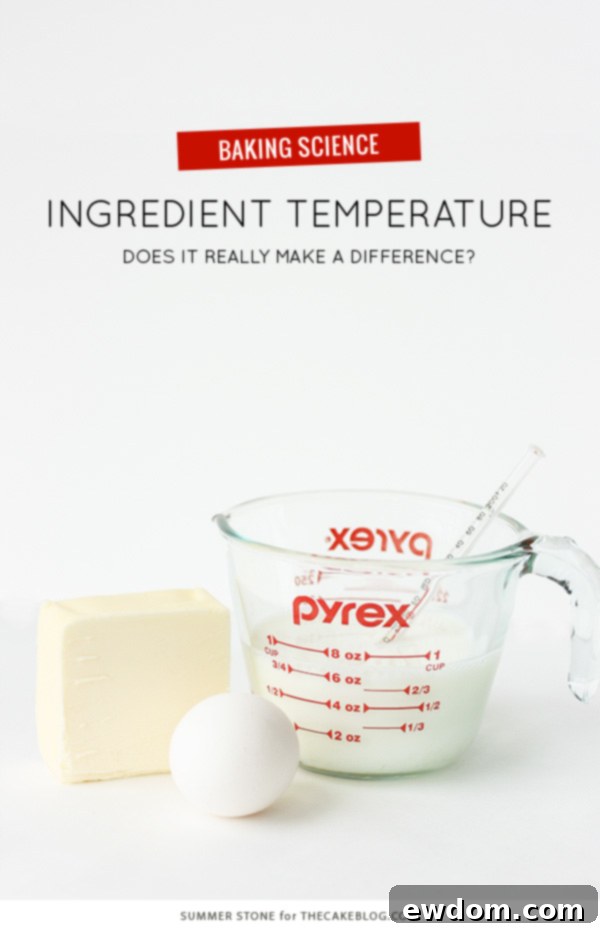
Every seasoned baker, and even many novice ones, has encountered that ubiquitous instruction at the top of a cake recipe: “Ensure all ingredients are at room temperature.” For years, I, like many others, found myself in a perpetual rush, often disregarding this seemingly minor detail. “What difference could a cold egg or a chilled splash of milk truly make?” I’d muse, tossing them into the mixing bowl without a second thought. This rebellious streak, however, eventually led to a genuine curiosity. It was time to put this age-old baking mantra to the test. I embarked on a baking experiment to meticulously observe the impact of ingredient temperature—cold, room temperature, and even slightly warm—on the entire cake-making process, from batter consistency to the final crumb structure and taste.
The results were not just enlightening; they were a profound lesson in the delicate science that underpins successful baking. It turns out, that seemingly simple instruction is a cornerstone of achieving consistently exquisite cakes. Let’s delve into the scientific factors at play and discover why the temperature of your ingredients holds the key to unlocking superior texture and flavor in your homemade cakes.
The Science Behind Ingredient Temperature in Baking
When you alter the temperature of your primary baking ingredients, you trigger a cascade of physical and chemical reactions that profoundly influence the final outcome of your cake. Three critical factors are particularly sensitive to temperature variations:
1. Ingredient Fluidity and Butter Plasticity
Butter is arguably the most temperature-sensitive ingredient in many cake recipes. Its state of plasticity—its ability to be molded and spread without breaking—changes dramatically within a relatively narrow temperature range. Cold butter, straight from the refrigerator, is hard and rigid. When you attempt to cream it with sugar, it struggles to integrate, remaining in solid clumps. This prevents the butter from properly coating flour proteins, which is essential for tenderizing the gluten, and more importantly, it inhibits the crucial process of air incorporation during creaming. Room temperature butter, on the other hand, is pliable and yielding. It readily breaks down into smaller particles that can effectively trap air pockets when beaten with sugar. These tiny air bubbles are fundamental to creating a light and airy cake structure. Warm butter, while initially blending well, can become too soft, leading to a loss of its structural integrity and an inability to maintain those trapped air pockets.
2. Emulsification: The Union of Fats and Liquids
Emulsification is the process by which fats and liquids, which typically resist mixing, are coaxed into forming a stable, homogenous mixture. In baking, butter and egg yolks are key emulsifiers. Egg yolks, rich in lecithin, act as a bridge between fat and water molecules, preventing them from separating. When ingredients are cold, molecular movement is sluggish. This means that both the fats in butter and the emulsifiers in egg yolks perform less efficiently. Cold butter won’t distribute evenly enough to emulsify properly with the liquids, leading to a “curdled” appearance in the batter. This lack of proper emulsification results in an uneven distribution of fat and moisture throughout the batter, directly impacting the cake’s texture and tenderness. Room temperature ingredients allow for optimal molecular interaction, leading to a smooth, stable emulsion where fats and liquids are beautifully integrated, creating a homogenous batter that bakes evenly.
3. Dissolving of Ingredients, Especially Sugar
Sugar’s role in a cake is multifaceted: it adds sweetness, contributes to moisture, aids in browning, and helps tenderize the crumb. Its ability to dissolve effectively within the liquid components of the batter is highly dependent on temperature. If your liquid ingredients (like milk or eggs) are too cold, the sugar crystals will dissolve very slowly and often incompletely. This can lead to a grainy texture in the finished cake and an uneven distribution of sweetness. Conversely, if liquids are too warm, sugar might dissolve too rapidly and excessively, potentially altering the batter’s viscosity and leading to a denser, sometimes gummy, cake. Room temperature ensures that sugar dissolves at an optimal rate, integrating smoothly into the batter without over-saturating it or leaving undissolved crystals, contributing to a fine, tender crumb.
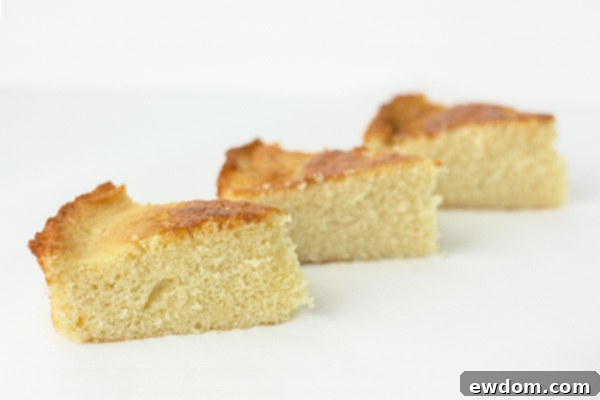
The Experiment: Cold, Room Temperature, and Warm Batters
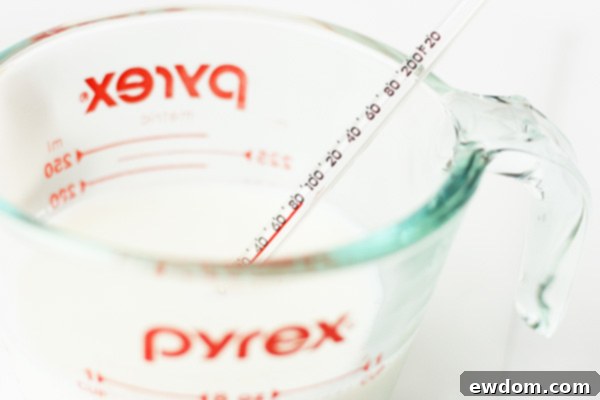
To truly understand the implications of these scientific principles, I set up a controlled experiment. I baked three identical cake recipes, varying only the temperature of the key ingredients: butter, eggs, and milk. My chosen temperature brackets were:
- Cold Ingredients: Approximately 40°F (straight from the refrigerator).
- Room Temperature Ingredients: Around 70°F (the universally recommended sweet spot).
- Warm Room Temperature Ingredients: Roughly 80°F (slightly warmer than ideal, pushing the limits without melting).
I deliberately avoided temperatures above 80°F to prevent the butter from melting, which would introduce an entirely different set of factors (e.g., loss of creaming ability, altered fat distribution) that would complicate the primary focus on plasticity and emulsification. These three temperature points provided a clear spectrum, allowing us to observe butter in three distinct solid states, and their corresponding effects on the batter and final cake.
Observations During Batter Preparation
The initial stages of mixing revealed stark differences, immediately validating the importance of ingredient temperature:
1. Cold Ingredient Batter
Working with cold butter was a struggle from the outset. Creaming it with sugar was an arduous task. Even after two minutes of rigorous beating, a significant hunk of butter remained stubbornly in the center of the bowl, with only its outer edges yielding to the mixer. The texture was gritty and uneven. Adding cold eggs helped somewhat in breaking down the butter, but pea-sized clumps persisted, visible even after thorough beating. When the dry ingredients and cold milk were incorporated, the butter remained in tiny, stubborn bits, never fully integrating. The resulting batter was noticeably thin, a clear indicator that proper emulsification—the stable blending of fats and liquids—had not been achieved. Pouring this thin, somewhat separated mixture into the pan felt like a compromise, not a promise of a perfect cake.
2. Room Temperature Ingredient Batter
This batter was a dream to work with. The room temperature butter, perfectly pliable yet still structured, blended effortlessly with the sugar. It transformed into a pale, fluffy, and incredibly creamy mixture, indicative of excellent air incorporation. When the eggs were added, they seamlessly integrated, creating a beautifully light and voluminous base. The addition of flour and room temperature milk resulted in a thick, luxurious batter with a wonderful body and smooth consistency. There was no hint of curdling; all ingredients were perfectly emulsified, demonstrating the harmonious interaction of components at their ideal temperature. This batter felt robust and promising, a true foundation for a tender cake.
3. Warm Ingredient Batter
The slightly warm butter, though appearing glossy and quite squishy (but not fully melted), also blended well with the sugar. This mixture achieved the lightest color among the three creamed bases, likely due to the butter’s extreme softness aiding in fast air incorporation. The batter emulsified smoothly with the eggs, dry ingredients, and milk, resulting in a homogenous and light texture. However, there was a subtle difference: the warm batter felt slightly looser, almost fragile, compared to the room temperature version. It conveyed a sense that the rapidly moving molecules, while initially integrating well, might be more prone to breaking emulsion or releasing trapped air during the baking process, signaling a potentially less stable structure.
The Baked Results: Texture, Crumb, and Mouthfeel
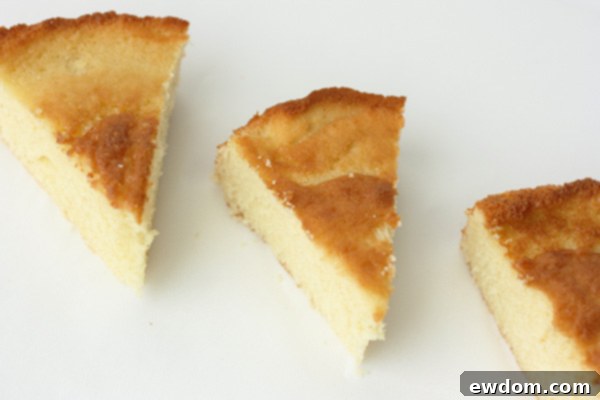
Upon emerging from the oven, the cakes initially displayed similar surface appearances. However, closer inspection revealed that the cakes made with cold and warm ingredients had a subtly shinier crust compared to the room temperature cake. This suggests that in the cold and warm cakes, sugar might not have dissolved or been contained optimally, leading to its migration to the surface during baking and subsequent caramelization. The true distinctions, however, became unmistakably clear once the cakes were sliced and tasted.
1. The Cold Ingredient Cake: Coarse and Dense
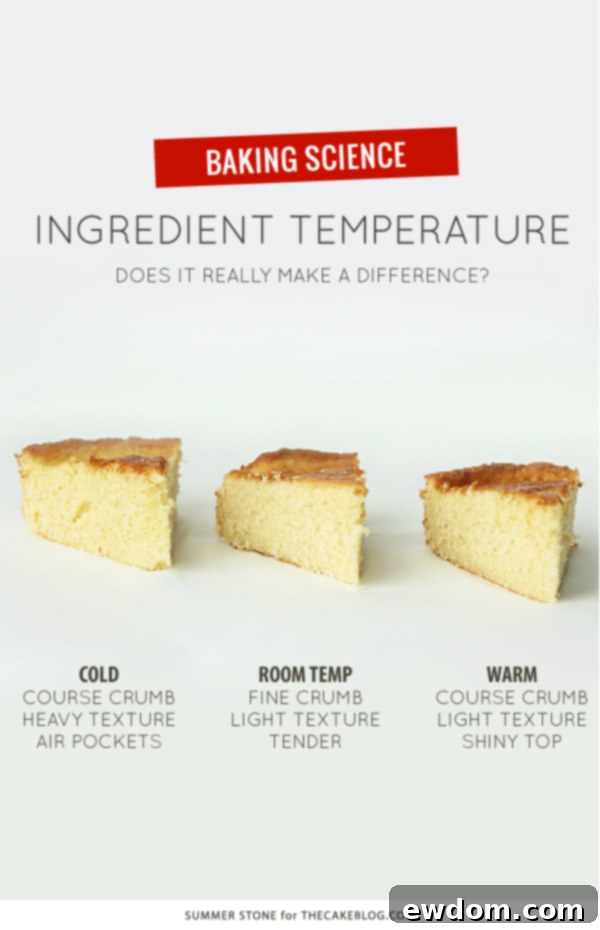
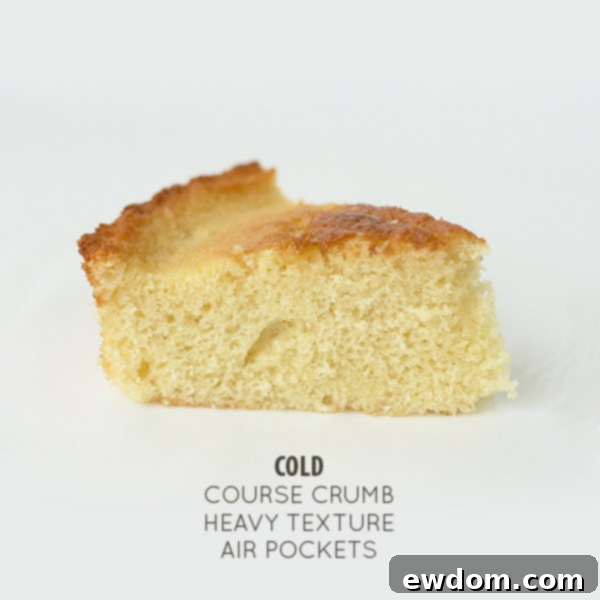
The cake made with cold ingredients was immediately identifiable by its noticeably coarse and dense texture. The internal structure was riddled with large, irregular air pockets, which were a direct consequence of the improper creaming and poor butter distribution observed during mixing. The butter, unable to break down and trap fine air, also failed to adequately coat the flour proteins, resulting in a tougher, less tender crumb. The reduced emulsification meant that fat and moisture weren’t evenly distributed, contributing to a cake that felt remarkably heavier and somewhat drier in the mouth. It lacked the delicate tenderness expected of a well-baked cake, proving that bypassing room temperature ingredients comes with a significant textural penalty.
2. The Room Temperature Cake: The Epitome of Fine Texture
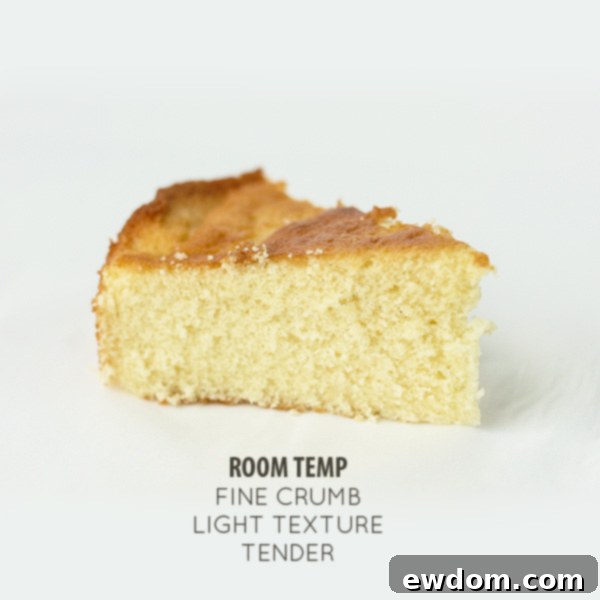
Without a doubt, the cake baked with room temperature ingredients was the star of the show, boasting the finest and most desirable texture among the three. Its crumb was exquisitely tender, even, and remarkably light, melting delicately in the mouth. This superb result is a testament to the cumulative effects of proper air incorporation, optimal butter distribution, thorough emulsification, and ideal sugar dissolving. The perfect plasticity of the butter allowed sugar crystals to effectively drive fine air particles into the fat, creating a stable, aerated structure. This well-emulsified batter translated into a cake that was not only light but also had a wonderfully tender and moist mouthfeel, embodying the ideal characteristics of a truly perfect cake. This cake showcased how all the elements of baking science align beautifully when ingredients are at their optimal temperature.
3. The Warm Ingredient Cake: Light but Still Coarse
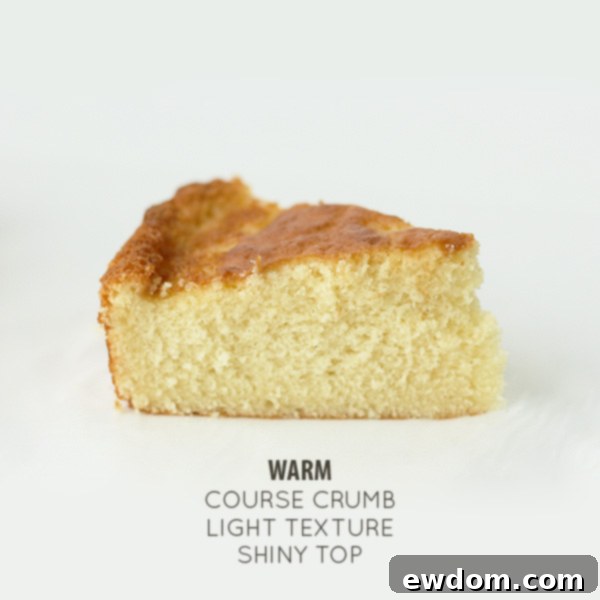
Intriguingly, the cake made with warm ingredients presented a texture that was slightly less coarse than the cold ingredient cake, yet still noticeably coarser than the room temperature standard. At first glance, it seemed counterintuitive that cakes from opposite temperature extremes could share similar characteristics. However, this outcome highlights how different mechanisms can lead to a comparable result. While the warm ingredient batter likely incorporated fine air particles well initially due to the butter’s extreme softness, it appears that the butter’s structural integrity was compromised. The molecules might have been moving too fast, or the butter was too soft to effectively *trap* and *retain* those delicate air bubbles, leading to their merging or collapsing during the baking process. This resulted in a slightly coarser crumb, akin to the cold ingredient cake in terms of visible air pockets, but with a lighter overall feel due to sufficient emulsification. The shiny top surface further supported the observation that sugar, dissolving excessively in the warmer liquid environment, had migrated and caramelized more on the surface, contributing to a denser top layer. While lighter than the cold cake, it still fell short of the impeccable texture of the room temperature version.
Quick Recap: Temperature’s Impact on Your Cake
For those short on time, here’s a concise summary of how ingredient temperature critically affects your cake:
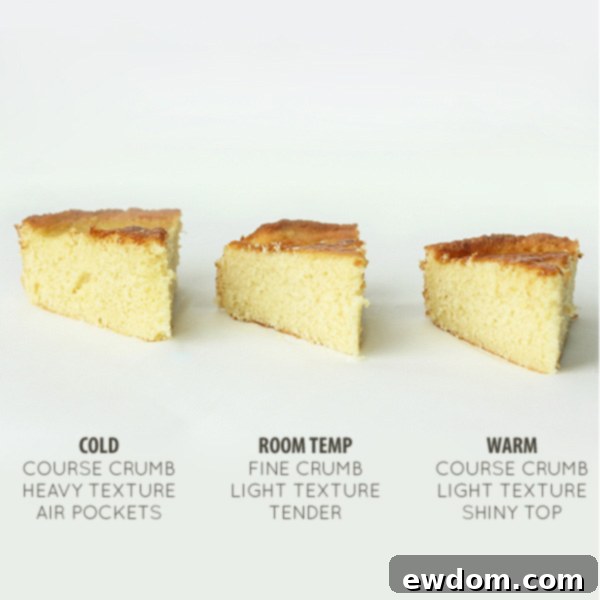
- Cold Ingredients: Lead to a coarse, dense, and heavy-textured cake due to poor butter distribution, inadequate air incorporation, and compromised emulsification.
- Room Temperature Ingredients: Enable a perfectly fine, even texture and a wonderfully light, tender mouthfeel. This is the gold standard for optimal aeration, emulsification, and sugar dissolution.
- Warm Ingredients: Result in a cake that is coarser in texture than ideal, despite often retaining a light feel. This is due to butter being too soft to effectively trap and hold air, even if emulsification is good.
Achieving Perfect Room Temperature Ingredients: Practical Tips
Given the undeniable impact of ingredient temperature, how can you consistently ensure your ingredients are ready for baking success? Here are some practical tips:
- Plan Ahead: The easiest way is to take butter, eggs, and milk out of the refrigerator 1-2 hours before you plan to bake. On a warm day, 30-45 minutes might suffice.
- For Butter: If you forget to take butter out, you can cut it into smaller pieces and leave it for 15-30 minutes. Avoid microwaving, as it often melts parts of the butter, destroying its plasticity. Alternatively, you can beat cold butter with a rolling pin to soften it gently, or place it between two sheets of parchment paper and gently roll over it.
- For Eggs: Place cold eggs (still in their shells) in a bowl of warm (not hot!) water for 5-10 minutes. This brings them to temperature quickly without cooking them.
- For Milk/Dairy: Gently warm milk in a microwave for 10-15 seconds, checking frequently, or in a small saucepan over low heat until just tepid. Be careful not to make it hot.
- Feel Test: For butter, it should be soft enough to leave a slight indentation when pressed with your finger, but still hold its shape—not melted or greasy. Eggs and milk should feel neither cold nor warm to the touch.
The Verdict: Embrace Room Temperature Baking!
In conclusion, this experiment unequivocally validates the wisdom passed down through generations of bakers: ingredient temperature absolutely matters. A seemingly minor shift of just 10 degrees Fahrenheit can significantly degrade the quality of your final product, impacting everything from the smoothness of your batter to the tenderness of your cake. For that coveted fine texture, consistent crumb, and exquisitely light and tender mouthfeel, prioritizing moderately room temperature ingredients is not just a suggestion—it’s a fundamental requirement. This commitment ensures optimal butter plasticity, efficient emulsification, and proper sugar dissolution, all harmonizing to create a truly superior cake.
I sincerely hope this comprehensive exploration into the science of baking empowers you in your culinary adventures. Embracing this simple yet crucial step will undoubtedly elevate your cakes from good to truly exceptional. Happy baking!
YOU MAY ALSO ENJOY: Exploring More Baking Science
Continue your journey into the fascinating world of baking science with these insightful articles:
- Why Oven Temperature Really Matters: Beyond Just the Numbers
- Chocolate vs. Cocoa: Understanding Their Distinct Roles in Baking
- Mastering the Mix: Essential Techniques for The Perfect Cake Batter
- The Art of Resting: Do Your Cupcakes Need a Break Before Baking?
- Overmixing a Cake: The Hidden Pitfalls of Too Much Agitation
- Choosing Your Flour: A Guide to the Best Flour for Every Bake