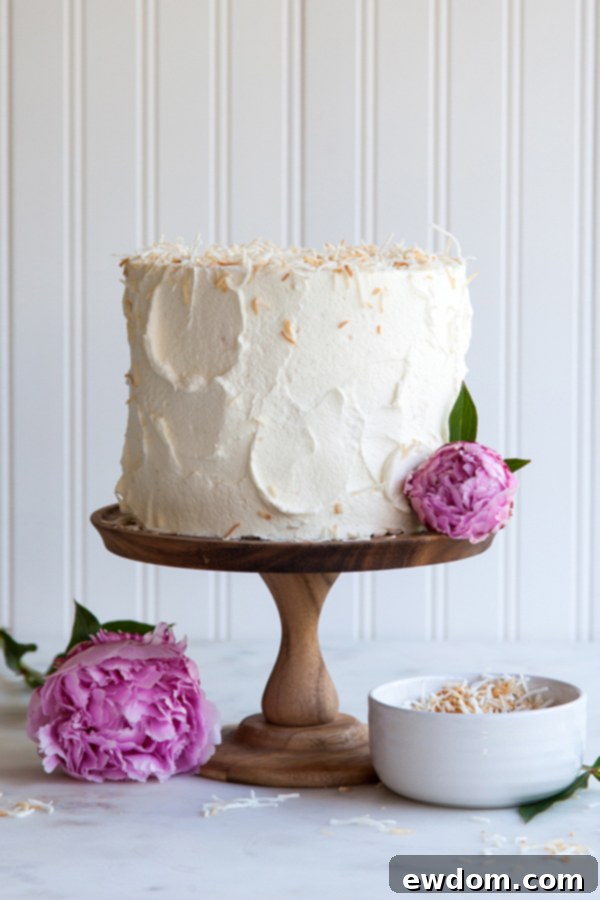
Indulge in Paradise: The Ultimate Coconut Tres Leches Layer Cake
Our esteemed contributor, Tessa Huff, invites you on a delightful culinary journey with her latest creation…
The world of international cuisine is an endless source of inspiration, a vibrant tapestry of flavors waiting to be discovered. In an age where global travel can sometimes feel like a distant dream, the kitchen offers an incredible passport to explore diverse cultures and culinary traditions. From the delicate, earthy notes of a Japanese matcha cake to a sophisticated reimagining of a classic German Black Forest Cake, there’s always an exciting new recipe to transport your senses, whether it’s from your local specialty store or across distant continents.
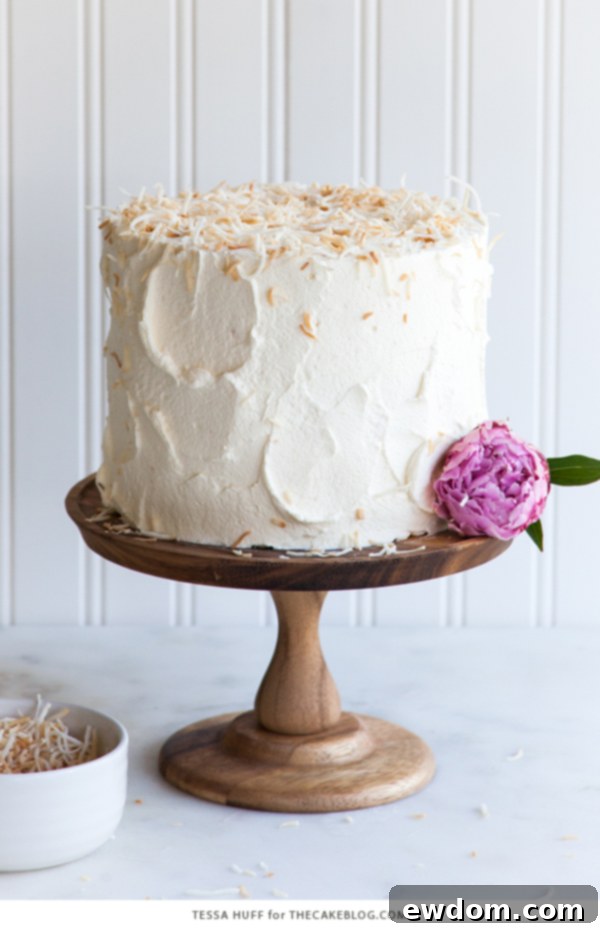
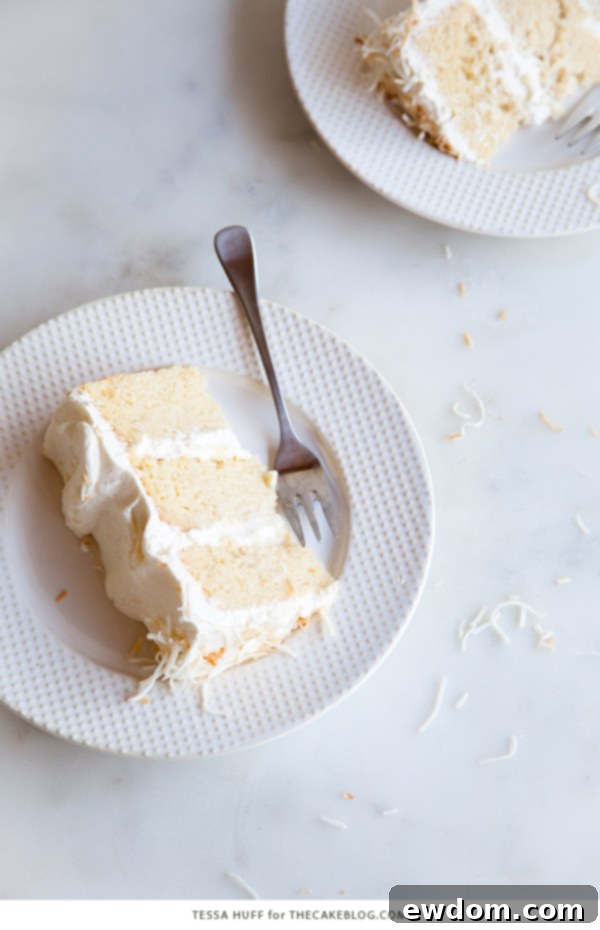
Today, we’re taking a delectable detour to Latin America, drawing inspiration from its iconic and beloved dessert: the Tres Leches Cake. Meaning “three milks,” this traditional masterpiece is renowned for its incredibly moist crumb, achieved by soaking a light sponge cake in a luxurious blend of three different milks. But for this particular creation, we’re giving it a tropical, aromatic twist: the Coconut Tres Leches Layer Cake. This innovative version embraces the rich, creamy essence of coconut, substituting full-fat coconut milk not only in the cake batter itself but also as a key component in the decadent milk soak, replacing traditional heavy cream. The result is an ethereal dessert, crowned with a generous sprinkle of toasted coconut flakes, offering both visual appeal and a delightful textural contrast.
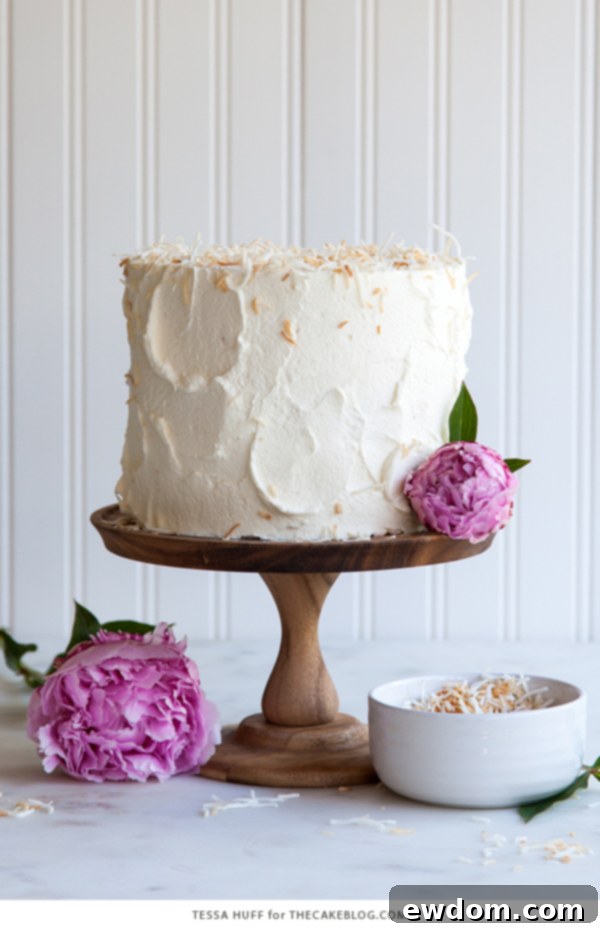
The Allure of Tres Leches: A Beloved Latin American Classic
The Tres Leches cake holds a special place in the hearts of many across Latin America, a staple at celebrations, family gatherings, and everyday indulgences. Its origin is somewhat debated, with various countries laying claim to its creation, but its popularity is undeniable, stretching from Mexico to Nicaragua and beyond. The magic of Tres Leches lies in its unique texture – a delicate, airy sponge cake that acts as a canvas, absorbing a rich concoction of evaporated milk, condensed milk, and heavy cream. This soak transforms the cake from a simple baked good into a luscious, melt-in-your-mouth experience, distinct from any other cake.
What makes a classic Tres Leches truly special is this harmonious blend of milks. Sweetened condensed milk provides intense sweetness and a thick, creamy body. Evaporated milk adds a deeper, caramelized undertone and helps thin the mixture, ensuring even absorption. And heavy cream, or whole milk in some recipes, contributes to the overall richness and moisture. The cake is typically chilled thoroughly after soaking, allowing the flavors to meld and the cake to firm up slightly, creating an incredibly satisfying dessert that’s both refreshing and deeply comforting.
A Tropical Transformation: Elevating the Classic with Coconut
While the traditional Tres Leches is undoubtedly a masterpiece, there’s always room for innovation. Our Coconut Tres Leches takes this beloved dessert to new heights by infusing it with the exotic and comforting flavor of coconut. This isn’t just a subtle hint; coconut is central to this cake’s identity, woven into both the cake batter and the essential milk soak. The use of full-fat coconut milk in the cake itself imparts a delicate, tropical essence, making the cake base moist and fragrant even before its grand drenching.
The real game-changer is the coconut milk in the soak. By replacing traditional heavy cream with full-fat coconut milk, we not only deepen the coconut flavor but also introduce a slightly different texture and richness to the overall dessert. The blend of sweetened condensed milk, evaporated milk, and full-fat coconut milk creates a soak that is intensely flavorful, sweet, and wonderfully creamy, permeating every fiber of the cake. This tropical infusion makes the Coconut Tres Leches a perfect dessert for any occasion, instantly evoking images of sun-drenched beaches and gentle ocean breezes.
From Sheet Cake to Showstopper: The Layer Cake Evolution
Traditionally, Tres Leches cake is baked in a simple sheet pan, making it an ideal choice for large gatherings and easy serving. However, for this particular recipe, a conscious decision was made to elevate it into a stunning layer cake. While there’s an undeniable charm and practicality to a party-sized sheet cake, transforming it into layers adds a touch of sophistication and glamour that can turn a simple dessert into a true centerpiece. Layer cakes are inherently festive, creating an impressive visual impact that’s perfect for celebrations and special occasions.
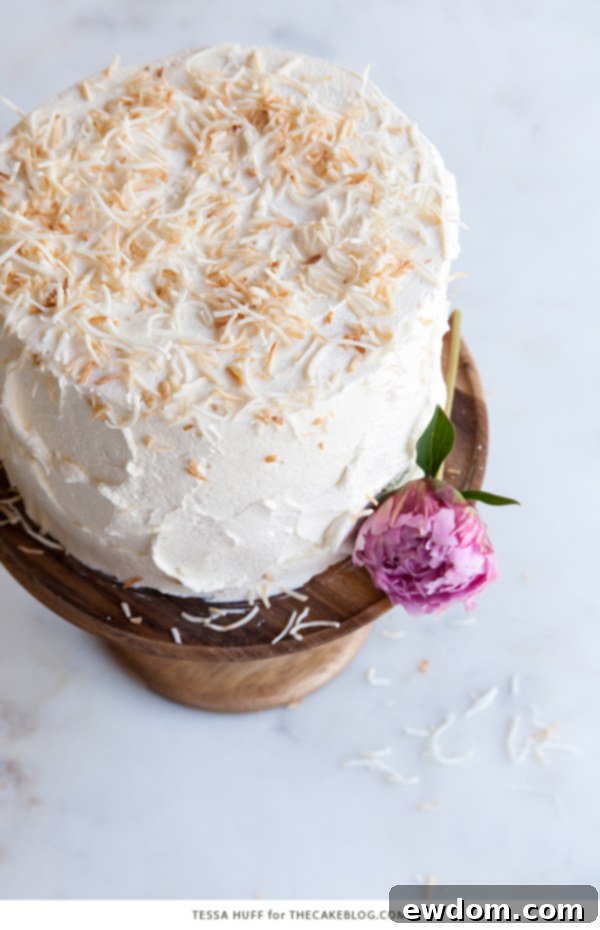
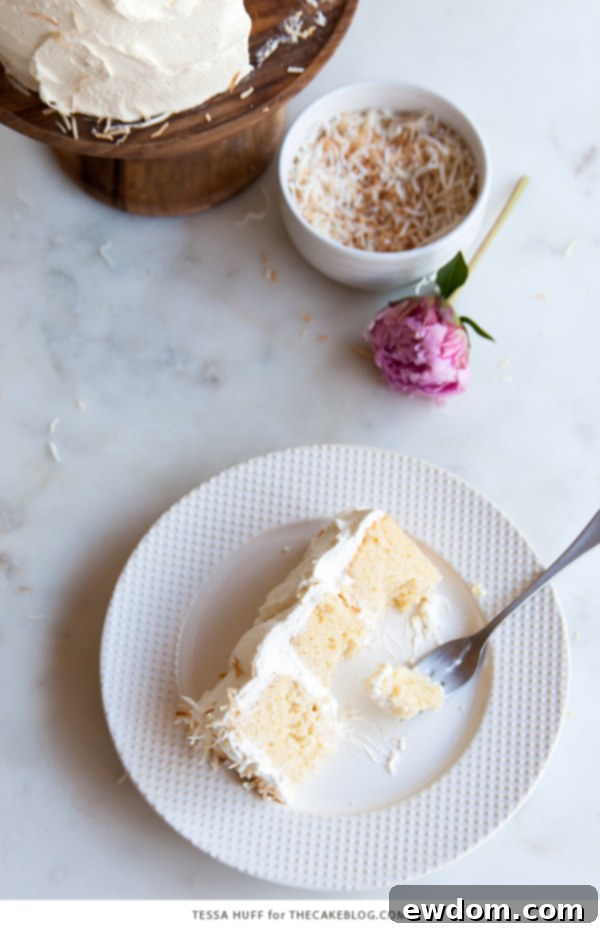
Instead of the typical light sponge often used in Tres Leches, this recipe opts for a butter cake base. To ensure it remains airy enough to absorb the indulgent milk mixture without becoming overly dense, the butter cake is thoughtfully lightened with egg whites. This careful balance results in a cake that, once soaked, becomes incredibly moist and decadent, albeit slightly on the heavier side compared to a traditional sponge. To complement this rich, milk-drenched foundation, a heavy, thick frosting would be an unnecessary addition. Instead, the layers are stacked with billowy clouds of light and airy whipped cream. A touch of leftover condensed milk from the soak is cleverly incorporated into the whipped cream, not only sweetening it perfectly but also providing crucial stabilization, ensuring it holds its form beautifully between the cake layers. The final flourish of toasted coconut flakes adds a much-needed textural counterpoint, contrasting wonderfully with the smoothness of the cream and the moist cake.
COCONUT TRES LECHES LAYER CAKE
A delightful recipe by Tessa Huff
For the Coconut Cake:
- 2 ¼ cups cake flour
- 2 teaspoons baking powder
- ½ teaspoon salt
- ¾ cup unsalted butter, softened
- 1 ½ cups granulated sugar
- 2 teaspoons vanilla extract
- 5 large egg whites
- 1 cup full-fat coconut milk
Instructions for the Coconut Cake:
- Preparation: Preheat your oven to 350°F (175°C). Lightly grease and flour three 6-inch round cake pans. This meticulous preparation ensures your cakes release cleanly and have a perfect edge.
- Combine Dry Ingredients: In a medium bowl, sift together the cake flour, baking powder, and salt. Sifting is crucial for an airy cake, removing lumps and ensuring even distribution of leavening agents. Set this mixture aside.
- Cream Butter and Sugar: In a large mixing bowl, using an electric mixer fitted with a paddle attachment, beat the softened unsalted butter on medium speed until smooth and creamy. Gradually add the granulated sugar, increasing the speed to medium-high. Continue mixing for 3-5 minutes until the mixture is light, fluffy, and pale in color. This creaming process incorporates air, essential for a tender cake crumb.
- Add Wet Ingredients (Egg Whites & Vanilla): With the mixer on low speed, slowly incorporate the vanilla extract. Then, gradually pour in the egg whites, a little at a time. This slow addition helps the batter emulsify and absorb the liquid without curdling. If the batter appears to curdle slightly, add a tablespoon or two of the reserved flour mixture; this will often bring it back together. Stop the mixer and use a rubber spatula to scrape down the sides and bottom of the bowl, ensuring all ingredients are fully incorporated.
- Alternate Dry and Wet: In alternating batches, add half of the dry flour mixture to the butter-sugar mixture, mixing on low speed until just combined. Follow with the full-fat coconut milk, mixing until absorbed. Finish by adding the remaining dry ingredients, mixing only until the batter is thoroughly combined and smooth. Be careful not to overmix, as this can develop the gluten too much, leading to a tough cake.
- Bake the Cakes: Evenly distribute the cake batter among the three prepared 6-inch round pans. Bake in the preheated oven for approximately 25 to 28 minutes, or until a wooden skewer or toothpick inserted into the center of the cakes comes out clean.
- Cool and Prepare for Soaking: Let the cakes cool on a wire rack for about 10 minutes within their pans. This initial cooling helps them firm up slightly before removal. After 10 minutes, gently invert the cakes onto individual plates. While still warm, use a serrated knife to carefully trim any domed tops to create flat layers. Then, generously prick the entire surface of each warm cake with a fork.
- The Milk Soak: While the cakes are still warm (this is crucial for optimal absorption), pour the prepared Milk Soak (recipe below) evenly over the tops of each cake. The warmth helps the cake fibers relax and soak up the liquid more effectively.
- Chill and Set: Gently cover each soaked cake with plastic wrap to prevent drying. Refrigerate the cakes for at least 4 hours, or ideally overnight, allowing them to cool completely and fully absorb the luscious milk mixture. This chilling period is essential for the cake to become incredibly moist and flavorful.
For the Milk Soak:
- ½ cup sweetened condensed milk
- 1/3 cup evaporated milk
- 1/3 cup full-fat coconut milk
Instructions for the Milk Soak:
While your baked cakes are cooling on a wire rack (after the initial 10 minutes in pans), whisk together the three types of milk – sweetened condensed milk, evaporated milk, and full-fat coconut milk – in a bowl until thoroughly combined. This mixture is the heart of your Tres Leches cake.
For the Whipped Cream:
- 2 cups heavy whipping cream, chilled
- ¼ cup sweetened condensed milk (from the soak, or extra)
- 1 teaspoon coconut extract (optional, but highly recommended for enhanced flavor)
- Toasted coconut flakes (optional, for garnish)
Instructions for the Whipped Cream:
- Begin Whipping: In a very cold mixing bowl (chilling the bowl and whisk attachment beforehand helps achieve stiffer peaks), using an electric mixer fitted with a whisk attachment, begin whipping the chilled heavy cream on medium speed.
- Add Condensed Milk: Once the cream starts to thicken slightly and soft peaks begin to form, gradually add the sweetened condensed milk. Increase the mixer speed to medium-high.
- Whip to Medium Peaks: Continue to whip until the cream reaches medium peaks. At this stage, the cream will hold its shape when the whisk is lifted but the tip will gently curl over.
- Add Coconut Extract: If using, add the coconut extract and continue whipping for another minute or so, until medium-firm peaks are achieved. Be careful not to over-whip, as the cream can quickly turn grainy or separate.
Assembling the Coconut Tres Leches Layer Cake:
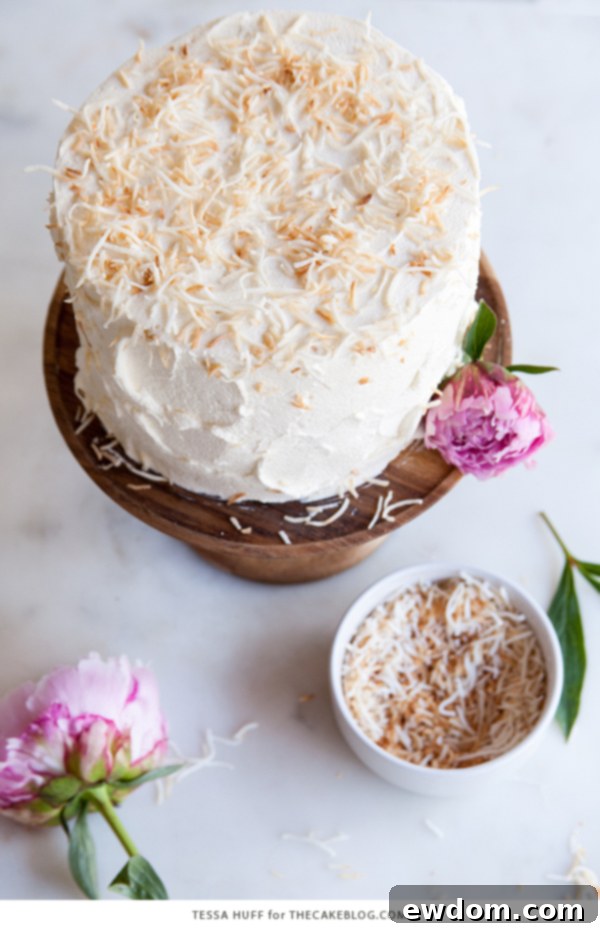
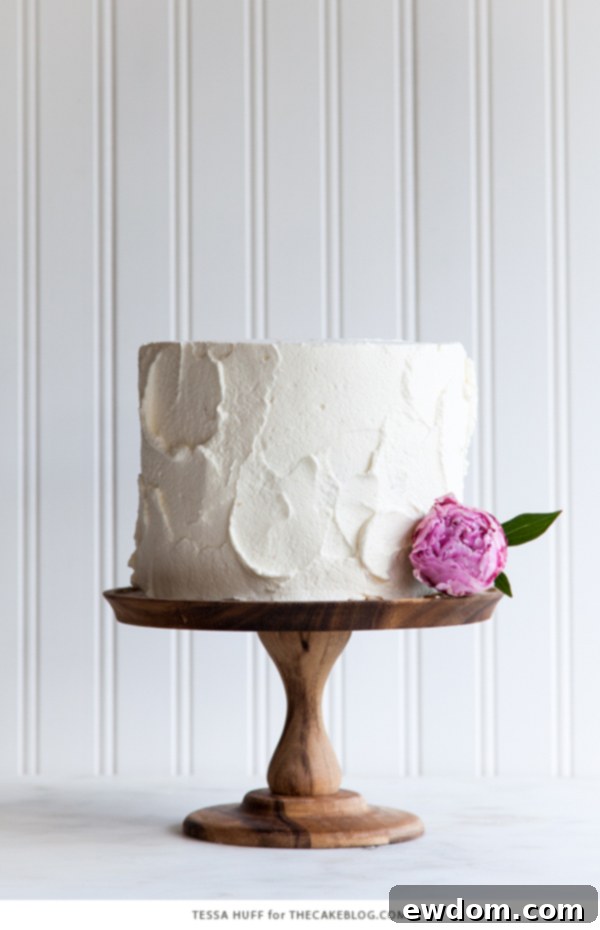
Once the soaked cake layers are completely chilled and firm, it’s time to assemble your masterpiece. Place one cake layer on your serving plate or cake stand. Spread a generous layer of the coconut whipped cream over the top. Carefully place the second cake layer on top, followed by another layer of whipped cream. Repeat with the third cake layer. Finally, frost the top and sides of the entire cake with the remaining whipped cream, creating beautiful swirls and peaks. If desired, generously sprinkle toasted coconut flakes over the top and sides of the cake for an extra burst of flavor and a delightful textural crunch. Use a gentle hand throughout the assembly process to avoid deflating the delicate whipped cream or damaging the moist cake layers.
Baker’s Notes for Success:
- Warm Cakes for Optimal Soaking: This is a critical step! Prepare the milk soak immediately after the cakes come out of the oven. Pouring the soak over still-warm cakes allows the cake’s cellular structure to be more open, facilitating maximum absorption of the luscious liquid. Cold cakes will not absorb the milk as effectively, resulting in a less moist and flavorful cake.
- Perfectly Whipped Cream: Achieving the right consistency for your whipped cream is essential for both appearance and stability. Aim for medium-firm peaks – the cream should hold its shape when lifted, but still be light and airy. If the cream is too soft, it may squish out between the layers of the somewhat dense, soaked cake, compromising the cake’s structure. Conversely, be extremely careful not to over-whip the cream; it can quickly become grainy and lose its smooth, cloud-like texture. Overworking whipped cream can also cause it to break down and separate. Refrigerating the assembled cake for at least an hour before serving or slicing allows the whipped cream to firm up and set beautifully, ensuring clean slices and a stable presentation.
- Coconut Extract Enhancement: While optional, a touch of coconut extract in the whipped cream can significantly amplify the tropical flavor profile of this cake. It deepens the coconut essence without adding extra sweetness or altering the texture.
- Toasting Coconut Flakes: For the best flavor and crunch, lightly toast your coconut flakes in a dry pan over medium-low heat, stirring frequently, until golden brown. This brings out their natural sweetness and adds an irresistible crispness. Be watchful, as they can burn quickly!
- Storage: Due to the dairy content and moisture, this cake must be stored in the refrigerator. It tastes even better the next day as the flavors continue to meld and the cake becomes even more saturated with the milk soak. Store covered to prevent drying out.
DELIGHT YOUR PALATE WITH MORE INSPIRING CAKE RECIPES:
Discover other exquisite cake creations that promise to impress and delight:
- Lemon Blueberry Cake: A Burst of Zesty Freshness
- London Fog Cake: Elegance in Every Earl Grey Infused Bite
- Eton Mess Cake: A Playful Twist on a British Classic
- Strawberry Thyme Cake: A Harmonious Blend of Sweet and Savory
- Honey Butter Cake: Simple Indulgence, Pure Comfort