Discover the secret science behind every perfect cake with insights from our contributor, Summer Stone of Cake Paper Party. Join us as we delve into the surprising world of sugar in baking.
The Sweet Science: Unveiling Sugar’s Indispensable Role in Perfect Cakes
Most home bakers understand that sugar is a fundamental ingredient in any cake recipe, primarily for its sweetness. However, its influence extends far beyond mere flavor. Imagine a cake without sugar: bland, pale, dense, and perhaps even squatty. The transformative power of sugar in baking is truly diverse and remarkable. To fully grasp its critical importance, we embarked on a fascinating baking experiment, exploring cakes made with varying sugar quantities—from no sugar at all to a generous one and a half times the standard amount (maintaining a 2:3 sugar to flour ratio). The outcomes were nothing short of astonishing, challenging preconceived notions about this everyday ingredient. Join us as we uncover the multifaceted roles sugar plays and reveal the surprising results of our scientific inquiry into cake perfection.
Beyond Sweetness: Sugar’s Multifaceted Contributions to Cake
While sugar is undeniably a primary flavor provider, its contributions to cake texture, color, and structure are equally crucial. Understanding these roles empowers bakers to create truly exceptional confections. Here’s a deeper dive into sugar’s key functions in cake baking:
1. Flavor Enhancement: Crafting Depth and Richness
The most obvious role of sugar is to impart sweetness, transforming a potentially flat batter into a delicious treat. Yet, its flavoring capabilities go much further. Sugar is integral to two vital chemical reactions that occur during baking: caramelization and the Maillard reaction. Caramelization, which begins when sugar heats to high temperatures (around 320°F or 160°C), creates a complex array of deep, nutty, and slightly bitter notes, contributing to a rich, nuanced flavor profile. Without sugar, these intricate flavors simply wouldn’t develop, leaving the cake with a raw-like, undeveloped taste. Furthermore, sugar participates in the Maillard reaction, a complex chemical interaction between amino acids and reducing sugars that’s responsible for the desirable golden-brown crust and savory aromas in many baked goods. This reaction, distinct from caramelization, provides a profound “baked” flavor, adding layers of complexity that are entirely absent in sugar-free cakes.
2. Tenderizing Effect: Achieving a Delicate Crumb
Counter-intuitively, sugar acts as a tenderizing agent in cake batter. Its presence weakens the structural framework provided by gluten and egg proteins. Sugar competes with flour for water, inhibiting gluten formation—the network of proteins that gives baked goods chewiness and structure. By slowing and reducing these protein-protein interactions, sugar prevents the cake from becoming tough or rubbery. It also delays starch gelation, allowing the cake to bake more evenly and remain moist. This tenderizing action results in a soft, delicate, and melt-in-your-mouth crumb texture, which is a hallmark of a truly great cake. Without sufficient sugar, a cake can become dense and tough due to an overly strong protein network.
3. Moisture Retention: The Secret to a Moist and Lasting Cake
Sugar is a hygroscopic ingredient, meaning it attracts and holds onto water molecules. This property is paramount in cake baking. By binding with water, sugar helps to keep the cake moist and fresh for longer periods. It prevents the rapid drying out that often plagues low-sugar or sugar-free baked goods. This moisture-retaining ability contributes significantly to the cake’s perceived texture, making it succulent and pleasant to eat. A well-hydrated cake also tends to have a better mouthfeel and a longer shelf life, resisting staling much more effectively than its sugar-deficient counterparts.
4. Leavening Aid: Ensuring a Light and Airy Rise
Sugar plays a crucial role in the leavening process, contributing to the cake’s volume and light texture. When sugar crystals are creamed with butter (or other fats), their sharp edges cut into the fat, creating tiny air pockets. During baking, these trapped air pockets expand, contributing to the cake’s rise. But its leavening contribution extends beyond just the creaming method. As our experiment dramatically revealed, sugar’s ability to hold onto water directly influences how moisture transforms into steam during baking. This steam, expanding within the cake’s structure, provides a significant lift. The interaction between sugar, water, and heat creates a ‘venue for liquid to gas expansion,’ resulting in a much lighter and fluffier cake. This was one of the most surprising and impactful findings of our study.
The Baking Experiment: Unveiling Surprising Outcomes
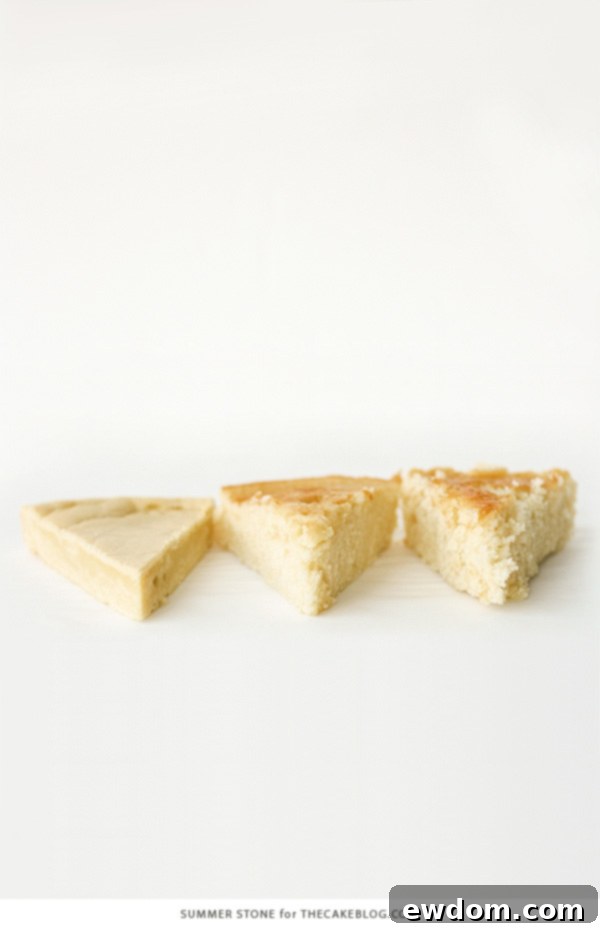
Before conducting this experiment, I held a fairly conventional understanding of sugar’s role in cake baking. I anticipated that a sugarless cake would be relatively fluffy, assuming that without sugar’s tenderizing effects, the structural components would remain strong. Conversely, I believed that a cake with an excessively high sugar content (150% of the standard amount) would likely collapse due to structural modification and weakening. The actual results, however, defied these expectations, proving that baking science often holds unexpected twists.
The Shocking Truth About Leavening and Moisture
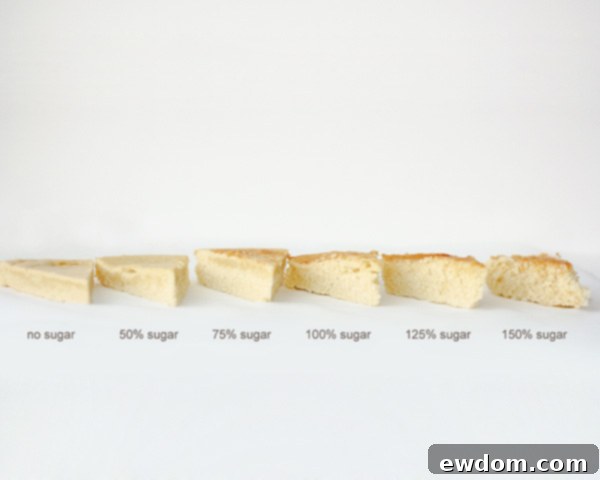
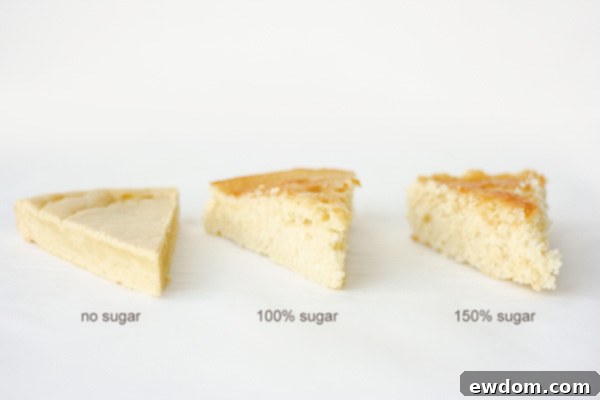
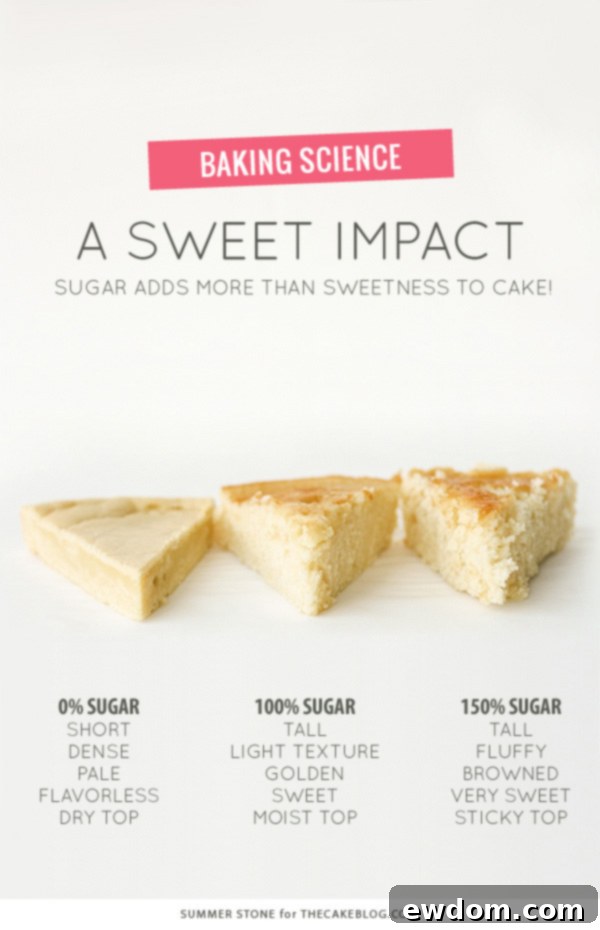
One of the most profound surprises came from the leavening differences. In this particular experiment, I deliberately did not cream sugar with butter for all samples, intending to isolate other variables. Therefore, I didn’t expect the variations in leavening between the sugarless and high-sugar cakes to be dramatically pronounced. Yet, the distinction was undeniable and, in fact, the most striking dissimilarity across all the cakes. The cake made with absolutely no sugar was remarkably short, dense, and heavy, almost brick-like in its structure. In stark contrast, the high-sugar cake emerged as the lightest and fluffiest of the batch. This was genuinely shocking! It highlighted a crucial point: sugar’s ability to retain water plays a far more significant role in facilitating liquid-to-gas expansion (steam) during baking than I had initially given it credit for. This enhanced steam production creates a substantial amount of rise, demonstrating that sugar’s impact on leavening is deeply intertwined with its hygroscopic properties.
Color and Flavor: A Visual and Gustatory Spectrum
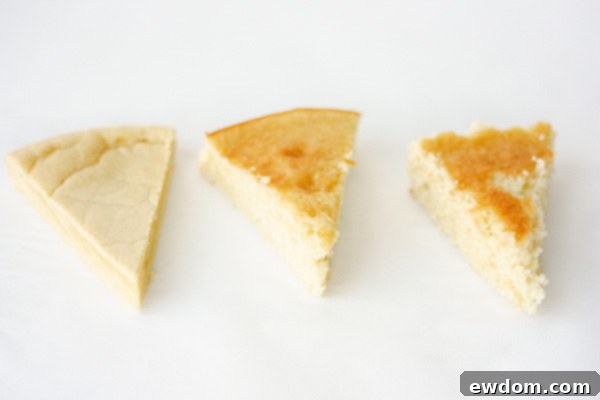
Beyond the dramatic differences in height and leavening, the visual impact of sugar’s absence or abundance was equally telling. The no-sugar and low-sugar cakes were noticeably pale, lacking the inviting golden-brown hue characteristic of the normal and high-sugar volume cakes. This visual difference directly translated into taste. The cakes with higher sugar content exhibited a much greater depth of flavor, benefiting from the caramelization and Maillard reactions that were largely absent in their pale, low-sugar counterparts. The raw-like flavor of the sugarless cake sharply contrasted with the rich, “baked” taste of the high-sugar versions, proving that sugar is not just about sweetness, but about creating a symphony of flavors and appetizing aesthetics.
Texture and Crumb: The Art of Tenderization
The photograph above beautifully illustrates the effects of tenderization across different sugar levels, particularly between the cake with a normal amount of sugar (100%) and the high-sugar cake (150%). While the high-sugar cake was undeniably fluffy and incredibly tender, it also became notably crumbly and loose, barely holding its structural integrity. This demonstrates that while sugar is a tenderizer, an excessive amount can lead to a crumb that is too delicate. Surprisingly, even with 150% of the standard sugar weight, the high-sugar cake, though very sweet, was “amazingly unoffending”—meaning the sweetness was palatable and not cloying, thanks to the balance of other flavors and textures. Conversely, the cake with half the standard sugar amount maintained a pleasant, mild sweetness while exhibiting a robust and well-structured crumb. This experiment underscores a crucial point for bakers: there is significant flexibility and “wiggle room” when adjusting the sweetness and tenderization factor in a cake recipe, allowing for customization to personal preferences or dietary needs without completely sacrificing quality.
Mastering Your Bake: Practical Takeaways for Home Bakers
Sugar’s influence on cake properties is truly expansive, touching every aspect from its visual appeal to its taste and texture. While leavening and flavor often stand out as the most noticeable factors, it’s the intricate dance of all its roles that defines a great cake. Our experiment reaffirmed that while a standard 2:3 sugar-to-flour ratio typically yields a cake with moderate sweetness, ideal leavening, and a desirable crumb, you possess the power to significantly modify your cake’s characteristics by adjusting the sugar content. Whether you aim for a denser, less sweet treat or a dramatically light, airy, and richly flavored indulgence, understanding sugar’s science is your secret weapon.
This knowledge empowers you to troubleshoot common baking issues or deliberately craft cakes that precisely match your desires. Want a moister cake with a longer shelf life? Lean towards slightly more sugar. Prefer a firmer crumb? A slight reduction might be in order. The key is to experiment and observe, just as we did. We encourage you to explore and find your own perfect balance. How much sugar do you typically prefer in your favorite cake recipes? Share your experiences and insights with us!
Best baking wishes!
YOU MAY ALSO ENJOY:
- Why Oven Temperature Really Matters
- Chocolate vs Cocoa: Understanding the Differences
- Mixing Up The Perfect Cake: Techniques for Success
- Do Your Cupcakes Need a Rest? The Science of Resting Batter
- Can You Overmix A Cake? Avoiding Common Baking Pitfalls