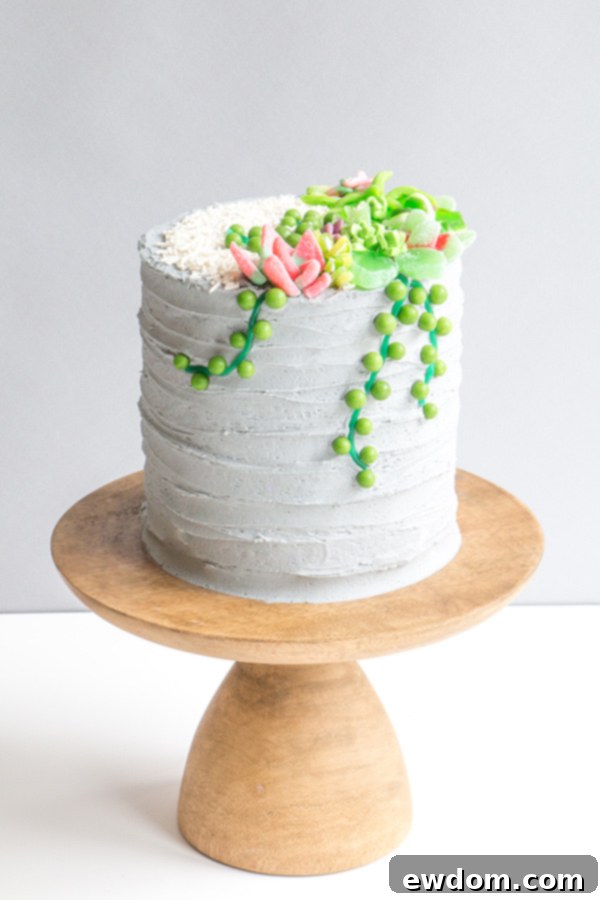
Crafting the Edible Oasis: A Candy Succulent Cake Tutorial
Bring Your Sweetest Garden Dreams to Life with Edible Candy Succulents
Welcome to a whimsical world where confectionery meets botany! This detailed guide will show you how to create an absolutely enchanting Candy Succulent Cake, adorned with beautifully realistic, yet entirely edible, succulent plants made from various candies. Join us as contributor Erin Gardner, a true master of innovative cake design, shares her secrets to transforming a simple cake into a breathtaking edible terrarium. Get ready to impress with a dessert that’s as delightful to look at as it is to eat!
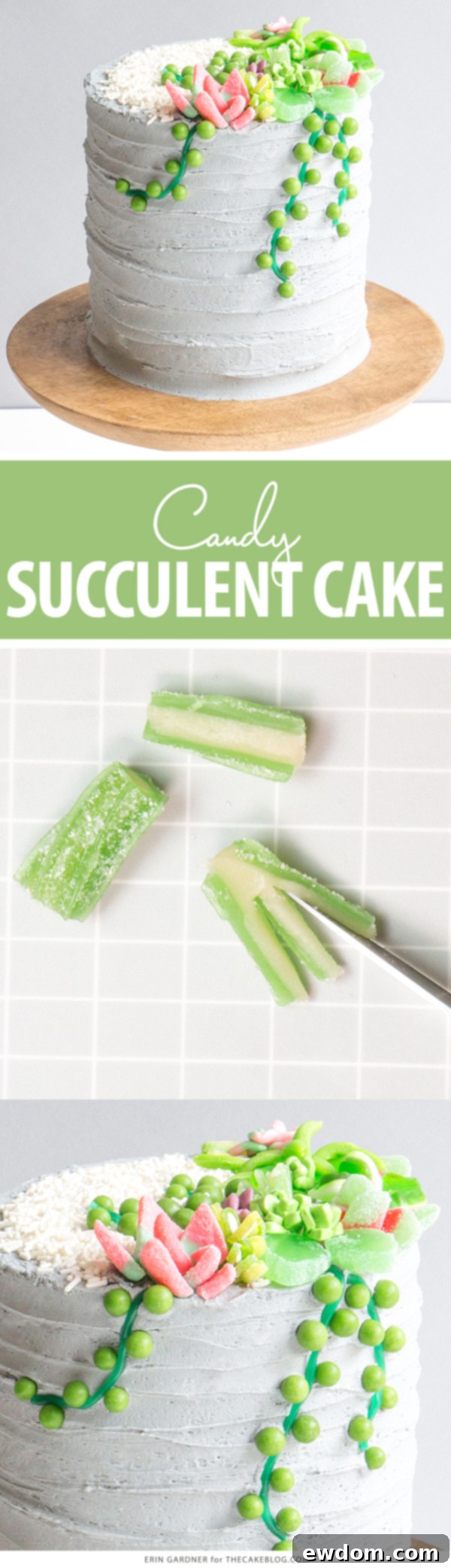
For many of us, the allure of succulents is undeniable. There’s something inherently captivating about their unique shapes, vibrant hues, and surprisingly intricate textures. Much like Erin, you might find yourself constantly drawn to these resilient desert beauties, perhaps even developing a “succulent problem” of your own! Their juicy, plump petals and leaves are simply irresistible, evoking a desire to reach out and touch them. And when paired with a love for all things sweet, the idea of combining these two passions into an edible creation becomes not just appealing, but a stroke of pure genius.
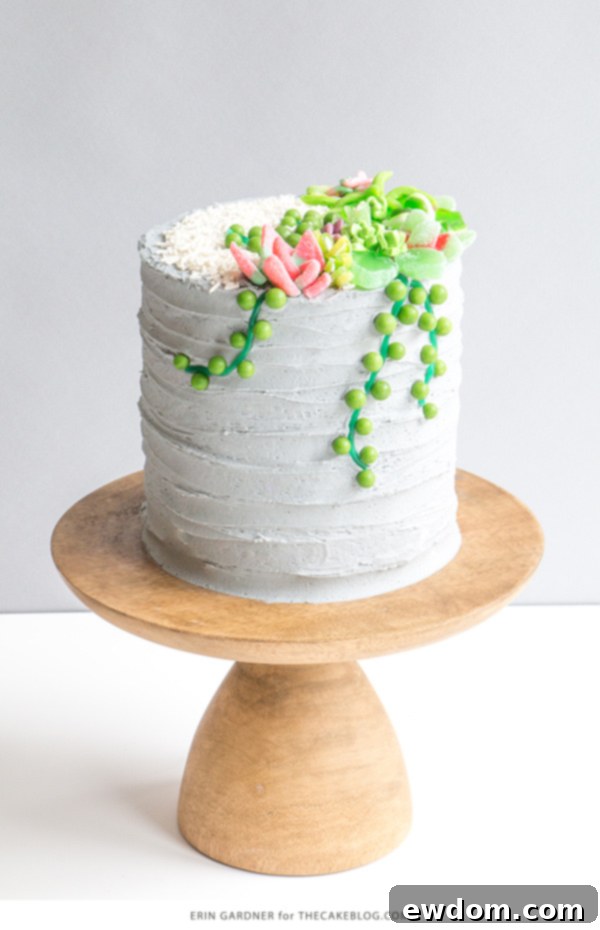
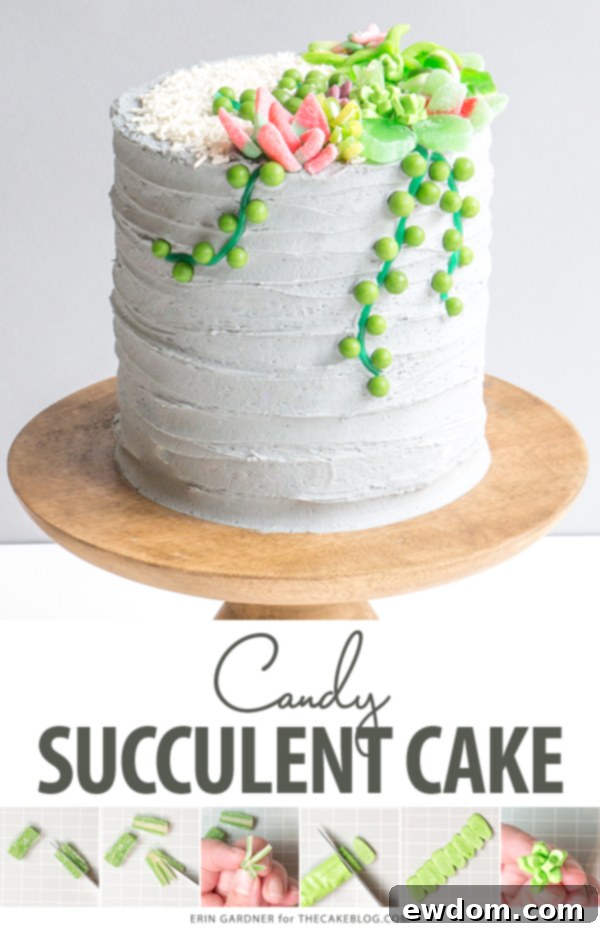
This project elegantly fuses the charm of living succulents with the joyful indulgence of candy. Gummy candies, with their inherent rubbery texture and translucent quality, prove to be the perfect medium for replicating the luscious leaves of real succulents. Imagine pinching a plump, sweet “petal” and discovering it’s not just beautiful, but utterly delicious! The versatility of this technique means you can follow Erin’s exact candy choices or experiment with readily available options in your local confectionery aisle. While these sweet succulents make spectacular cake toppers, don’t limit your creativity; they would also form a stunning, lush green garden on a batch of cupcakes, or even be arranged in individual dessert cups for a truly unique treat.
CANDY SUCCULENT CAKE: Step-by-Step Edible Artistry
A detailed tutorial by Erin Gardner
Essential Supplies for Your Edible Succulent Garden:
Gathering your tools and ingredients is the first exciting step in bringing your candy succulent cake to life. Here’s a comprehensive list of what you’ll need, including specific candy recommendations from Erin Gardner. Feel free to explore similar candies if exact varieties aren’t available – the key is finding textures and colors that mimic natural succulents.
- One 6-inch round cake, expertly finished with a smooth, light gray buttercream frosting. This will serve as your ‘cement pot’ base.
- 1 cup white jimmies sprinkles: For creating a realistic “soil” or gravel effect.
- 1/4 cup sparkling sugar: Adds a touch of shimmer and texture to your ‘soil.’
- Sour watermelon slices: Excellent for creating broad, flat, leaf-like succulents.
- Gummy mint leaves: Perfect for delicate, individual leaves or as accents.
- Sour strawberries: Their shape and color lend themselves well to vibrant succulent forms.
- Gummy frogs: Surprisingly versatile for larger, multi-layered succulent designs.
- Sour filled taffy bites: Ideal for crafting smaller, compact rosettes.
- Green taffy strips: Great for slender, pointed leaves.
- Taffy rope (green and purple): Excellent for creating spiral or rolled succulent shapes.
- Filled sour licorice ropes: Their segmented nature is perfect for creating unique textured succulents.
- Watermelon taffy: Offers a distinct color gradient and pliable texture for petal-like formations.
- Green licorice rope: Useful for creating trailing stems or smaller branch-like elements.
- Large green candy pearls: Add a charming, succulent-like pebble effect or small clustered plants.
- Small icing spatula: Essential for texturing your cake’s buttercream.
- Small knife: For precise cutting and shaping of various candies.
- Kitchen shears: Invaluable for quick and clean candy cuts.
- Pan spray or a small amount of grease: To prevent candy from sticking to your tools.
VIDEO TUTORIAL: Watch the Magic Unfold
For a dynamic visual guide to complement these written instructions, watch Erin Gardner in action. This video demonstrates each technique, offering invaluable insights into the shaping and arrangement of your edible succulents. It’s the perfect way to see how the candy transforms under expert hands.
Designing Your Cake Base: The Rustic Cement Pot Effect
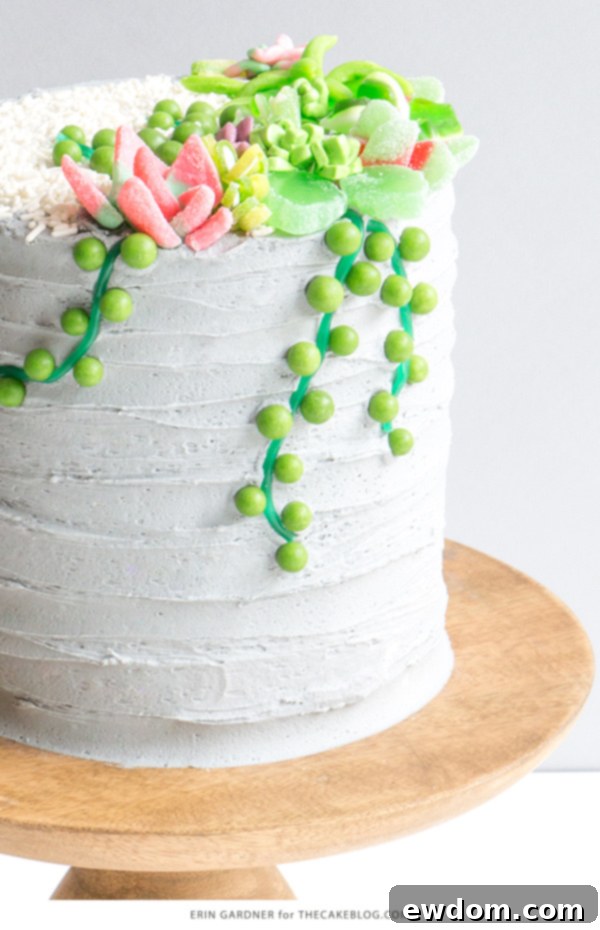
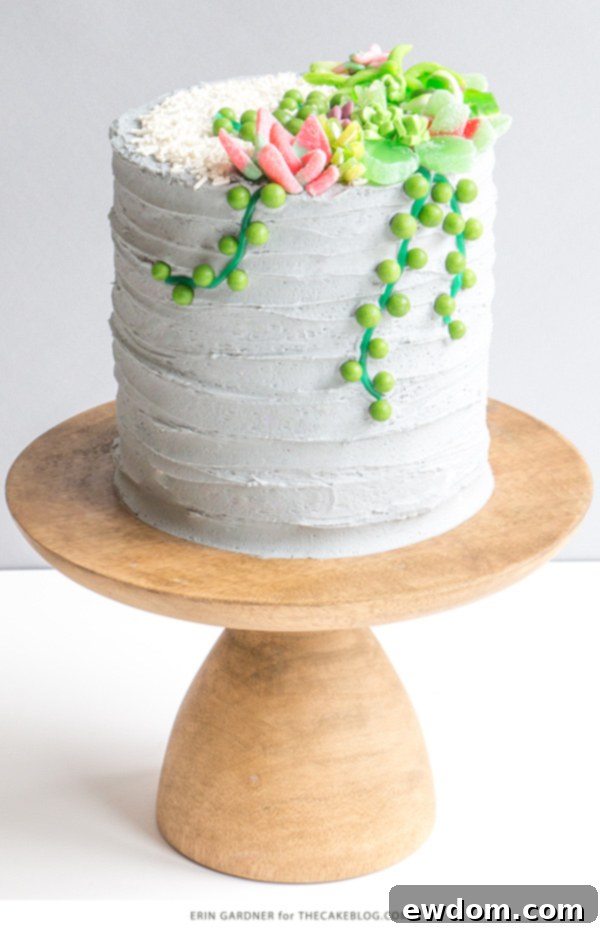
The foundation of your edible terrarium is a cake that mimics a stylish, rustic cement planter. This contrasting backdrop allows your colorful candy succulents to truly pop. Begin with your 6-inch round cake, already expertly iced in a light gray buttercream. Place the cake on a turntable, ensuring it spins smoothly. As the cake rotates, gently drag the tip of a small icing spatula horizontally through the buttercream. Don’t strive for perfection; the beauty of this design lies in its organic, slightly uneven texture, mirroring the authentic character of a handcrafted cement pot. These subtle horizontal lines add depth and visual interest to your cake’s “pot” aesthetic.
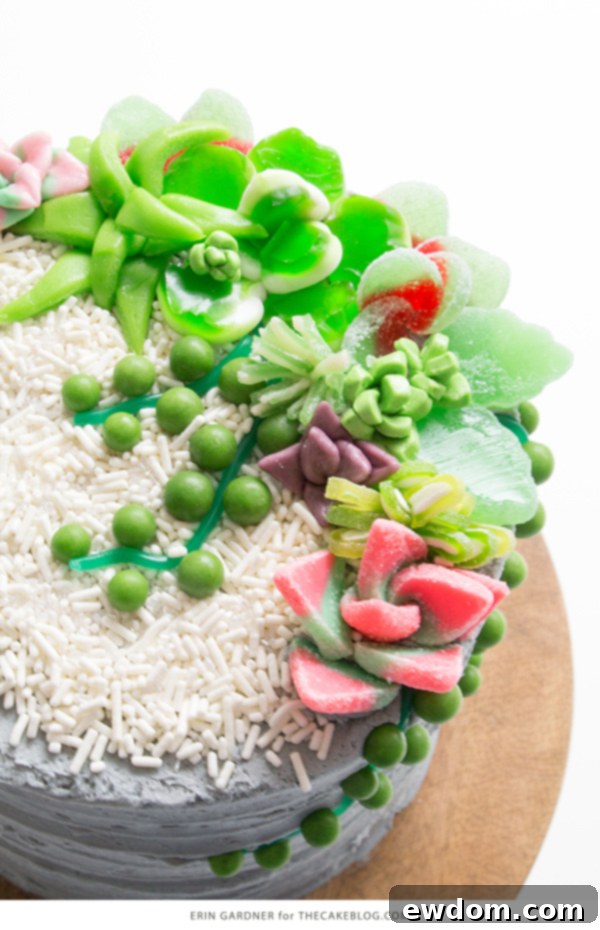
Once your ‘pot’ is textured, it’s time to create the ‘soil.’ In a small bowl, combine your white jimmies sprinkles and sparkling sugar. This mixture will provide a realistic, textural element. Carefully spoon this sprinkle mixture onto the top of the cake, deliberately leaving a crescent-shaped open space on one side. Around the remaining perimeter of the cake, aim to create a distinct 1/4-inch lip of exposed buttercream. This thoughtful detail helps to further simulate the rim of a planter, enhancing the overall illusion of a potted succulent garden.
Crafting Your Edible Succulents: Leaves and Stems from Candy
This is where the true artistry begins! To ensure smooth cutting and prevent sticky situations, always lightly grease the blade of your small knife and/or your kitchen shears with pan spray or a tiny dab of grease. Remember to clean and re-grease your tools as needed, especially when switching between different candy types. When approaching your succulent designs, embrace a bit of botanical liberty. The goal isn’t strict realism but rather charming representation. It’s often helpful to cut a little more candy than you think you’ll need; you can always tuck single leaves into empty spaces later. Maintain flexibility throughout the process and let the candy guide your creative instincts.
Let’s delve into the specific techniques for transforming various candies into stunning succulent forms:
Taffy Rope Succulents:
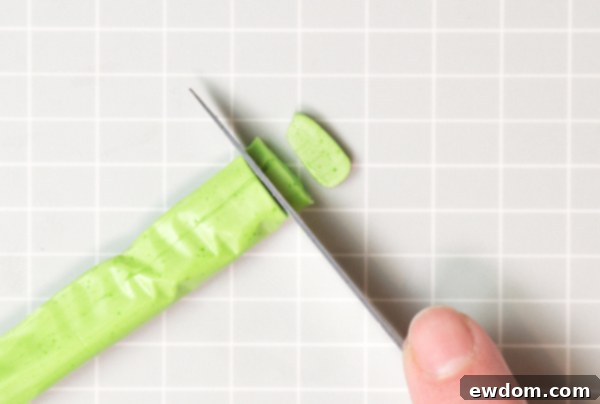
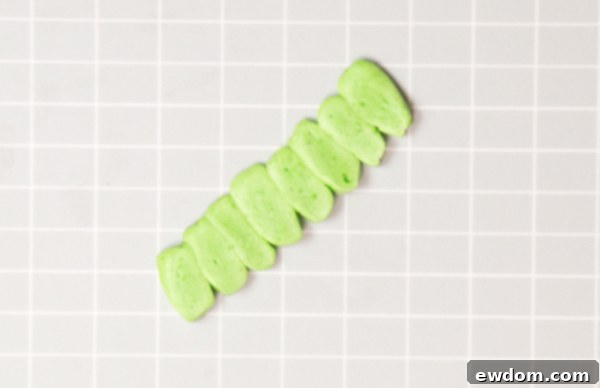
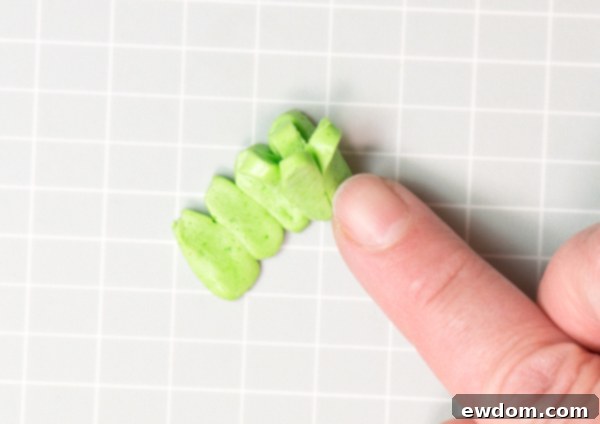
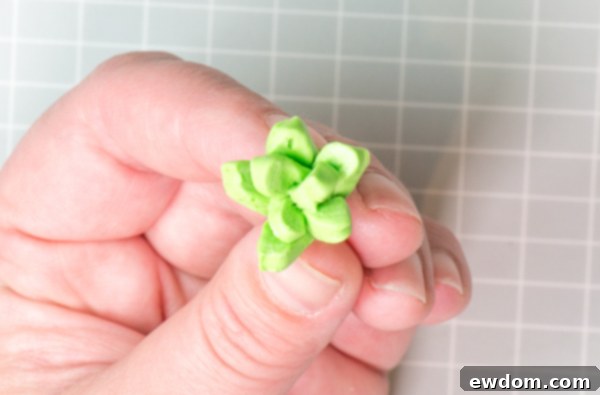
Begin by slicing the taffy rope into small, uniform ovals. Lay these oval pieces side-by-side, pressing them gently to ensure they adhere to each other, forming a continuous strip. Carefully roll this strip of candy up from one end, creating a compact spiral. Once rolled, pinch the base of the bundle firmly to secure its shape. Then, gently fan out the tips of the candy pieces, pulling them away from the center of the bundle to mimic opening succulent leaves. Finally, trim the bottom of your creation so it sits flat and stable on the cake. Repeat this process to create as many of these charming succulents as your design requires, experimenting with different sizes and colors of taffy rope for variety.
Filled Sour Licorice Ropes for Spiky Succulents:
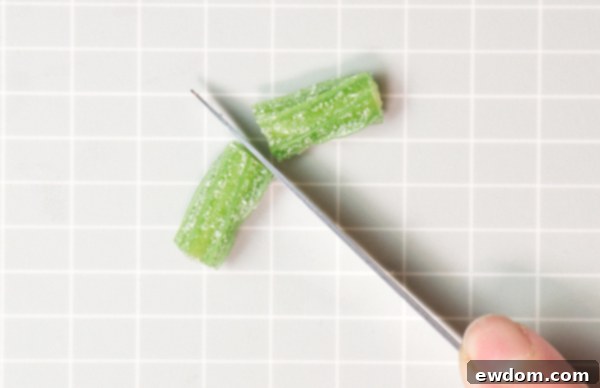
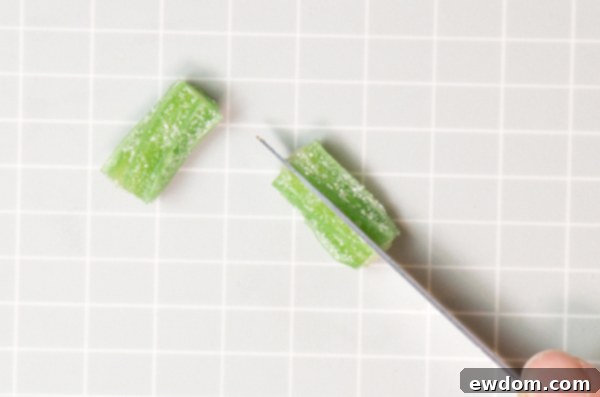
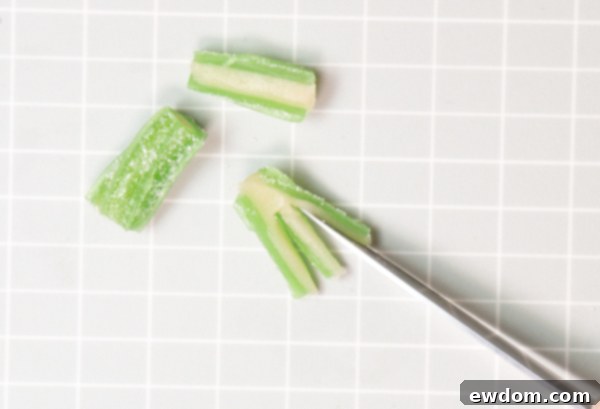
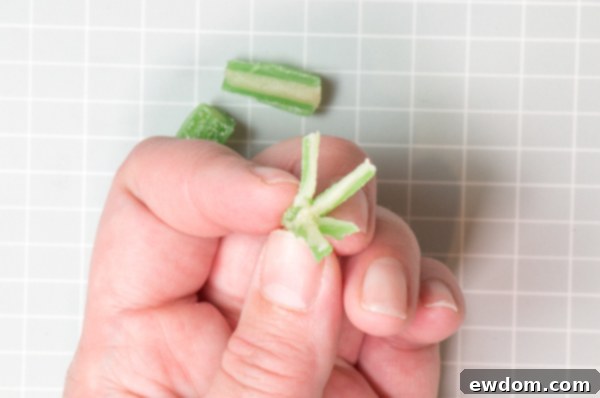
For a different texture, take a filled sour licorice rope and cut it into two manageable pieces. Lay one piece on its side and carefully slice it in half lengthwise. This action will expose the soft, white center of the licorice, creating a striking contrast. Now, cut into the exposed white center several times, making thin, stringy strips while leaving the base of the candy piece intact. This creates a fringe-like effect. Repeat this process with the remaining licorice pieces. Once all pieces are cut, gather the stringy sections into a bundle and firmly pinch them together at the base. Gently fan out the stringy pieces to create a spiky, grass-like succulent, reminiscent of certain Echeveria varieties.
Sour Watermelon Slice Succulents:
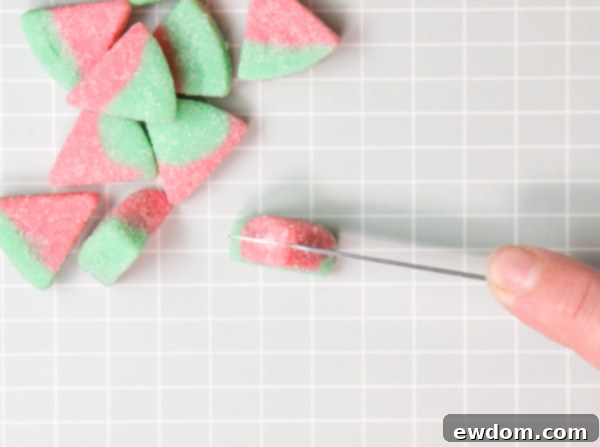
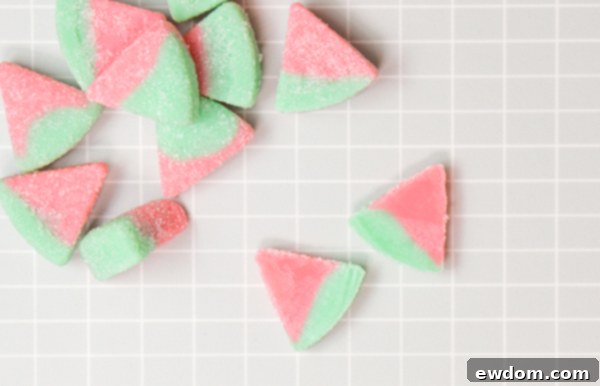
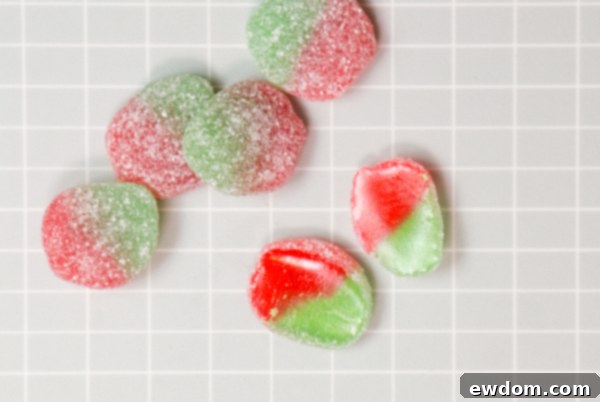
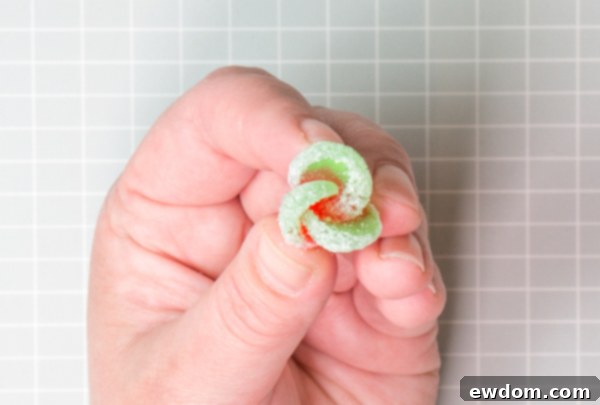
To create these broad-leaved succulents, stand a sour watermelon slice upright on its rind side. Using your small knife, slice the candy in half through its width, yielding two distinct triangle shapes. Lay these pieces down with the cut side facing up and set them aside. Repeat this process with two more watermelon slices, aiming for 2 to 3 candies per succulent. Arrange three of these triangular pieces, slightly overlapping each other with their cut sides facing up. Carefully roll this line of candy triangles upwards and pinch the base securely. Gently fan out the tips of the leaves away from the base using your fingertips to achieve a natural, open succulent form. Remember to reserve some additional cut slices; these can be wonderfully used to tuck into the final arrangement, filling gaps and adding dimension.
Sour Strawberry Succulents:
Sour strawberries offer a wonderful shape and texture for succulent leaves. Carefully cut a sour strawberry in half horizontally. This will give you two semi-circular pieces. Curl up three of these pieces, following the same rolling and fanning process you used for the sour watermelon slices. The goal is to create a compact, rosette-like succulent. As with the watermelon slices, it’s a good idea to reserve more cut pieces. These can be strategically placed later to fill any empty spaces within your arrangement, adding richness and volume to your edible garden.
Gummy Frog Succulents:
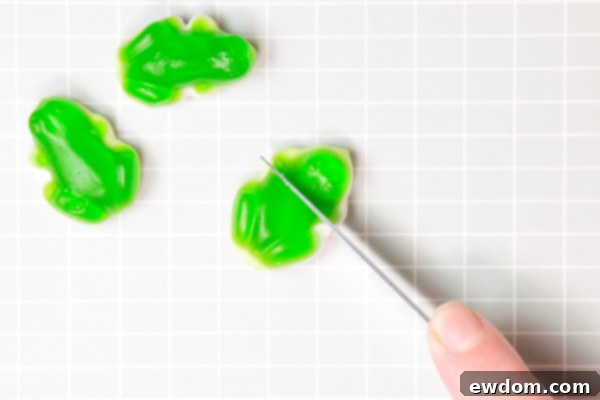
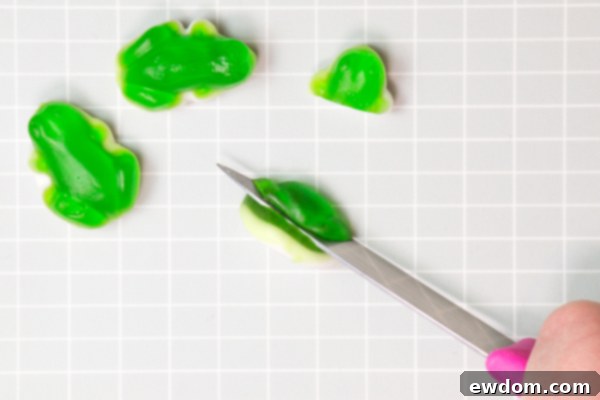
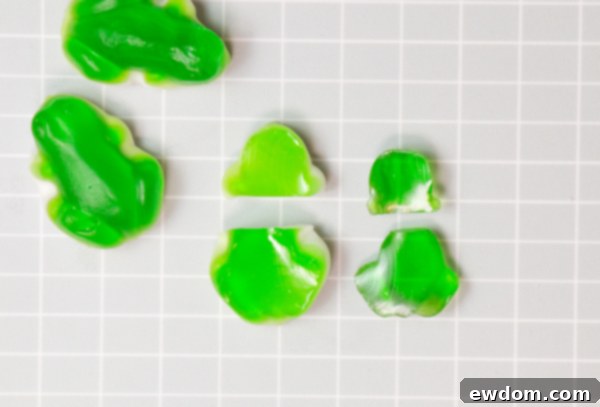
Prepare for a playful transformation! Take a gummy frog and cut it in half just below its head. This will give you a ‘head’ piece and a ‘body’ piece. Stand both pieces upright on their cut sides. Now, carefully slice down through the green part of one of the candy pieces, creating thin, elongated sections that resemble succulent leaves. Repeat this with the other piece. Continue this process with a few more gummy frogs. For instance, to form one of the larger, more dramatic succulents, Erin used approximately five cut ‘bottom’ pieces and three cut ‘top’ pieces. Arrange these pieces in layers, creating a fuller, multi-dimensional succulent bloom.
Sour Filled Taffy Bites for Compact Rosettes:
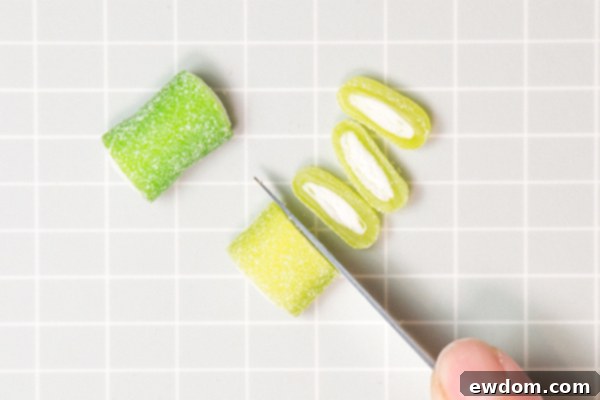
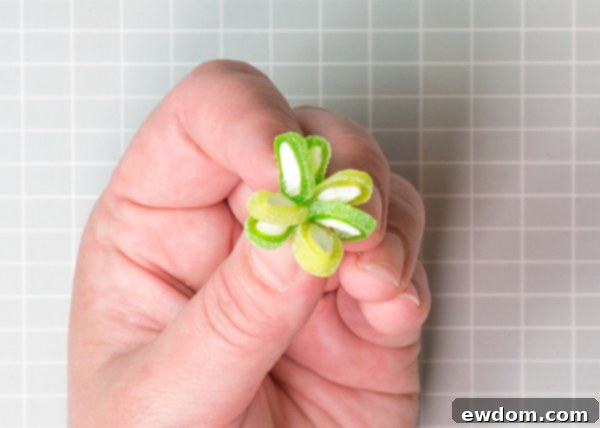
Sour filled taffy bites are perfect for creating charming, compact succulent rosettes. Slice each taffy bite into several thin, oval strips. Once you have a collection of these small strips, gather them together into a tight bundle. Firmly pinch the bundle at its base. You can then gently fan out the individual strips slightly to give the appearance of tightly packed succulent leaves. These small, intricate pieces are excellent for filling smaller gaps or adding delicate touches to your overall arrangement.
Green Taffy Strips for Pointed Leaves:
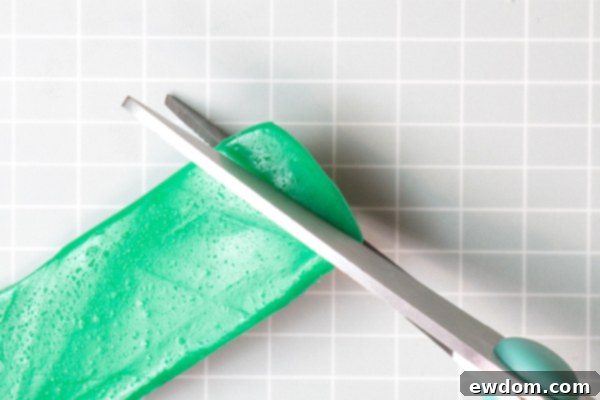
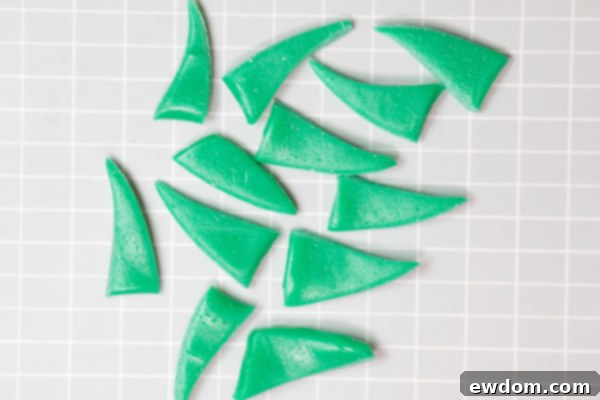
Utilize kitchen shears to cut the green taffy strip into numerous long, thin triangles. These shapes are ideal for creating succulents with more pointed, angular leaves. Layer three of these triangles, ensuring they overlap at their narrowest (smallest) ends. Carefully roll this layered arrangement, pinch the base, and then gently arrange the tips, fanning them out just as you did with the watermelon slices. To build a fuller succulent, continue adding more triangles around the outside of the initial coiled center, gradually building layers to create a multi-petaled effect.
Watermelon Taffy for Petal-Perfect Blooms:
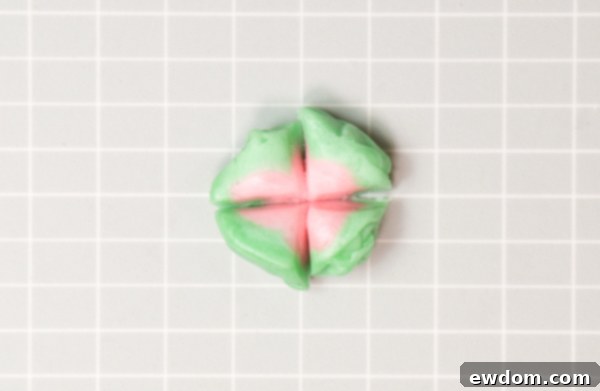
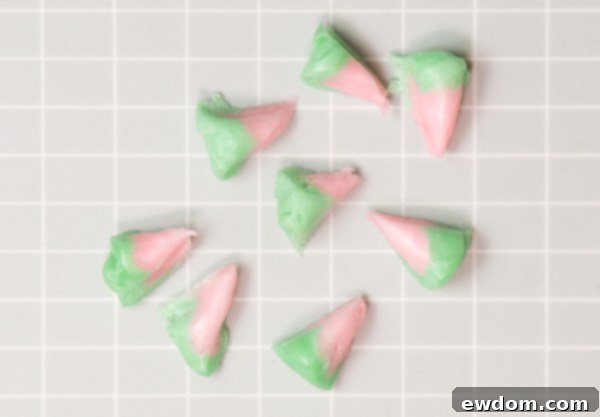
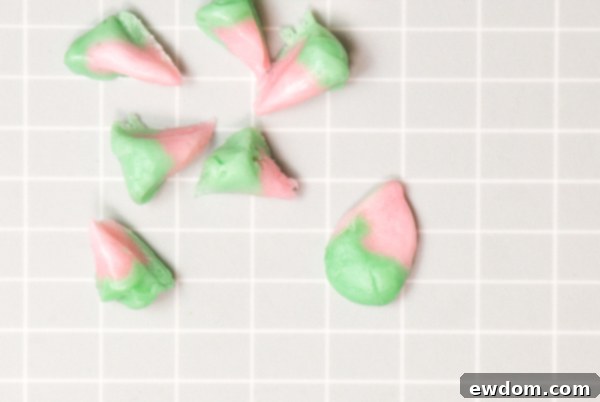
Watermelon taffy’s unique color gradient makes it an excellent choice for crafting realistic, petal-like succulent blooms. Begin by cutting the watermelon taffy into eight equal pieces, much like slicing a pie. Take each wedge and gently flatten it to create a distinct petal shape. Arrange three of these flattened petals in a row, allowing their bases to slightly overlap. Carefully roll these three petals up to form the central bud of your succulent, then gently fan out their tips. Once the center is established, stick the remaining petals around this coiled core, building out the bloom. If needed, trim the base of the completed succulent flat to ensure it sits stably on your cake.
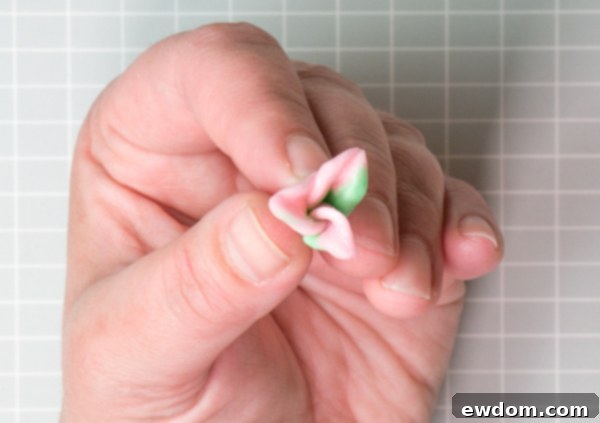
Gummy Mint Leaves for Simple Accents:
Sometimes, simplicity is key. Gummy mint leaves can be used as-is for effortless individual leaves, adding natural green accents. For an interesting twist and to reveal their attractive translucent, shiny center, you can also slice them in half horizontally. These halved pieces are perfect for scattering around the base of larger succulents or for filling small gaps, adding a touch of dewy freshness to your edible garden.
Assembling Your Edible Succulent Cake: Creating a Lush Landscape
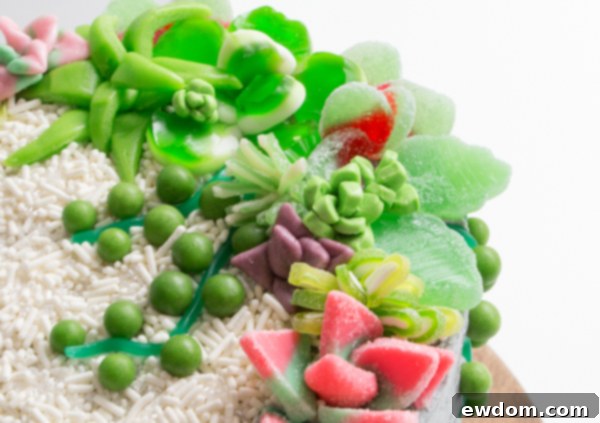
Now for the exciting part – arranging your candy creations into a breathtaking edible landscape! Begin by placing the larger succulents onto the top of the cake first. These will serve as your focal points and help establish the overall structure of your garden. For a captivating central piece, arrange five of the gummy frog ‘bottoms’ in a circular, flower-like shape. Then, carefully add three of the cut frog ‘heads’ to the very center of this arrangement, creating a multi-layered succulent bloom that draws the eye.
To add elements of trailing foliage, cut two short lengths of green licorice rope. Position these on the cake so they appear to emerge naturally from your central succulent arrangement, extending outwards. Along both sides of each licorice rope ‘stem,’ artfully place several large green candy pearls. These pearls brilliantly mimic small, clustered succulents or succulent ‘babies,’ adding delightful detail and realism. Don’t stop there – consider allowing some of these charming pearl succulents to cascade gently over the sides of the cake, further enhancing the illusion of a living, overflowing planter. Finally, carefully fill in the remaining spaces within your arrangement with all the other finished candy succulents you’ve created. Remember to tuck in extra leaves or smaller candy pieces wherever needed to achieve a dense, lush, and natural-looking edible garden. Step back, admire your work, and relish the beauty of your sweet botanical masterpiece!
Beyond the Candy Succulent Cake: More Edible Garden Inspiration
If you’ve enjoyed creating this unique candy succulent cake, you’ll be thrilled to know there’s a whole world of botanical-inspired cake decorating to explore! Dive deeper into the art of edible gardens with these other fantastic tutorials and projects, also from The Cake Blog. Each offers a fresh perspective on bringing nature’s beauty to your baking:
- Cupcake Terrarium: Create miniature edible landscapes on individual cupcakes.
- Mid-Century Cactus Cake: A stylish and retro take on desert-themed desserts.
- Prickly Pear Wedding Cake: Elegant and sophisticated, perfect for a unique celebration.
- Buttercream Succulent Cake: Master the art of piping realistic succulents using buttercream frosting.
We hope this comprehensive tutorial has inspired you to embark on your own edible succulent adventures. Whether you’re a seasoned baker or just starting out, the joy of creating something so beautiful and delicious is truly rewarding. Don’t be afraid to experiment with different candies, colors, and arrangements. Your candy succulent cake is sure to be a showstopper and a testament to your creativity. Happy baking!