Our esteemed contributor, Summer Stone of Cake Paper Party, returns today with an exciting exploration into the art and science of baking with alcohol. Prepare to elevate your dessert repertoire!
Spirited Baking: Unlocking Deeper Flavors and Elevating Your Cakes with Alcohol
As the festive season draws near, bakers everywhere seek novel ways to infuse warmth and sophistication into their holiday creations. Forget the often-maligned, heavy fruitcakes of yesteryear; instead, envision cakes imbued with nuanced, captivating flavors that truly embody the spirit of the holidays. Alcohol, when incorporated thoughtfully into baking, transforms from a simple additive into a masterful flavor enhancer, opening up a world of aromatic possibilities that will delight even the most discerning palate.
For too long, alcohol in baking has been relegated to traditional recipes or viewed with skepticism. However, modern culinary science reveals that these spirited ingredients offer a unique ability to deepen and expand the flavor profiles of your favorite cakes, providing a remarkable boost to both taste and aroma. It’s a technique that sophisticated bakers are increasingly embracing to craft truly memorable desserts.
The Scientific Secret: How Alcohol Enhances Cake Flavors
The magic of baking with alcohol lies in its unique molecular properties, which allow it to influence flavor perception in two primary, yet distinct, ways:
- Direct Flavor Contribution: Alcohol itself carries a wealth of complex flavors. These are derived from its source material—whether fruit, grain, or botanical—and the intricate processes of fermentation, distillation, and aging. Think of the rich molasses notes from rum, the fruity warmth of brandy, the earthy hints of a stout, or the citrus zest of an orange liqueur. When added to a cake, these intrinsic flavors are directly integrated, layering depth and character into the finished product. A good quality spirit or liqueur will impart its unique essence, creating a more sophisticated and multi-dimensional taste experience.
- Flavor Enhancement Through Volatility: This is where the true scientific marvel of alcohol comes into play. Alcohol is a volatile compound, meaning it evaporates at a lower temperature than water. As alcohol evaporates during baking and even after, it acts as a carrier for other aromatic compounds present in the cake. These “hitchhiker” flavor molecules, which might otherwise remain trapped within the cake matrix, are lifted and transported through the nasal passages, where our sense of smell (olfaction) interprets them. This process significantly amplifies our perception of the cake’s existing flavors, making them seem more pronounced, vibrant, and aromatic. The result is a cake that not only tastes richer but also boasts a more captivating aroma.
This dual action means that alcohol doesn’t just add a new flavor; it also elevates and accentuates the flavors that are already there, creating a more harmonious and intense sensory experience.
Finding the Sweet Spot: Alcohol Concentration and Liquid Balance in Baking
Achieving the perfect balance when incorporating alcohol into your cake batter is crucial. While a concentration of approximately 1% ABV (alcohol by volume) is often considered ideal for optimal flavor enhancement, this precise level isn’t always practical, especially when working with lower-alcohol beverages like beer or wine. Achieving 1% ABV with these would require adding a significant volume of liquid, which could easily upset the delicate balance of your cake recipe, leading to a dense, soggy, or overly moist crumb.
Therefore, determining the appropriate amount of your chosen adult beverage depends on several key factors:
- The Alcohol’s Concentration (ABV): Higher proof alcohols, like spirits, require smaller additions to achieve a noticeable flavor. Lower proof options, like wines or ciders, will necessitate larger quantities, which then ties into liquid balance.
- Overall Liquid Ingredient Balance: When adding alcohol, you must account for its liquid volume. For recipes sensitive to moisture, you may need to reduce other liquids (like milk, water, or even eggs) to maintain the correct consistency and structural integrity.
- Desired “Spirit” Level: How prominent do you want the alcohol flavor to be? A subtle hint for delicate palates or a more robust presence for a truly “spirited” dessert? Start conservatively and adjust in future batches.
It’s also important to note that while some alcohol does cook off during the baking process, a significant percentage remains. For instance, studies show that after baking for 30 minutes, approximately 35% of the original alcohol content can still be present. This means cakes baked with alcohol are not entirely alcohol-free and should be consumed responsibly, especially when serving children or individuals who avoid alcohol.
To guide your additions, the following chart provides suggested volumes for a standard 3-layer, 8-inch round cake, categorized by alcohol type and concentration:
| Type of Alcohol | % Alcohol by Volume (ABV) | Suggested Addition for a 3-Layer 8-inch Cake |
| Liquor (e.g., Rum, Brandy, Whisky, Vodka) | 20-95% | 2-12 Tablespoons |
| Liqueurs (e.g., Kahlua, Amaretto, Grand Marnier) | 15-30% | 4-12 Tablespoons |
| Wine and Fortified Wines (e.g., Port, Sherry, Marsala) | 10-20% | 8-16 Tablespoons |
| Beer and Hard Cider | 3-14% | 10-20 Tablespoons |
Alcohol’s Effect on Cake Structure: A Baker’s Balancing Act
Beyond flavor, the addition of alcohol can also influence the physical structure and texture of your cake. Understanding these effects is key to baking successful spirited cakes.
Alcohol, by its nature, can diminish the strength of a cake’s structural components, primarily gluten. Gluten, developed from flour proteins, provides elasticity and strength, allowing the cake to hold its shape. Alcohol can interfere with gluten formation or weaken its network, potentially leading to a more tender, or in extreme cases, a more crumbly texture. This effect is more pronounced with higher alcohol content or larger additions.
Furthermore, the acidity of certain alcoholic beverages can also play a role. Ingredients like wine, beer, and some ciders are acidic. Acidity can have a tenderizing effect on gluten, similar to how buttermilk works in a recipe. While a little tenderness is desirable, excessive acidity, combined with the alcohol’s structural impact, could lead to a cake that doesn’t rise as much or has a weaker crumb. Bakers must consider this when selecting their alcohol and potentially adjusting other acidic ingredients in the recipe.
To illustrate these structural nuances, Summer Stone conducted a fascinating experiment, baking several cakes with varied alcohol types to observe the tangible differences:
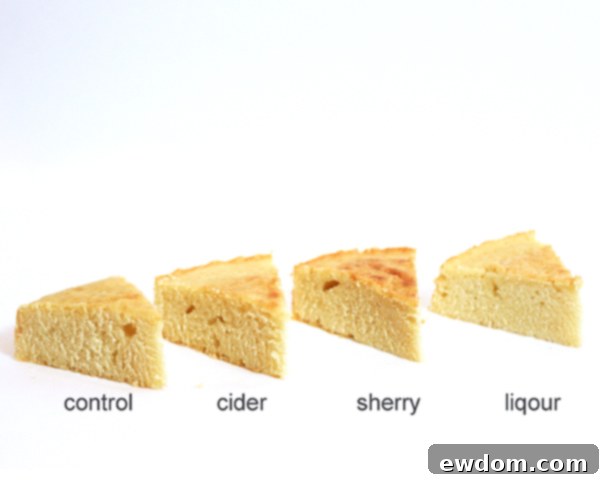
The experiment involved baking cakes with the following additions, while compensating for liquid volume differences with water in the batter:
- Hard Cider (5% ABV): 16 Tablespoons added.
- Sherry (Fortified Wine, 17% ABV): 12 Tablespoons added.
- Brandy (40% ABV): 9 Tablespoons added.
A control cake, to which only water was added for liquid balance, served as the baseline for comparison.
Observations from the Experiment:
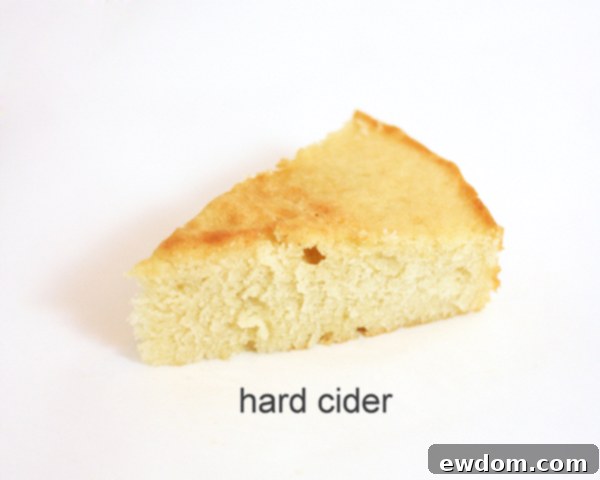
Hard Cider Cake: Compared to the control cake, the hard cider cake exhibited remarkably little structural change. Its texture remained light and airy, very similar to the control. This is likely due to the lower ABV and the relatively moderate acidity of the cider, allowing for a balanced outcome even with a larger liquid addition.
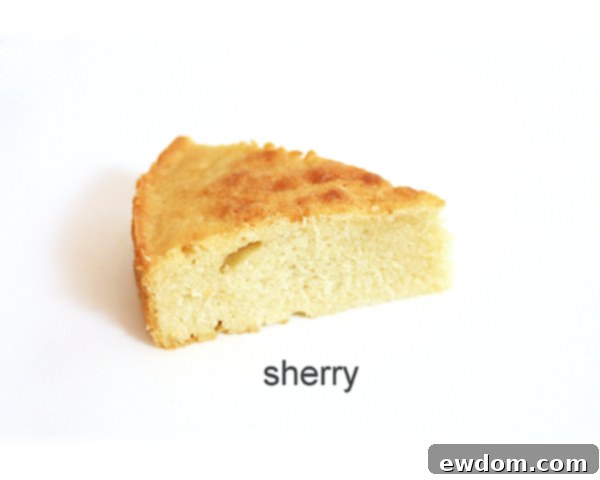
Sherry Cake: The cake containing sherry was ever so slightly more compact than both the control and hard cider cakes. However, it still maintained a delightful lightness and fluffiness, showcasing that fortified wines can be integrated without significantly compromising texture, while adding a unique flavor dimension.
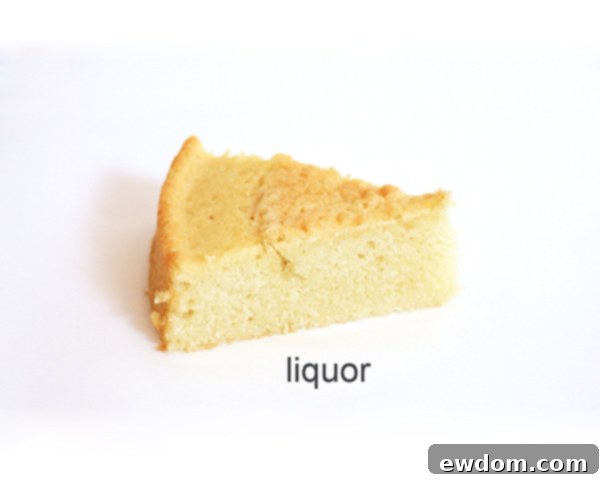
Brandy Cake: As anticipated, the brandy cake was a bit more compact than the other three cakes. Given brandy’s higher alcohol content, this slight densification is understandable. Despite this, it still yielded a beautiful, tender crumb and a pleasant consistency, proving that even higher-proof spirits can be successfully incorporated to create a moist, flavorful cake with a desirable texture.
Crucially, all the alcohol-infused cakes developed unique and incredibly pleasant flavors. None of them tasted overtly “boozy” or unbalanced; instead, they offered sophisticated flavor profiles that truly enhanced the cake. This experiment demonstrates that with careful consideration of ABV and liquid balance, bakers can confidently introduce a wide array of spirits into their recipes without fear of structural collapse.
Choosing Your Spirit: A Guide to Flavor Pairings for Inspired Cakes
The true artistry of baking with alcohol lies in selecting the right spirit to complement and elevate your cake’s core flavors. Here’s a guide to inspire your next spirited creation:
- Dark Rums: Ideal for chocolate, coffee, spice, and tropical fruit cakes. Rums bring notes of molasses, caramel, vanilla, and sometimes oak, adding a deep warmth and complexity. Think a spiced rum in a carrot cake or a dark rum in a rich chocolate fudge cake.
- Brandies and Cognacs: These distilled wines offer fruity, floral, and sometimes nutty notes, often with a hint of oak from barrel aging. They pair beautifully with fruit cakes, vanilla, almond, and even lighter chocolate cakes. A quality brandy can transform a simple apple cake into an elegant dessert.
- Liqueurs: Liqueurs are diverse and often intensely flavored.
- Coffee Liqueurs (e.g., Kahlua, Tia Maria): Perfect for coffee-flavored cakes, chocolate cakes, or tiramisu-inspired desserts.
- Orange Liqueurs (e.g., Grand Marnier, Cointreau): Excellent with citrus cakes, chocolate-orange combinations, or even cranberry-orange.
- Nut Liqueurs (e.g., Amaretto, Frangelico): Fantastic for almond, hazelnut, or plain vanilla cakes, adding a rich, nutty depth.
- Mint Liqueurs (e.g., Crème de Menthe): A delightful addition to chocolate mint cakes.
- Whiskies and Bourbons: With their distinct caramel, vanilla, oak, and sometimes smoky profiles, whiskies (especially bourbon) are superb in pecan, maple, apple, and gingerbread cakes. They add a robust, comforting warmth that is particularly inviting during colder months.
- Wines and Fortified Wines:
- Dessert Wines (e.g., Sauternes, Moscato): Can add a delicate sweetness and fruity aroma to berry or light fruit cakes.
- Port or Sherry: Excellent in fruit cakes, chocolate cakes, or even a rich red velvet, imparting complex, dried fruit, and nutty notes.
- Red Wine: A surprisingly good match for deep chocolate cakes, creating a sophisticated and slightly tannic background.
- Beers and Hard Ciders:
- Stouts or Porters: Their malty, coffee, and chocolate notes are incredible in chocolate cakes, gingerbread, or savory-sweet bakes.
- Hard Cider: As demonstrated, it can add a subtle fruitiness to apple cakes or fall-spiced desserts without compromising structure.
Beyond the Batter: Other Spirited Applications
The magic of alcohol in baking isn’t limited to mixing it directly into the cake batter. It can be used in various other ways to amplify flavor and moisture:
- Soaking Syrups: A common technique, especially for layer cakes. Brushing or pouring an alcohol-infused syrup over baked cake layers adds moisture, flavor, and a delightful aroma. Think rum syrup for a vanilla cake or brandy syrup for a fruitcake.
- Frostings and Glazes: A splash of a complementary liqueur or spirit can transform a simple buttercream or glaze. Kahlua in a coffee buttercream, Grand Marnier in an orange glaze, or a hint of bourbon in a caramel frosting can elevate your cake’s topping significantly.
- Fruit Fillings and Compotes: When making fruit fillings for cakes, a touch of liquor can deepen the fruit’s natural flavors and add an extra layer of complexity. Brandy with cooked apples, rum with bananas, or kirsch with cherries are classic pairings.
- Brushing Finished Cakes: For certain cakes, especially fruitcakes or sponges, brushing the finished, cooled cake with a spirit can help preserve it and infuse it with flavor over time.
Tips for Spirited Baking Success
To ensure your alcoholic baking endeavors are nothing short of spectacular, keep these tips in mind:
- Quality Matters: Use alcohol you would genuinely enjoy drinking. The better the quality of the spirit, the better the flavor it will impart to your cake.
- Start Small, Taste, and Adjust: If you’re new to spirited baking, begin with the lower end of the suggested volume ranges. You can always add more next time, but you can’t take it out.
- Balance is Key: Pay attention to the overall flavor profile. Ensure the alcohol enhances, rather than overwhelms, the other ingredients.
- Consider Your Audience: Be mindful that not all the alcohol bakes off. Inform your guests if your cake contains alcohol, especially if serving children or those with dietary restrictions.
- Experiment and Take Notes: The best way to master spirited baking is through experimentation. Keep a baking journal to track what works best with different recipes and alcohols.
This holiday season, challenge the conventional and embrace the exciting world of spirited baking. Forget the insipid fruitcakes and instead, let alcohol become your secret ingredient for livening up your layer cakes, upgrading your cake flavors, and adding a wonderful aromaticity that will captivate everyone who takes a bite. Happy holiday baking, and may your cakes be truly spirited!
YOU MAY ALSO ENJOY:
Why Oven Temperature Really Matters
Mixing Up The Perfect Cake
Do Your Cupcakes Need a Rest?
EGGSactly Perfect Baking
Can You Overmix A Cake?
Find all of our holiday recipes and tutorials in our Christmas Gallery!