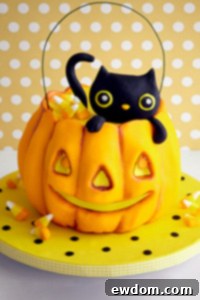
Sculpting the Perfect 3D Pumpkin Cake: A Festive Halloween Masterpiece
Unleash your inner cake artist with this enchanting Jack-o’-lantern creation, perfect for Halloween celebrations!
By our expert contributors, Mary and Brenda Maher of Cakegirls.
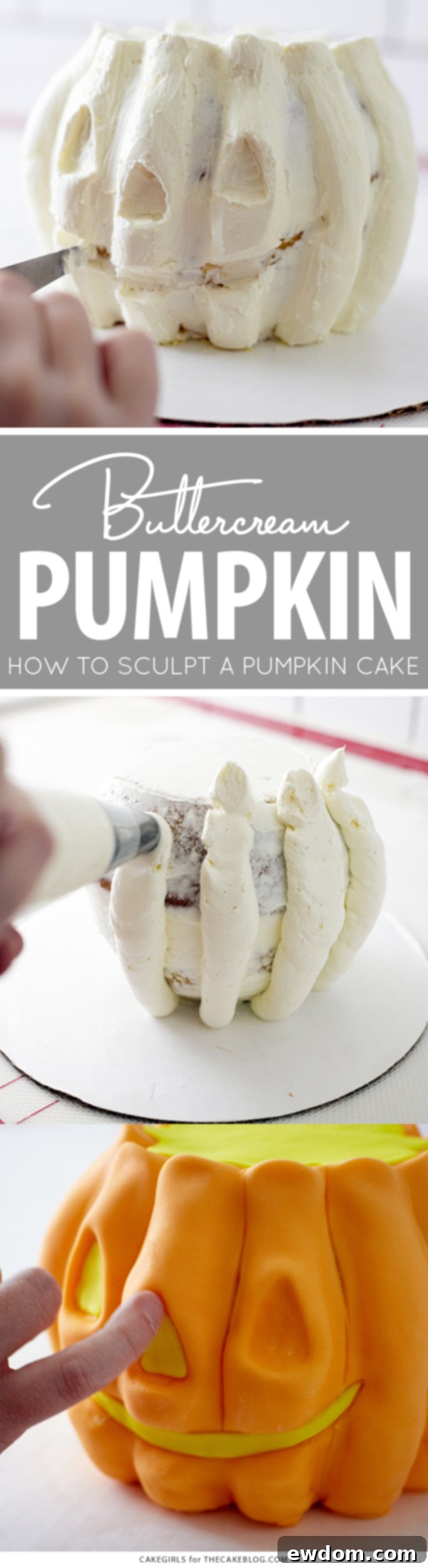
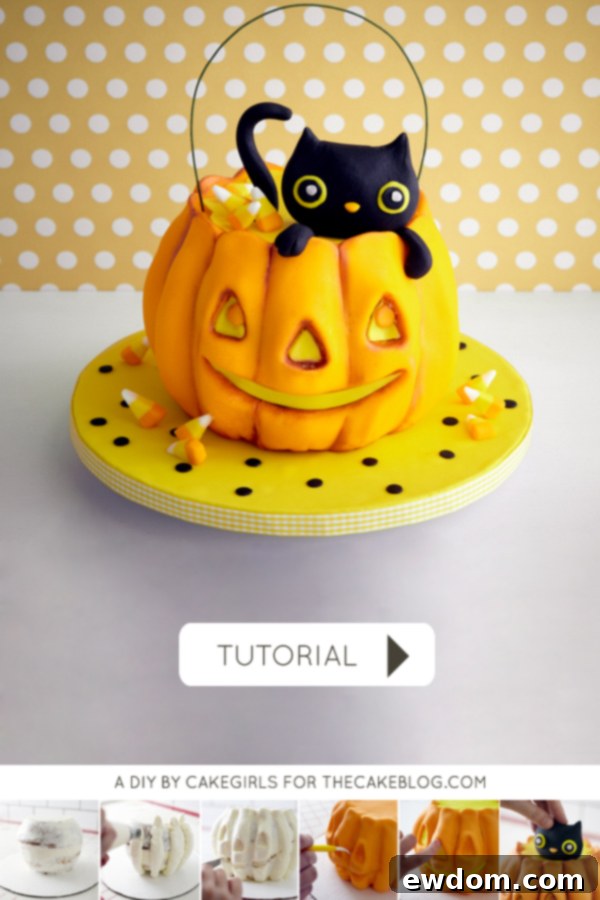
Prepare to enchant your guests and ignite the spirit of Halloween with this truly spectacular 3D pumpkin cake! Whether you’re hosting a ghoulish gathering or simply want to create a memorable centerpiece, this adorable jack-o’-lantern, complete with a playful fondant kitty peeking out, is guaranteed to be the star of any spooktacular celebration. This comprehensive tutorial will guide you through a fascinating array of cake decorating techniques, including meticulous sculpted buttercream, intricate figure modeling, and sophisticated shading with luster dust. We’ve broken down each step into easy-to-follow instructions, ensuring that even intermediate bakers can achieve professional-looking results. With the help of a ball pan for perfect symmetry and silky Swiss meringue buttercream for effortless sculpting, along with a few expert tips, you’ll be amazed at how easily this stunning creation comes together. Get ready for the “wow!” factor when your friends and family see this delightful Halloween treat.
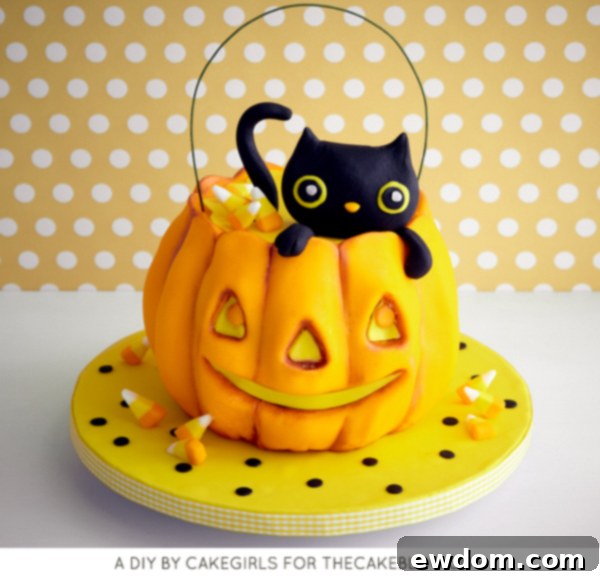
Crafting a Whimsical Kitty Cat in a Pumpkin Cake
A Step-by-Step Halloween Cake Tutorial by Cakegirls
Essential Supplies for Your Pumpkin Cake Project:
Gathering all your materials before you begin will ensure a smooth and enjoyable decorating process. Here’s what you’ll need for this intricate yet achievable 3D pumpkin cake:
- Cake Baked in a Ball Pan: Two halves of a sphere cake, preferably frozen until firm. Freezing makes the cake much easier to handle and sculpt without crumbling.
- Swiss Meringue Buttercream: This stable, smooth buttercream is ideal for sculpting and achieving clean finishes.
- Fondant in Key Colors: Yellow fondant (for the cake board and pumpkin details), vibrant Orange fondant (for the pumpkin’s main covering and specific details), and Black fondant (for the charming kitty cat and accents).
- 10″ Round Support Drum: Provides a sturdy base for your sculpted cake, essential for both decorating and presentation.
- Copper Luster Dust: Used for creating realistic shading and adding depth to the pumpkin’s texture.
- Assorted Paintbrushes: Essential for applying luster dust and edible glue. Dedicate specific brushes for food use only.
- 18 Gauge Green Floral Wire: For supporting the kitty’s tail and potentially for propping other fondant pieces while drying.
- Flower Leaf / Veining Tool: Perfect for creating natural-looking indentations and textures on your fondant.
- Craft Knife: For precise cutting of fondant, such as trimming excess or shaping details.
- Piping Bag: To apply buttercream with control.
- Large Round Piping Tip (#9): Creates consistent, bold lines of buttercream for sculpting the pumpkin’s shape.
STEP 1: Preparing Your Canvas – The Board, Kitty, Tail, and Candy Corn Accents
This initial stage focuses on preparing the foundational elements and charming embellishments that will bring your pumpkin cake to life. Precision here will contribute to a polished final look.
Covering the Cake Board with Fondant:
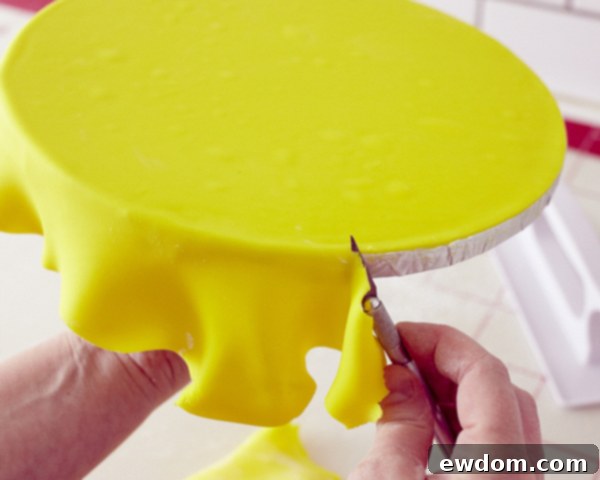
To begin, lightly dust your work surface with powdered sugar to prevent sticking. Roll out the yellow fondant as thinly as you can achieve, ensuring it’s large enough to comfortably cover your 10-inch cake drum. A thin layer provides a clean, elegant base without being overly thick. Lightly brush the top surface of the cake drum with a thin, even coat of water; this acts as a natural adhesive. Carefully place the rolled fondant on top, smoothing it out gently with your hands to remove any air bubbles. Finally, use your craft knife to trim away any excess fondant around the edges of the drum, creating a neat and professional finish.
Crafting the Adorable Fondant Kitty Cat Head:
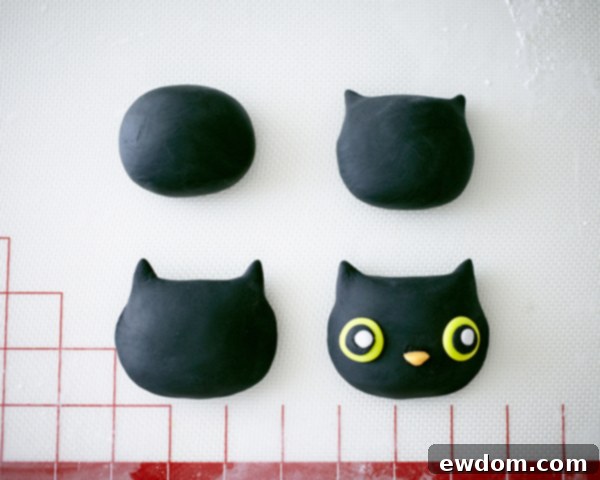
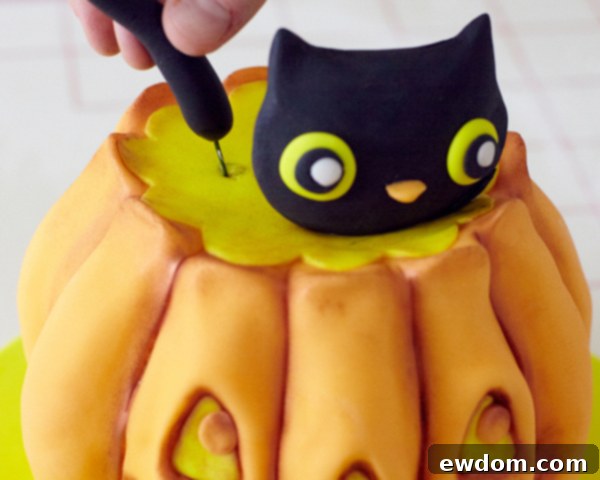
Next, let’s bring our little Halloween companion to life. Take approximately 2 1/2 ounces of black fondant and begin by shaping it into a smooth, elongated oval ball. This will form the basic structure of the cat’s head. With gentle pressure, pinch the top edges of the oval to deftly create two distinct, pointy ears. Using your fingers, carefully smooth the surface of the face, slightly flattening the outer edges to give it character. Taper the head subtly to achieve a more refined and charming shape. Allow your artistic touch to guide you in creating an expressive feline face.
For the eyes: Roll tiny balls of yellow, black, and white fondant. Flatten each into varied size discs. Layer them carefully onto the face—yellow first for the base, then black for the pupil, and a tiny white dot for a glint of light—using just a touch of water to securely adhere each layer. The water acts as a subtle edible glue.
For the nose: Take a very tiny pinch of orange fondant and shape it into a neat little triangle. Attach it just below the eyes with a dab of water. This adds a sweet contrast to the black fondant.
Expert Tip: To ensure stability when placing the kitty head on your finished cake, stand the sculpted head upright to dry. This allows the bottom to flatten slightly as it sets, making it easier to position later.
Fashioning the Playful Kitty Tail:
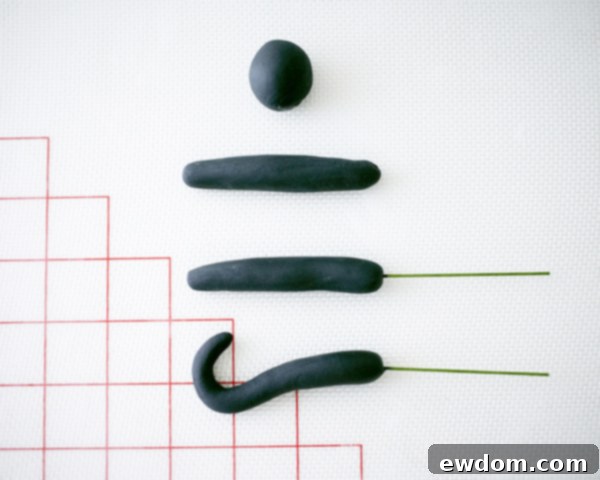
To create the cat’s curving tail, knead about 1/2 ounce of black fondant until it’s pliable and smooth. Roll it into a long, slender sausage shape. Continue rolling and smoothing until the tail reaches approximately 3 inches in length. Now, clip a 4 1/2-inch piece of 18-gauge green floral wire. Dip one end of the wire into a small amount of water to help it adhere to the fondant. Carefully insert the wet end of the wire into the fondant sausage, leaving about 3 inches of the wire exposed at the other end. This exposed wire will be used to insert the tail into the cake. Gently thin the end of the tail and curl it to give it more character and movement. Set the tail aside in a position that allows it to dry with its playful curve, maintaining its shape.
Crafting Delightful Candy Corn Decorations:
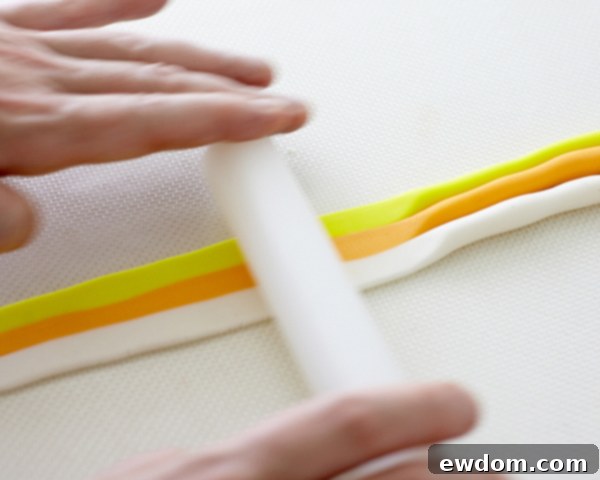
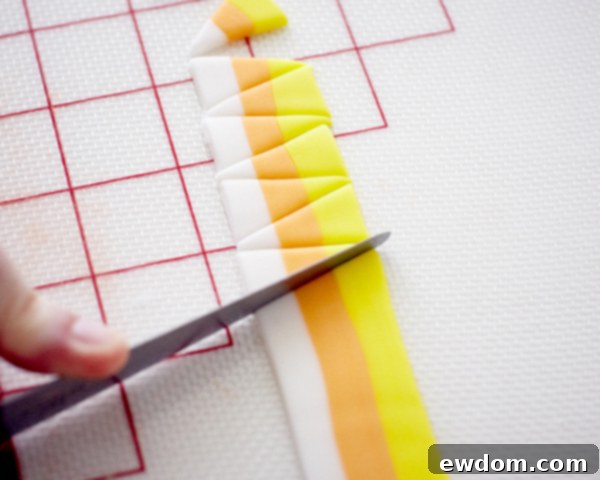
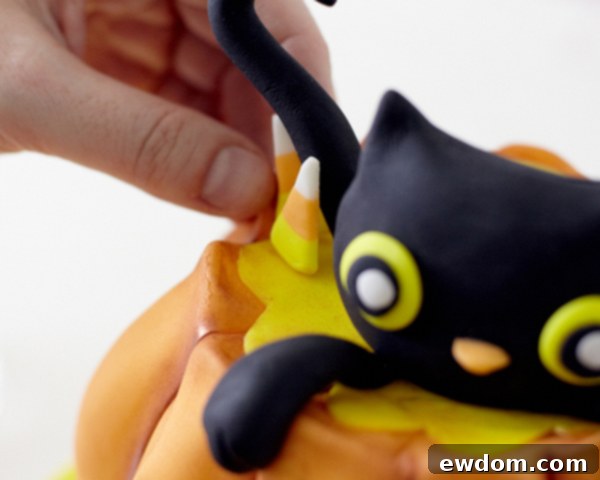
No Halloween cake is complete without some iconic candy corn! To make these classic treats, roll out three separate ropes of fondant: one orange, one yellow, and one white. Aim for uniform thickness for each rope. Carefully place the three ropes side-by-side. Lightly brush a tiny amount of water along the touching edges of the ropes to help them stick together. Allow them to sit for a minute or two to ensure they adhere firmly. Once bonded, gently roll the combined ropes out into a single strip about 1/4 inch thick. Using your craft knife, cut the strip into small triangles, mimicking the distinctive shape of traditional candy corns. These vibrant, edible candies will add a charming touch to your finished cake board.
STEP 2: Sculpting Your Pumpkin – Icing and Buttercream Texture
This phase is where your cake truly begins to take on its pumpkin form, using the versatility of buttercream to create a strong, sculptural base for your fondant.
Assembling and Crumb Coating the Ball Cake:
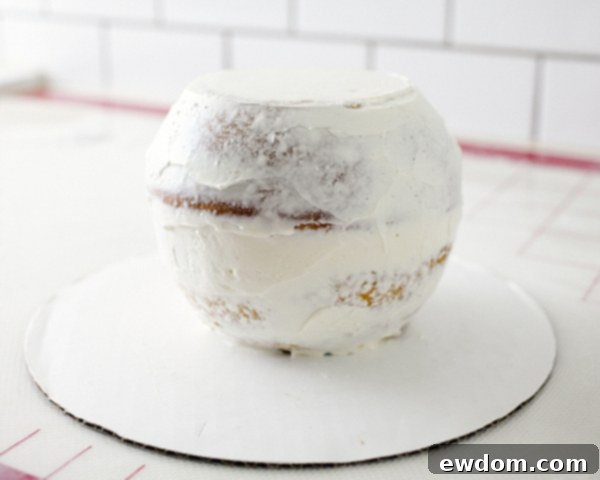
Carefully remove your two ball cake halves from the freezer. On the rounded side of each ball, use a serrated knife to cut a flat spot approximately 3 1/2 inches in diameter. This flat surface is crucial for stability when stacking the cake. Place one cake half on an extra cardboard circle – this will act as a temporary base for ease of handling. Generously sandwich the two cake layers together with a thick layer of Swiss meringue buttercream. Once stacked, apply a thin, rough layer of buttercream all over the entire cake. This “crumb coat” traps any loose crumbs, creating a clean canvas for further decorating. Refrigerate the cake for 15-20 minutes to allow the crumb coat to firm up.
Adding Distinctive Buttercream Ridges for Pumpkin Texture:
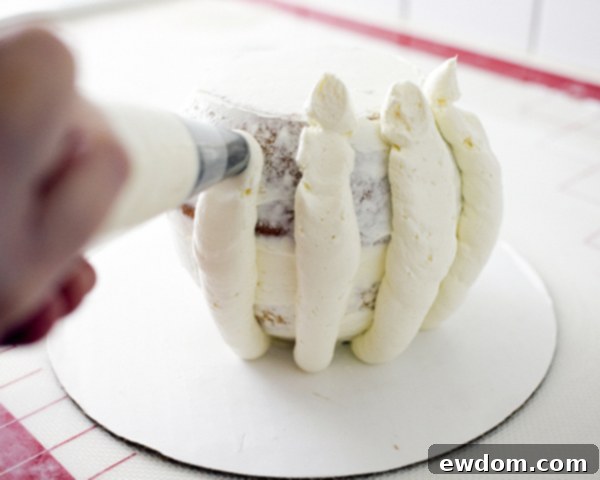
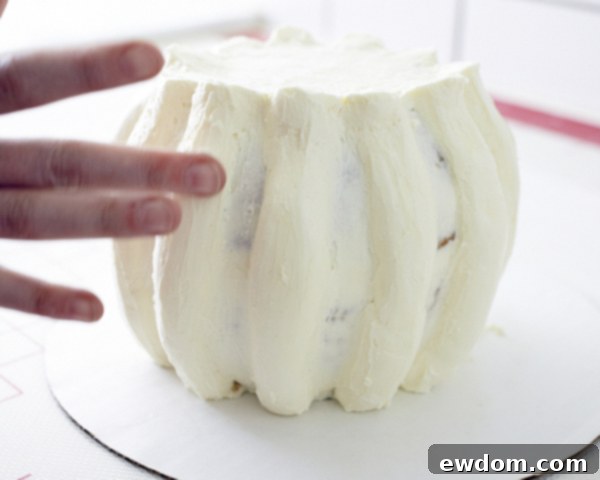
Equip your piping bag with the large #9 round piping tip and fill it generously with Swiss meringue buttercream. This tip is ideal for creating robust, even lines. Begin piping evenly spaced, heavy, vertical lines all around the outside of the ball-shaped cake. Ensure these lines extend slightly past the top of the cake, leaving a consistent space between each ridge. These piped lines are the secret to easily creating the characteristic ridges of a pumpkin. Once you’ve piped all the ridges, place the cake back into the refrigerator for 20-30 minutes, or until the buttercream is firm to the touch. This chilling step is vital for the next sculpting stage.
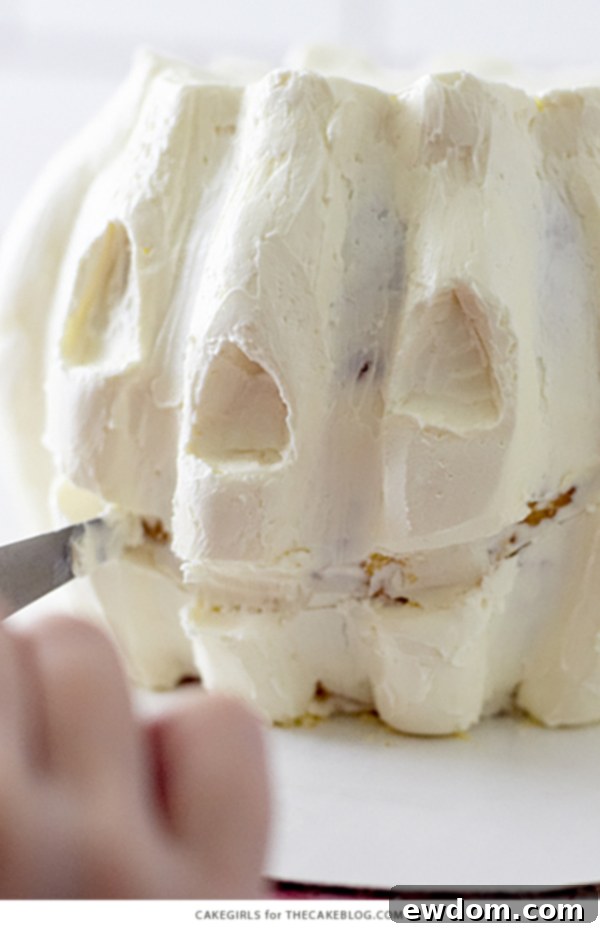
Once the buttercream has firmed up, remove the cake from the fridge. Now for a unique sculpting technique: wash your hands thoroughly with hot, soapy water and dry them completely. The natural warmth of your fingers will become your sculpting tool. Gently use your warm fingertips to smooth the buttercream, softening the sharp ridges you just piped. This process allows the buttercream to integrate more seamlessly into the desired pumpkin shape, creating a smooth yet undulating surface. This step may take around 15 minutes, so be patient and work deliberately to achieve the perfect organic form.
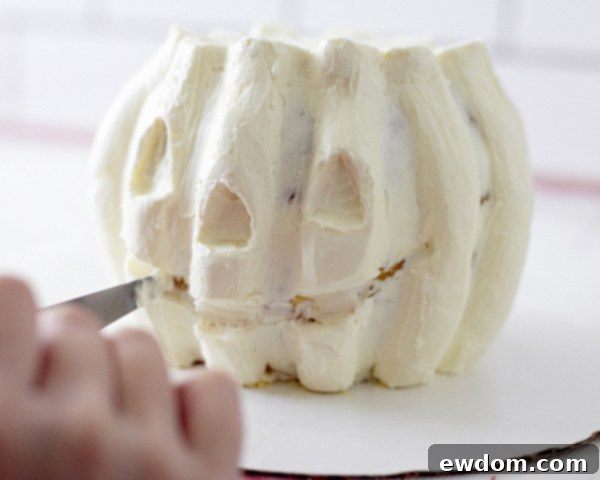
Next, it’s time to carve out the iconic jack-o’-lantern face. Using an offset tapered spatula (or a small knife), carefully scrape out the shapes for the pumpkin’s eyes, nose, and mouth. Make sure these features are proportionate to the size of your pumpkin. After carving, use your finger again to gently soften the edges of these cut-outs, giving them a more natural, less harsh appearance. This also helps prepare the surface for the fondant. Return the cake to the fridge to firm up once more, ensuring the carved features hold their shape before the next step.
STEP 3: Fondant Covering and Adding Realistic Detail to Your Pumpkin
This crucial stage transforms your buttercream sculpture into a vibrant, textured pumpkin, ready for its final decorative touches.
Draping the Pumpkin with Orange Fondant:
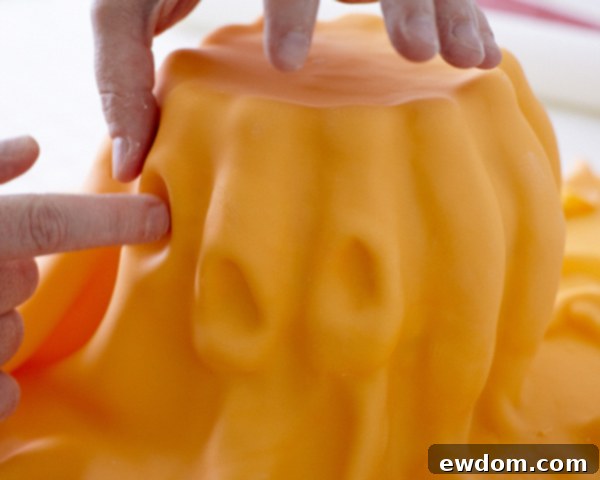
On a surface lightly dusted with powdered sugar, roll out your orange fondant to an even thickness of about 1/8 inch. Ensure the fondant is large enough to drape over your entire buttercream-sculpted pumpkin with some excess. Carefully lift the rolled fondant and gently drape it over the chilled cake. Using your hands, meticulously smooth the fondant onto the cake, working from the top down. Pay close attention to pressing the fondant firmly into the buttercream creases and cavities you created in the previous step. This ensures that all the underlying details and shapes are preserved and accentuated. With a craft knife, carefully trim away any excess fondant from around the base of the pumpkin, creating a clean edge.
Enhancing Pumpkin Texture with a Veining Tool:
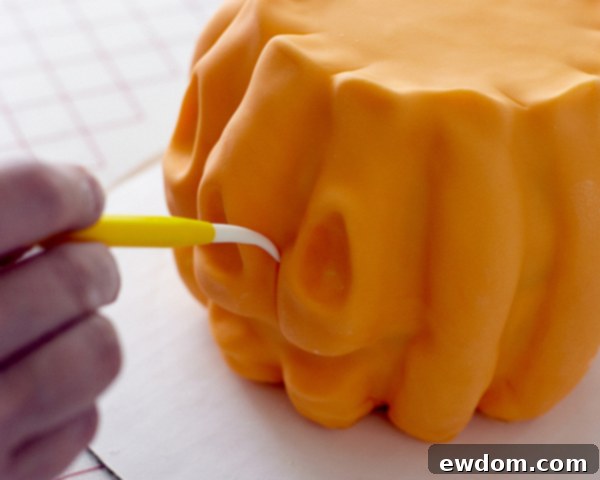
To give your pumpkin an even more authentic look, take your flower leaf (veining) tool. Gently make vertical indentations between the existing fondant bumps or ridges. This technique adds subtle character and mimics the natural texture of a real pumpkin, enhancing its visual appeal. Work with a light touch to create realistic, organic lines without tearing the fondant.
Applying Facial Features and Luster Dust Shading:
Roll out a small piece of yellow fondant and use your craft knife to cut a circular shape that will fit neatly onto the very top of your pumpkin, acting as the stem base. Adhere it with a tiny bit of water. Next, roll out more yellow fondant and carefully cut out the eyes, nose, and mouth shapes for the jack-o’-lantern face. You may need to trim them slightly to fit perfectly into the carved cavities. Adhere these yellow fondant pieces into their respective spots with a touch of water. Now, for the magic of shading: dip a clean, dry paintbrush into your copper luster dust. Tap off any excess onto a paper towel to avoid over-application. Gently brush the luster dust into the crevices and creases of the cake, especially around the pumpkin’s ridges and carved facial features. This creates dramatic shading and incredible depth, making your pumpkin appear more three-dimensional and realistic. Continue to build up layers of dust as needed, blending carefully to achieve your desired intensity. Finally, flatten two small balls of orange fondant and place them strategically on the cake as subtle eye details, adding another layer of dimension. Refrigerate the cake for approximately 20 minutes to allow everything to firm up before you attempt to transfer it to its final fondant-covered board.
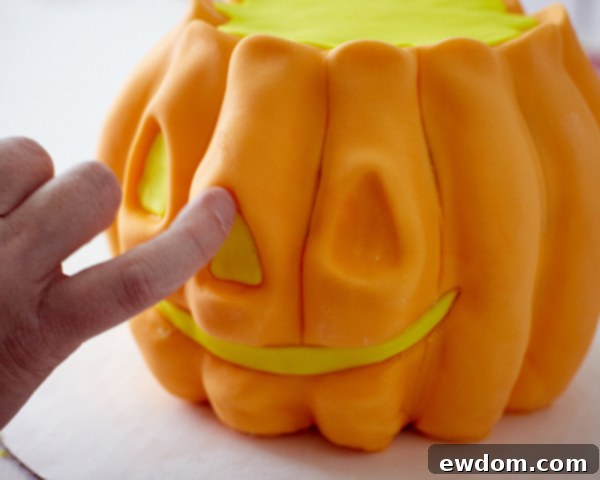
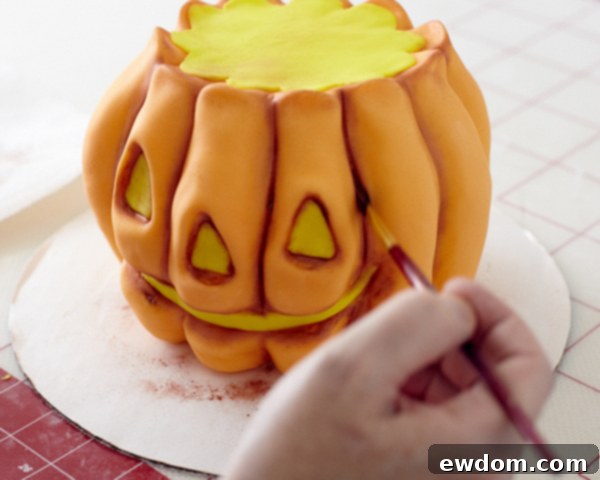
STEP 4: The Grand Finale – Finishing and Assembling Your Halloween Masterpiece
With the main pumpkin sculpted and detailed, it’s time to bring all the elements together for a truly enchanting Halloween cake.
Transferring the Cake and Creating Edible Glue:
Carefully use a wide spatula or two spatulas to transfer your chilled pumpkin cake from its temporary cardboard base onto the prepared, fondant-covered support drum. A small dab of buttercream beneath the cake will help adhere it securely to the board. Next, you’ll need edible glue for attaching your fondant pieces. Take a pea-sized ball of white fondant and place it in a small cup or bowl. Add a few drops of water and begin mashing it with the back of a spoon or a paintbrush. Continue to add water, drop by drop, and stir until the consistency resembles thick, sticky glue. This homemade edible adhesive is perfect for securing delicate fondant decorations.
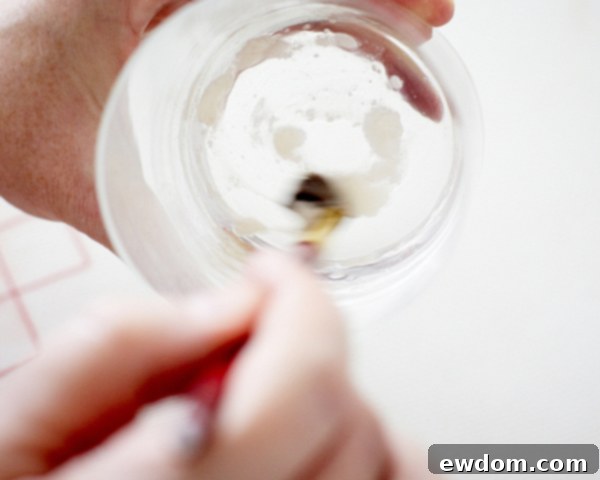
Attaching the Kitty and Paws:
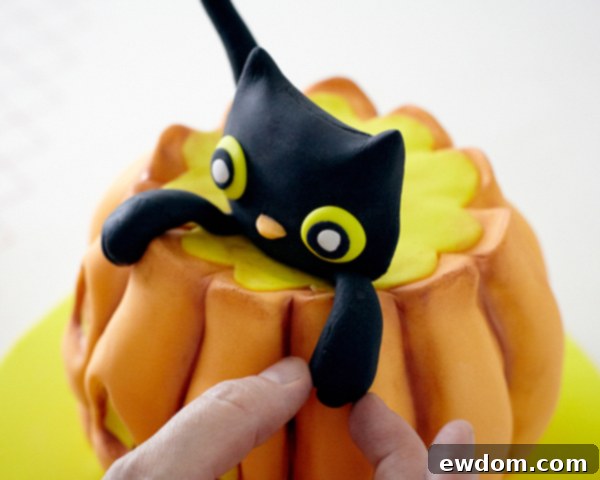
Brush some of your freshly made edible glue onto the flat bottom of the kitty cat head you prepared earlier. Carefully position and adhere the head to the top of the pumpkin cake, making it look as though it’s peeking out. If necessary, you can use a hidden piece of floral wire or toothpicks as temporary props to help support the head while the glue dries and sets firmly. Attach the prepared kitty tail in the same manner, inserting the exposed wire into the cake and securing the fondant base with edible glue. For the playful paws, take two 1/2-ounce pieces of black fondant and shape each into a realistic cat paw. Use a small amount of edible glue to attach these paws over the edge of the pumpkin, creating the illusion that the kitty is resting its front limbs on the pumpkin’s rim.
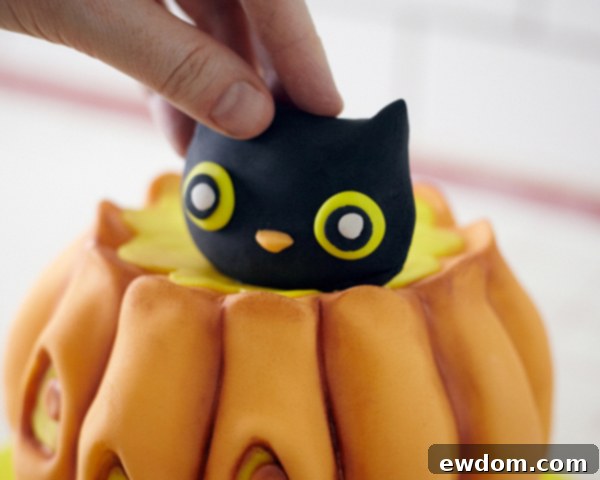
Completing Your Halloween Cake with Decorative Accents:
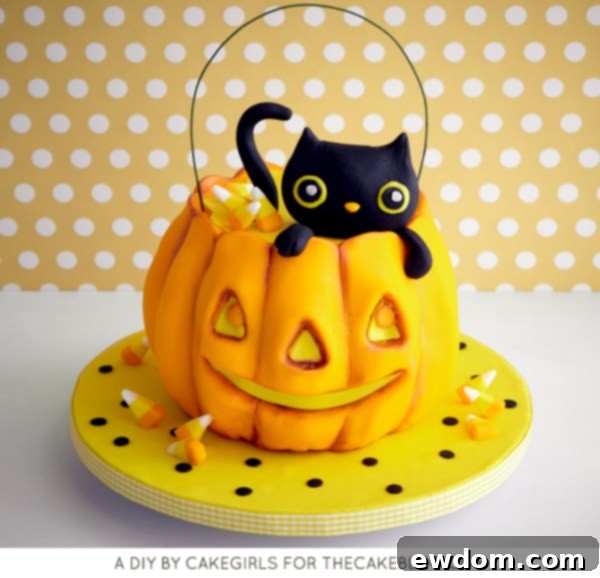
To put the finishing touches on your impressive Halloween cake, start by adhering small black fondant dots onto the yellow fondant cake board, creating a festive polka-dot pattern or a trail leading to the pumpkin. Arrange and attach the candy corns you made earlier around the base of the pumpkin or scattered on the board, using edible glue. For a charming handle, take a piece of the green floral wire, bend it into an arch, and insert each end into the top of the pumpkin, giving it the appearance of a real pumpkin basket. Finally, wrap a decorative ribbon around the entire edge of the cake drum and secure it with a touch of edible glue or royal icing. Stand back and admire your stunning, handcrafted 3D pumpkin cake – a true masterpiece ready to delight!
Unleash Your Halloween Creativity!
Crafting this 3D pumpkin cake is more than just baking; it’s an artistic journey that results in an unforgettable centerpiece for your Halloween celebrations. From the initial sculpting of the buttercream to the delicate shading with luster dust and the charming addition of a fondant kitty, each step adds to the magic. This tutorial empowers you to create a show-stopping dessert that will undoubtedly gather compliments and create lasting memories. So, don’t hesitate to dive into this delightful project, embrace the techniques, and let your creativity shine this spooky season. Happy decorating!
Explore More Spooktacular Cake Ideas from Cakegirls:
If you enjoyed crafting this charming pumpkin cake, you’ll love these other imaginative Halloween cake tutorials and recipes. Expand your decorating repertoire and create an entire array of eerie-sistible treats!
- Black Cat Cake
- Monster Eye Cake
- Mini Mice Cakes
- Marshmallow Spiderweb Cake
- Spooky Splatter Cake