Revolutionizing Swiss Buttercream: The No-Meringue Method for Effortless Perfection
We are absolutely delighted to welcome a truly innovative voice to our community: Summer Stone of Cake Paper Party! Prepare to have your long-held baking beliefs delightfully challenged and transformed as Summer takes us on an enlightening journey, exploring traditional baking concepts with fresh, exciting, and remarkably effective new approaches. Her insights promise to make your time in the kitchen more enjoyable and your results more spectacular.
Debunking the Buttercream Myth: Is Meringue Truly Necessary?
CAKE MYTH : The widely accepted belief is that you must painstakingly create a perfectly formed and stable meringue to produce a European-style buttercream, such as the beloved Swiss Meringue Buttercream (SMBC).
For countless bakers, including myself for a significant period, the idea that a fully realized, stable meringue was an absolute prerequisite for creating Swiss Meringue Buttercream felt like an unshakeable truth. I often found myself pondering the logic: why invest precious time and effort in meticulously whisking egg whites to lofty, beautiful peaks, only to then effectively “destroy” that delicate structure by vigorously beating in generous quantities of butter? It seemed counterintuitive, almost like building a magnificent sandcastle just to watch the tide wash it away.
Furthermore, I was intrigued by the inherent instability often associated with traditional SMBC. Even highly experienced and skilled bakers frequently encountered challenges, reporting instances where their buttercream would inexplicably “break,” curdle, or simply refuse to come together perfectly. These frustrations suggested a deeper issue than mere technique.
Driven by this curiosity and a desire for a more reliable method, I embarked on an extensive journey of experimentation. After numerous trials, adjustments, and careful observations, I am thrilled to share my groundbreaking findings. The answers I’ve uncovered will not only help you create a superior buttercream faster and easier than ever before but will also reveal a startling truth: you don’t need a meringue at all!
Introducing the No-Meringue Swiss Buttercream (SBC): A Simpler, More Stable Approach
My innovative method for crafting Swiss Buttercream (SBC) bypasses the traditional meringue step entirely, offering a streamlined process that yields consistently smooth, stable, and delicious results. This isn’t just a shortcut; it’s a fundamentally different approach rooted in a deeper understanding of emulsion science. Here, I’ll walk you through each step and explain the scientific principles behind why this method is so incredibly effective and foolproof.
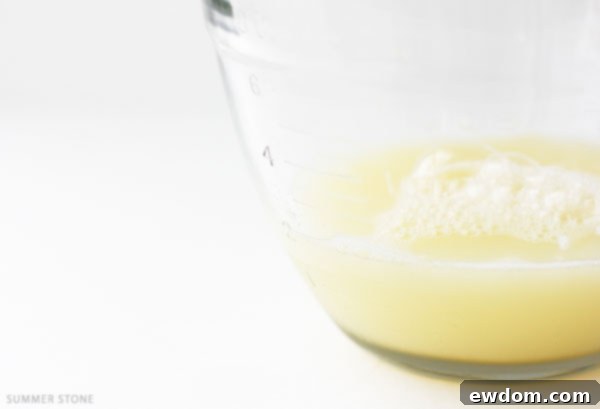
Step 1: The Foundation – Starting with Egg Whites
In this revolutionary SBC method, egg whites play two pivotal, yet distinct, roles. Firstly, they act as a primary liquid component, providing the necessary solvent to dissolve granulated sugar efficiently. Secondly, and often overlooked in traditional discourse, they contribute to the overall structure and stability of the final emulsion, though not by being beaten into an airy foam. Unlike traditional SMBC, where egg whites are laboriously whipped to stiff peaks to incorporate air, this method skips that step entirely. Why? Because those delicate protein-mediated air pockets, while beautiful in a meringue, are inherently unstable when introduced to a significant amount of fat, like butter. When butter is added to a meringue, much of that painstakingly incorporated air is lost, and the meringue often collapses into a syrupy, deflated puddle, undermining the very goal of aeration. For convenience and safety, pasteurized egg whites from a carton work perfectly, but freshly separated egg whites from whole eggs are equally effective.
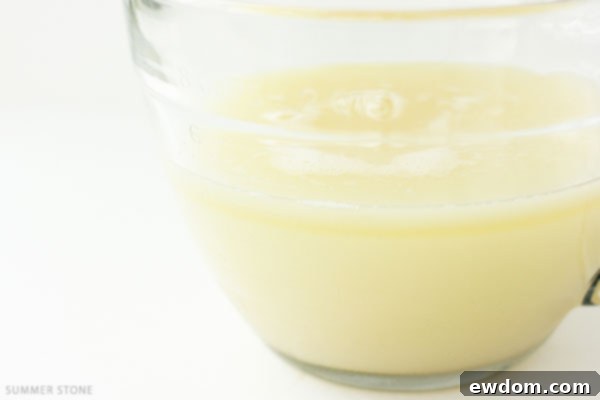
Step 2: Sweetness and Structure – Incorporating Sugar
Beyond its obvious and delightful role as a flavor enhancer, sugar is a critical structural player in our Swiss Buttercream. When dissolved into the egg whites, sugar doesn’t just sweeten; it significantly thickens and stabilizes the liquid. This synergistic sugar-egg combination, when later emulsified with butter, creates a remarkably robust and stable emulsion – far more resilient than any of its individual components could be alone. The sugar acts as a humectant, helping to retain moisture, and contributes to the smooth, luxurious texture we desire in a premium buttercream.
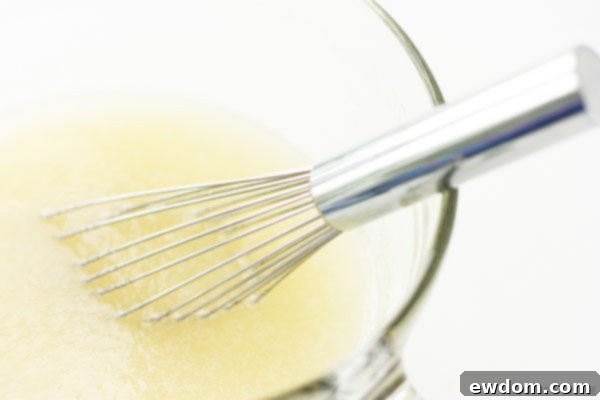
Step 3: Harmonizing Ingredients – Whisking Eggs and Sugar
The egg whites and granulated sugar share a fascinating and beneficial symbiotic relationship in this recipe. The egg whites generously provide the necessary solvent, allowing the sugar crystals to dissolve evenly and thoroughly. In return, the sugar works its magic by weakening the natural tendency of egg white proteins to coagulate prematurely. This interaction ensures the mixture remains in a smooth, liquid state, preventing it from turning into an undesirable “scrambled egg” consistency during the heating process. To maximize these benefits and ensure a flawlessly smooth base for your buttercream, it is crucial to whisk the eggs and sugar together very thoroughly until well combined.
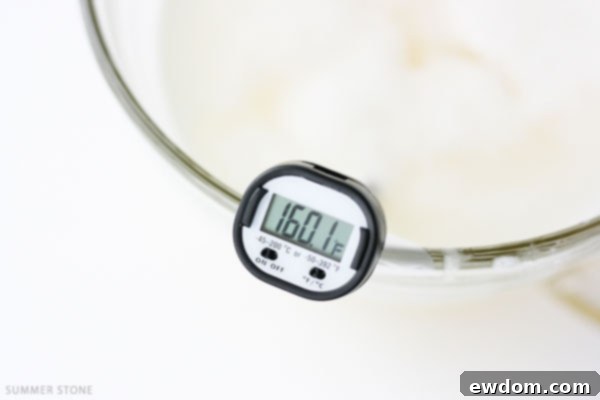
Step 4: The Critical Transformation – Heating the Egg-Sugar Mixture
While egg whites are excellent for dissolving sugar, achieving full dissolution of all sugar crystals, especially at high concentrations, requires the application of heat. This heating step serves several vital purposes. Foremost among them is safety: heating the egg-sugar syrup to a precise temperature destroys any potential harmful bacteria, such as Salmonella, which may be present in fresh egg whites. I highly recommend reaching an internal temperature of 160°F (72°C) to ensure complete pasteurization and food safety. The easiest and most efficient way I’ve found to achieve this is in the microwave, stirring at one-minute intervals. A single recipe batch typically takes between 3-4 minutes. Alternatively, a double boiler over simmering water provides a gentler, more controlled heating method until the safe temperature is reached. At 160°F, all sugar crystals should be fully dissolved, yielding a clear, slightly thickened syrup. To further minimize any chance of recrystallization, I like to incorporate half an ounce of corn syrup into the mixture. This acts as an invert sugar, interfering with the crystallization process. Remember to diligently scrape down and stir in any sugar granules clinging to the sides of the bowl, as even one stubborn, undissolved crystal can “reseed” the entire batch, leading to a grainy texture.
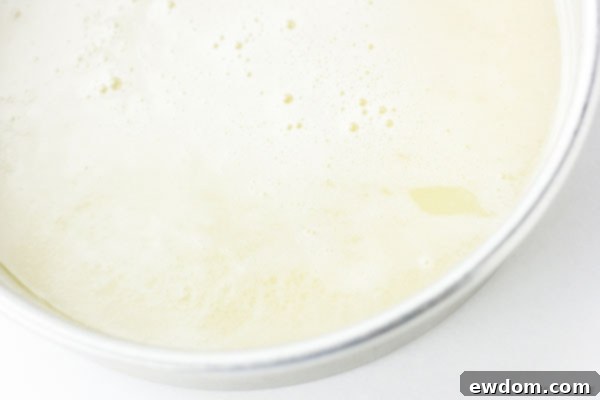
Step 5: Perfecting the Temperature – Cooling the Egg-Sugar Syrup
This step is a crucial differentiator from traditional Swiss Meringue Buttercream and is key to the stability of this method. Once your egg-sugar syrup has reached the desired temperature of 160°F, it needs to be cooled rapidly and thoroughly. I achieve this by pouring the hot syrup into a clean cake pan or a shallow metal bowl and placing it directly into the freezer for approximately 20-30 minutes, or until it reaches a cool to cold temperature range of 45-60°F (7-15°C). The rationale here is simple yet profound: when this cool syrup is introduced to the softened butter (as we’ll see in Step 7), the two components seamlessly emulsify without the risk of “breaking” or curdling. This contrasts sharply with traditional SMBC, where a cold syrup would inhibit meringue formation, forcing bakers to add butter to a room-temperature (or even warm) meringue. This room-temperature blending often places significant stress on the mixture, making the formation of a proper, stable emulsion much more challenging and prone to failure.
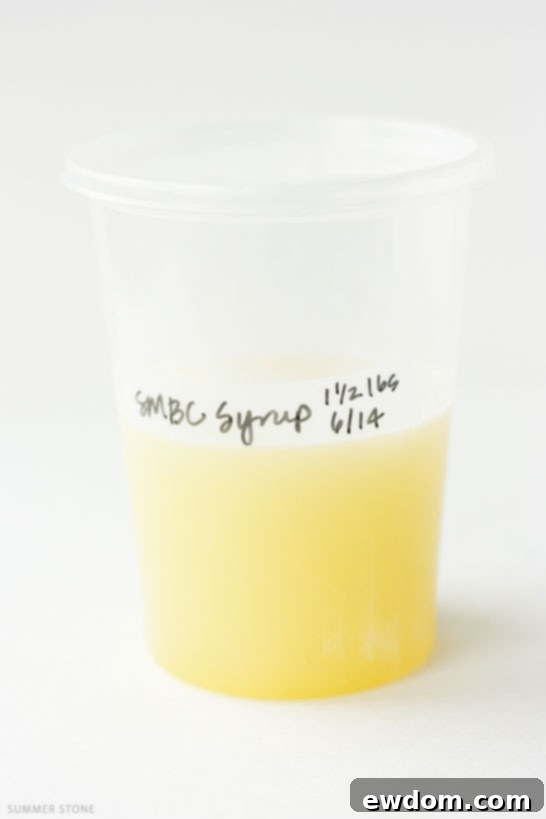
Step 6: Smart Prep – Making Extra Syrup for Future Use
One of the most significant advantages and conveniences of preparing Swiss Buttercream using this no-meringue method is the ability to batch-prepare the egg-sugar syrup. You can easily make large quantities of this foundational syrup and freeze any extra portions for future baking endeavors. This means that next time you need a fresh batch of buttercream, a significant portion of the prep work is already done! Simply thaw and proceed with the remaining steps. In the accompanying photos, I demonstrate this by making a double recipe of the syrup, saving half for a convenient, quick-start batch later on. This prep-ahead capability is a true game-changer for busy bakers and professionals alike.
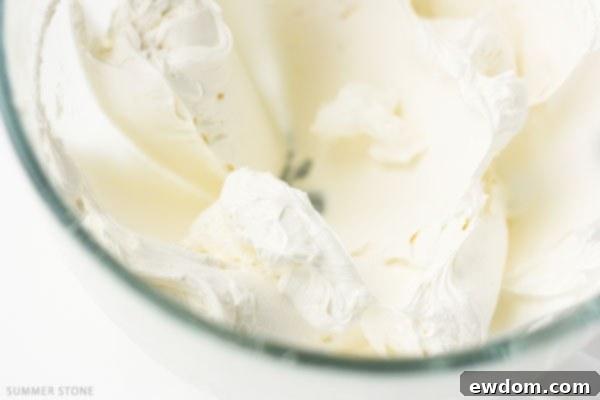
Step 7: The Star of the Show – Beating Butter Until Light and Fluffy
In our No-Meringue Swiss Buttercream, butter truly takes center stage as the emulsification superstar. Given its crucial role, it makes perfect sense to begin by preparing the butter and then gradually incorporating the cooled syrup into it. I start with high-quality unsalted butter that is at a cool room temperature – firm enough to hold its shape but pliable enough to indent easily. By beating the butter on high speed for approximately 2 minutes *before* adding the syrup, we achieve two vital outcomes: the butter lightens significantly in color, and it incorporates air in a structurally sound manner. This aeration within the butter creates a stable matrix, a stark contrast to the fragile, protein-mediated air pockets of a meringue, which often collapse when fat is introduced. The slightly cooler temperature of the butter also aids in forming a robust emulsion.
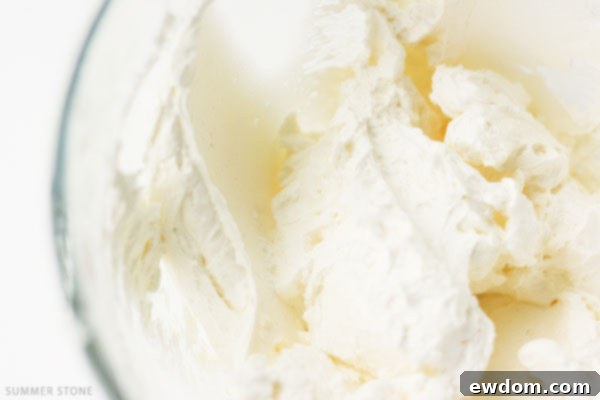
Step 8: Gradual Incorporation – Adding Half of the Sugar Syrup
The success of a stable emulsion often lies in thoughtful, gradual incorporation. Adding half of the cooled egg-sugar syrup at this stage allows the mixer’s mechanical action to work effectively, initiating and developing the emulsion without overwhelming the butter. Introducing too much liquid at once can shock the butter, causing the mixture to “break” or curdle. After adding the first half of the syrup, continue beating for at least one minute on medium-high speed to ensure it is thoroughly incorporated into the aerated butter. The mixture might look slightly loose or curdled at this point, but don’t worry – this is normal and will resolve in the next step.
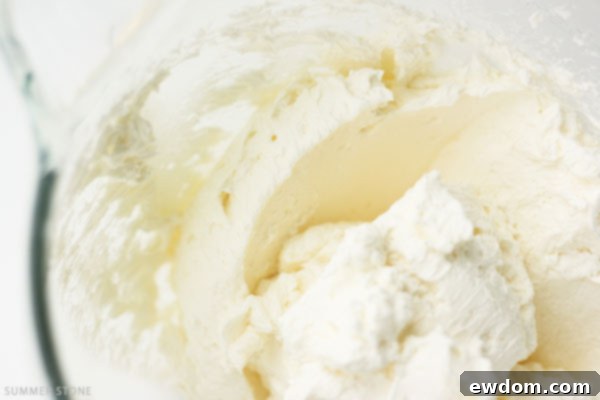
Step 9: Completing the Emulsion – Adding Remaining Syrup
Now, add the second half of the cooled egg-sugar syrup to the butter mixture. Once again, beat the mixture on high speed. This final addition, combined with vigorous mixing, will complete the emulsification process, transforming the mixture from what might have looked curdled into a smooth, cohesive, and beautifully aerated buttercream. Continue beating until the mixture is visibly light, fluffy, and uniform in texture. At this point, your buttercream will likely be quite firm and stable, ready for the final touches.
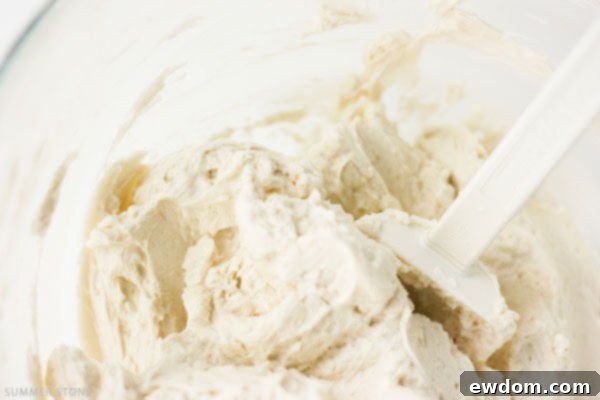
Step 10: Flavor and Customization – Adding Vanilla and Other Liquids
The final stage is where you truly personalize your Swiss Buttercream. Incorporate essential flavorings like vanilla extract. Beyond adding a rich, aromatic depth, these liquid additions also serve to smooth out and lighten the buttercream’s texture, giving it that luxurious mouthfeel. At this stage, your buttercream will be wonderfully firm and stable, perfect for piping intricate designs. If you prefer a creamier buttercream that is slightly less sweet, you have the flexibility to add additional butter – up to another 4 ounces – beating it in gradually until fully incorporated. For those who desire a lighter, airier buttercream with a texture closer to whipped cream, additional liquids can be introduced. Consider adding milk, sour cream, cream cheese, fruit juices, spirits, fruit purees, or even plain cool water. I’ve successfully incorporated up to half a cup of cool water per recipe, achieving a delightfully light consistency. The key is to slowly drizzle in any additional liquid while the mixer is running on medium speed, allowing it to fully integrate without disrupting the emulsion.
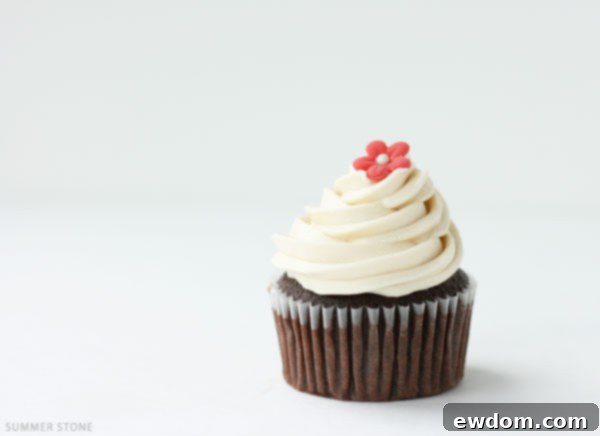
I sincerely hope this revolutionary, no-meringue method for creating a truly exceptional European-style buttercream transforms your baking experience. You’ll discover it’s not only significantly easier but also far more fool-proof and reliable than traditional approaches. Embrace this simpler path to perfectly smooth, stable, and delicious buttercream every single time. Happy baking and decorating!
Effortless Swiss Buttercream: The No-Meringue Recipe
A game-changing recipe by Summer Stone
Ingredients:
- 8 ounces (227 grams) egg whites (from whole eggs or a carton) – approximately 1 cup
- 16 ounces (454 grams) granulated sugar – approximately 2 ¼ cups
- ½ ounce (14 grams) corn syrup – 1 tablespoon (optional, for anti-crystallization)
- 16 ounces (454 grams) unsalted butter, softened but cool (not warm) – 2 cups
- 2 tablespoons (30 milliliters) vanilla extract
Instructions:
- Prepare the Egg-Sugar Syrup: In a microwave-safe bowl, thoroughly whisk together the egg whites and granulated sugar. Ensure the mixture is very well combined, as the sugar acts to protect the egg proteins from cooking prematurely.
- Heat the Syrup: Heat the mixture in the microwave on high for 2-4 minutes, stopping and whisking well after every 30-second interval. Continue heating until all the sugar is dissolved and the mixture reaches an internal temperature of 160°F (72°C). (As an alternative, this step can be done over a double boiler set over simmering water, stirring constantly until the desired temperature and clarity are achieved).
- Cool the Syrup: Carefully pour the hot syrup into a clean, shallow metal bowl or cake pan. Place it in the freezer for 20-30 minutes, or until it has cooled to a temperature between 45-60°F (7-15°C).
- Aerating the Butter: While the syrup chills, place the softened, cool butter into the bowl of a stand mixer fitted with the paddle attachment. Beat the butter on high speed for 2 minutes until it becomes noticeably lighter in color and well-aerated.
- Incorporate the Syrup: With the mixer running on medium-high speed, gradually add half of the cooled egg-sugar syrup to the butter. Beat for 1 minute until partially incorporated.
- Complete the Emulsion: Add the remaining half of the syrup and continue beating on high speed for several minutes until the mixture transforms into a smooth, fluffy, and fully emulsified buttercream.
- Flavor and Finish: Add the vanilla extract and beat for an additional 30 seconds until completely smooth and evenly flavored.
Your No-Meringue Swiss Buttercream is now ready to use immediately for all your decorating and filling needs!
Storage Guidelines:
This incredibly stable buttercream offers excellent storage flexibility. It can be stored at cool room temperature (up to 70°F/21°C) for up to 2 days. For longer storage, transfer the buttercream to an airtight container and refrigerate for up to 2 weeks. For extended preservation, it can be frozen for up to 2 months. When ready to use, simply thaw to room temperature and re-whip briefly until light and fluffy again.