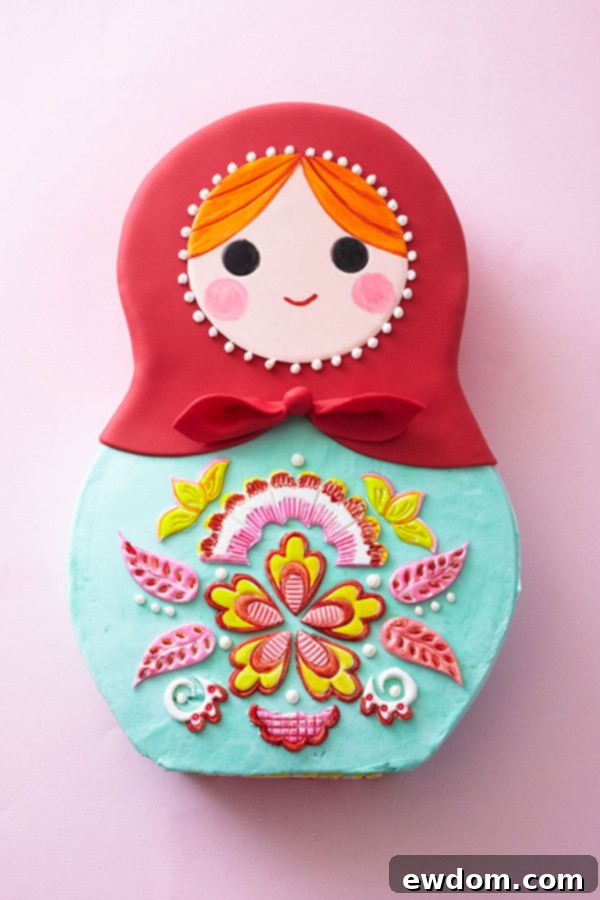
Russian Nesting Doll Cake: A Step-by-Step Guide to Crafting a Folk Art Masterpiece
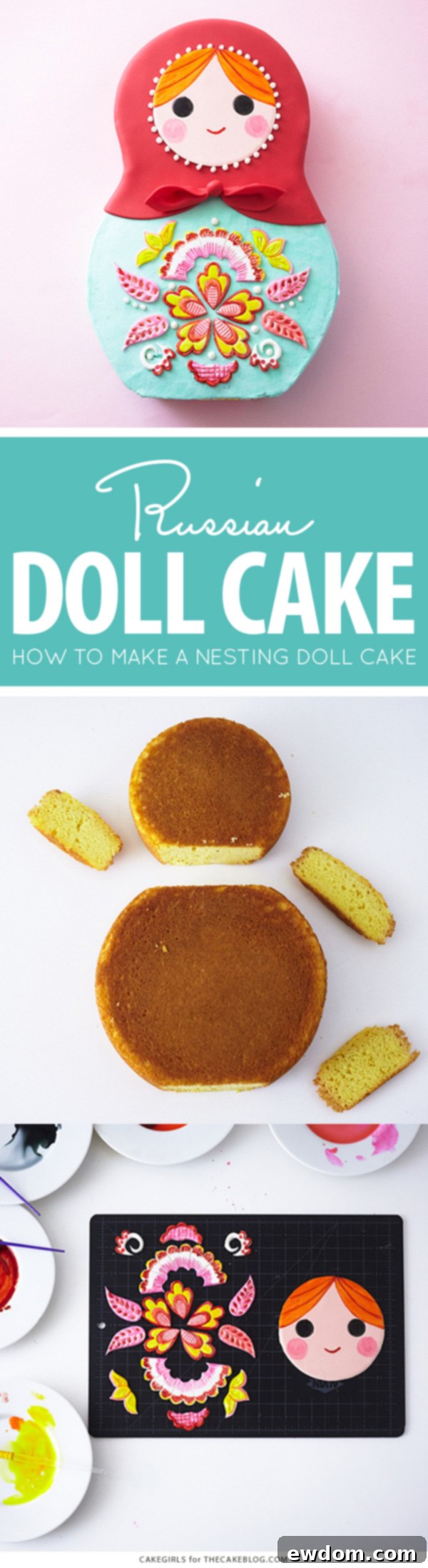
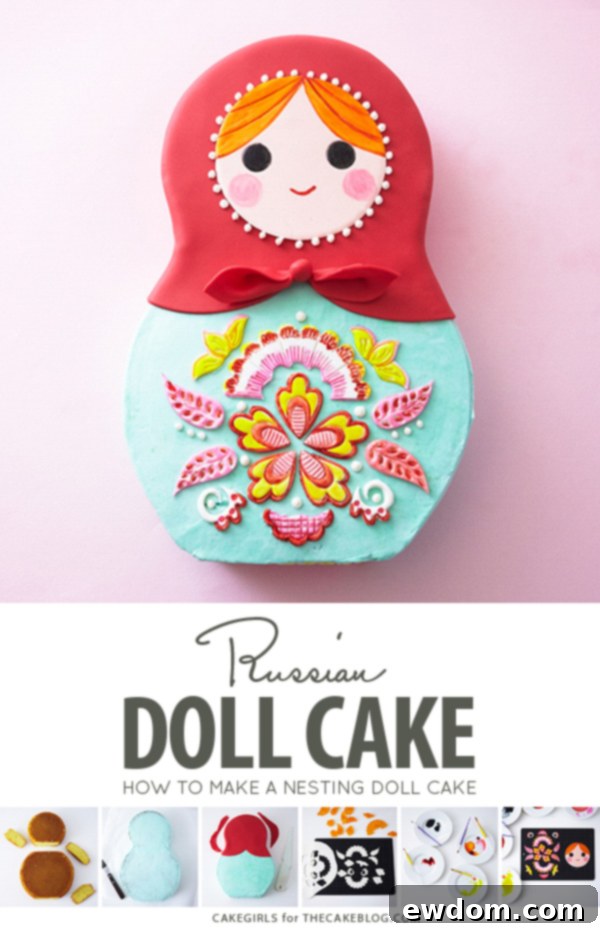
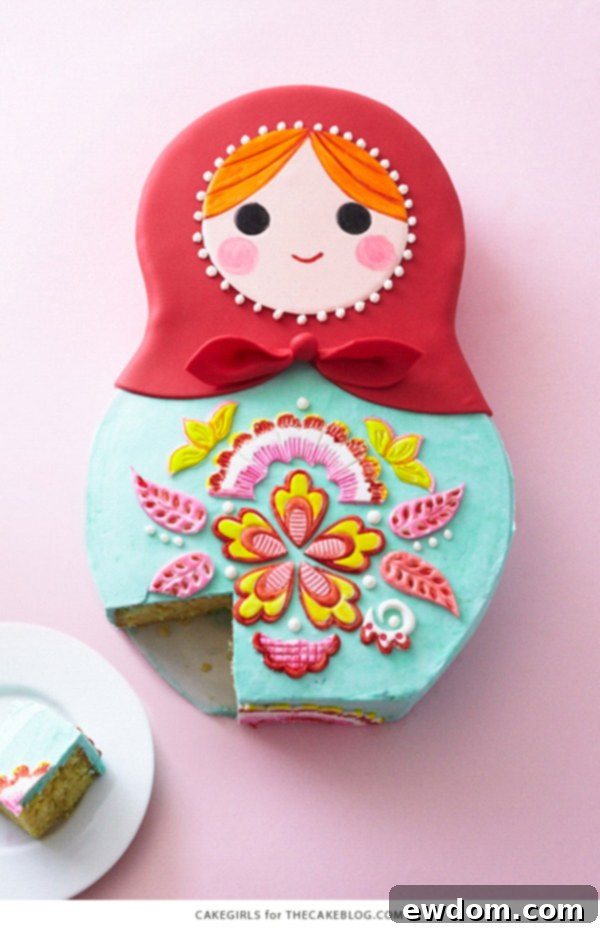
Welcome to a delightful journey into the world of creative cake decorating! In this comprehensive tutorial, Mary and Brenda Maher of Cakegirls guide you through creating an enchanting Russian Nesting Doll Cake. This adorable, folk art-inspired confection, featuring beautiful watercolor painted details, is not just a dessert; it’s a centerpiece that tells a story. Perfect for baby showers, birthdays, or any special occasion, this unique Matryoshka doll cake blends traditional charm with modern design, making it an unforgettable edible art piece. Get ready to impress your guests with a cake that’s as meaningful as it is delicious.
The Inspiration Behind the Matryoshka Doll Cake
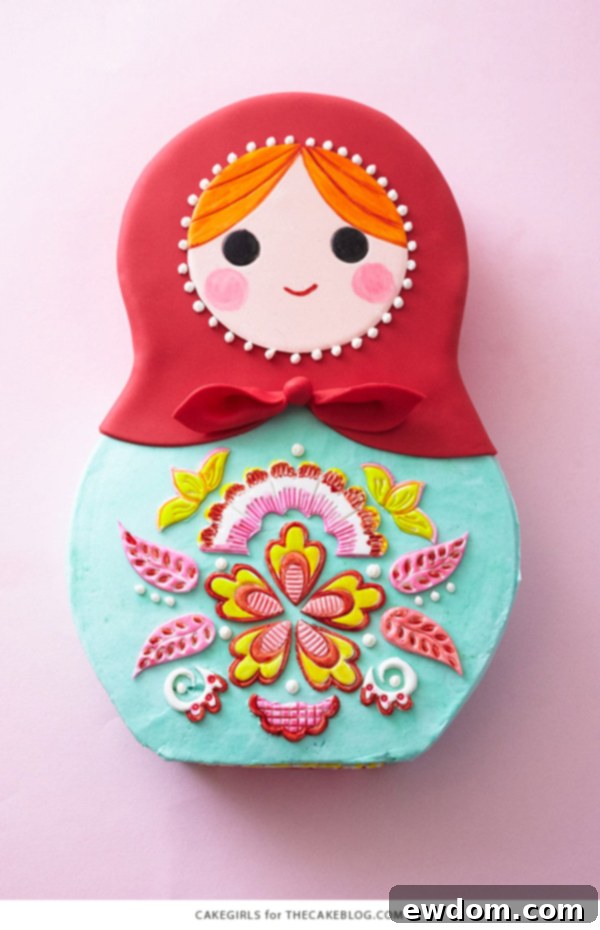
During our years running a bustling cake shop, baby shower cakes consistently topped our sales charts. It might seem surprising, but we found that these occasions often inspire people to go all out. A baby shower isn’t just a celebration of a new life; it’s a cherished opportunity to make the mother-to-be feel incredibly special and showered with love. While classic themes like duckies remain timeless, the world of baby shower cakes has evolved dramatically, embracing more imaginative and personalized designs. Modern parents-to-be often seek cakes that are not only delicious but also reflect their unique style and the anticipation of their little one.
This vibrant, punchy, and deeply symbolic Russian Nesting Doll Cake offers the perfect modern twist for such a momentous event. The Matryoshka doll, with its charming layers of dolls nestled within each other, serves as a clever and heartwarming nod to pregnancy and the blossoming family. It beautifully symbolizes the layers of love, protection, and new life. The graphic details and bold color scheme elevate the design, ensuring the cake is both playful and sophisticated. It’s a design that truly captures attention and sparks conversation, moving beyond conventional themes to celebrate new beginnings with unique artistry and a touch of whimsy. This cake isn’t just a dessert; it’s a piece of edible storytelling.
Crafting Your Folk Art Masterpiece: Design Elements
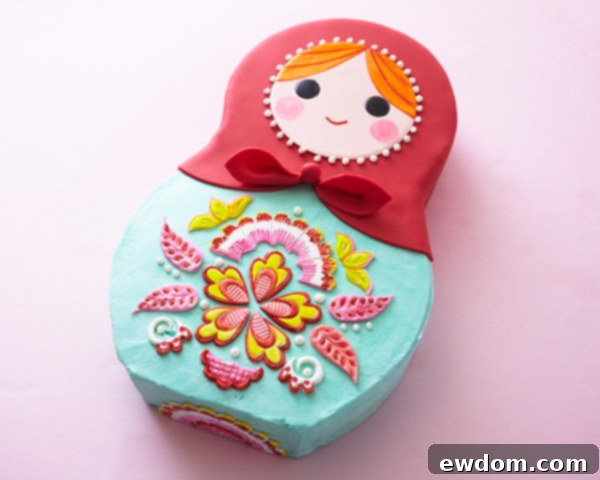
To achieve the distinctive, beloved shape of our Matryoshka doll, we began with standard round cake pans. Through careful trimming and shaping, these everyday layers are transformed into the characteristic silhouette of the nesting doll, providing a stable yet elegant base. Instead of the traditional, often subdued pink and blue color schemes, we opted for a bold and fresh palette, giving this classic concept a truly contemporary and eye-catching edge. The vibrant hues we chose enhance the folk art appeal, making the cake pop with personality.
The cake itself is expertly coated in smooth, crusting buttercream, creating a pristine and stable canvas for the intricate decorative details that follow. The magic of the folk art design truly comes alive with the help of a specialized fondant cutter set. This indispensable tool simplifies the creation of delicate patterns and intricate shapes, transforming what might seem like complex designs into easily manageable steps. But what truly makes this cake special and unforgettable is the opportunity for personalization. By subtly customizing the doll’s facial features—perhaps matching hair or eye color to the future parents, or incorporating a cultural motif—you can create a deeply personal and touching tribute. This thoughtful touch elevates the cake from a beautiful dessert to a cherished keepsake, one that will undoubtedly capture the hearts of every guest at your celebration and make the mother-to-be feel truly seen and celebrated.
RUSSIAN NESTING DOLL CAKE: A Detailed Step-by-Step Tutorial
A comprehensive guide by Cakegirls
Supplies You’ll Need:
- Cake Base: 6″ and 8″ Single Layer Cakes (baked, leveled, and thoroughly cooled). Using a sturdy cake recipe is recommended.
- Icing: Basic Crusting Buttercream Icing (a generous batch, as it’s used for both icing and piping details).
- Fondant:
- Red Rolled Fondant (approximately 8 oz, for the headscarf and bow).
- White Rolled Fondant (approximately 8 oz, for appliques and skin tone).
- Tools for Decoration:
- Floral Applique Folk Art Cutter Set (essential for intricate patterns).
- Food Safe Paintbrushes (various sizes, including fine-tipped for detail work).
- Small Spatula or Icing Smoother (for achieving a perfectly smooth buttercream finish).
- Rolling Pin (for fondant).
- Large Can (well cleaned) or a 4″ Round Cutter (for the doll’s face).
- Carving Tool or Toothpick (for delicate markings).
- Piping Tip (small round tip for eye markings and piping dots).
- Coloring & Adhesives:
- Assorted Gel Food Coloring (red, pink, orange, yellow, green, light blue, black – for painting and tinting fondant).
- Clear Alcohol (e.g., vodka, gin) or Clear Extract (e.g., lemon, vanilla) for mixing watercolor paints. These evaporate quickly, leaving no taste.
- Powdered Sugar (for dusting fondant to prevent sticking).
- Water (for attaching fondant pieces).
Step 1: Prepare Your Cake Layers for Shaping
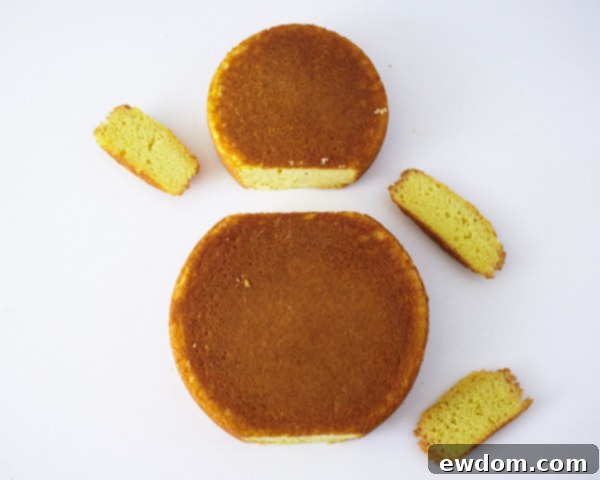
Begin by baking your 6″ and 8″ single-layer cakes according to your favorite reliable recipe. Ensure they are completely cooled before proceeding. For optimal handling and a perfectly smooth finish, we highly recommend wrapping your cooled cakes tightly in plastic wrap and freezing them for at least a few hours, or ideally, overnight. A firm, frozen cake is significantly easier to trim and ice without crumbling or deforming.
Once chilled, carefully trim the bottom edge of your 6″ cake layer and both sides of your 8″ cake layer. The objective here is to create flat, stable surfaces on each cake. These trimmed edges will allow the layers to sit flush against each other when stacked, forming the foundational, rounded shape of the nesting doll’s body and head. Precision in this step is key for a symmetrical doll shape.
Step 2: Crumb Coat and Ice the Cake Base
Now, let’s bring vibrant color to your cake’s base. Tint approximately two-thirds of your basic crusting buttercream icing to a beautiful aqua shade. Achieve this by mixing a small amount of blue gel paste food coloring with an even smaller touch of green gel paste until you reach your desired hue. Reserve the remaining one-third of your buttercream as plain white for later details.
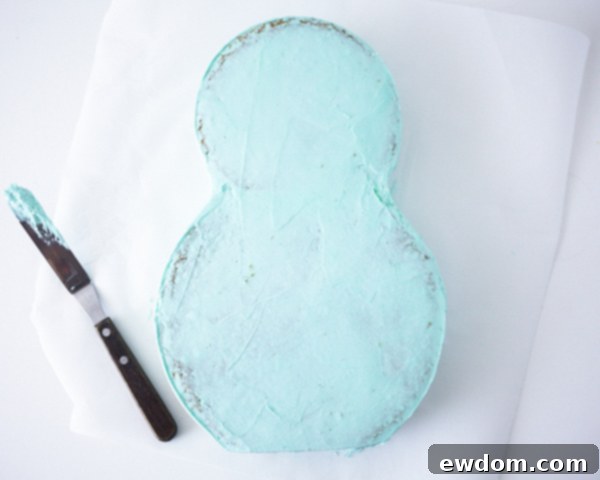
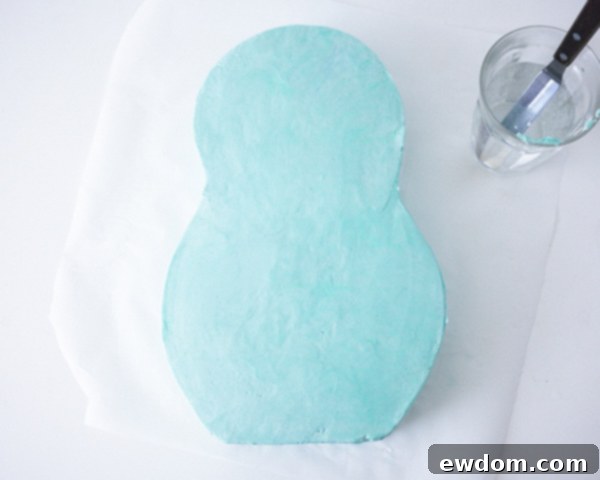
Apply a thin, even crumb coat to your prepared, shaped cake. This initial, foundational layer is crucial for sealing in any loose cake crumbs, creating a clean and smooth surface for your final icing. Once the crumb coat has set slightly, proceed to apply a thicker, uniform layer of the aqua buttercream over the entire cake. For an exceptionally smooth and professional finish, dip your small spatula or icing smoother into very hot water, shake off any excess liquid, and then gently glide it over the buttercream. The heat from the spatula will slightly melt the butter on the surface, allowing you to achieve a remarkably flawless and streak-free exterior.
After successfully icing the cake, carefully transfer it to the refrigerator and allow it to chill for at least one hour. This vital step ensures the buttercream firms up completely, providing a solid foundation and preventing any smudges or damage when you begin applying the delicate fondant decorations.
Step 3: Drape the Red Fondant Headpiece
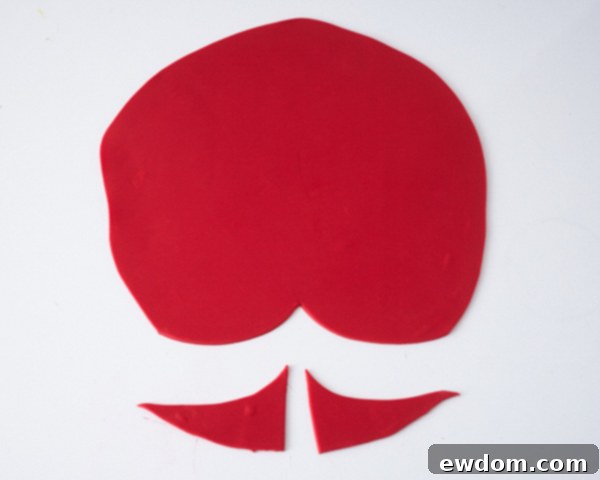
Take your vibrant red fondant and roll it out evenly into a large, thin circle. Aim for a thickness of approximately 1/8″; this ensures the fondant drapes beautifully and gracefully over the cake without appearing bulky. Rolling it thinly also provides you with sufficient excess fondant for crafting the decorative bow tails later. With precision and a steady hand, use a sharp knife or a specialized scalloped cutter to create an attractive scalloped edge along the bottom perimeter of this red fondant circle. This intricate edge will form the distinctive lower border of the doll’s headscarf.
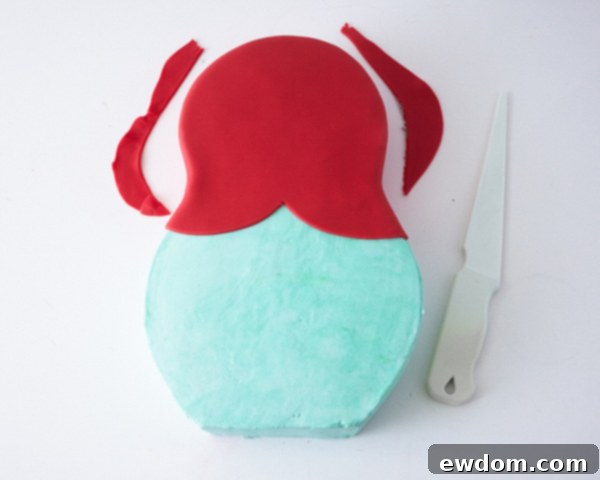
Once prepared, gently and carefully drape the red fondant over the top “head” portion of your chilled cake. Take your time to meticulously smooth it over the rounded edges with your hands, working out any air bubbles or wrinkles to achieve a seamless finish. The cold buttercream underneath will help the fondant adhere smoothly. After it is perfectly positioned and smoothed, use a sharp paring knife or a pizza cutter to neatly trim any excess fondant at the base of the cake, creating a crisp, defined line where the red headpiece meets the aqua body of the doll.
Step 4: Fashion the Elegant Fondant Bow
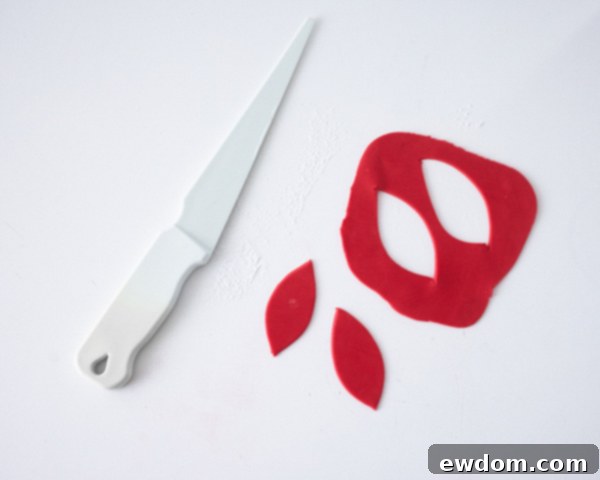
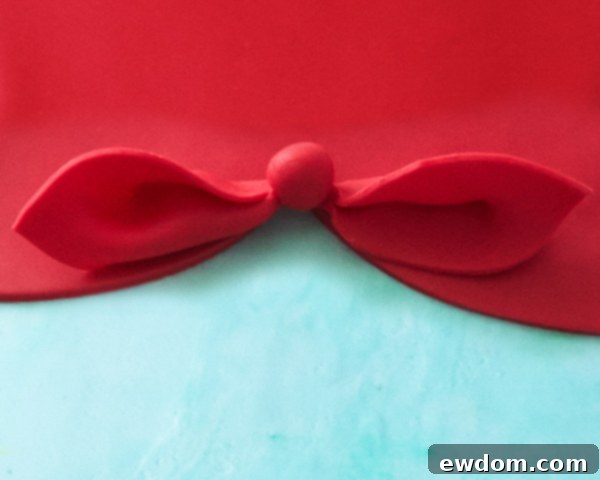
Utilizing the excess red fondant from the previous step, roll it out again to a consistent thinness. From this rolled fondant, cut two symmetrical leaf shapes, each measuring approximately 2 1/2″ in length. These meticulously cut pieces will form the graceful “tails” of your doll’s charming bow. To imbue them with a lifelike dimension and gentle curve, gently pinch one end of each leaf shape, creating a subtle fold. Apply a tiny dab of water to the back of each pinched end; this acts as a light adhesive. Carefully attach these shaped pieces to the cake, positioning them strategically on the headscarf to beautifully resemble a charming, flowing bow. For the perfect finishing touch, roll a small, smooth ball of red fondant and gently attach it to the center where the two leaf shapes converge, elegantly completing the entire bow detail.
Step 5: Prepare the Doll’s Face Component
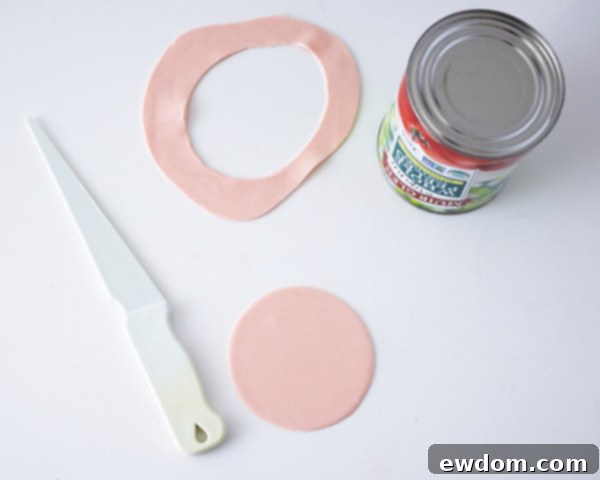
Take a portion of your remaining white fondant and tint it to a soft, natural flesh color. This can be delicately achieved by incorporating a mere touch of pink gel food coloring, followed by an even smaller touch of yellow gel. Mix these colors thoroughly and knead the fondant until a smooth, uniform skin tone is achieved. Next, roll out this flesh-colored fondant to an even thickness and precisely cut a perfect 4″ circle. If you do not possess a specific 4″ round cutter, a thoroughly cleaned large can of tomatoes, tuna, or any similar cylindrical object with a 4″ diameter can serve as an excellent and effective guide for cutting. Carefully set this perfectly cut circle aside; this piece will meticulously become the doll’s expressive face, ready for further detailing.
Step 6: Cut and Prepare Intricate Fondant Appliques
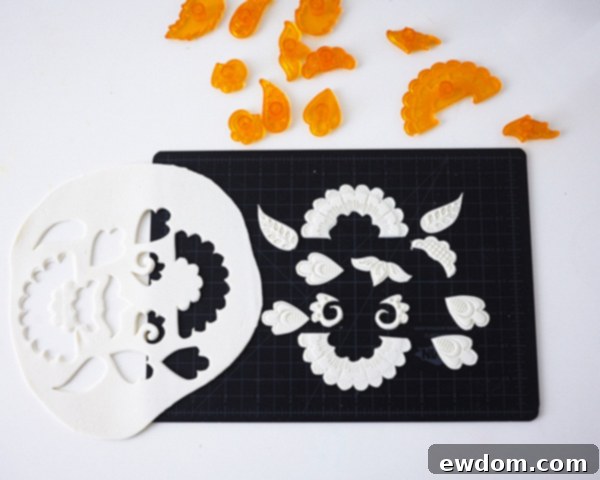
Now, let’s move on to creating the intricate folk art details that will truly bring your doll cake to life! Roll out the rest of your white fondant to a consistent and even thinness. This ensures the appliques are delicate and lay flat. Utilize your Floral Applique Folk Art Cutter Set to cut out a variety of decorative pieces. These specialized cutters are designed to produce beautiful, intricate patterns that will gracefully adorn the doll’s “belly” and complement the headscarf. Experiment with different shapes and sizes from the set to create a rich, varied design.
Essential Tips for Achieving Clean Fondant Cuts:
- Maintain Thinness: It is paramount to always roll your fondant fairly thin. Fondant that is thicker than the depth of your cutter will not cut cleanly, often resulting in jagged or incomplete edges. A thickness of approximately 1/16″ to 1/8″ is ideal for most applique cutters.
- Eliminate Stickiness: Ensure the surface of your fondant is completely free of stickiness. Lightly dust both sides of the rolled fondant with a fine coating of powdered sugar. Then, gently brush off any excess with a clean, dry hand. This creates a slightly chalky, non-stick surface that is absolutely ideal for clean, crisp cuts and prevents the fondant from adhering to the cutter.
- Press, Wiggle, and Lift: To achieve the sharpest, most defined edges, press the cutter firmly and evenly into the fondant. While maintaining firm pressure, gently shake the cutter back and forth or wiggle it slightly on the cutting surface. This subtle movement helps to fully separate the cut piece from the surrounding fondant. Finally, lift the cutter and carefully remove the piece. This precise technique will yield much cleaner and more professional results.
Step 7: Arrange Appliques and Mark Face Details
Once you have a beautiful collection of your meticulously cut applique pieces, carefully lay them out on a clean surface to organize a preliminary pattern. This crucial step allows you to visualize the final design, experiment with different arrangements, and ensure that all pieces fit harmoniously on the doll’s body. Next, retrieve your flesh-colored fondant circle, which is destined to become the doll’s face. Using a fine carving tool or a simple toothpick, delicately create subtle indentations or markings for the doll’s hair. These small, guiding marks will serve as essential reference points for the subsequent painting stage. For the doll’s eyes, we discovered that pressing the bottom of a piping tip (a small round one works best) into the fondant creates perfectly uniform and symmetrical circular markings, making the painting of the eyes much easier and more precise.
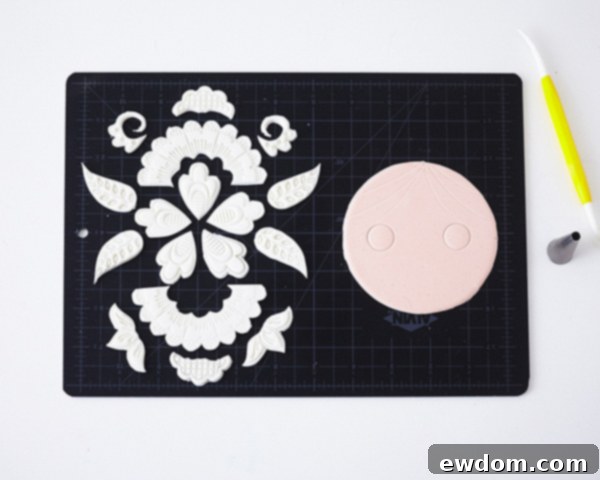
Step 8: The Art of Watercolor Painting
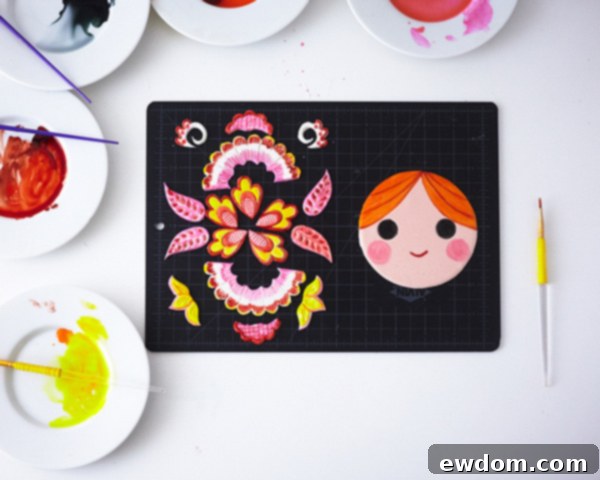
Now, let’s prepare your food-safe paints to achieve a beautiful watercolor effect. In a small cup or on a plate, place a single drop of your chosen gel food coloring. To this, add several drops of clear alcohol (such as vodka or gin) or clear extract (like lemon or vanilla extract). Swirl the two ingredients together gently until you achieve a smooth, watercolor-style paint consistency. The alcohol is preferred because it evaporates rapidly, leaving behind vibrant color without making your fondant soggy or sticky. Before applying any paint to your main design, always test your mixed color on a small, excess piece of fondant. This allows you to verify that the color is the exact shade and translucency you desire, preventing any unwanted surprises.
For our specific design, we employed a warm and inviting palette of red, pink, and yellow to meticulously paint the intricate floral applique pieces, bringing out their delicate details. For the doll’s face, we utilized a soft orange gel for a gentle, rosy blush on the cheeks, precise black gel for defining the eyes and eyebrows, and a touch of cheerful pink for the lips, collectively breathing life and personality into the character.
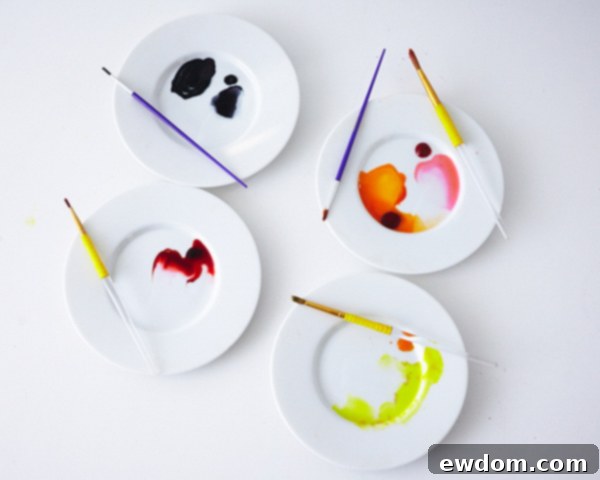
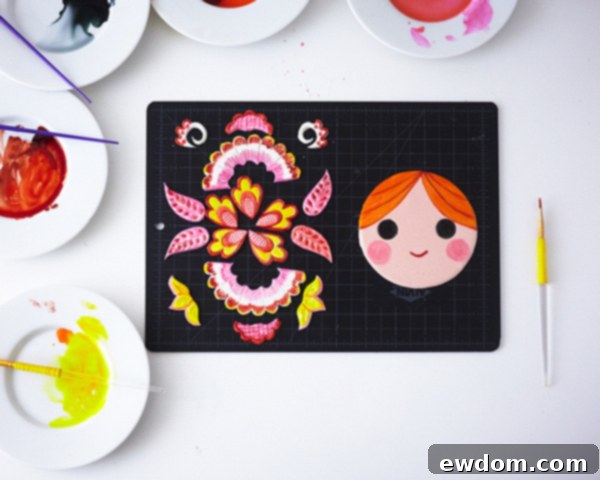
Step 9: Final Assembly and Decorative Finishing Touches
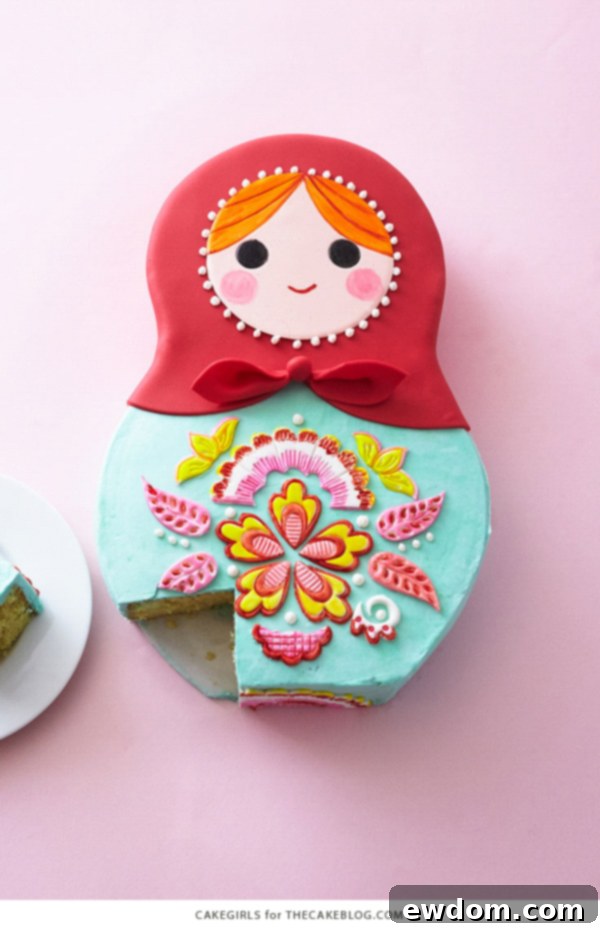
Carefully attach the intricately painted, flesh-colored face circle to the red fondant headpiece of the cake. A very light coating of water applied to the back of the fondant face piece will act as a gentle, yet effective, adhesive, ensuring it sticks securely without causing any damage or distortion to your delicate work. Next, it’s time to arrange your beautifully painted floral applique pieces onto the “belly” of the doll. This is where your creativity truly shines! Don’t be afraid to improvise and adapt; in our experience, sometimes a meticulously planned pattern might not quite fit perfectly in practice, and adjusting pieces on the fly is a natural and often necessary part of successful cake decorating. Shift, overlap, and play with the arrangement until you achieve a balanced, harmonious, and aesthetically pleasing design. Use a tiny dab of water on the back of each applique piece to secure it firmly in place.
To add a final, exquisite touch of charm and texture, take any leftover white buttercream and load it into a piping bag fitted with a small round tip. Carefully pipe small, delicate dots. Create a lovely, continuous border of dots around the doll’s face, enhancing its frame. Additionally, strategically add a few dots within the intricate floral applique pattern to further enhance its visual appeal and add subtle dimension. These small, thoughtful details will add depth, a touch of elegance, and a truly professional finish to your folk art masterpiece, making it truly stand out.
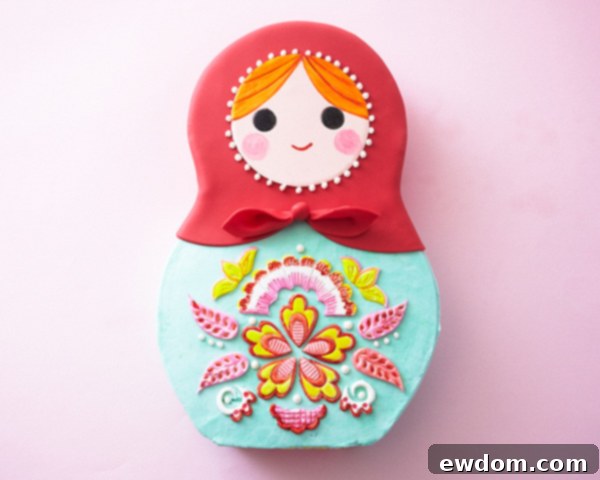
Tips for an Even More Stunning Russian Nesting Doll Cake
- Plan Your Design Thoroughly: Before you even begin cutting or painting any fondant, it’s immensely helpful to sketch out your desired facial features, hair style, and the precise placement of your applique pieces. This pre-visualization helps you solidify the final look, anticipate potential challenges, and significantly minimizes the need for on-the-fly adjustments.
- Work in a Cool Environment: Fondant is highly sensitive to heat and humidity. It can quickly become sticky, soft, and extremely difficult to work with in warm, humid conditions. If possible, ensure you work in a cool, dry room to keep your fondant pliable but firm.
- Patience is Key to Perfection: Do not rush any part of this intricate process, especially when you are smoothing fondant, making delicate cuts, or painting fine details. Taking your time, step by step, will undoubtedly result in a much cleaner, more refined, and ultimately professional-looking finish for your cake.
- Unleash Your Creativity with Customization:
- Personalize Hair & Eyes: Make the doll truly unique by changing the hair color, hair style, or eye color to directly match the parents-to-be or even the baby’s expected features. This personal touch will resonate deeply.
- Vary Dress Patterns & Colors: Experiment boldly with different colors and patterns for the fondant appliques. You aren’t limited to one set of cutters; explore using different folk art cutter sets, or even try freehand cutting simple designs for a truly unique and artistic look.
- Incorporate Cultural Touches: If the baby shower has a specific cultural theme or family heritage, consider incorporating relevant motifs, patterns, or colors that are significant to that background into the doll’s dress or headscarf.
- Scale for Impact: While this tutorial focuses on a single doll, you could adapt the concept to create a set of progressively smaller nesting doll cakes for an even grander, more impactful display on a dessert table.
- Practice Makes Perfect for Painting: If you are new to the art of food painting, we highly recommend practicing on small scraps of leftover fondant first. This allows you to gain a comfortable feel for the consistency of your mixed paint and understand the appropriate pressure needed for different brush strokes before committing to your final design.
Conclusion: Your Masterpiece Awaits!
Your exquisite Russian Nesting Doll Cake is now triumphantly complete! Take a moment to step back and truly admire your stunning creation – it’s a magnificent testament to your creativity, patience, and meticulous attention to detail. This unique cake, with its heartwarming symbolism of new life and its intricate folk art details, is absolutely destined to be the undisputed star of any baby shower or celebration. It’s far more than just a dessert; it’s a memorable piece of edible art designed not only to delight and impress but also to evoke wonder and joy.
Get ready for an outpouring of compliments and eager anticipation as your guests marvel at this beautifully crafted cake before it’s joyfully and lovingly devoured. Enjoy every single moment of sharing this incredibly special and meaningful treat, knowing you’ve created something truly extraordinary. We can’t wait to see your unique Russian Nesting Doll Cake creations!
YOU MAY ALSO ENJOY:
- Baby Rattle Cake Pops
- Giant Donut Cake
- Pirate Skull Birthday Cake
- Fairytale Ruffle Cake
- Cupcake Terrarium