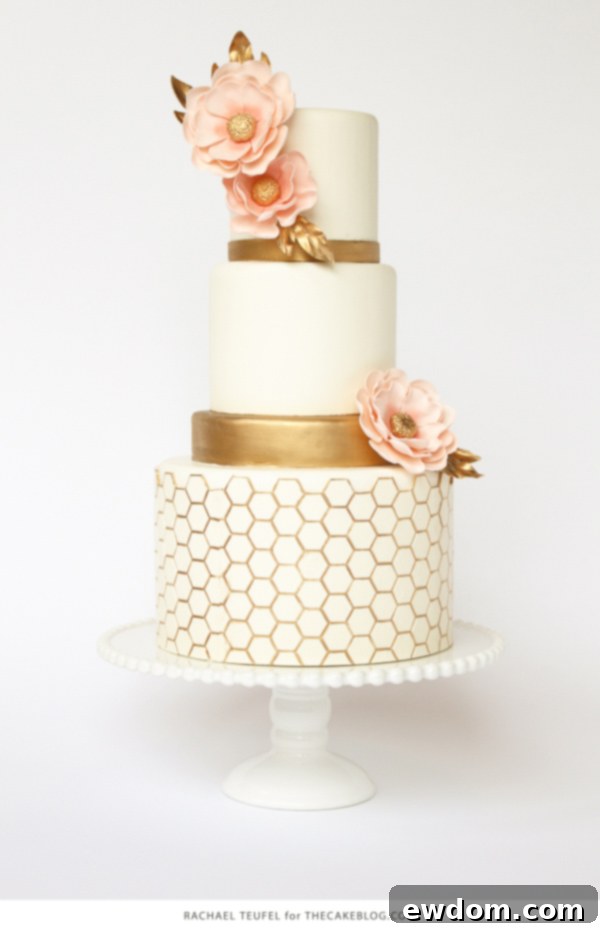
Welcome back to our exclusive Design Tips series, where we delve into the fundamental principles that transform ordinary cakes into extraordinary edible masterpieces. Today, we’re thrilled to host Rachael Teufel, the visionary behind Intricate Icings Cake Design, as she guides us through the crucial concepts of proportion and scale in cake artistry. Rachael’s expertise in creating breathtaking custom cakes makes her the perfect mentor to illuminate these often-overlooked design elements. Prepare to revolutionize your approach to cake decoration as we explore how these principles can elevate your creations to new heights of sophistication and visual impact.
Mastering Proportion and Scale in Cake Design
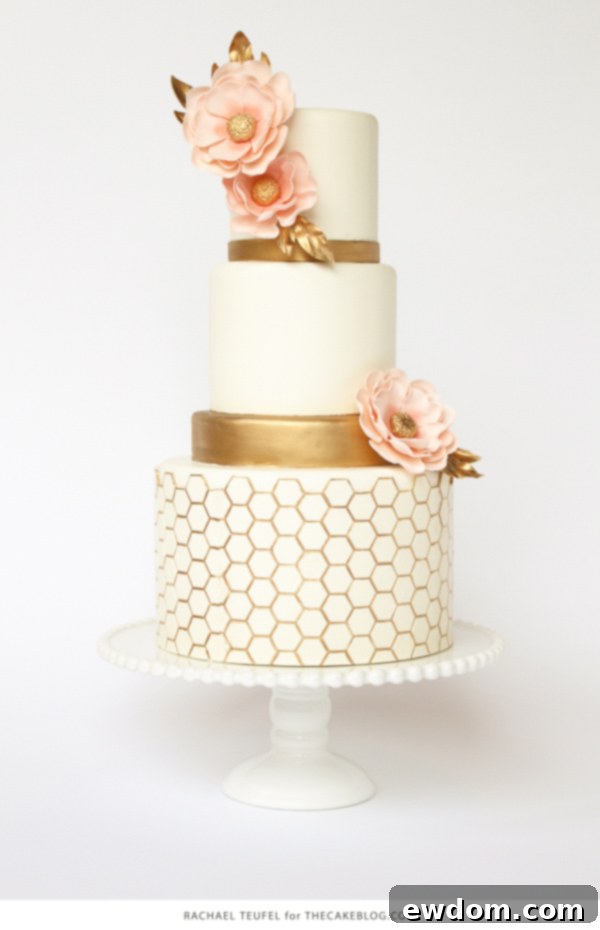
Over the past few months, we’ve explored essential design principles such as inspiration, balance, and movement. These elements form the bedrock of compelling visual design, and today, we continue our journey by tackling two equally vital concepts: proportion and scale. Using my elegant gold honeycomb cake as a prime example, along with illustrative sketches, we’ll uncover how understanding these principles can dramatically enhance your cake designs. Let’s begin by defining these terms and then apply them directly to the art of cake creation, starting with proportion.
Understanding Proportion in Cake Artistry
At its core, proportion refers to the harmonious relationship between various elements within a design, typically assessed by their relative size and quantity. In cake design, this principle is paramount. It dictates how different parts of your cake—from the height and width of individual tiers to the size and arrangement of decorative elements—interact with each other. A well-proportioned cake feels balanced and aesthetically pleasing, guiding the viewer’s eye naturally to key features.
Defining Proportion: The Harmony of Elements
When we talk about proportion, we’re considering how the dimensions of one component relate to the dimensions of another, and to the whole. For instance, think about a multi-tiered cake. Is the bottom tier appropriately wider than the one above it? Are the decorative sugar flowers sized correctly in relation to the tier they adorn? Achieving good proportion means every element feels like it belongs, creating a cohesive and visually satisfying structure. It’s not just about absolute size, but about the *relationship* of sizes. This subtle interplay of dimensions can attract attention to a focal point, ensuring your desired element truly stands out.
Practical Application: Crafting Visually Balanced Cakes
Consider the architecture of a cake. Whether it’s the classic stacked tiers or a more avant-garde sculpture, the way height, width, and depth are distributed is critical. A tier that is too tall for its diameter might look unstable, while one too short could appear squat. Similarly, small details on an expansive tier can get lost, just as overly large decorations on a petite tier can overwhelm it. Mastering proportion allows you to consciously manipulate these relationships to create designs that are not only beautiful but also structurally sound and visually harmonious. This principle applies to every aspect, from the spacing of edible pearls to the size of a hand-painted motif. Understanding proportion helps you make deliberate choices that lead to breathtaking results, ensuring that every piece of your cake contributes to its overall elegance and impact.
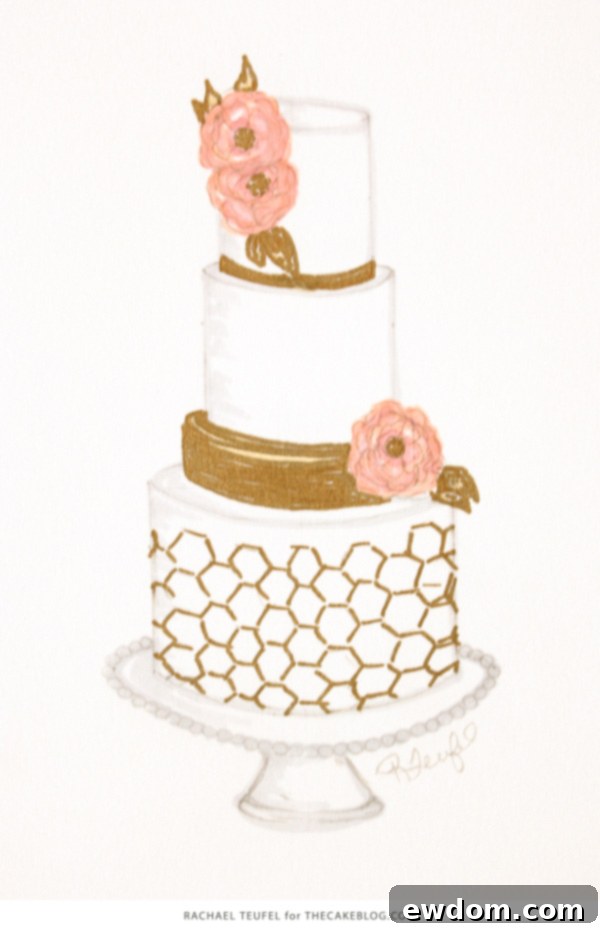
To vividly illustrate these concepts, I’ve prepared a series of sketches. In the first sketch, you’ll observe a traditional tiered cake featuring uniform 4-inch tall tiers. Here, the solid gold tier immediately becomes the central focal point, thanks to its bold, eye-catching color that naturally draws the viewer’s gaze. This demonstrates how even with uniform proportions, a strong color contrast can be effectively used to establish focus.
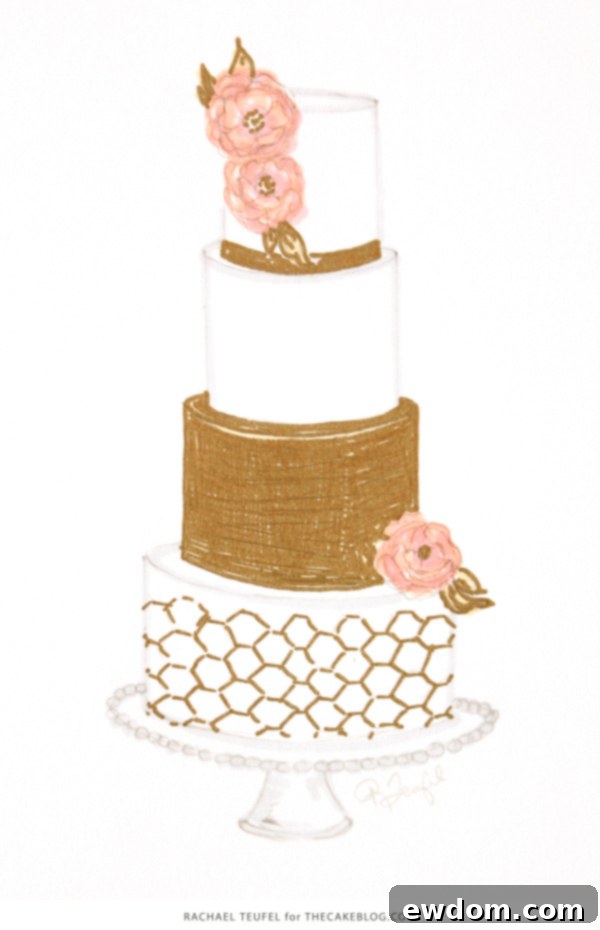
The next sketch presents a more contemporary layout, showcasing a thoughtful variation in tier heights (specifically 4×4, 5×4, 6×1, and 8×5 inches). In this innovative design, the solid gold tier is intentionally reduced in height. Consequently, the intricate honeycomb pattern, now spanning the tallest tier, transforms into the new primary focal point. This simple yet effective alteration in tier heights profoundly changes the cake’s visual hierarchy, proving that dynamic proportion can shift emphasis and create entirely new visual narratives, even when utilizing the same decorative elements.
Exploring Scale in Cake Design
Now, let’s shift our focus to scale. While often confused with proportion, scale refers specifically to the size of an object in relation to another object, or more broadly, in relation to human perception and familiar objects in the natural world. We instinctively perceive scale based on our experiences, and when elements are intentionally designed to be “larger than life” or unusually small, scale is being masterfully employed to create drama, whimsy, or a striking visual effect.
Defining Scale: Relative Size and Visual Impact
Scale is about context. A sugar flower that might seem normal on a small cupcake would appear enormous and dramatic on a standard cake tier if its dimensions were exaggerated. Conversely, an intricately detailed miniature scene on a large cake can create a sense of preciousness and surprise. The deliberate manipulation of scale can evoke strong emotions and challenge viewer expectations. This can be powerfully demonstrated by using a gigantic sugar flower that dramatically spans several tiers of a cake, commanding immediate attention and creating a fantastical element. Another fantastic example is seen in some of Mike McCarey’s iconic bobblehead cakes, where the enlarged heads of figurines create an unmistakable sense of playful exaggeration and character.
Creating Drama and Emotion with Scale
Thinking about scale allows you to tell a story with your cake. Do you want to convey grandeur? Exaggerate the size of your central motif. Aiming for delicate elegance? Introduce a cluster of finely detailed, smaller elements that draw the viewer closer. Scale is a powerful tool for conveying a cake’s personality and message, adding depth and intrigue beyond mere decoration. It challenges the viewer to look beyond the obvious, creating a truly memorable experience. This deliberate choice impacts the overall feel and aesthetic, making your cake a conversation starter. Whether it’s through oversized elements that create a dramatic statement or miniature details that invite closer inspection, manipulating scale is key to transforming a beautiful cake into an unforgettable artistic expression.
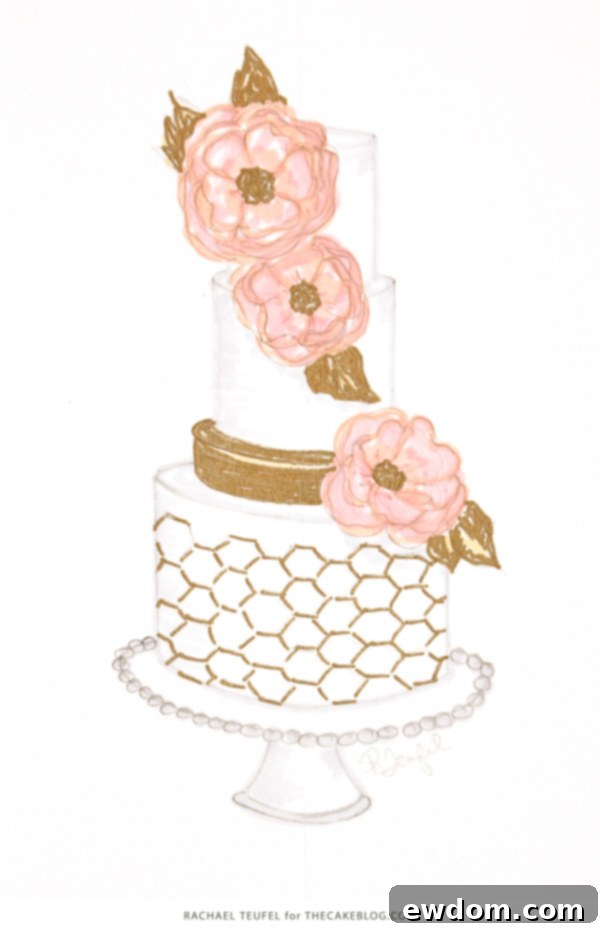
In this final sketch, I’ve simply enlarged the scale of the flowers. This deliberate act of increasing their size transforms them into a new, undeniably more dramatic floral focal point, instantly capturing attention and giving the cake a fresh, bold character.
Bringing It All Together: Proportion, Scale, and Your Cake Masterpiece
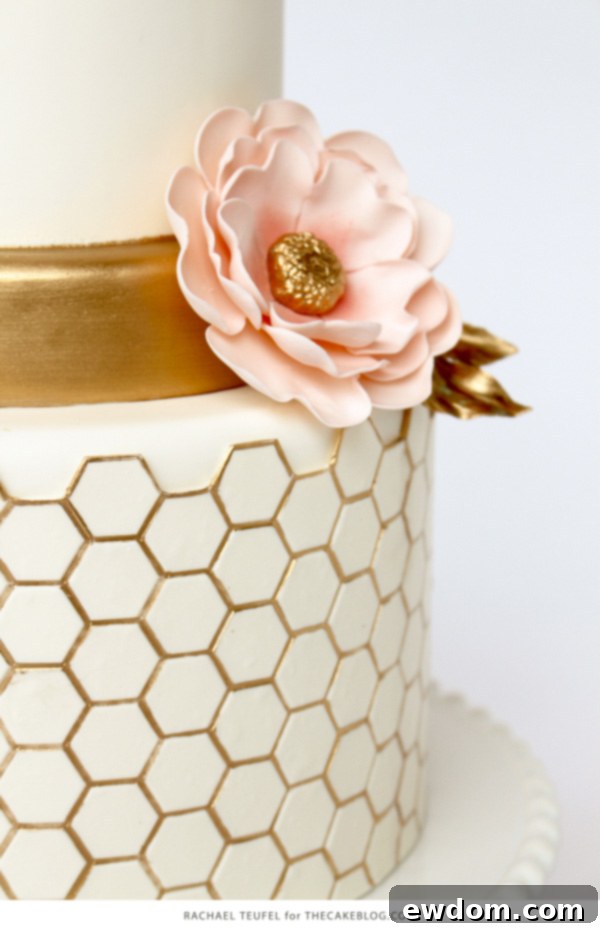
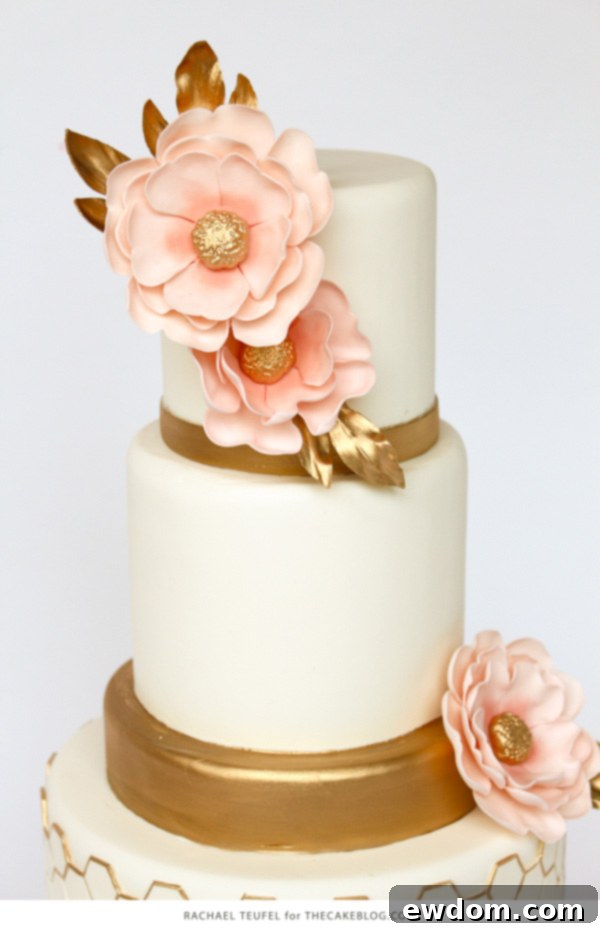
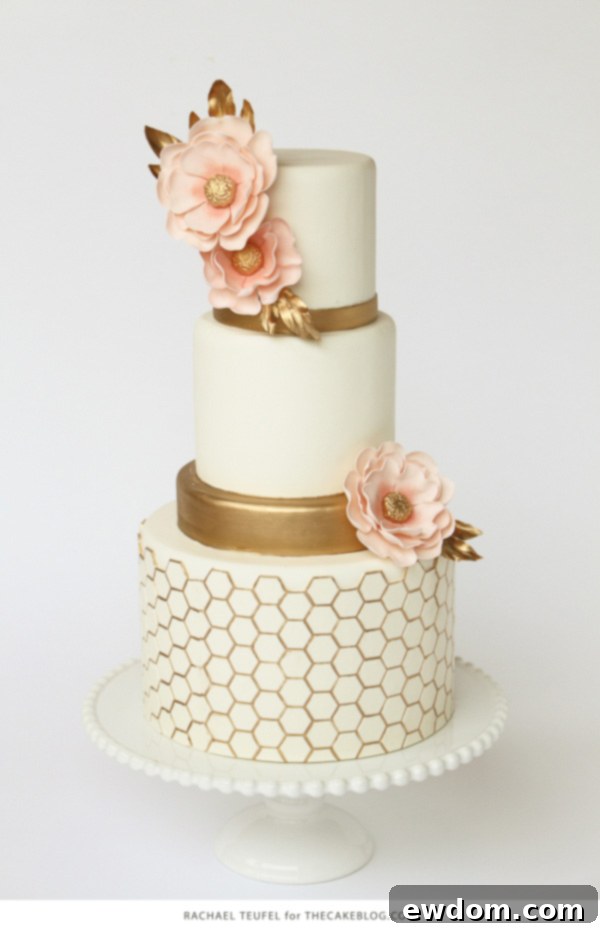
Now, let’s take another look at the finished gold honeycomb cake. Observe how the careful consideration of both proportion and scale works in harmony to create a stunning, cohesive design. The balance of tier heights (proportion) guides the eye, while the striking gold honeycomb pattern and the relative size of any subtle accents (scale) contribute to its elegant focal point. As you embark on designing your own custom cakes, always remember to consciously think about which element you want to be your focal point. Use the principles of proportion and scale as your guiding compass to intentionally craft a design that not only looks beautiful but also tells a story and evokes a desired emotion. Experiment with varying tier heights, exaggerate decorative elements, or introduce unexpected contrasts to create truly unique and unforgettable masterpieces.
Mastering these design principles is a journey, not a destination. With each cake you create, you have an opportunity to refine your eye and hone your skills in proportion and scale. Don’t be afraid to sketch out your ideas beforehand, play with different dimensions, and imagine how various elements will interact. The more you practice, the more intuitive these concepts will become, allowing you to design with confidence and precision. Whether you’re crafting a grand wedding cake or a charming birthday cake, a deep understanding of proportion and scale is your secret weapon for creating truly impactful and memorable edible art.
VENDORS & CREDITS
Cake Design & Artistry : Intricate Icings Cake Design
Learn From This Baker : Online Cake Classes with Rachael Teufel on Craftsy
EXPLORE MORE DESIGN TIPS:
Continue your journey through the essential elements of cake design with more insights from our series:
- Design Tips : Finding Inspiration for Your Next Cake
- Design Tips : Achieving Balance in Your Cake Designs
- Design Tips : Creating Movement and Flow in Cake Art