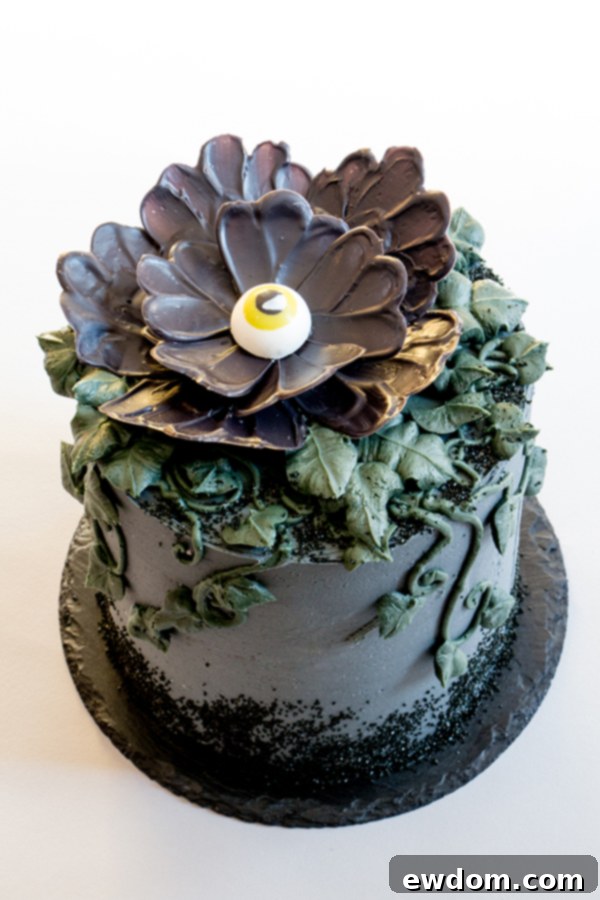
Craft a Ghastly Delight: The Ultimate Chocolate Eyeball Flower Halloween Cake
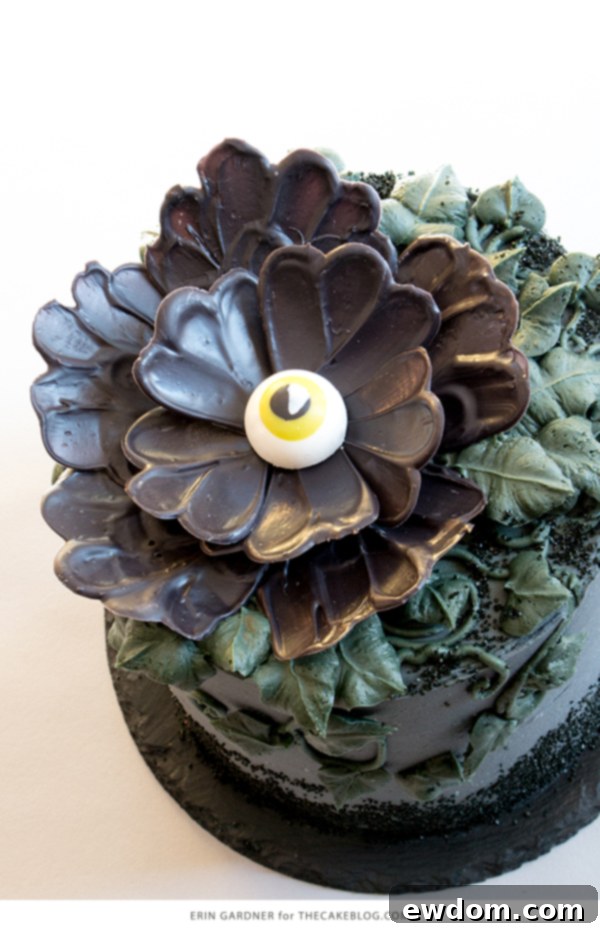
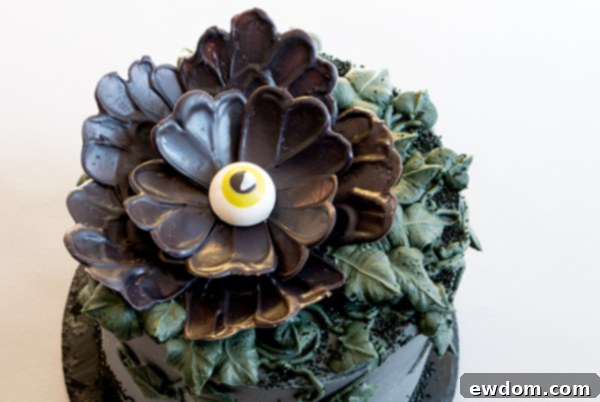
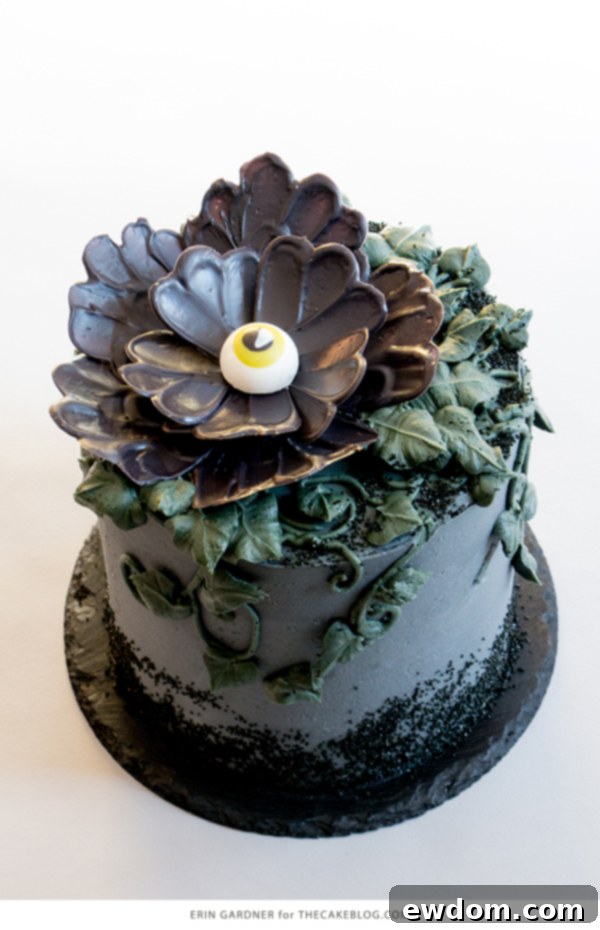
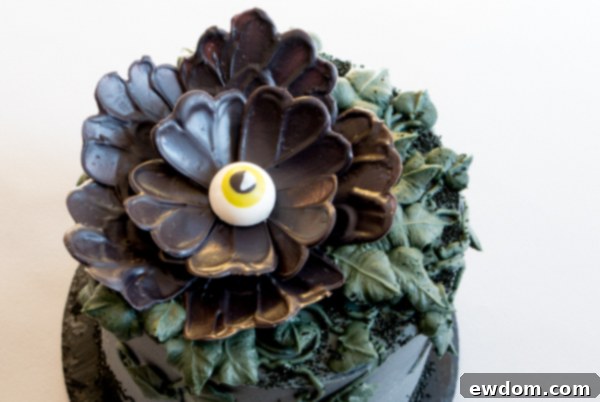
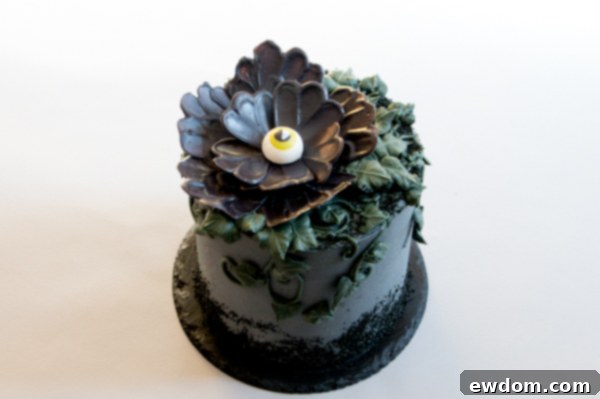
As the leaves turn and a chill fills the air, Halloween beckons with its promise of spooky fun and delightfully ghoulish treats. If you’re searching for a show-stopping dessert that perfectly blends elegance with eerie charm, look no further than this incredible Chocolate Eyeball Flower Halloween Cake. This unique creation, brought to you by our talented contributor, Erin Gardner, transforms simple chocolate into a hauntingly beautiful edible masterpiece. It’s a black chocolate flower with a mesmerizing, edible eyeball at its center, designed to be the centerpiece of any Halloween gathering.
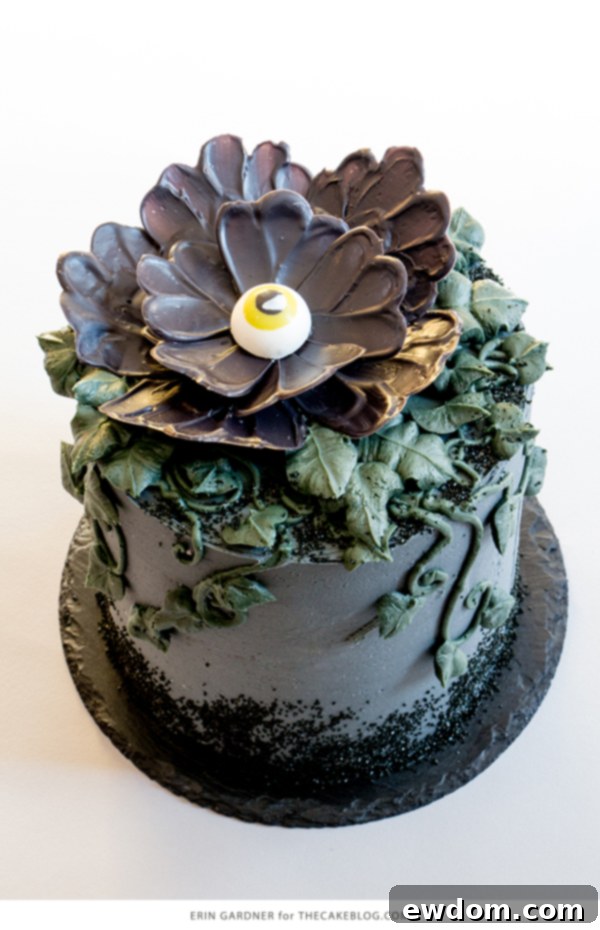
Erin Gardner, a master of confectionery artistry, expertly marries two of her most celebrated techniques in this tutorial: crafting giant chocolate flowers and creating realistic chocolate eyeballs. The beauty of this project lies in its deceptive simplicity. While the final result is astonishingly impressive, the methods involved are far easier to execute than they appear, making it an achievable goal for bakers of various skill levels. Imagine the gasps of delight and dread when your guests behold this eerie yet elegant dessert.
Essential Preparation for a Perfect Halloween Display
One of the fantastic advantages of this cake design is the ability to prepare its key components in advance. The chocolate eyeballs and petals can be made days, or even weeks, ahead of time. Once completely dry and firm, store them in an airtight container at room temperature. This crucial step allows you to spread out the decorating process, reducing stress closer to your event. It’s vital to avoid refrigerating these chocolate elements, as the humidity within a fridge can cause chocolate to pit, soften, or develop an unsightly “bloom” (a white, powdery appearance), compromising their pristine finish and structural integrity.
For optimal presentation and quality, assemble your entire cake shortly before serving. While the individual chocolate pieces are sturdy, a fully decorated cake with delicate chocolate embellishments can be sensitive to environmental changes. This magnificent flower makes a devilishly delightful statement on a tall layer cake, adding an undeniable touch of dramatic flair. However, don’t limit your imagination! Smaller versions of these creepy blossoms would be just as fabulous, serving as hauntingly haute cupcake toppers or decorative accents for other Halloween treats. This versatility ensures your ghoulish creativity can flourish.
Unleash Your Inner Mad Scientist: Supplies for Your Chocolate Eyeball Flower
To embark on this thrilling baking adventure, gather the following essential tools and ingredients. Using high-quality coating chocolate (also known as candy melts or compound chocolate) simplifies the process as it doesn’t require tempering, ensuring a smooth, glossy finish every time. If you prefer using true chocolate, be sure to temper it properly for the best results.
CHOCOLATE EYEBALL FLOWER
A comprehensive tutorial by Erin Gardner
Supplies List:
- Black coating chocolate or high-quality white chocolate tinted with black oil-based food coloring. The black provides the perfect ominous backdrop for your creepy flower.
- White coating chocolate or white chocolate, essential for the eyeball’s sclera (white part).
- Green coating chocolate or white chocolate tinted green (using oil-based food coloring). Feel free to choose any eerie eye color you desire – blue, yellow, or even red for a truly demonic gaze!
- Parchment paper: Crucial for shaping the petals and allowing them to release easily once dry.
- Icing spatula: A small, flexible one is ideal for spreading chocolate thinly and evenly.
- Shallow bowl: To create the natural curve of flower petals as they set.
- Small dome mold or circular ice cube tray: This will give your edible eyeball its perfectly rounded, realistic shape.
- 6-inch round cake: Your foundation. Already finished with dark gray buttercream, it provides a somber, mysterious base for your flower.
- 2 cups dark green buttercream: This will be used for the vines and leaves, adding a touch of dark, creeping foliage.
- Small round piping tip: For delicate details like the fine white line in the eyeball and small vines.
- Large round piping tip: For piping larger dollops of buttercream to secure petals and create the base for the eyeball.
- Large leaf tip: To create realistic, gothic-inspired leaves around your flower.
- Piping bags: Several are needed for the different colors of chocolate and buttercream.
- Black sanding sugar: For a sparkling, ominous finish around the base of the cake, adding texture and a hint of decay.
Visual Assistance: Watch the Process
For those who prefer a visual demonstration, this detailed video tutorial will guide you through each step of creating your Chocolate Eyeball Flower. Watching the techniques in action can be incredibly helpful for mastering the nuances of chocolate work and assembly.
Step-by-Step Guide: Crafting Your Hauntingly Beautiful Cake
1. Sculpting the Sinister Petals
The foundation of your creepy flower begins with its striking black petals. Precision and patience are key to achieving their delicate yet dramatic appearance.
- Begin by cutting several small rectangles of parchment paper, each approximately 2 by 3 inches in size. These will serve as individual canvases for your petals.
- Melt your black coating chocolate in a small, heatproof bowl. Ensure it’s smoothly melted and free of lumps. You can use a microwave at 30-second intervals, stirring between each, or a double boiler for a gentle melt.
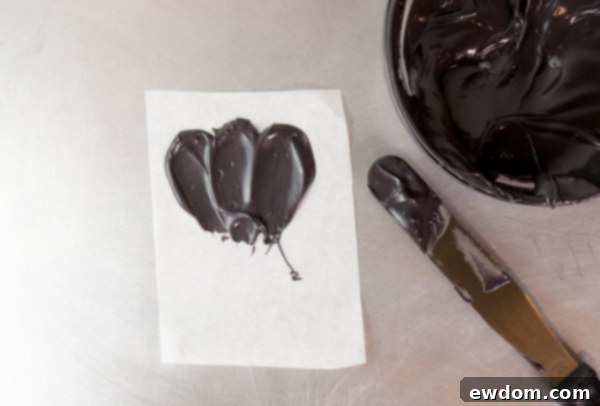
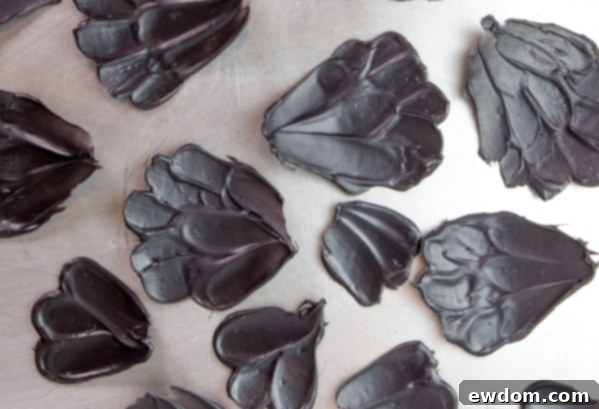
- Using your small icing spatula, scoop a small amount of melted chocolate and gently spread it onto one of the parchment rectangles. Aim to create a petal-like, fan shape that is roughly 2 inches wide at its broadest point. This first layer forms the initial curve and structure.
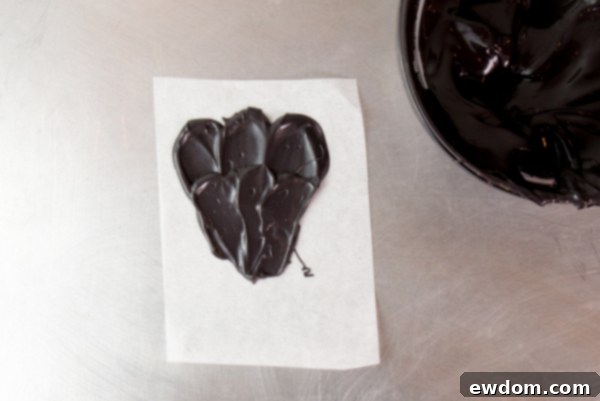
- Dip your spatula into the chocolate once more and spread a second, slightly smaller layer of chocolate just below the first. This layering technique helps to build depth and define the overall triangular shape of a natural petal. The edges should be thin and delicate, while the base can be slightly thicker for strength.
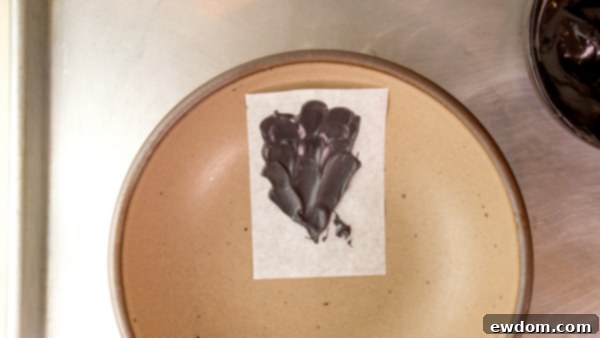
- Immediately after spreading the chocolate, while it is still wet and pliable, carefully lift the parchment paper and gently drop it into a shallow bowl. The natural curve of the bowl will encourage the chocolate petal to dry with a beautiful, realistic, concave shape, adding dimension to your finished flower.
- Repeat this process to create at least 4 more larger petals for the outer layer of your flower. For the interior of the flower, repeat the first part of the process (spreading chocolate on parchment) at least 5 more times, but make these petals slightly smaller, around 1.5 to 2 inches wide, to create a natural layering effect.
- Allow all of your chocolate petals to dry completely and harden, which typically takes about 10 minutes at room temperature. Once firm, carefully peel them from their parchment paper backing. Handle them gently as they can be brittle.
- Melt the white, green (or your chosen iris color), and black coating chocolates in separate heatproof bowls. For best control, transfer each melted chocolate into its own small piping bag or a DIY paper cone with a very fine tip.
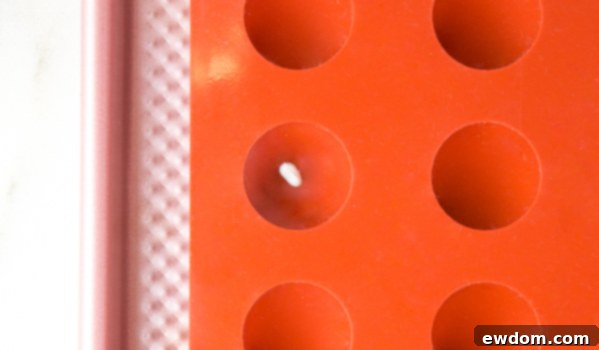
- Take your small dome mold (or ice cube tray). Using the white chocolate, pipe a small, thin line, roughly a centimeter in length, directly in the center of one of the dome cavities. This forms the reflective highlight of the eye, adding depth.
- Next, pipe a pea-sized circle of black chocolate directly over the center of the white line. This will be the pupil. Don’t fret if a tiny bit of the white line peeks out beyond the black circle; this only enhances the realistic effect.
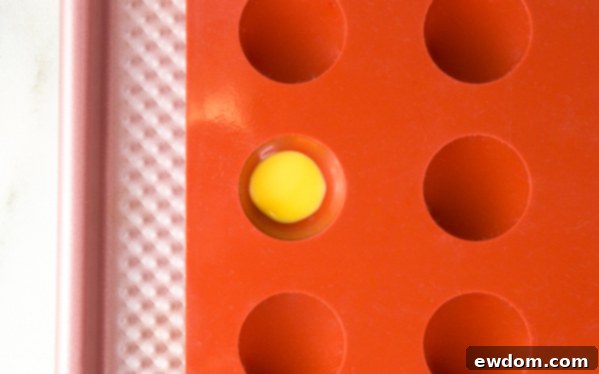
- Carefully pipe a ring of your chosen colored chocolate (green in this case) around the black pupil. Ensure the colored chocolate fills the space between the pupil and the edge of where the iris would be. Gently tap the dome mold against your work surface a few times to help the chocolate layers settle and smooth out any air bubbles, ensuring a seamless, vibrant iris.
- Pop the mold into the refrigerator for just one minute. This brief chill will help the detailed layers of chocolate firm up quickly, preventing them from mixing when you add the final layer.
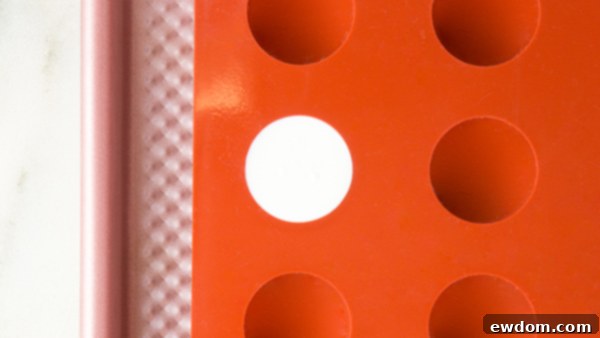
- Retrieve the mold and fill the remainder of the dome cavity with white chocolate, fully encasing the pupil and iris. Tap the mold against your work surface one last time to ensure the white chocolate spreads evenly and creates a smooth back for the eyeball.
- Allow the entire chocolate eyeball to harden completely, which should take approximately 10 minutes in the refrigerator or a cool room. Once fully set, carefully pop the eyeball out of the mold. The smooth, rounded surface will face upwards, revealing your stunning, edible eye.
- Prepare your dark green buttercream by filling three separate piping bags: one fitted with the small round tip (for fine vines), one with the large round tip (for securing petals and the eyeball), and one with the large leaf tip (for foliage). Distribute the buttercream accordingly: just a few tablespoons for the small round tip, about 1/4 cup for the large round tip, and the majority for the leaf tip.
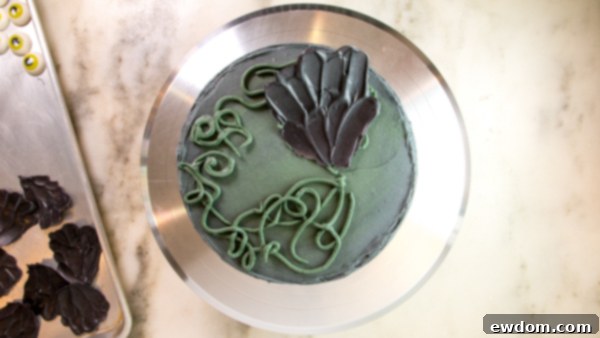
- Using the piping bag fitted with the small round tip, pipe delicate, sprawling vines of green buttercream over the top of the cake. Allow some of these vines to gracefully hang over the sides, creating an organic, creeping effect that enhances the eerie garden theme.
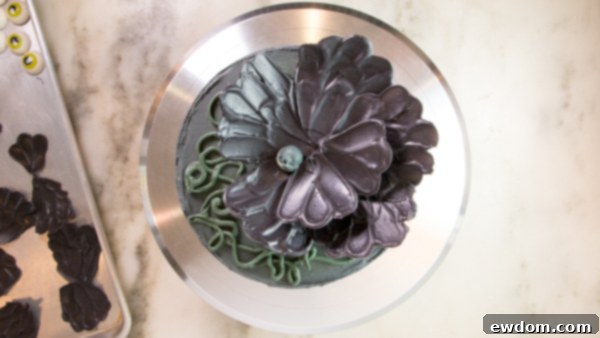
- Carefully place one of the larger chocolate petals on the top surface of your cake, positioned slightly off-center. Continue adding three more large petals, overlapping each one as you work your way around the cake to form the outer layer of the flower. For the final large petal, overlap the petal placed before it and gently tuck the other side underneath the very first petal, creating a seamless, enclosed circle. Use a small dollop of buttercream under each petal to secure it to the cake.
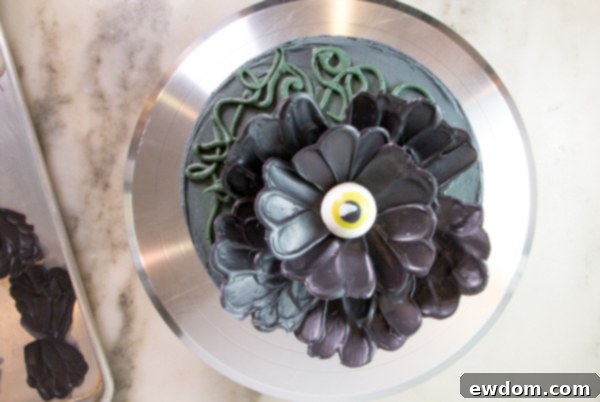
- Now, to create the inner layer of petals, use the piping bag fitted with the large round tip to pipe a generous dollop of buttercream onto the lower half of one of the larger, outer petals. This serves as the anchor for your smaller petals. Gently top this dollop with one of your smaller chocolate petals. Repeat this process, adding 4 more small petals in an overlapping fashion, mirroring how you placed the larger outer layer, to complete the center of the flower.
- Once the inner petals are in place, pipe another significant dollop of buttercream directly in the very center of the flower. This will be the bed for your captivating eyeball. Carefully place your chocolate eyeball onto this buttercream dollop, ensuring it is secure and faces outwards, gazing ominously.
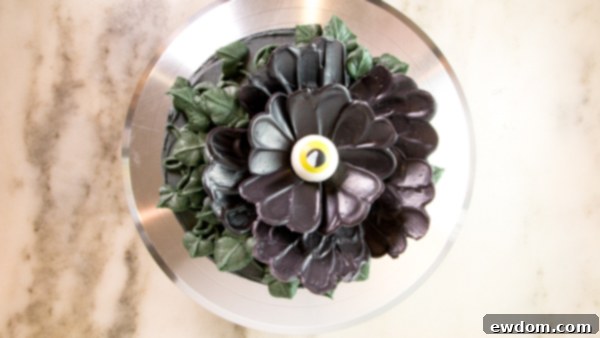
- To add the finishing botanical touches, use the piping bag fitted with the large leaf tip. Pipe dark green leaves under the base of the chocolate flower petals and strategically along the buttercream vines you created earlier. This adds depth, texture, and a touch of eerie realism to your monstrous bloom.
- For a final touch of dark enchantment, sprinkle black sanding sugar generously between the green vines and around the bottom edge of the cake. This adds a subtle sparkle and a gritty, mysterious texture, completing the gothic aesthetic of your magnificent Halloween creation.
- Chocolate Consistency: Ensure your melted coating chocolate is smooth and flowing. If it’s too thick, add a small amount of paramount crystals or a neutral oil (like refined coconut oil) to thin it slightly. If it’s too thin, it may not hold its shape as well.
- Buttercream Temperature: For best piping results, ensure your buttercream is at a consistent room temperature. If it’s too cold, it will be stiff; if too warm, it will be too soft.
- Handling Petals: Chocolate petals can be delicate, especially when thin. Handle them by the thicker base and try to minimize direct contact with warm hands to prevent melting or fingerprints.
- Creative Eyeball Variations: Don’t be afraid to experiment with different iris colors or even add tiny red “veins” using a fine-tipped edible marker for an even more gruesome effect.
- Secure Assembly: Use just enough buttercream to secure the petals and eyeball without it oozing out excessively. A steady hand and careful placement are your best tools.
- Display Considerations: As mentioned, assemble the cake just before serving. If you must transport it, ensure it’s in a cool environment and handled carefully to prevent damage to the delicate chocolate elements.
- Witch Cauldron Cake: Brew up some magic with this enchanting design.
- Poison Apple Cake: A wicked twist on a classic fairytale motif.
- Black Cat Cake: A purr-fectly spooky addition to your Halloween table.
- Buttercream Spiderweb Cake: Intricate and eerie, yet surprisingly simple to create.
- Monster Eye Cake: Explore more edible eyeball designs.
- Marshmallow Spiderweb Cake: A fun and sticky creation for all ages.
2. Conjuring the Captivating Chocolate Eyeball
The centerpiece of your ghastly bloom, the edible eyeball, requires a steady hand and attention to detail to achieve its striking realism.

3. Assembling Your Bewitching Cake
Now, bring all your hauntingly beautiful elements together on your pre-made dark gray cake to create the final, spectacular display.
Tips for a Flawless and Frightening Finish
More Hauntingly Delicious Halloween Cake Inspirations
If this Chocolate Eyeball Flower has sparked your Halloween spirit, explore more spine-chillingly creative cake ideas to complete your festive spread. Erin Gardner and The Cake Blog offer a treasure trove of tutorials to inspire your next ghoulish creation:
Creating this Chocolate Eyeball Flower cake is more than just baking; it’s an art form that brings a unique blend of elegance and horror to your Halloween celebration. With Erin Gardner’s expert guidance, you’re well-equipped to craft a dessert that will be remembered long after the last bite. So gather your ingredients, embrace the spooky season, and enjoy the process of bringing this incredible vision to life!