Our contributor, Summer Stone of Cake Paper Party, is back today with a new baking science experiment…
The Ultimate Chocolate Cake: Unveiling the Secret to Deep Chocolate Flavor and Perfect Texture
The quest for the truly perfect chocolate cake is a culinary journey many bakers embark on. It’s a delicate balance: achieving a moist, tender crumb while ensuring an intensely satisfying chocolate flavor that leaves no doubt about its identity. For years, I’ve been dedicated to uncovering the secrets behind a chocolate cake that truly stands out – one where every bite delivers an unmistakable, profound chocolate experience. A crucial decision in any chocolate cake recipe lies in selecting the core chocolate ingredient: should you use unsweetened chocolate, cocoa powder, or a strategic combination of both? This comprehensive guide delves into the unique characteristics of each, exploring how they perform when baked into a cake, ultimately revealing the optimal approach for superior flavor and texture.
Understanding Your Chocolate: Cocoa Beans to Baking Ingredients
Both chocolate and cocoa powder originate from the remarkable cacao bean. After fermentation, extraction, and drying, these beans become the foundation for a wide array of chocolate products. Cacao beans naturally contain a significant amount of cocoa butter, typically around 50 percent of their composition. The production process for cocoa powder involves pressing the cacao liquor to extract a substantial portion of this cocoa butter, leaving behind finely ground cocoa solids. In contrast, manufacturing solid chocolate requires the addition of extra cocoa butter to achieve its characteristic smooth texture, rich taste, and melt-in-your-mouth quality.
Not all cocoa powders are created equal. Some manufacturers remove nearly all the cocoa butter, resulting in a lean powder primarily composed of cocoa solids, which delivers a potent chocolate flavor. Other varieties retain a higher percentage of cocoa butter, leading to a richer, sometimes fattier cocoa powder. These can contain as much as 25 percent fat, significantly influencing the final baked good.
Natural vs. Dutch-Processed Cocoa: A Key Distinction
Cocoa powders generally come in two primary forms: natural and Dutch-processed. This distinction is vital for any baker aiming to master chocolate creations.
- Natural Cocoa Powder: This form of cocoa is not treated with alkalizing agents. It retains its natural acidity, which gives it a lighter color and a slightly sharper, fruitier chocolate flavor. Its acidic nature reacts with baking soda, making it a common choice for recipes that rely on this leavening agent for lift.
- Dutch-Processed Cocoa Powder: Also known as alkalized cocoa, this variety has been treated with an alkali solution to neutralize its acidity. This process results in a darker color, often a deep reddish-brown, and a smoother, less bitter, and milder chocolate flavor. Because it’s neutral, Dutch-processed cocoa typically requires baking powder or a combination of baking powder and baking soda (when another acidic ingredient is present) for proper leavening, as it won’t react with baking soda alone. The choice between natural and Dutch-processed cocoa can dramatically alter both the color and flavor profile of your chocolate cake.

Designing the Experiment: Unraveling the Chocolatey Mystery
To definitively determine whether unsweetened chocolate, cocoa powder, or a combination yields the best flavor profile and texture in a cake, I meticulously designed an experiment involving three distinct cake formulations. Each cake was prepared with the utmost care, ensuring consistency in all variables except for the type of chocolate ingredient.
- Cake 1: Contained only unsweetened chocolate.
- Cake 2: Featured only cocoa powder.
- Cake 3: Utilized a balanced blend of half unsweetened chocolate and half cocoa powder.
For this trial, I specifically selected a high-quality Dutch-processed cocoa powder. My decision was informed by prior experiments that consistently showed Dutch cocoa delivered a bolder, more profound chocolate flavor compared to its natural counterpart. The particular Dutch cocoa used in this experiment was notable for retaining a significant portion of its cocoa butter, boasting a 24 percent fat content. This higher fat content is crucial, as it impacts the richness and moisture of the final cake. To maintain fairness and scientific rigor across all three recipes, precise adjustments were made to account for the differing fat levels between the unsweetened chocolate and the cocoa powder, ensuring that any observed differences were attributable solely to the type of chocolate solids, rather than extraneous fat content. This meticulous approach allowed for a clear and unbiased comparison of each ingredient’s impact.

Cake #1: The Unsweetened Chocolate Classic
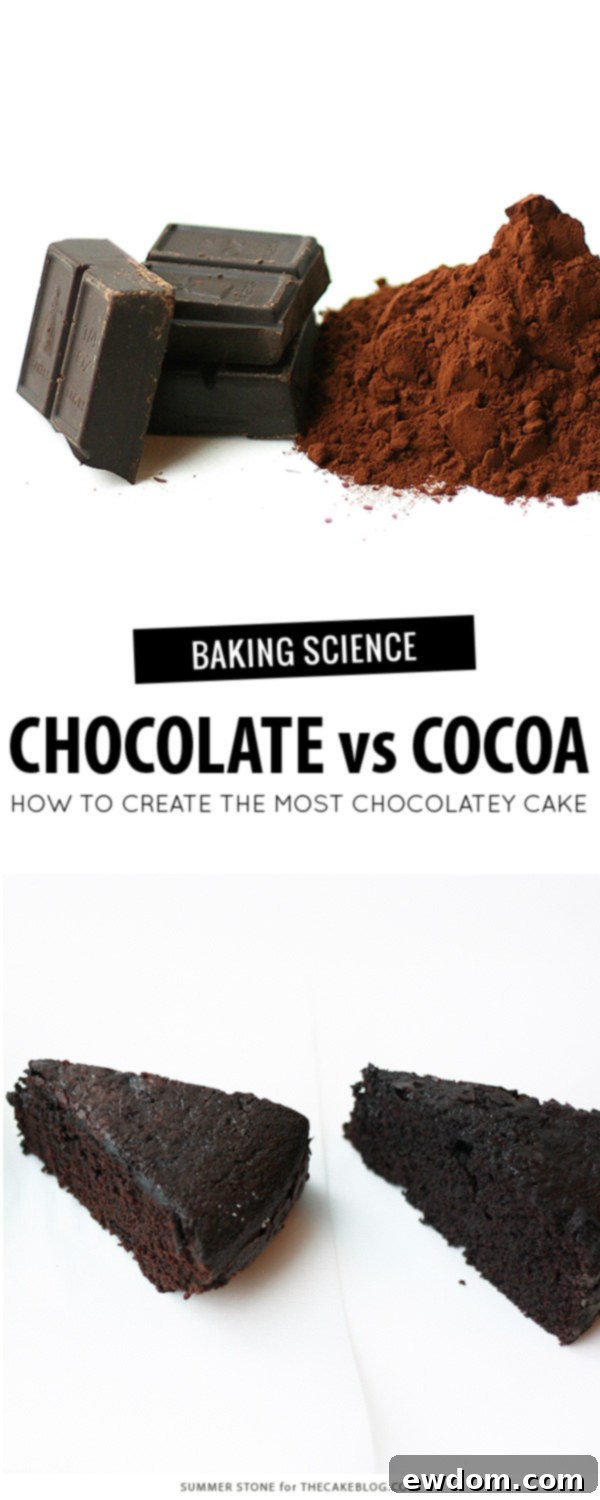
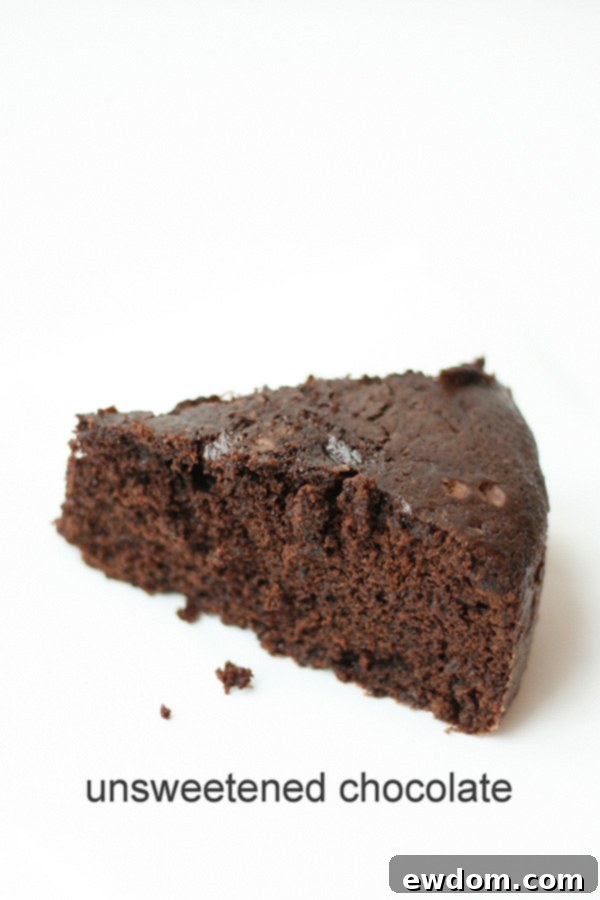
The cake prepared solely with unsweetened chocolate presented a pleasing, mild, and well-rounded chocolate flavor. Its color was noticeably lighter than the other two cakes, displaying a gentle brown hue. While undeniably pleasant, this cake did not achieve the intense chocolate impact I was striving for. The flavor was good, but it lacked the deep, almost audacious chocolate presence that defines an truly exceptional chocolate cake. This outcome suggests that while unsweetened chocolate contributes a smooth, characteristic chocolate base, its higher cocoa butter content (typically around 50-60%) dilutes the concentration of cocoa solids relative to an equal weight of cocoa powder, thus resulting in a less pronounced flavor intensity. The richness was there, but the “punch” was not as strong as desired.
Cake #2: The Bold Cocoa Powder Creation
In stark contrast, the cake formulated with only cocoa powder exhibited a remarkably deep, dark color, almost bordering on black, and a truly bold chocolate flavor. The cocoa powder seemed to infuse the cake with a highly concentrated burst of chocolate intensity, creating a pronounced and immediate cocoa experience. This cake delivered the robust flavor I was seeking, validating the power of concentrated cocoa solids. However, despite its intense flavor, there was a subtle richness or complexity that seemed to be absent. It had the raw power of chocolate but lacked some of the smooth, luxurious mouthfeel that a higher fat content often provides. It was an excellent cake, but it left me wondering if there was a way to combine this intense flavor with an even more nuanced and rounded profile, something that the cakes incorporating unsweetened chocolate seemed to possess.

Cake #3: The Harmonious Blend of Both
The third cake, which incorporated a balanced combination of half unsweetened chocolate and half cocoa powder, proved to be the undeniable winner. This cake achieved a rich, dark chocolate color, striking a perfect balance between the milder hue of the unsweetened chocolate cake and the intense darkness of the cocoa-only version. More importantly, its flavor was exceptional – a harmonious blend of profound chocolate intensity complemented by a subtle, luxurious nuance of cocoa butter. This specific characteristic, the distinct cocoa butter richness, was a defining feature of the cakes containing solid chocolate, and it truly elevated the overall flavor experience in this blended version. I firmly believe this flavor combination provides the quintessential taste and texture that a perfect chocolate cake should embody. It offered the best of both worlds: the concentrated punch of cocoa solids and the smooth, complex depth provided by cocoa butter.

The Verdict: A Symphony of Flavor and Texture
Through this insightful baking experiment, the results are clear: the finest chocolate cake emerges from a recipe that thoughtfully combines both unsweetened chocolate and cocoa powder in substantial amounts. This synergy is key to unlocking the ultimate chocolate experience. Unsweetened chocolate, with its inherent cocoa butter content, contributes not only cocoa solids but also the essential fat that rounds out the flavor, provides richness, and contributes to a tender, moist crumb. On the other hand, cocoa powder, being primarily concentrated cocoa solids, delivers an unparalleled intensity of chocolate flavor and imparts that desirable deep, dark color that makes a chocolate cake so visually appealing.
When these two forms of chocolate are married together in a cake, they create a truly remarkable symphony of taste and texture. The cocoa solids from both ingredients provide a robust, multi-layered chocolate profile, while the cocoa butter ensures a luxurious mouthfeel and a moist, tender structure. This combination doesn’t just give you a chocolate cake; it gives you the chocolate cake – a rich, complex, and intensely satisfying dessert that lives up to every expectation.
Beyond the Experiment: Elevating Your Chocolate Cake
Understanding the science behind chocolate and cocoa empowers you to become a better baker. Here are some additional insights to perfect your chocolate cake creations:
Understanding the Role of Fat and Solids
The fat content, primarily from cocoa butter, is crucial. It contributes to the cake’s tenderness, moisture, and mouthfeel. Cakes with higher fat content tend to be more succulent and have a smoother texture. Cocoa solids, on the other hand, are the primary carriers of chocolate flavor. When you use cocoa powder, you’re essentially getting a concentrated dose of these flavor compounds. Unsweetened chocolate offers a balance, bringing both fat and solids to the table. This balance is what often results in a more complex and satisfying flavor profile than either ingredient used alone.
Choosing Your Chocolate Ingredients Wisely
- Unsweetened Chocolate: Look for quality brands. The higher the cocoa percentage in unsweetened chocolate (often 90-100%), the more intense the cocoa flavor will be, though this is balanced by the cocoa butter content.
- Cocoa Powder: As discovered, Dutch-processed cocoa often yields a bolder flavor and darker color. However, natural cocoa has its place, especially in recipes that leverage its acidity to react with baking soda for leavening. Some recipes even call for “black cocoa,” an extra-dark Dutch-processed cocoa, for an almost Oreo-like flavor and color.
- Fat Content in Cocoa: Pay attention to the fat percentage in your cocoa powder. A higher fat content (like the 24% used in this experiment) can contribute to a richer, moister cake, sometimes requiring slight adjustments to other fats in your recipe.
Tips for Adapting Recipes and Troubleshooting
If a recipe calls for only one form of chocolate and you wish to adapt it for a more robust flavor, consider these points:
- Substituting Cocoa for Unsweetened Chocolate: If you’re replacing unsweetened chocolate with cocoa powder, remember that cocoa powder is primarily solids and lacks the cocoa butter. For every ounce of unsweetened chocolate, you can substitute 3 tablespoons of cocoa powder plus 1 tablespoon of butter or oil to make up for the fat.
- Substituting Unsweetened Chocolate for Cocoa: This is trickier due to the added fat in solid chocolate. For every 3 tablespoons of cocoa powder, you might use 1 ounce of unsweetened chocolate, but you would likely need to reduce other fats in the recipe slightly, and potentially adjust liquids to maintain consistency.
- Leavening Agents: Always consider the type of cocoa you’re using. Natural cocoa requires baking soda to react with its acidity, while Dutch-processed cocoa needs baking powder (or another acidic ingredient if baking soda is present).
I genuinely hope this in-depth analysis and practical guidance empower your chocolate cake-baking efforts, leading you to create truly unforgettable desserts. Happy baking!
Further Reading for Baking Enthusiasts
- Why Oven Temperature Really Matters
- Mixing Up The Perfect Cake
- Do Your Cupcakes Need a Rest?
- EGGSactly Perfect Baking
- Can You Overmix A Cake?
Indulge Your Cravings: Favorite Chocolate Cake Recipes
- Chocolate & Peanut Butter Cake
- Flourless Chocolate Espresso Cake
- Banana Choco Hazelnut Cake
- Chocolate Turtle Cake