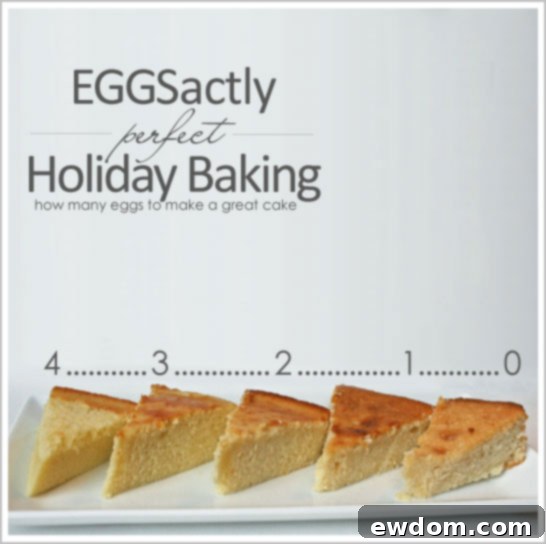
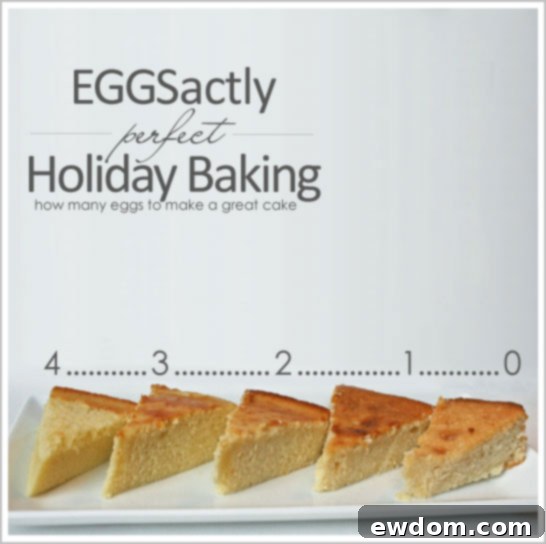
4… 3… 2… 1… 0?? As we gear up for the bustling holiday baking season, understanding the fundamental components of our favorite treats becomes paramount. To help us achieve bakery-quality results every time, Summer Stone of Cake Paper Party shares her invaluable insights into how eggs profoundly influence the characteristics of our cakes.
The Egg-sential Guide to Perfect Cakes: Mastering Egg Ratios for Baking Success
The question of how many eggs are truly necessary to create an exceptional cake is one that puzzles many home bakers. A quick glance at traditional recipes for a standard 9-inch, two-layer American butter cake often reveals a common requirement of four eggs. However, a deeper dive into the vast world of butter cake recipes uncovers a wide spectrum, with calls for anywhere from two to a generous six eggs. This disparity naturally leads to a crucial question: What number of eggs genuinely yields the best results?
Before we delve into practical experimentation, let’s first dissect the intricate and multifaceted roles that eggs play within the complex chemistry of a cake. An egg, seemingly simple, is a powerhouse of components, each contributing significantly to the final product’s texture, flavor, and appearance. Understanding these fundamental contributions is the first step toward mastering your baking.
The Multifaceted Role of Eggs in Cake Baking
Eggs are far more than just a liquid component in a cake batter; they are dynamic ingredients that perform a diverse array of functions. From providing structural integrity to enhancing flavor and color, their presence is indispensable. Here are the major duties eggs perform, each contributing to the symphony of a perfect cake:
- Structure: Eggs are primary architects of a cake’s internal framework. The proteins in egg whites, particularly albumin and globulin, coagulate and solidify when heated, creating a robust network that gives the cake firmness, stability, and prevents it from collapsing. This protein matrix works in conjunction with gluten from flour to form the backbone of your cake, dictating its height and crumb.
- Aeration & Leavening: The unique ability of eggs, especially egg whites, to trap air when beaten is critical for leavening. This incorporated air expands during baking, contributing to the cake’s lightness and volume. This process works hand-in-hand with chemical leavening agents like baking powder and soda, creating a delicate, airy texture that is highly sought after.
- Emulsification: Egg yolks are natural emulsifiers, thanks to the lecithin they contain. This powerful compound helps to seamlessly blend fats (like butter or oil) and liquids (such as milk or water) into a smooth, homogenous batter. Effective emulsification prevents separation, ensures even distribution of ingredients, and results in a cake with a consistently moist crumb that doesn’t feel greasy on the palate.
- Flavor: While often subtle, eggs impart a distinctive richness and depth of flavor to cakes. They complement other ingredients, adding a foundational savory note that balances sweetness. The quantity of eggs can significantly influence this, ranging from a delicate background note to a pronounced “eggy” taste, similar to a custard.
- Color: The golden hue derived from the carotenoids in egg yolks contributes a lovely soft yellow pigmentation to both the raw batter and the finished cake. This natural coloring enhances the visual appeal, giving cakes a warm, inviting appearance without the need for artificial dyes.
- Moisture Provision: Eggs are approximately 75% liquid, meaning they contribute a substantial amount of moisture to the batter. This liquid component helps thin the batter to an optimal consistency, ensuring a tender and palatable final product. The right balance of liquid from eggs is crucial; too little can result in a dry cake, while too much can lead to a dense, gummy texture.
- Fat Contribution: Egg yolks are a significant source of fat. This fat content plays a vital role in contributing to the cake’s moistness, richness, and tenderness. It shortens gluten strands, preventing the cake from becoming tough, and enhances the overall mouthfeel, making each bite more indulgent.
Beyond Theory: The Practical Experiment
Understanding the theoretical functions of eggs is one thing, but witnessing their impact in a real-world scenario is another. It might seem straightforward to predict the outcome of adding or subtracting a couple of eggs from a recipe, but the complex interplay between eggs and other ingredients makes definitive predictions challenging. How do these roles interact, and which ones become dominant under different conditions? To move beyond mere hypothesis and truly grasp the practical implications, we must venture into the oven and observe the results firsthand.
To gain a tangible understanding of how egg volume variation impacts the overall cake, an experiment was conducted involving five eight-inch cake layers, each prepared with a different number of eggs. This allowed for a direct comparison, moving from the theoretical science to the baked reality. Each cake layer received 0, 1, 2, 3, or 4 eggs, which is approximately equivalent to modifying a standard recipe that might call for 0, 3, 6, 9, or 12 eggs for a larger batch.
Observations During Batter Preparation
Differences were remarkably apparent even before the batters entered the oven. The physical characteristics of the mixed batters offered the first clues about the eventual cakes:
- 0-Egg Batter: This batter was noticeably thick, dense, and had a pale, almost white color. Its consistency suggested a lack of leavening and emulsification, indicating it would struggle to rise and achieve a fine crumb.
- 1-Egg Batter: Still quite thick but slightly looser than the zero-egg version. A faint yellowish tint was present, and there was a subtle improvement in fluidity.
- 2-Egg Batter: This batter began to exhibit a more typical cake batter consistency – smoother, more flowing, and a pleasant light yellow color, suggesting better emulsification and potential for aeration.
- 3-Egg Batter: Comparatively thinner than the previous batters, with a more pronounced golden hue. It flowed more readily from the spoon, hinting at a lighter final texture.
- 4-Egg Batter: This was the thinnest in consistency among all the batters and boasted the richest golden color. Its fluidity indicated a significant amount of liquid and fat from the eggs, which could impact its final structure and stability.
Baking Outcomes: A Deeper Dive into Taste and Structure
Once baked, the true impact of varying egg quantities became undeniably clear, particularly in terms of taste and, most significantly, structural integrity.
Taste Profile Variations
The flavor of each cake layer offered a fascinating spectrum of experiences:
- The 0-Egg Layer: This cake had a strikingly raw flour taste, indicating insufficient baking and a lack of binding agents to temper the starchy flavor. It was also excessively sweet, as the absence of egg flavor left the sugar unchecked and unbalanced. The overall impression was more like a dense, underbaked biscuit than a cake.
- The 1-Egg Layer: While an improvement, it still leaned towards a denser, less complex flavor profile. The raw flour taste was diminished, but the sweetness remained somewhat overpowering, suggesting the single egg provided only minimal balance.
- The 2 & 3-Egg Layers: These layers were unanimously described as pleasant tasting. They achieved a harmonious balance of sweetness and richness, with the eggs contributing to a well-rounded and appealing flavor profile that is typically expected in a classic butter cake.
- The 4-Egg Layer: This cake possessed a markedly “eggy” taste, reminiscent of a baked custard or a rich bread pudding. While delicious in its own right, this pronounced eggy flavor might not be what a baker is aiming for in a traditional butter cake, where eggs are meant to enhance rather than dominate the flavor profile.
The Critical Role of Eggs in Cake Structure
The most dramatic and instructive variance between the layers was undeniably their structure and texture:
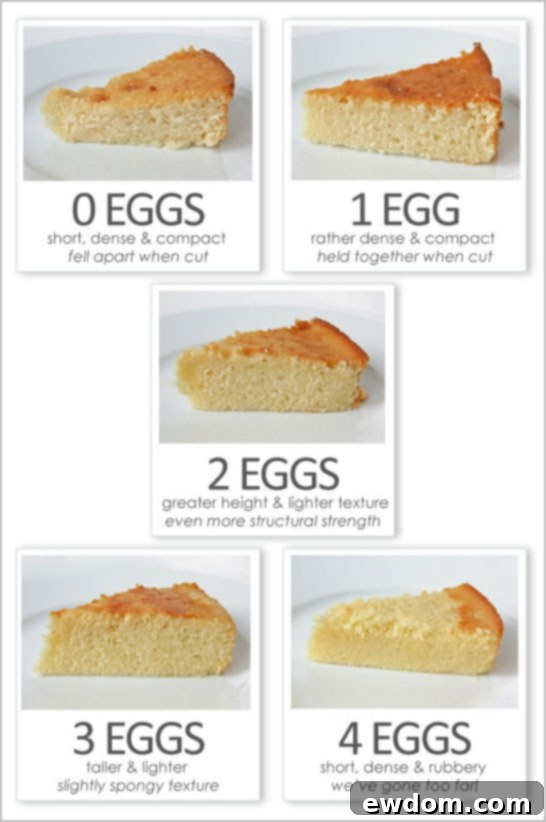
- The 0-Egg Layer: This cake was a testament to the essential role of eggs in structure. It was exceptionally short, incredibly dense, and compact, almost like a heavy scone. It possessed so little structural integrity that attempting to remove a piece resulted in it crumbling apart immediately. The absence of egg proteins meant there was no internal network to hold the crumb together, leading to a frustratingly fragile outcome.
- The 1-Egg Layer: A slight improvement over its eggless counterpart, this layer was still rather dense and compact. However, it did manage to hold together when cut, indicating that even a single egg contributed some binding properties, albeit minimally. Its crumb was tight and heavy.
- The 2-Egg Layer: This layer marked a significant leap forward. It exhibited greater height and a noticeably lighter, more tender texture. The increased egg content provided enhanced structural strength, allowing for a more open and delicate crumb that held its form beautifully. This started to resemble a desirable cake texture.
- The 3-Egg Layer: Even taller and lighter than the two-egg cake, this layer demonstrated the continued positive impact of eggs on aeration and lift. However, a critical point was reached: the egg structure began to approach the limits of its usefulness for this specific type of cake. The texture started to take on a slightly spongy quality, hinting at an excess of protein creating a rubbery, bouncy chew rather than a tender crumb.
- The 4-Egg Layer: This layer, despite its higher egg count, was surprisingly short, dense, and distinctly rubbery. This outcome is often counter-intuitive for those who believe more eggs always lead to a lighter cake. If you’ve ever experienced a génoise or chiffon cake fall dramatically or turn strangely chewy, you will recognize this exact phenomenon. The excess protein from too many eggs can over-coagulate, creating a tough, resilient network that expels moisture and air, leading to a heavy, rubbery texture rather than a light, airy one. The structure essentially became *too* strong and inflexible.
Factors Influencing Egg Ratios in Recipes
The “ideal” number of eggs isn’t a one-size-fits-all answer; it’s highly dependent on the type of cake you’re making and the desired final texture. Different cake categories are engineered around varying egg quantities and preparation methods:
- Butter Cakes: As seen in the experiment, traditional butter cakes generally thrive with a moderate egg count (often 2-4 for a standard layer). They rely on eggs for structure, richness, and some leavening, but balance is key to avoid rubberiness.
- Sponge Cakes (e.g., Génoise, Chiffon, Angel Food): These cakes are defined by their incredibly high egg content, often relying almost exclusively on aerated egg whites (angel food) or whole eggs (génoise) for their dramatic rise and airy structure. Their goal is volume and extreme lightness, hence the egg-heavy recipes.
- Pound Cakes: Known for their dense, rich crumb, pound cakes traditionally used a pound each of butter, sugar, flour, and eggs. While modern versions vary, they often feature a higher fat-to-egg ratio compared to sponge cakes, contributing to their signature density.
- Cupcakes vs. Layer Cakes: While similar, slight adjustments in egg content can be made for cupcakes, which bake faster and are often desired to be a bit more stable for frosting.
Beyond the cake type, other ingredients also play a pivotal role. The type of flour (e.g., low-protein cake flour versus high-protein bread flour), the amount and type of fat (butter or oil), and the presence of chemical leavening agents (baking powder/soda) all interact with the eggs. For instance, more fat can tenderize, counteracting a slightly higher egg count, while stronger flour might require more moisture from eggs to prevent dryness.
Tips for Home Bakers and Troubleshooting Egg-Related Issues
Mastering the use of eggs in baking goes beyond just counting them. Here are some invaluable tips and common issues to consider:
- Use Room Temperature Eggs: This is a golden rule for many baking recipes. Room temperature eggs emulsify much more effectively with other ingredients, creating a smoother, more stable batter. They also whip up with greater volume and speed, leading to better aeration.
- Weigh Your Eggs for Precision: While counting eggs is common, the size of eggs can vary significantly. For professional-level precision, weighing your eggs (especially for larger batches or sensitive recipes) ensures consistent results every time. A large egg typically weighs around 50-60 grams without the shell.
- Don’t Overmix: While eggs contribute to structure, overmixing a batter after flour is added can lead to excessive gluten development, resulting in a tough cake. Mix until just combined.
- Troubleshooting Common Problems:
- Dry Cake: Could indicate too few eggs, leading to insufficient moisture and fat.
- Crumbly Cake: Often a sign of too little structure and binding from eggs.
- Rubbery/Spongy Cake: A classic symptom of too many eggs, where the protein network becomes overly strong.
- Dense Cake: Can result from insufficient aeration provided by eggs or too little liquid content.
- Adjusting for Specific Needs: You can manipulate egg volumes to achieve specific results. If you desire a lighter, more tender crumb, a slight reduction in eggs or an increase in egg whites might be beneficial. Conversely, if you need a cake with greater structural integrity for carving or stacking, a moderate increase in whole eggs could provide the necessary strength.
Conclusion: Finding Your “Eggsactly” Perfect Balance
In summary, the journey to a perfect cake is inextricably linked to understanding and respecting the pivotal role of eggs. They are not merely an ingredient but a dynamic force that dictates a cake’s structure, aeration, moisture, fat content, emulsification, flavor, and color. As Summer Stone’s experiment vividly illustrates, straying too far from the optimal egg balance, whether by adding too few or too many, can lead to outcomes ranging from crumbly and dense to rubbery and flavor-imbalanced.
The findings emphasize that while two or three eggs yielded the most pleasant and balanced results in a standard butter cake, there is no single “magic number” that applies to all recipes. Every cake is a delicate ecosystem of ingredients, and the interaction of eggs within that system is crucial. The true art of baking lies in recognizing these nuances and understanding how to adjust them to achieve your desired outcome.
So, as you prepare for your next baking adventure, take inspiration from these insights. Don’t be afraid to experiment, thoughtfully varying the number of eggs in your favorite recipes to truly determine “eggsactly” what works best for you and your unique baking goals. Happy baking!