Our contributor, Summer Stone Polzel of Cake Paper Party, is back today with a new baking science experiment….
The Ultimate Flour Comparison for Perfect Cakes: Unraveling Baking Science Secrets
In the vast world of baking, few ingredients hold as much power over the final outcome of a cake as flour. It’s far more than just a filler; flour is the fundamental building block, the structural workhorse, and a crucial contributor to the texture, flavor, and overall success of your baked goods. For bakers aiming for that perfect, tender crumb and moist, delicious result, understanding the nuances of different flour types is absolutely essential. The market offers a dizzying array of options, and availability can vary significantly depending on your geographic location, making the choice even more challenging.
Today, we’re diving deep into the fascinating science of flour. We’ll clarify the key differences between various types of wheat flours, from their protein content and granule size to their origin and processing methods. More importantly, we’ll demonstrate precisely how these characteristics translate into real-world baking results, helping you make informed decisions for your next culinary masterpiece. Prepare to unlock the secrets to achieving your ideal cake every single time.
Flour Fundamentals: The Science Behind Your Cake’s Success
At its core, flour is a complex ingredient primarily composed of wheat starch. However, the presence and type of protein molecules within the flour are what truly define its baking properties. Most of the protein in wheat flour consists of gliadin and glutenin, which, upon hydration with water, combine to form gluten. This elastic network is what gives baked goods their structure. Beyond protein, the physical characteristics of the flour, such as the size of its granules, also play a significant role in determining the properties of the dough or batter and the texture of the final baked product. Finer grinds, for instance, are known to create a more delicate crumb and a superior mouthfeel in cakes.
The Unsung Hero: Why Flour Matters in Cake Baking
Flour’s primary function in a cake is to provide structure. The gluten network formed from its proteins acts like a scaffolding, trapping gases produced by leavening agents (like baking soda or powder) and allowing the cake to rise and hold its shape. Without adequate structure, a cake would collapse into a dense, unappetizing mass. Beyond structure, flour contributes significantly to the cake’s flavor profile. While subtle, different flours can impart distinct undertones, from a delicate sweetness to a slightly nutty or wheaty note. Crucially, flour also dictates the cake’s texture. A flour with higher protein content tends to create a chewier, more robust texture, while a lower protein, finely milled flour yields a tender, melt-in-your-mouth crumb.
Protein Power: Understanding Gluten Formation
The protein content in flour is arguably its most critical defining characteristic, particularly in relation to gluten development. When flour is mixed with water, these proteins, primarily gliadin and glutenin, link together to form gluten. The strength and elasticity of this gluten network directly influence the texture of the final baked good. For cakes, where tenderness is highly prized, a lower protein content is generally preferred as it results in less gluten development, leading to a softer, more delicate crumb. Conversely, for items like bread, a higher protein content is essential to develop a strong, chewy structure capable of trapping large amounts of gas.
Finely Ground Secrets: Granulation and Texture
Beyond protein, the fineness of the flour grind is another crucial factor. Finely ground flours, typically derived from soft wheat, absorb liquids more readily and evenly. This leads to a smoother batter, which in turn contributes to a finer, more uniform crumb structure in the finished cake. Larger, coarser flour granules, often found in harder wheat flours, can result in a more open, sometimes crumbly, and less delicate texture. For the ultimate in cake tenderness, a finely milled flour is always the superior choice.
Hard vs. Soft Wheat: The Grain’s Impact
The origin of wheat flour further differentiates its properties. Wheat varieties are broadly categorized into “hard wheat” and “soft wheat.” Hard wheat typically has a higher protein content and a more robust endosperm, making it challenging to grind into a very fine powder. Soft wheat, on the other hand, contains less protein and a softer endosperm, allowing it to be milled into an exceptionally fine flour. This distinction is vital for cake baking: soft wheat flours, due to their lower protein and finer granulation, are inherently better suited for producing tender, delicate cakes, while hard wheat flours are the preferred choice for hearty bread.
Bleached vs. Unbleached: The Great Flour Debate
Another significant distinction among flours, particularly in cake baking, is whether they are bleached or unbleached. The bleaching process involves treating flour with chemical agents to whiten its color and, in some cases, modify its baking properties. Common bleaching agents include potassium bromate, benzoyl peroxide, or chlorine.
The Bleaching Process: What It Entails
Historically, flour naturally whitens as it ages and oxidizes. Bleaching chemicals accelerate this process, giving flour a brighter, whiter appearance that many consumers prefer. However, the impact extends beyond aesthetics. Potassium bromate, once widely used, has raised health concerns and is now banned in Canada and most of Europe, though it remains permitted in the United States. Benzoyl peroxide is used across various flour types and does not significantly affect gluten strength. Chlorine, however, is almost exclusively used in cake flour because it actively weakens the gluten structure and allows the flour to absorb more liquid. This unique property makes bleached cake flour highly desirable for very tender, moist cakes, as the weakened gluten prevents toughness and the increased absorption contributes to moisture retention. Unbleached flours, by contrast, are left in their natural state, retaining a slightly off-white or creamy color and a more robust flavor profile, as they are not subjected to these whitening or conditioning chemicals.
A Deep Dive into Flour Types for Cake Baking
Understanding the general characteristics is one thing, but knowing the specifics of each flour type available in stores is crucial for successful cake baking. Here, we break down the most common wheat flours you’ll encounter:
Bread Flour: High Protein, High Gluten
Bread flour is a powerhouse of protein, typically containing between 11.5% and 13.5%. It is ground from hard wheat varieties and can be found in both bleached and unbleached forms. As its name suggests, bread flour is ideal for yeasted breads, where its high protein content facilitates the formation of strong, elastic glutinous bonds. These strong bonds are excellent for trapping gases and creating a chewy texture, but they result in an open, coarse crumb that is far from ideal for the delicate structure required in most cakes. While it provides excellent structure, its use in cakes would lead to a dense, tough, and overly chewy product.
All-Purpose Flour: The Versatile Kitchen Staple
All-purpose flour, often abbreviated as AP flour, is the most common flour found in home kitchens due to its versatility. Its protein content typically ranges from 9.5% to 11.5% and it’s usually made from a blend of hard and soft wheats to strike a balance between strength and tenderness. Available in both bleached and unbleached varieties, AP flour appears in countless cake recipes. However, for truly tender and fine-crumbed cakes, it often needs to be mixed with lower-protein alternatives like cake flour or starches to improve the final texture. Using AP flour alone can sometimes result in a cake that is slightly tougher or has a coarser crumb than desired for delicate confections.
Pastry Flour: The Secret to Tender Bakes
Pastry flour is a fine-milled flour derived exclusively from soft wheat, boasting a protein content ranging from 7% to 9.5%. It is typically sold unbleached, retaining its natural creamy hue. While not as commonly specified in cake recipes as all-purpose or cake flour, its exceptionally fine granule size and lower protein content make it an outstanding, albeit underutilized, option for producing incredibly tender and flaky baked goods, including certain cakes. Its properties lend themselves beautifully to delicate pastries, pie crusts, and soft cookies, making it a hidden gem for cake bakers seeking extreme tenderness and a fine crumb.
Cake Flour: The Epitome of Tenderness
Cake flour is specifically engineered for creating light, airy, and tender cakes. It is a very fine-milled flour, exclusively made from soft wheat, often sourced from the heart of the wheat grain for the finest granulation. Its protein content is the lowest among wheat flours, ranging from 6% to 8%. Traditionally, cake flour is bleached, with the chlorination process further weakening its gluten-forming proteins and enhancing its ability to absorb liquids, leading to incredibly moist and tender cakes. However, some manufacturers are now offering unbleached options. While frequently called for in cake recipes, it’s sometimes blended with all-purpose flour to mediate its delicate structure with a bit more foundational strength, balancing flavor and structural effects for some recipes.
The Baking Science Experiment: A Hands-On Flour Comparison
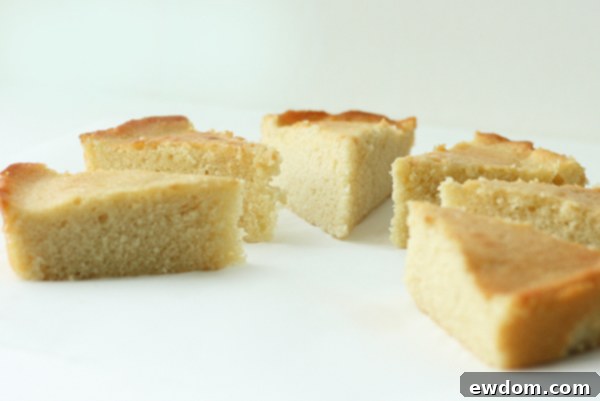
To truly understand how these differences play out in your oven, we embarked on a direct, head-to-head comparison. Using a consistent cake recipe, we tested a range of flours commonly used, or considered for use, in cake baking. Our selection aimed to provide clear insights into the impact of protein content, milling, and processing on the final cake.
Flours Under Scrutiny:
- Unbleached All-Purpose Flour (Standard control)
- Unbleached All-Purpose Flour plus Cornstarch (A common DIY cake flour substitute)
- Unbleached Pastry Flour
- King Arthur Unbleached Cake Flour (Known for its blend of wheat flour and wheat starch)
- Bob’s Red Mill Unbleached Cake Flour (Made solely from finely milled soft wheat)
- Bleached Cake Flour (Our benchmark for traditional cake flour)
Experiment Results: Cake by Cake Analysis
All-Purpose Flour (and Cornstarch Substitute): Consistent but Coarse
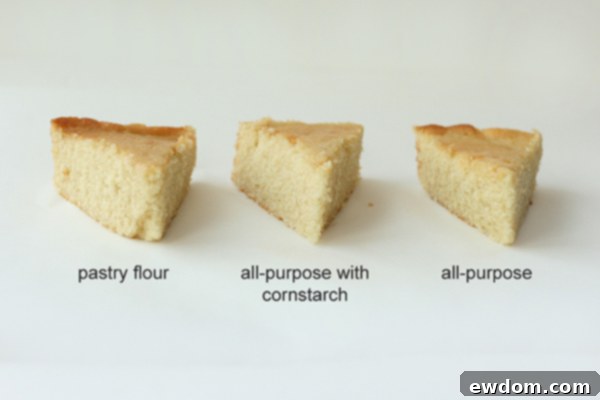
The two cakes made with all-purpose flour—one plain and one with added cornstarch—yielded remarkably similar results. This suggests that the common home hack of adding cornstarch to AP flour to mimic cake flour has a surprisingly minimal effect on the overall baking outcome in terms of height, crumb, and texture. Both cakes were comparatively short in stature, featuring an open and slightly coarse crumb. Their color was noticeably darker than the cake made with pastry flour. Furthermore, the all-purpose flour cakes exhibited a distinct “wheaty” taste, which, though faint, evoked a sensory memory akin to Play-Doh – a flavor not typically desired in a delicate cake. This outcome highlights the limitations of higher-protein all-purpose flour for achieving the tender crumb of a true cake flour.
Pastry Flour: The Unexpected Gem for Tenderness
The cake made with unbleached pastry flour truly stood out, offering a significant improvement over the all-purpose flour cakes. It was notably taller, showcasing a much finer and more uniform crumb structure. The color was lighter, signaling a more refined flour. Crucially, its texture was vastly superior: smooth, with an excellent mouthfeel, and a mild, appealing taste that was free from any overpowering “wheaty” notes. Pastry flour’s low protein content and fine milling proved to be a winning combination for cake tenderness, demonstrating its potential as a superb, albeit less common, choice for delicate cakes.
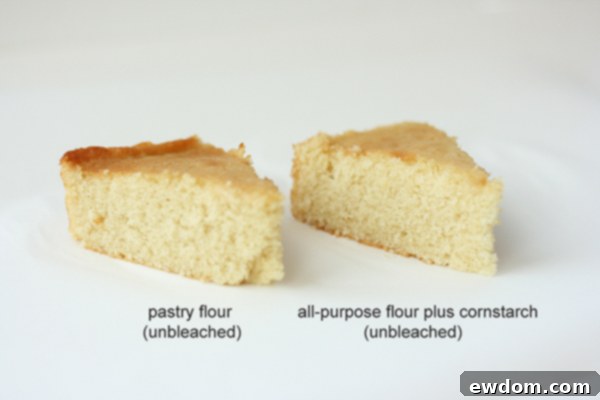
The photograph above vividly illustrates the striking color variation between the pastry flour cake and the all-purpose flour-cornstarch cake. Despite ending up with a roughly similar starch-to-protein ratio (in the case of AP + cornstarch), the intrinsic properties of the flours, particularly their protein structure and granule size, produced noticeably different cakes in terms of appearance and texture.
Bleached vs. Unbleached Cake Flours: Subtle Yet Significant Nuances
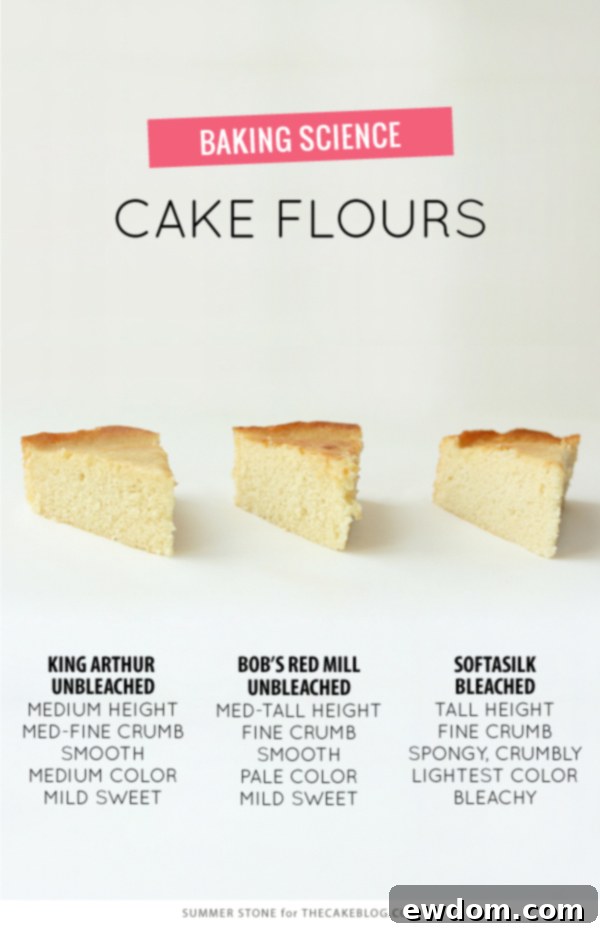
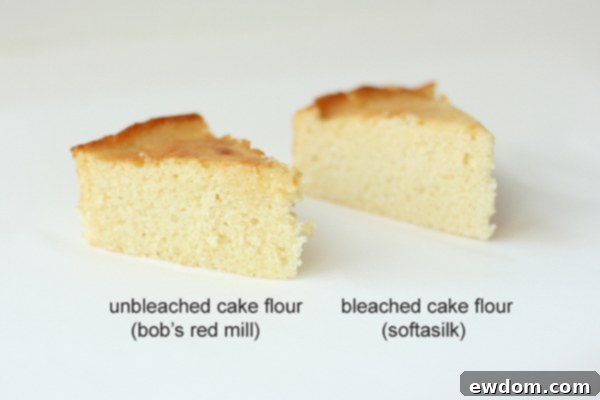
Comparing the cakes made with various cake flours revealed some intriguing, albeit subtle, differences. The unbleached cake flour from King Arthur, formulated as a blend of wheat flour and wheat starch, resulted in a cake that was slightly darker in color and a touch shorter than the cake made with Bob’s Red Mill unbleached cake flour. Bob’s Red Mill, which is composed solely of finely milled soft wheat flour, produced a slightly lighter and taller cake with a wonderfully delicate texture. In contrast, the Softasilk bleached cake flour, made from finely milled and chemically treated soft wheat, presented a cake that was a bit lighter in color and marginally taller. However, its texture was distinctively slightly spongy and surprisingly crumbly when compared to the cakes baked with the unbleached cake flours. Moreover, the bleached cake flour cake carried a very distinct flavor profile that was notably absent in its unbleached counterparts, suggesting that the chemical treatment may also impart a subtle, unique taste. This distinct flavor can sometimes be described as slightly metallic or chemically, which might not be desirable for all bakers.
As depicted in the photo below, the Bob’s Red Mill unbleached cake flour cake was just a touch darker and slightly shorter than the bleached cake flour cake, highlighting the visual variations that subtle processing differences can create.
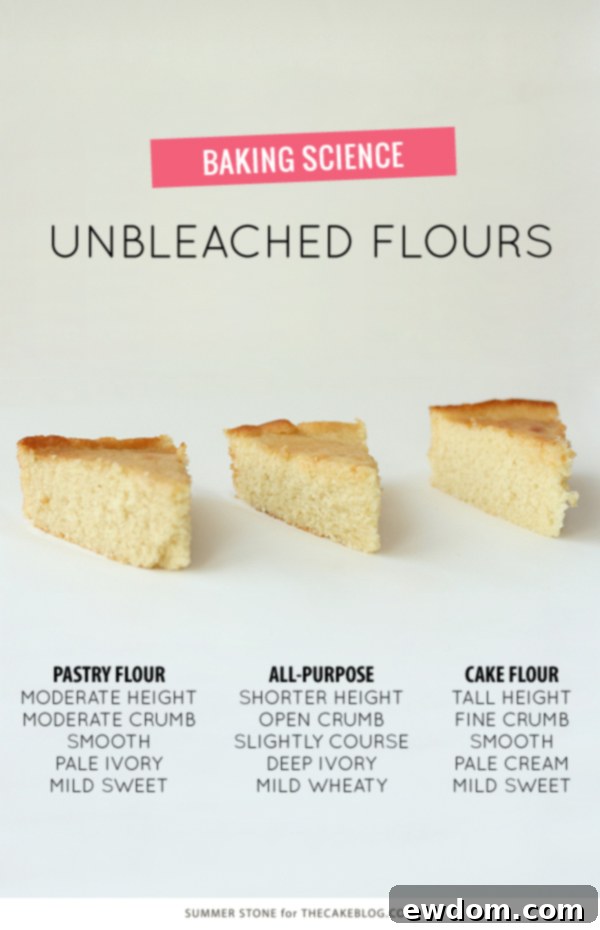
For a complete visual comparison of the unbleached flours, the image below provides a clear overview. It demonstrates that the all-purpose flour cake is the darkest in color and shortest in stature, indicative of its higher protein and coarser grind. The pastry flour cake appears a bit taller and a tad lighter, showcasing its improved texture. Finally, the unbleached cake flour (specifically Bob’s Red Mill in this instance) stands out as the lightest in color and the tallest among the unbleached contenders, confirming its superior performance for achieving the lightest and most tender cake crumb.
Key Takeaways and Recommendations for Your Next Bake
After this extensive exploration and hands-on experiment, the results are clear and insightful. The unbleached pastry flour and unbleached cake flours truly impressed, consistently delivering superior cakes with finer crumbs, lighter colors, and more delicate textures. Their lower protein content and finer milling are undeniably key to achieving that coveted tender crumb.
Making the Right Choice for Your Cake:
- Prioritize Specialty Flours: While unbleached pastry flour and unbleached cake flours might require a bit more effort to locate in certain grocery stores, their exceptional results make the hunt entirely worthwhile. Look for them in specialty baking aisles or natural food stores.
- The Reliable Substitute: If access to these specialty flours is limited, a fantastic and widely accepted substitute is to combine half all-purpose flour and half cake flour. This blend effectively lowers the overall protein content of your flour mixture, mimicking the tenderness of a dedicated cake flour while retaining some structural integrity. This balances the characteristics to give you a more tender cake than using all-purpose flour alone.
- When All-Purpose is Your Only Option: Should all-purpose flour be your sole available choice, don’t despair! You can still bake a wonderful cake. The trick is to opt for the brand with the lowest protein content you can find. Checking nutrition labels for protein per serving can help you make an informed decision, as lower protein translates to less gluten development and a more tender result.
- Experiment and Taste: Ultimately, baking is an art as much as a science. Don’t be afraid to experiment with different flours and combinations to discover what works best for your specific recipes and desired outcomes. Pay attention to how each flour impacts the taste, texture, and rise of your cakes.
Choosing the right flour is a foundational step in mastering cake baking. By understanding the science behind each type, you empower yourself to create cakes that are consistently moist, tender, and utterly delicious. Happy baking, and may your cakes always rise beautifully!
YOU MAY ALSO ENJOY:
Why Oven Temperature Really Matters
Chocolate vs Cocoa
Mixing Up The Perfect Cake
Do Your Cupcakes Need a Rest?
Can You Overmix A Cake?