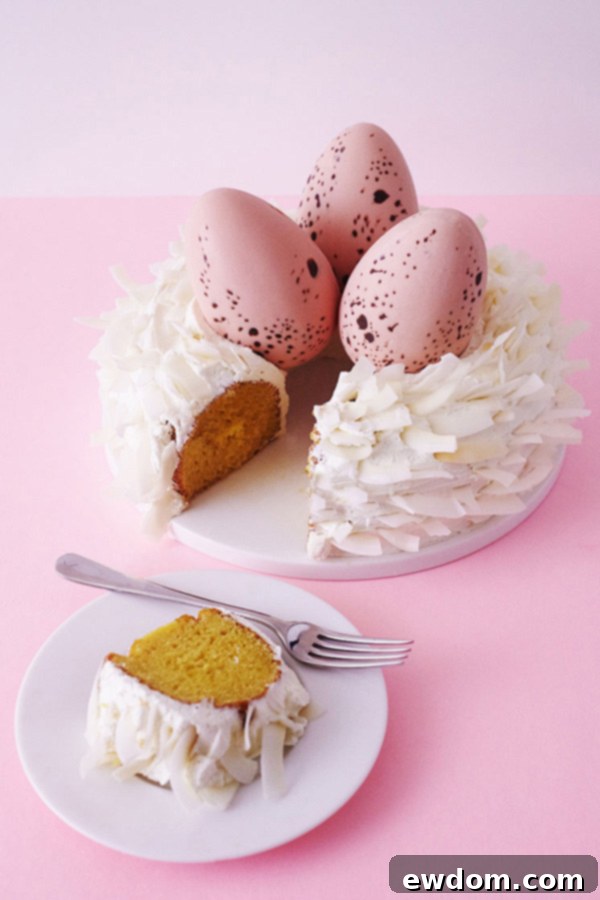
Our talented contributors, Mary and Brenda Maher of Cakegirls, are back with an inspiring new tutorial, just in time for spring!
Crafting the Perfect Easter Nest Cake: A Step-by-Step Guide to a Stunning Holiday Dessert
Easter marks a truly delightful season for bakers and cake decorators alike. After months of indulging in the rich, heavy flavors of winter holidays – think robust caramels, warming spices, and decadent pumpkin desserts – the arrival of spring brings a refreshing change. It’s a chance to embrace vibrant pastels, light and airy textures, and the delicate, refreshing flavors of the season, like zesty lemon and sweet coconut. Traditionally, the Easter dessert table often features elaborate basketweave cakes or charming piped lambs, designs we’ve loved and created many times over.
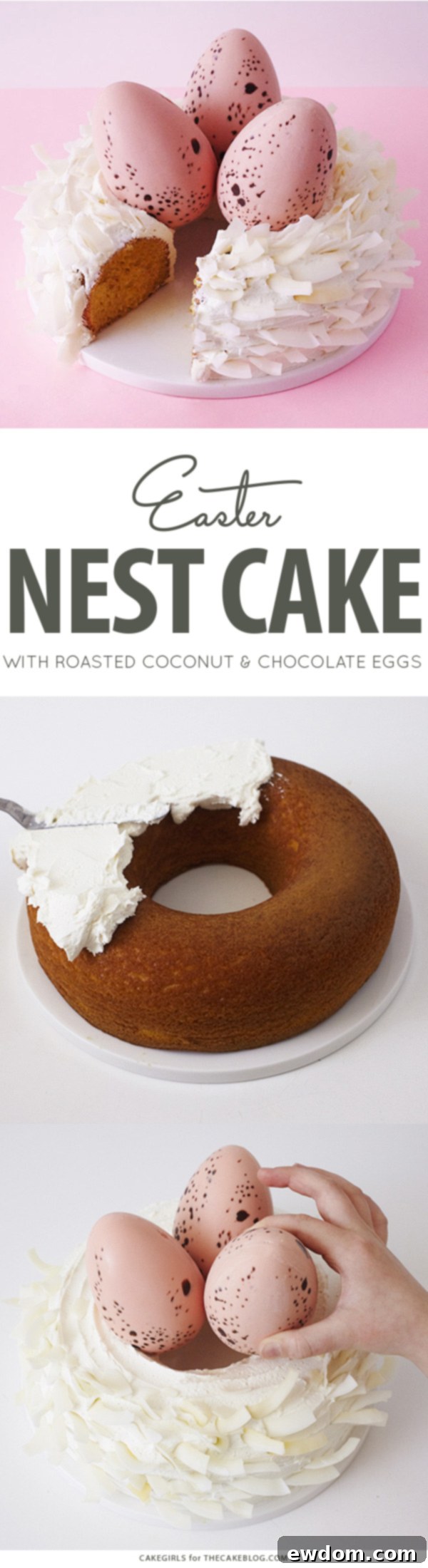
This year, however, we at Cakegirls wanted to offer a fresh perspective on the quintessential Easter centerpiece. We envisioned something elegant, yet effortlessly charming, and a beautifully oversized spring nest emerged as the perfect solution. Imagine a cake that captures the essence of spring’s renewal and natural beauty, adorned with delicate, speckled chocolate eggs that add a touch of sophisticated whimsy. The genius behind this design lies in its simplicity: a donut-shaped cake serves as the sturdy base, beautifully finished with textured, roasted coconut to mimic a real nest, and adorned with artisanally crafted chocolate eggs. This approach ensures an elegant presentation without the fuss, making it an achievable “wow” factor for any Easter gathering.
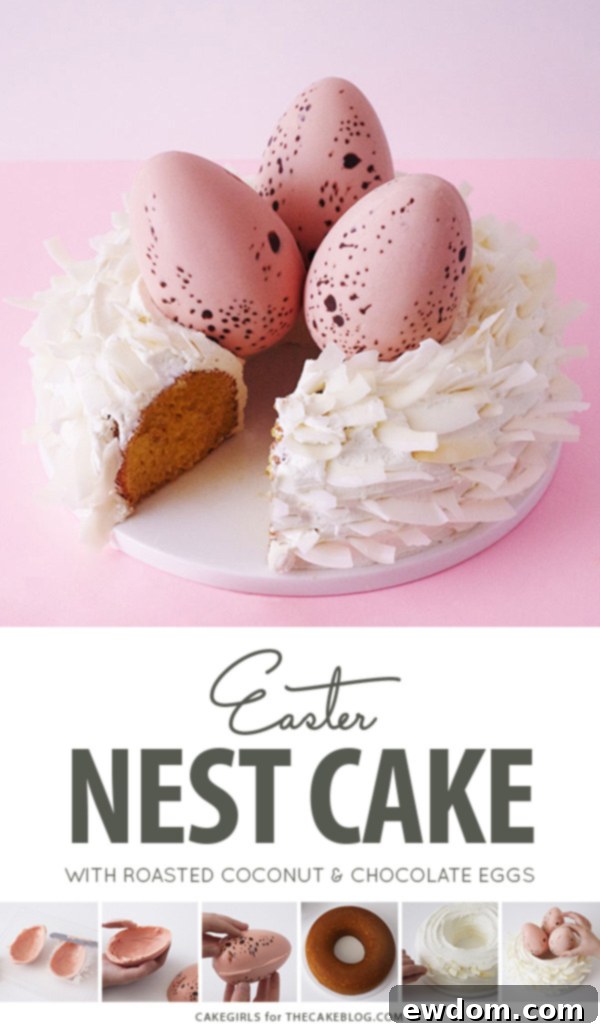
Why a Donut-Shaped Cake Pan is Your Easter Baking Secret Weapon
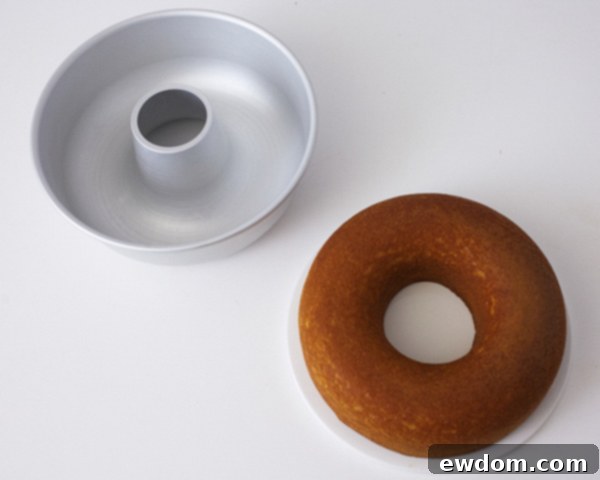
When it comes to versatile baking tools, a good donut cake pan is an absolute game-changer in our kitchen. We adore having pans in our collection that can transform to suit various creative visions, and the donut pan consistently delivers. Sometimes, it’s the ideal mold for a colossal, playful donut or a strikingly modern bundt cake. Other times, it might ingeniously double as a life preserver for a themed pool party treat. But this Easter, its true brilliance shines as the foundation for our elegant nest cake.
The beauty of using a donut pan for this particular design cannot be overstated. It inherently creates a cake with a natural hollow center, perfectly mimicking the depression of a bird’s nest. This means you skip the tedious steps of carving and shaping, allowing you to pour in your batter, bake, and emerge with a cake already halfway to its final nest form. This fundamental shape not only simplifies the baking process but also provides a stable and aesthetically pleasing structure. From this point, the true magic unfolds with the decorative elements: the exquisite speckled chocolate eggs provide that undeniable “wow” factor, while the specific choice of an extra-large egg-shaped chocolate mold becomes our secret weapon for crafting these impressive, edible decorations.
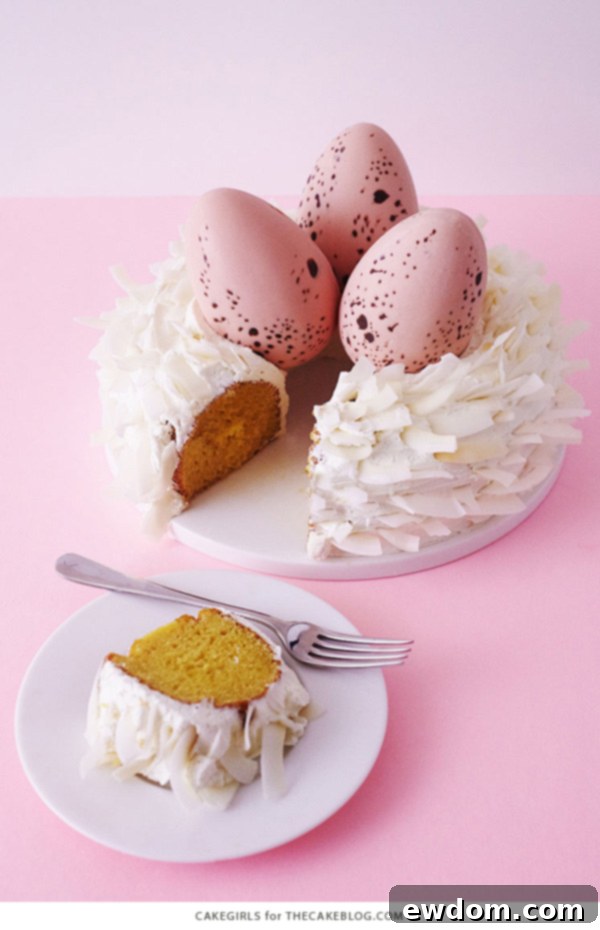
The Foundation: Cake, Buttercream, and the Perfect Coconut
While the visual appeal of our Easter Nest Cake is undeniable, the deliciousness of its foundation is equally important. For this recipe, a homemade, from-scratch cake recipe is truly ideal. A freshly baked cake offers a superior crumb texture and depth of flavor that elevates the entire dessert experience. However, we understand that time is often a luxury, especially during holiday preparations. In a pinch, a good quality box mix cake can certainly work beautifully and will still result in a delightful dessert.
Where we strongly recommend investing your time and effort is in the buttercream. A fluffy, homemade American buttercream recipe is not just a tasty topping; it’s a critical structural component for this cake. You need a nice, thick, and sturdy layer of icing to act as the adhesive for the toasted coconut chips, ensuring they stay securely in place and contribute to the realistic nest texture. For the coconut itself, we specifically chose fresh roasted coconut chips. These larger, irregularly shaped pieces of coconut offer a more rustic, branch-like texture compared to finely shredded coconut, making the nest truly convincing. We sourced ours from Trader Joe’s, but this style of roasted or toasted coconut is becoming increasingly available at other gourmet grocery stores, health food markets, and can be conveniently purchased online. Its rich flavor and unique appearance are indispensable for achieving the authentic look and feel of our Easter nest.
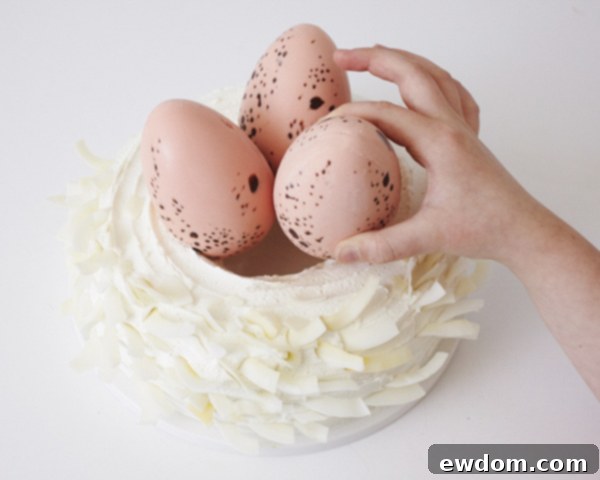
EASTER NEST CAKE: A Step-by-Step Tutorial
by Cakegirls
Supplies You’ll Need:
- Cake baked in a Donut Shaped Cake Pan
- Generous batch of American Style Buttercream
- 1 bag of Light Pink Candy Coating (or preferred egg color)
- Small amount of Dark Chocolate Candy Coating (for speckles)
- Extra-Large Egg Chocolate Mold
- Approximately 4 ounces of Toasted Coconut Chips
- Toothpicks
- Small spatula or offset spatula
- Microwave-safe bowls
Part 1: Preparing Your Cake and Buttercream Base
- Bake the Cake: Begin by baking your cake of choice in the donut-shaped pan according to your recipe’s instructions. Ensure the pan is properly greased and floured to prevent sticking.
- Cool Thoroughly: Once baked, allow the cake to cool completely in the pan on a wire rack before carefully inverting it. A fully cooled cake is crucial for clean removal and subsequent icing.
- Chill for Stability: For optimal handling, wrap your cooled cake tightly in plastic wrap and place it in the refrigerator for at least a few hours. A chilled cake is significantly firmer and much easier to ice with buttercream without tearing or crumbling. If you’re baking ahead, you can even freeze the wrapped cake for future use; just remember to defrost it in the fridge overnight before you plan to decorate.
- Prepare Buttercream: You can also make your American buttercream ahead of time. Store it in an airtight container in the fridge. About an hour or two before you need to use it, pull it out to allow it to soften slightly. Give it a good re-stir with a spatula or whip it again briefly with a mixer to restore its creamy, spreadable consistency before applying.
Part 2: Crafting Your Stunning Speckled Chocolate Eggs
The speckled chocolate eggs are truly the crowning glory of this cake, adding an artisanal touch that elevates the entire presentation. Patience and precision here will yield beautiful results.
- Melt Dark Chocolate for Speckles: Take a small handful of dark chocolate candy coating and place it into a microwave-safe container. Heat in the microwave for 30-second intervals at half power (50-60%). Remove the container, stir thoroughly, and continue heating and stirring until the candy coating is fully melted and smooth. Be extremely careful not to overheat the chocolate, as it can seize or burn easily.
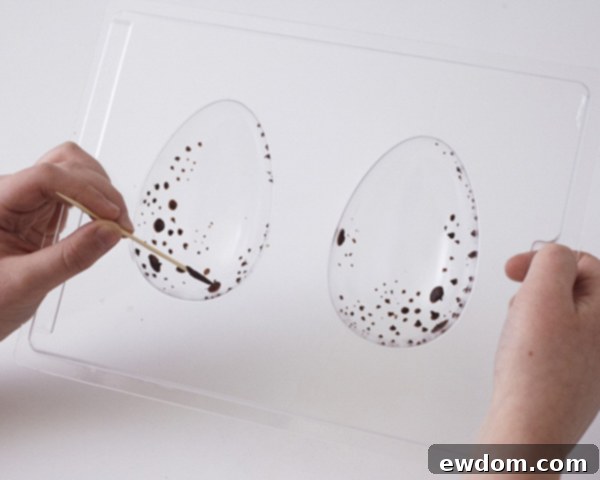
- Create the Speckles: Dip a clean toothpick into your melted dark chocolate candy coating. Carefully make small, irregular dots inside the cavities of your extra-large egg mold. Aim for an organic, scattered look, mimicking natural bird eggs. Once you’ve added the desired speckles, immediately place the mold into the refrigerator for 2-3 minutes. This quick chill will firm up the chocolate dots, preventing them from melting or blending into the main egg color.
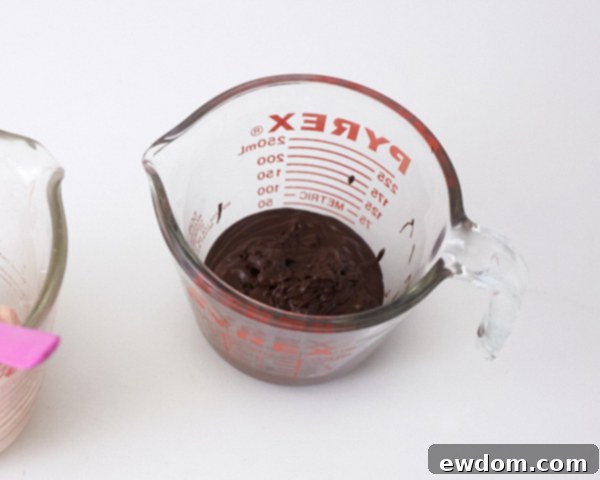
- Melt Pink Candy Coating: Now, melt about one-third of a bag of light pink candy coating (or your chosen egg color) using the exact same gentle microwave method as the dark chocolate: short intervals at half power, stirring frequently. Ensure the coating is completely melted and smooth, but crucially, it should not be hot. If it’s too warm, it will melt the pre-set dark chocolate speckles, causing them to smear.
- Form the Egg Shells: Dollop a couple of generous, heaping tablespoons of the melted pink candy coating into each half of the egg mold. Using the back of a small spoon, carefully spread the coating to evenly line the entire cavity, creating a sturdy shell. It’s important that this shell is no thinner than 1/4 inch thick; a thicker shell will ensure your eggs are robust and won’t easily break when handled. Make sure the coating extends slightly over the edge of the mold.
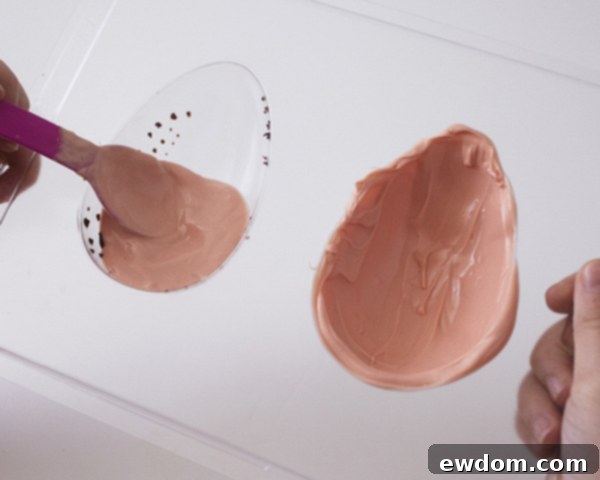
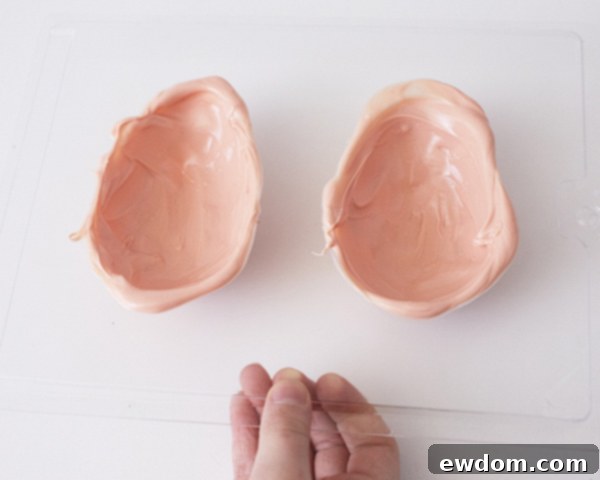
- Level the Edges: Once you’ve coated both sides of the mold, use a small, clean spatula or a bench scraper to carefully scrape across the top surface of the mold. This creates a perfectly flat, clean edge on each egg half, which is essential for easily joining them later.
- Chill to Set: Place the entire egg mold back into the refrigerator for approximately 15 minutes. This will allow the candy coating to fully set and harden.
- Demold and Inspect: After chilling, remove the mold from the fridge. Before demolding, gently check the shells for any obvious thin spots. If you find any, you can add a small amount of additional melted coating to reinforce them. Once satisfied, carefully flex the mold to gently pop out the two hardened egg halves.
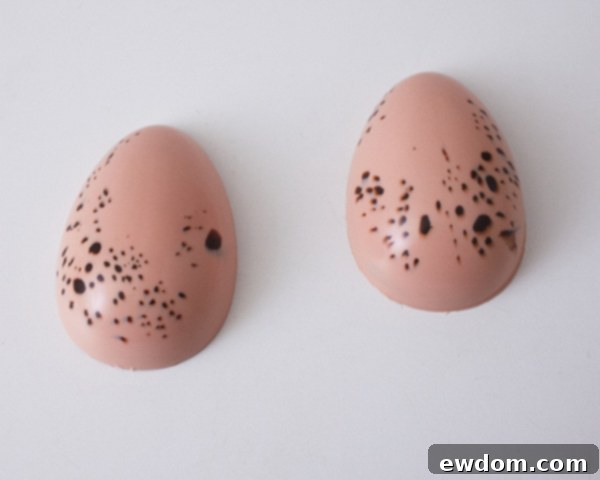
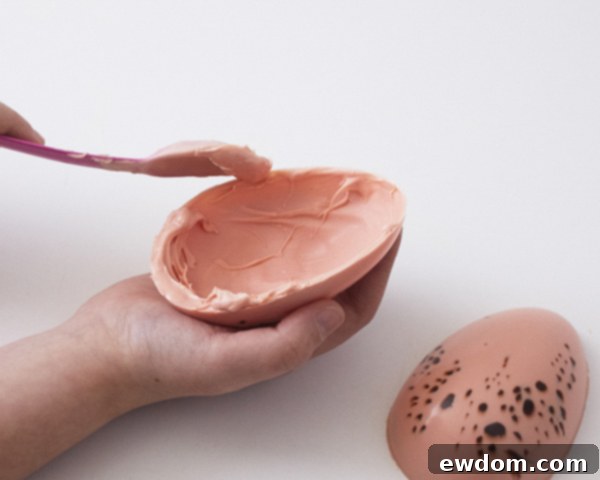
- Join the Egg Halves: If your candy coating has cooled and hardened, rewarm it slightly in the microwave until it’s just melted again. Take one egg half and spoon a small amount of melted coating along its flat edge. Carefully place the second half on top, aligning the edges perfectly. Gently use your finger to wipe away any excess coating that might seep out from the seam, creating a neat finish. Hold the two halves together firmly for a few moments until you feel they are securely bonded.
- Repeat for All Eggs: Repeat this entire process – melting, speckling, molding, chilling, demolding, and joining – three times in total to complete three beautifully speckled Easter eggs, ensuring they are all equally sturdy and appealing.
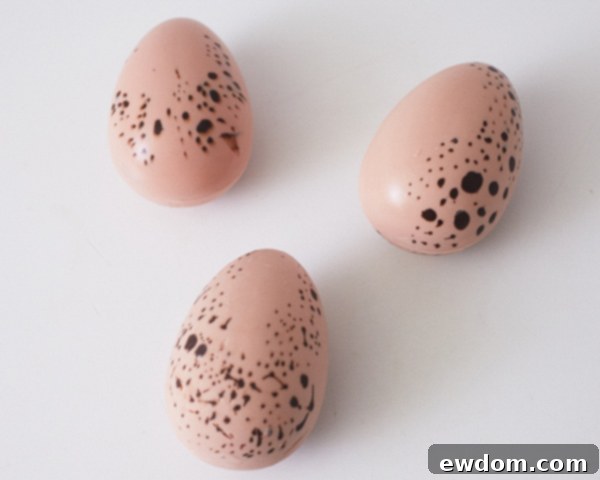
Part 3: Assembling and Decorating Your Easter Nest Cake
With your cake chilled and your exquisite chocolate eggs ready, it’s time to transform the donut cake into a convincing and charming nest.
- Ice the Cake with a Nest-like Texture: Using an offset spatula or a regular spatula, apply a generous, thick layer of your prepared buttercream over the entire surface of the donut cake. Don’t worry about making it perfectly smooth; instead, embrace a rough, textured finish. To create a realistic nest-like texture, drag the end of your spatula through the buttercream, following the circular shape of the cake. This technique creates subtle grooves and ridges, mimicking the intricate woven strands of a bird’s nest.
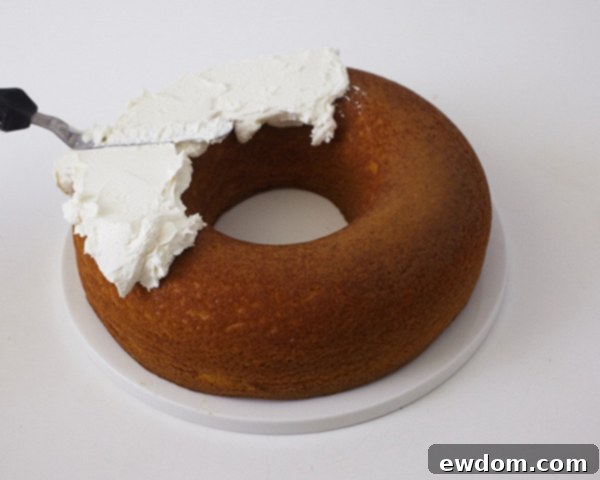
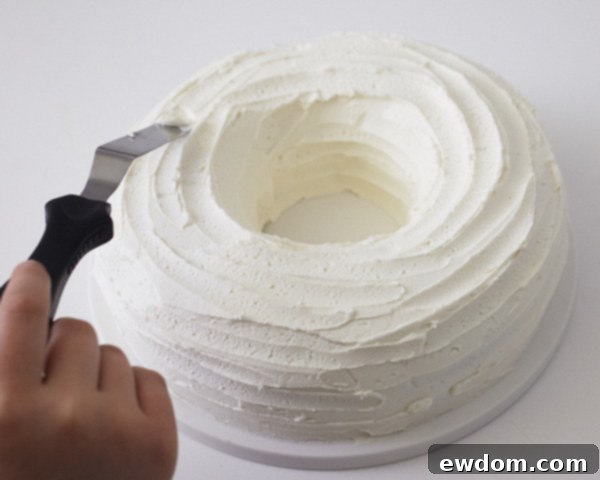
- Apply Toasted Coconut Chips: Now comes the delightful part of adding the “nest” material. Gently press individual pieces of your toasted coconut chips into the buttercream, covering the entire iced surface. For the most authentic and visually cohesive nest appearance, make sure the pieces are all heading in roughly the same direction. This careful placement prevents the texture from looking haphazard and creates a natural, flowing effect.
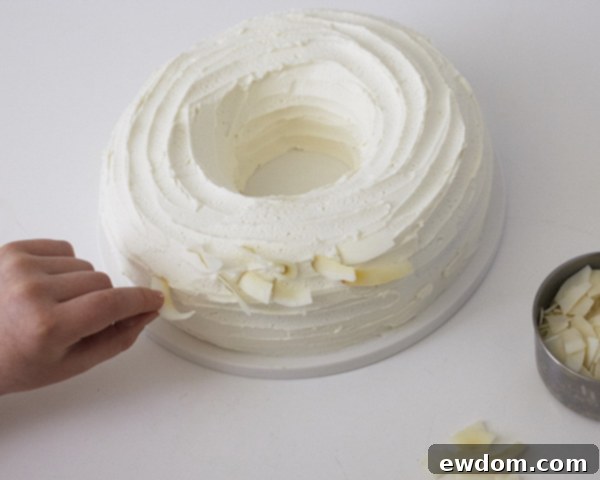
- Place Your Chocolate Eggs: Before completely finishing the coconut around the top inner edge, carefully arrange your beautiful speckled chocolate eggs in the center of the cake, nestled perfectly within the donut hole. The donut shape is designed to accommodate them wonderfully. If, however, they don’t sit perfectly snugly, you can discreetly carve out a small section of the cake within the hole or apply a little extra buttercream to the base of the eggs to ensure they are stable and securely positioned in the middle.
- Finish the Nest: Once the eggs are in place, apply any remaining coconut chips around the top inner edge of the cake, filling in any gaps and giving your nest a complete, polished look.
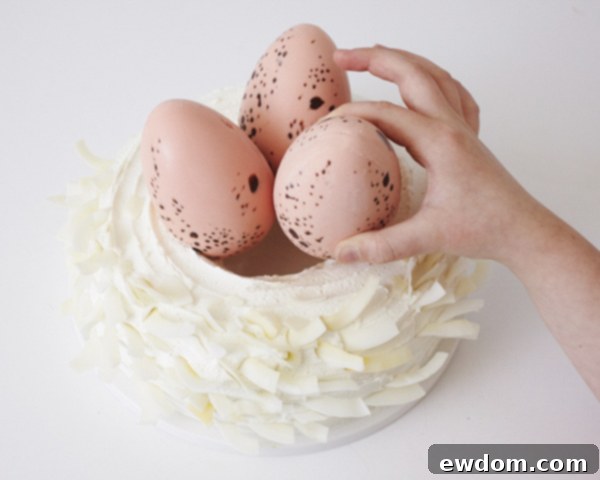
Part 4: Voila! Your Masterpiece Awaits!
And just like that, with your final coconut pieces meticulously placed, your breathtaking Easter Nest Cake is complete! Step back and admire your creation – an elegant, charming, and utterly delicious centerpiece that is sure to captivate and delight all who gather around your Easter table. Now, the only thing left to do is gather your loved ones, slice into this beautiful baby, and savor the delightful flavors of spring and celebration!
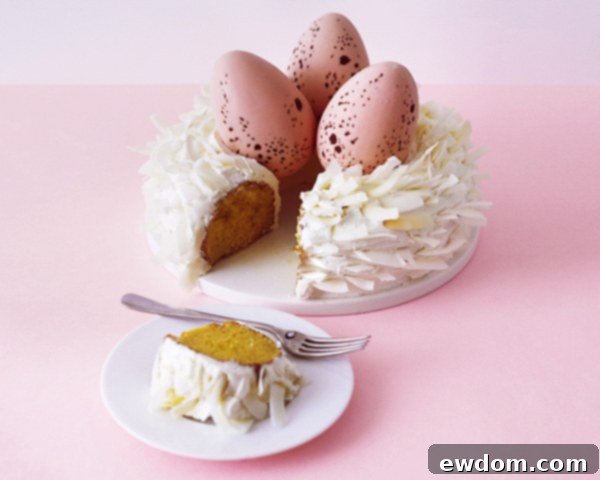
Tips for Success & Creative Variations
To ensure your Easter Nest Cake is nothing short of perfection, consider these additional tips and creative variations:
- Cake Flavor Customization: While a classic vanilla or lemon cake pairs beautifully with coconut, feel free to experiment! A light coconut cake, almond cake, or even a subtle orange zest cake could add wonderful dimensions of flavor.
- Buttercream Alternatives: If American buttercream isn’t your preference, a cream cheese frosting or a smooth meringue-based buttercream (like Swiss or Italian) can also work. Just ensure it’s firm enough to hold the coconut chips securely.
- Coconut Texture Play: For a slightly different aesthetic, you could mix finely shredded coconut with the toasted chips, or even lightly toast shredded coconut yourself for a similar effect if chips are hard to find.
- Egg Color Creativity: Don’t limit yourself to pink! Experiment with pastel blue, green, yellow, or lavender candy coatings for your eggs to match your Easter decor. You can even create smaller “mini eggs” using different sized molds.
- Filling the Eggs: For an extra surprise, you could partially fill your chocolate eggs with small candies, sprinkles, or even a different flavored ganache before joining the halves.
- Seasonal Garnishes: Enhance the natural look of your nest with edible flowers (like violas or pansies), a few delicate sprigs of fresh mint, or even a scattering of additional mini chocolate eggs or candy chicks around the base.
- Storage: Store the finished cake in an airtight cake carrier at room temperature for up to 2-3 days, or in the refrigerator if your buttercream or filling requires it. Let it come to room temperature before serving for the best flavor and texture.
YOU MAY ALSO ENJOY THESE RELATED EASTER TREATS:
- Speckled Egg Cake
- Chocolate Easter Bunny Cake
- Sugar Cookie Moss Cake
- Chocolate Daffodil Cake
- Mini Easter Egg Cakes