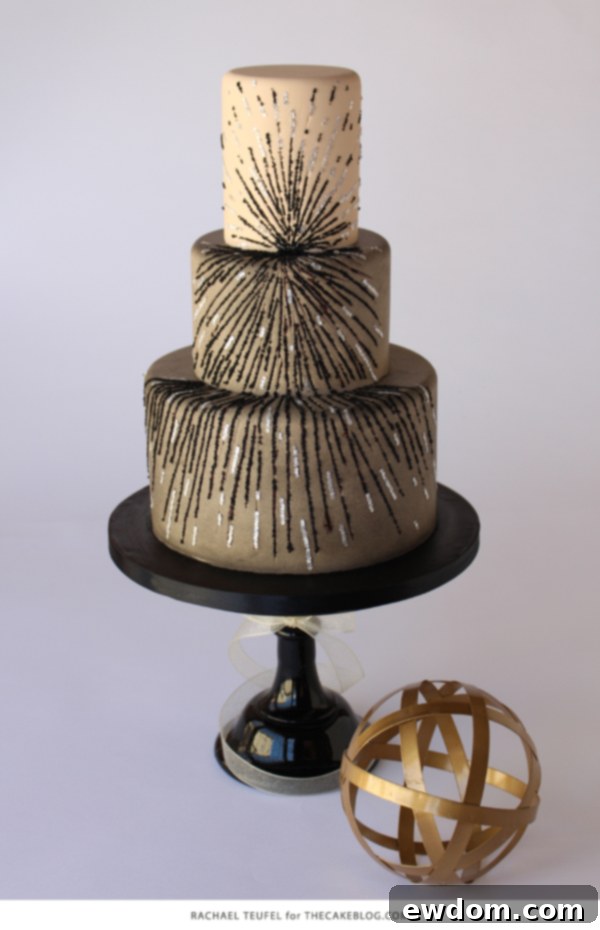
Welcome back to our insightful Design Tips series, where we unravel the foundational elements of crafting visually stunning cakes. This month, we’re joined by our esteemed contributor, Rachael Teufel of Intricate Icings Cake Design, who shares her expertise on one of the most critical principles in art and, by extension, cake design: Balance. Prepare to transform your approach to cake artistry as Rachael guides us through the nuances of creating harmonious and captivating edible masterpieces.
At its heart, cake design is an exquisite form of edible art. Like any other artistic discipline, it thrives on a set of fundamental principles that dictate aesthetic appeal and visual harmony. Beyond mere decoration, a truly exceptional cake captivates the eye and tells a story, much like a painting or a sculpture. These foundational elements, including balance, movement, proportion, pattern, emphasis, and unity, coalesce to create a piece that is not just edible but also deeply appealing to the human gaze. When these details are meticulously considered and brought together cohesively, the result is an artwork that resonates and delights.
Have you ever found yourself admiring a cake, yet feeling an undefinable sense that something was slightly off, or perhaps missing a crucial element? More often than not, this subtle discord stems from a lack of balance. Balance in design refers to the visual weight of elements within an artistic composition. It’s about how these elements are arranged to achieve a sense of equilibrium and stability. Understanding balance is key to creating a cake that feels complete and intentional. It’s typically categorized into three distinct types: symmetrical, asymmetrical, and radial. Let’s delve deeper into each category, exploring how they manifest in design through illustrative sketches.
Understanding Symmetrical Balance in Cake Design
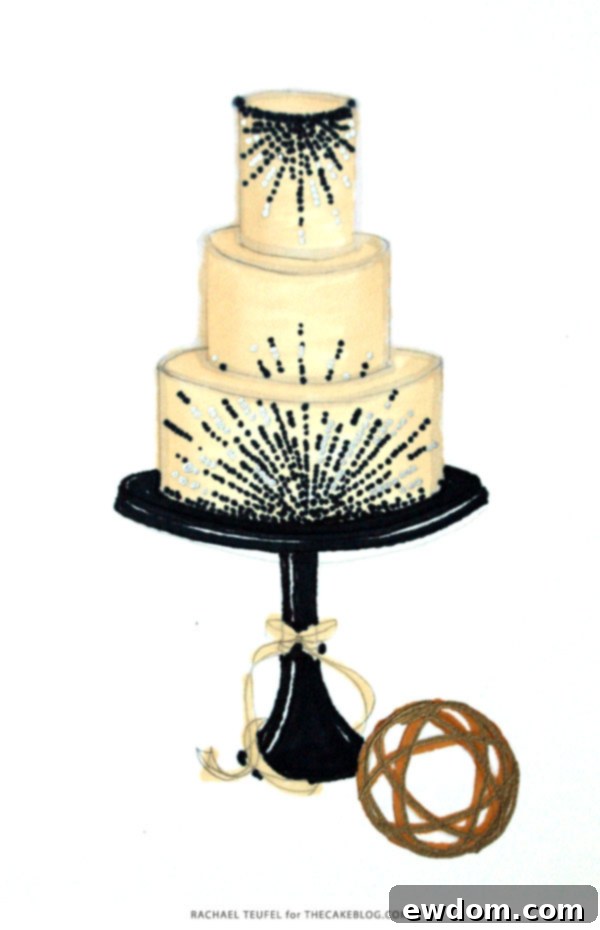
Symmetrical balance is perhaps the most straightforward and often recognized form of equilibrium. In a symmetrically balanced design, both halves of the artwork are identical, or very nearly so, whether divided vertically or horizontally down a central axis. This creates a mirror-image effect, where elements on one side are replicated precisely on the other. It evokes a strong sense of formality, order, and classic elegance, often conveying stability and tradition. Think of a perfectly stacked multi-tiered wedding cake with identical floral arrangements on either side, or intricate piping designs that mirror each other from top to bottom.
In our first sketch, you can clearly observe the principles of symmetrical balance in action. The starburst motifs are meticulously replicated, ensuring that the visual weight on the left side precisely matches that on the right. Similarly, the composition maintains a harmonious equilibrium from top to bottom. This type of balance is highly effective for designs that aim to convey a sense of grandeur, precision, and timeless beauty. It offers a sense of comfort and predictability, making it a popular choice for formal events and traditional celebrations.
Embracing Asymmetrical Balance for Dynamic Cakes
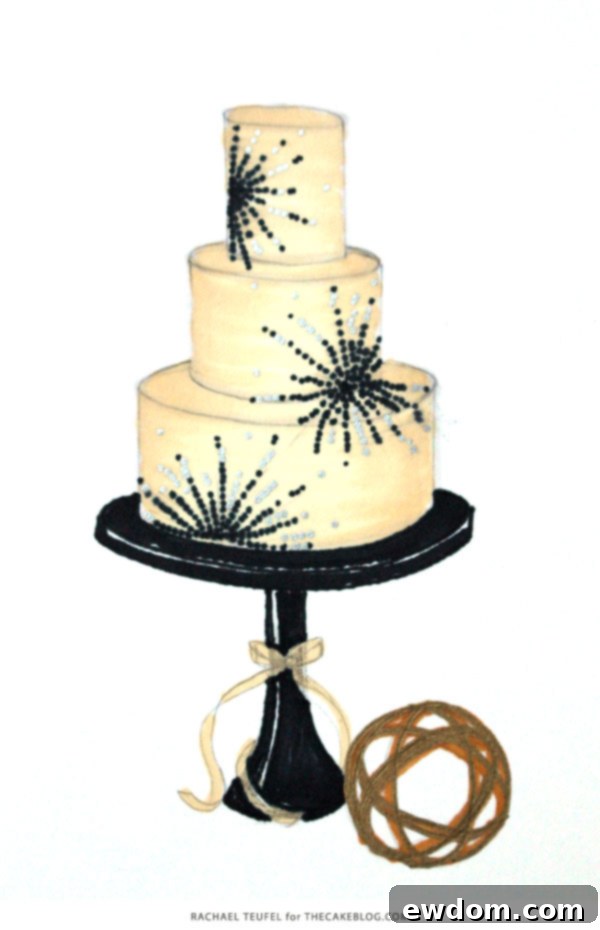
In contrast to the structured harmony of symmetry, asymmetrical balance introduces a more dynamic and modern aesthetic. Here, elements on either side of an imaginary central axis are distinctly different, yet they manage to achieve equilibrium through careful manipulation of visual weight. This means that a larger, heavier element on one side might be balanced by several smaller, lighter elements on the other, or by a single element placed further from the center. It’s about creating a sense of balance without mirroring, often resulting in designs that feel more organic, playful, and contemporary.
The second sketch beautifully illustrates asymmetrical balance. While one side might appear “heavier” due to larger starbursts clustered towards the bottom, a smaller, lighter starburst positioned strategically towards the top of the opposite side acts as a counterweight. This thoughtful arrangement prevents the design from feeling lopsided or chaotic. Instead, it creates an engaging visual tension and movement that draws the eye across the composition. Asymmetrical designs are perfect for cakes that aim for a more artistic, avant-garde, or naturalistic feel, like cascading floral arrangements or abstract geometric patterns.
Achieving Elegance with Radial Balance
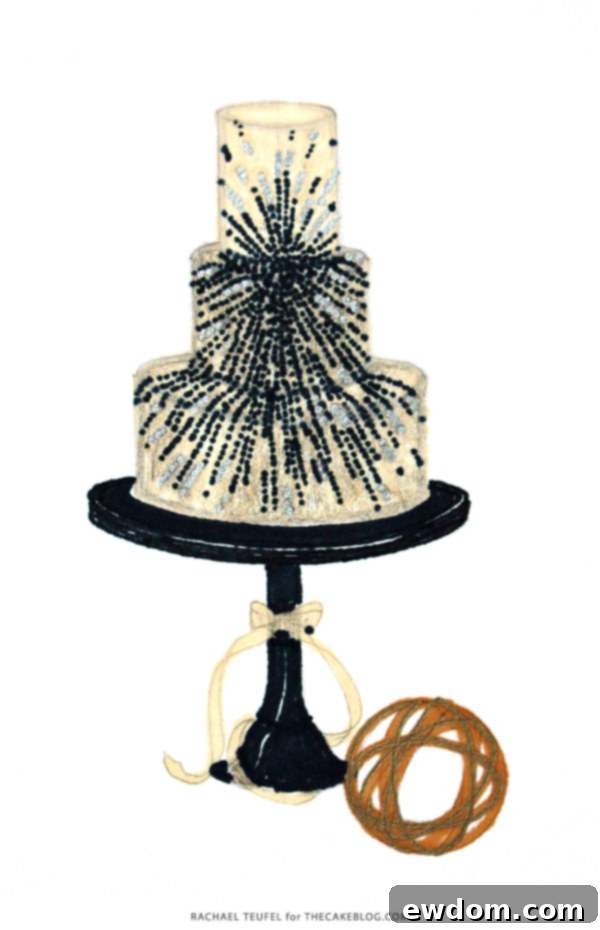
Radial balance, a captivating form of design equilibrium, occurs when all elements radiate outwards from a single, central point. This creates a natural focal point that draws the viewer’s eye directly to the center, then guides it outwards along the radiating patterns. It’s a powerful way to create emphasis and a sense of unity, often evoking feelings of harmony, grandeur, and an almost mesmerizing beauty. Think of mandalas, the spokes of a wheel, or the petals of a flower blossoming from its core; these are classic examples of radial balance.
Our third sketch exemplifies a radial design where details emerge and spread from a central point. Even if that central point isn’t exactly in the geometric center of the cake (as shown with a slightly higher center point in the illustration), the fundamental principle remains: all elements originate from and expand outwards from a singular focal area. This creates a powerful visual magnet, ensuring that the design feels perfectly integrated and complete. Radial balance is particularly effective for accentuating key features, such as a prominent sugar flower, an intricate monogram, or a dazzling edible gem, making it an excellent choice for celebratory cakes that demand attention.
The Endless Possibilities of Balance: From Inspiration to Creation
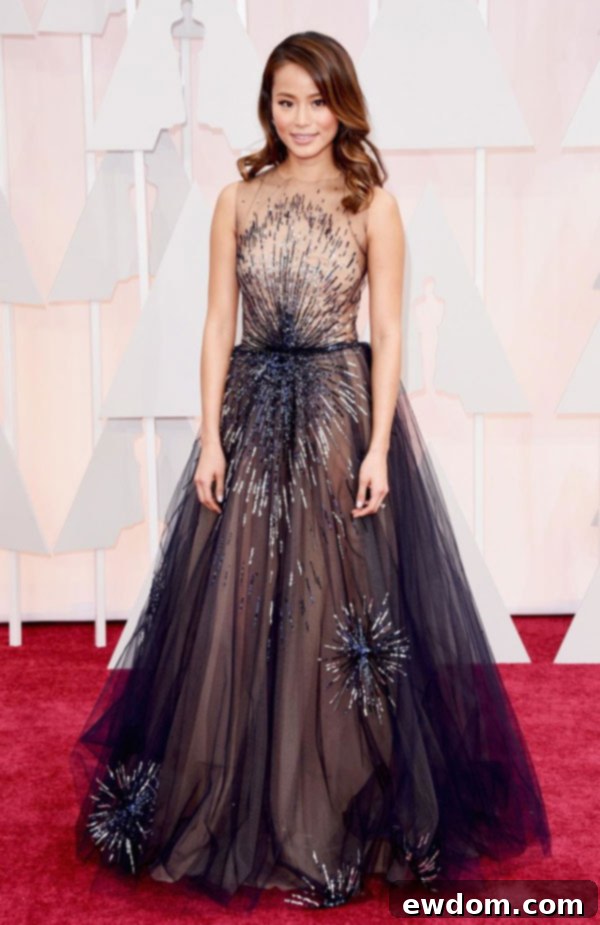
One of the most thrilling aspects of mastering design principles, particularly balance, is the sheer variety of creative avenues they open up. Each type of balance offers a distinct aesthetic and emotional resonance, allowing designers to express a wide range of styles and moods. What makes the design process truly enjoyable is exploring these possibilities and discovering how different approaches to balance can dramatically alter a piece. For instance, all three of our discussed designs – symmetrical, asymmetrical, and radial – were born from a single source of inspiration: a breathtaking Yanina Couture gown.
This common origin highlights the transformative power of design interpretation. Despite sharing the same muse, each sketch possesses the potential to evolve into an entirely unique cake design, each with its own character and visual story. The magic lies in how various design elements are manipulated to achieve different balanced effects. The strategic use of color and shading, for instance, can significantly alter perceived weight; darker, more saturated hues often feel heavier than lighter, pastel tones. Similarly, texture, or the absence thereof, plays a crucial role – a heavily textured surface can create visual density, while a smooth, unadorned area provides a sense of lightness or negative space. Even a subtle variation in the size or scale of elements can profoundly impact the balance, shifting a design from serene to dynamic, or from traditional to contemporary.
Achieving the perfect visual aesthetic often involves a bit of playful experimentation. Sometimes, it’s not about following rigid rules but about intuitively “playing” with the arrangement of elements until the composition feels just right to the eye. As you can vividly see in our sketches, even the most minor adjustments – a shift in placement, a change in scale, or an alteration in color intensity – can yield a surprisingly big impact on the overall balance and harmony of the design. This iterative process of refinement is where true creativity flourishes, allowing cake artists to fine-tune their visions and bring them to life with precision and artistry.
From Runway to Edible Art: Crafting the Yanina Couture Inspired Cake
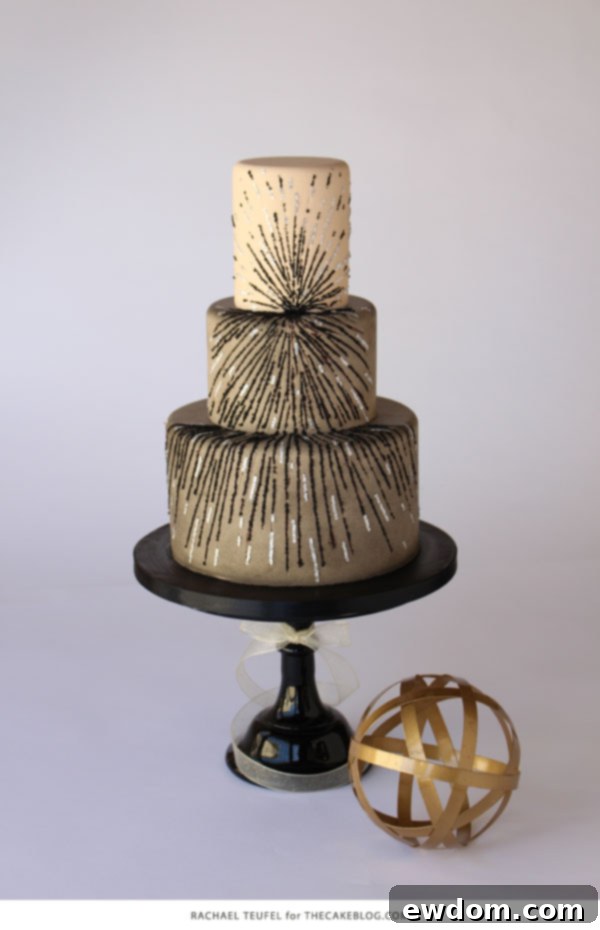
When it came time to translate the inspiration from the stunning Yanina Couture gown into a tangible cake, I gravitated towards the elegant dynamism of the radial design depicted in sketch number three. This choice allowed for a dramatic focal point that perfectly encapsulated the luxurious and intricate details of the gown. Are you ready to witness the culmination of this creative journey? Above, we offer another close look at the exquisite inspiration gown, providing context for the design choices. Below, you’ll discover my final cake design, a testament to how fashion can seamlessly transform into edible art, guided by the principles of balance.
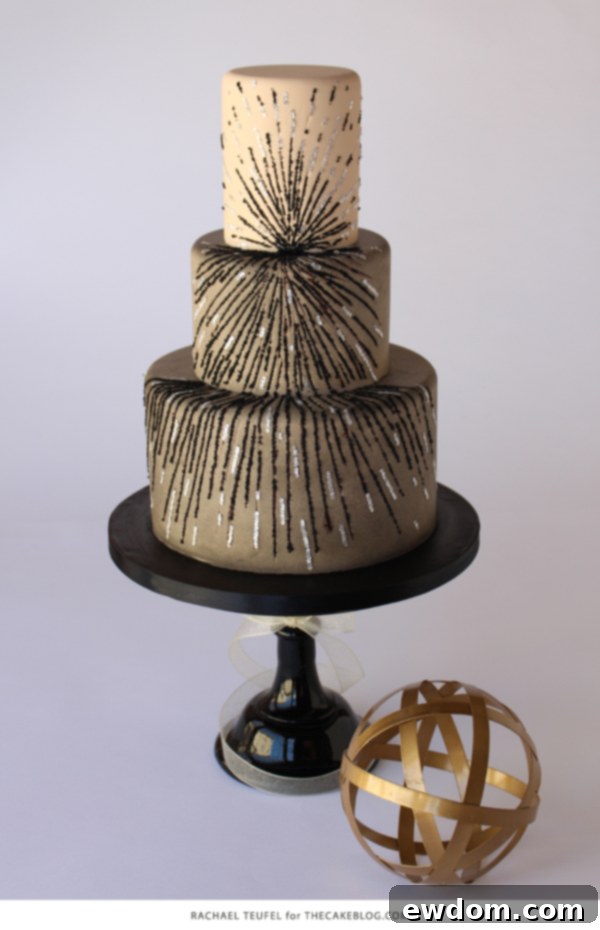
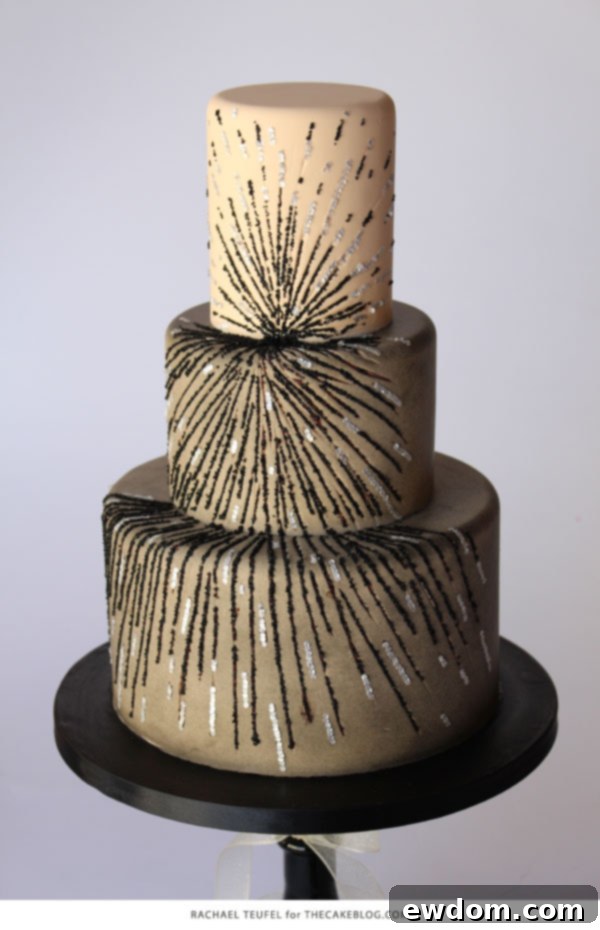
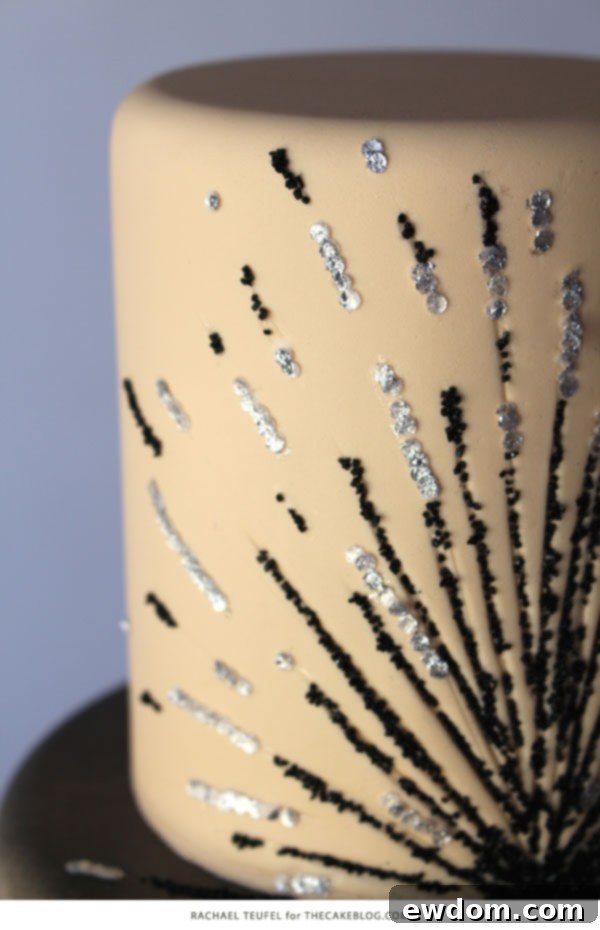
Bringing the sophisticated look of black tulle delicately layered over ivory fabric to life in an edible medium presented an intriguing creative challenge. The goal was to achieve that ethereal, translucent quality without losing the cake’s structural integrity or compromising on taste. After a period of dedicated experimentation with various techniques and materials, I was utterly delighted with the final outcome. The solution that proved most effective involved applying a very light, almost gossamer, coat of black airbrush color onto a pristine ivory fondant base. This technique allowed for a subtle yet impactful layering effect, mimicking the delicate sheerness of the gown’s fabric beautifully, creating depth and a sophisticated visual texture.
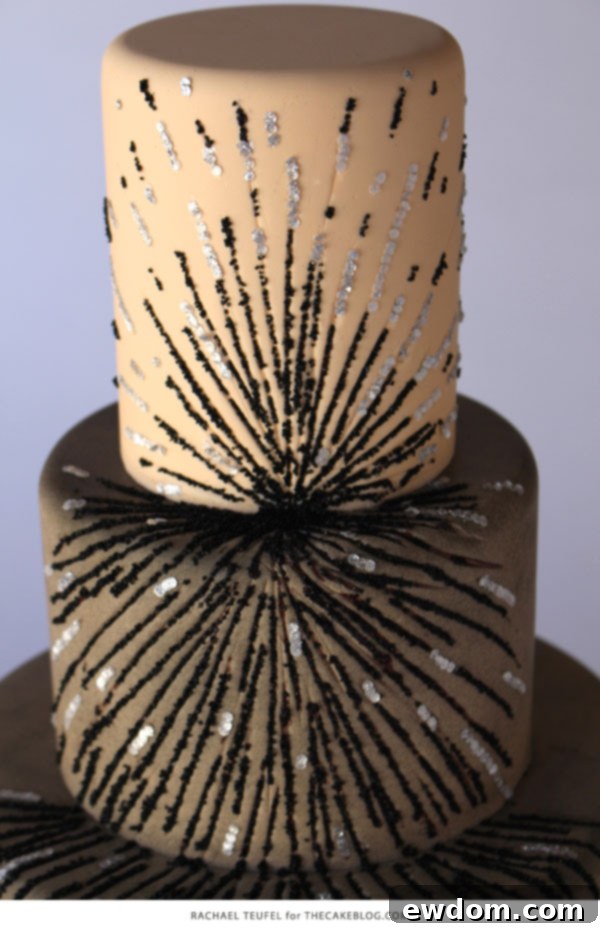
While the original gown shimmered with an array of black and silver sequins, I aimed to introduce a distinct textural dimension to the cake design, giving it a unique tactile appeal while maintaining the luxurious essence. Instead of replicating the exact sequin texture with edible sugar paste, I opted to incorporate black sanding sugar. This choice provided a magnificent, granular sparkle that caught the light in a different, perhaps even more captivating, way than traditional sequins might have. To further elevate the design and introduce an element of intricate craftsmanship, I painstakingly placed tiny wafer paper sequins. Each of these delicate pieces was individually hand-painted with a lustrous silver shimmer dust, replicating the gown’s embellishments with an exquisite level of detail and dedication. The combination of the ethereal airbrushing, the glittering sanding sugar, and the meticulously crafted wafer paper sequins resulted in a cake that was not only visually stunning but also rich in varied textures, all working in harmony to express the radial balance envisioned in the initial sketch.
Elevate Your Cake Designs: Embrace the Power of Balance
As you embark on your next cake design project, whether sketching out a fresh concept or refining an existing idea, we encourage you to keep these fundamental principles of balance at the forefront of your mind. Recognizing and consciously applying symmetrical, asymmetrical, or radial balance will not only elevate the visual appeal of your creations but also foster a deeper understanding of artistic composition. Don’t shy away from playful experimentation; dedicate time to exploring the myriad ways in which balance can be achieved. Try new arrangements, experiment with different visual weights, and challenge yourself to step outside your comfort zone. You’ll be genuinely amazed at the significant growth you’ll observe in your own design skills and the sophisticated artistry reflected in your cakes.
The journey of mastering cake design is one of continuous learning and joyful discovery. Should you find yourself needing a creative refresh or a guiding hand along the way, remember that this post is designed as a valuable resource. Revisit it anytime to reinforce your understanding of balance, inspire new ideas, and empower your cake artistry. Happy designing, and may your future cakes be perfectly balanced masterpieces!
VENDORS & CREDITS
Cake Design & Execution : Intricate Icings Cake Design
Learn More From This Baker : Online Cake Classes with Rachael Teufel on Craftsy
Inspiration Gown : Gown
YOU MAY ALSO BE INTERESTED IN THESE RELATED DESIGN TIPS POSTS:
Design Tips : Finding Inspiration for Your Cakes
Design Tips : Understanding Movement in Cake Art