Mastering the Ombre Cake: A Guide to Gradation in Baking with Miso Bakes
We are delighted to welcome back our exceptionally talented contributor, Miso, from the acclaimed Miso Bakes. Today, she returns to share her delightful insights and innovative approaches to creating one of the most visually stunning dessert trends: the ombre cake. Prepare to be inspired as Miso demystifies the art of color gradation, offering both bold designs and subtle elegance that will elevate your baking endeavors.
The Enduring Appeal of Ombre: A Global Trend
Whether you call it Ombre, Gradience, or Gradation, this captivating color transition trend has firmly established itself across a myriad of creative fields. Its pervasive charm can be observed in everything from intricate nail art and fashionable hair coloring techniques to sophisticated interior design palettes. Most delightfully, this aesthetic has profoundly influenced the culinary world, gracing everything from delicate cookies and celebratory cakes to elaborate dessert tables with its unique and eye-catching appeal. The seamless blend of hues offers a dynamic visual experience, drawing the eye and adding a touch of modern artistry to any creation.
Miso’s own fascination with gradation began several years ago during a memorable manicure experience in Seoul. The nail artist, with a friendly demeanor, inquired if she desired “gradation” on her nails. The term was new to Miso, prompting a moment of puzzled curiosity. She simply shrugged, indicating her unfamiliarity with the concept.
Observing Miso’s confusion, the artist kindly offered a demonstration, painting a small sample on her pinky nail. The result was an instant revelation: a rich, deep magenta at the base of the nail gradually faded into a delicate, almost nude pink towards the tip. Miso was utterly captivated. She immediately knew she had to have all ten nails adorned in this innovative manner. This newfound love for the gradient effect wasn’t just a fleeting trend; Miso continued to opt for this style even after returning to the States, experimenting with various color schemes – sometimes a deep purple, other times a serene blue, a playful pink, or even a dramatic black. Of course, these fashionable nail adventures predated her deep dive into the world of baking. Now, her nails, while meticulously clean and kept short for practical kitchen work, tell a different story – one of a dedicated baker rather than a frequent nail art enthusiast.
From Nail Art to Edible Masterpieces: The Journey to Ombre Cakes
While Miso had previously incorporated the enchanting gradience effect into smaller treats, such as her charming cookie pops, the idea of applying this intricate color fade to a grander scale – specifically a cake – initially felt like a formidable challenge. The sheer size and the precision required for a seamless transition seemed somewhat overwhelming. However, propelled by her innate creativity and a persistent desire to explore new techniques, Miso eventually decided it was time to embrace the challenge and give ombre cakes a try.
As she embarked on her first ombre cake project, Miso faced a delightful artistic dilemma. Should she pursue a subtle, monochromatic gradation, allowing a single chosen color to gently soften from its deepest shade to its lightest? Or should she be more audacious, incorporating a spectrum of distinctly different yet harmoniously blended hues? Unable to choose between these two compelling artistic directions, Miso decided to explore both. The result was two unique ombre cakes, each infused with her personal touch and innovative flair, demonstrating the vast versatility of this beautiful decorating technique.
Exploring Ombre: Two Distinct Cake Creations
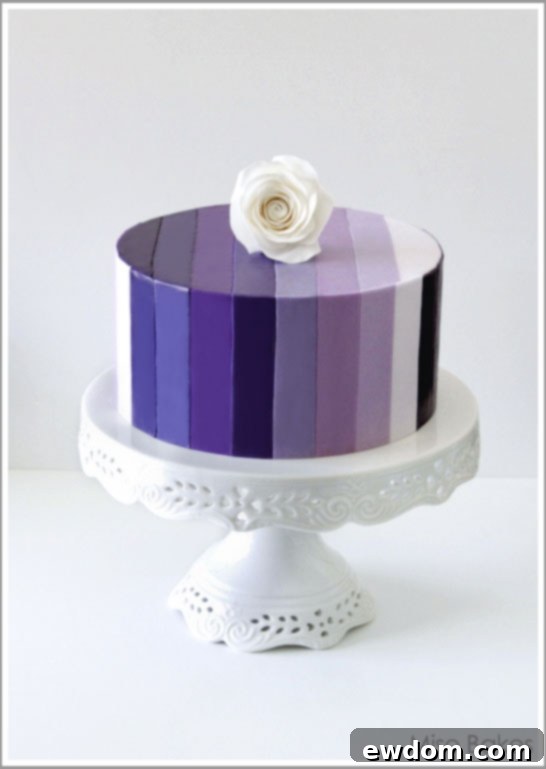
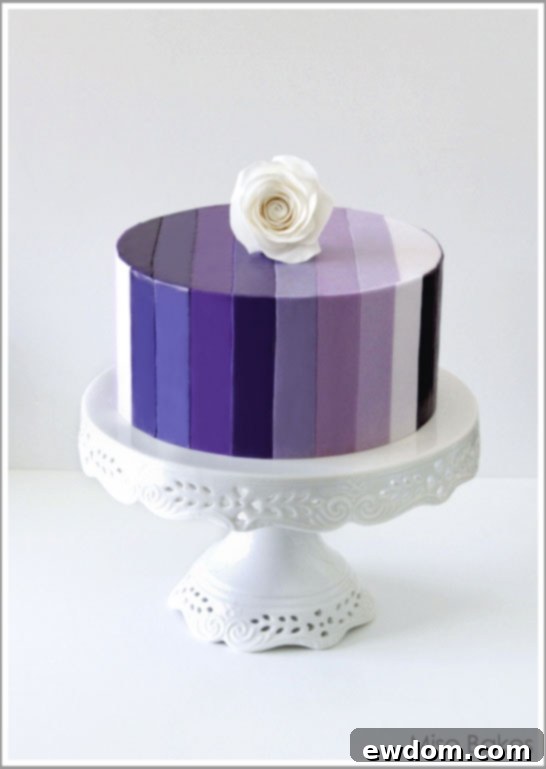
1. The Daring Vertical Purple Ombre Cake
For her inaugural ombre cake, Miso opted for a vibrant, multi-tonal approach, carefully integrating various shades of purple. Eschewing the more common horizontal gradience often seen in many contemporary cake designs, Miso bravely chose a vertical orientation for her ombre effect. This unconventional design decision immediately set her creation apart, showcasing a refreshing twist on a popular trend. The process involved meticulously applying side strips of colored fondant or frosting, each strip a progressively lighter or darker shade of purple, and then carefully aligning these strips both vertically and horizontally around the cake, creating a repeating, dynamic pattern.
2. The Elegantly Subtle Green Ombre Cake with Gold Accents
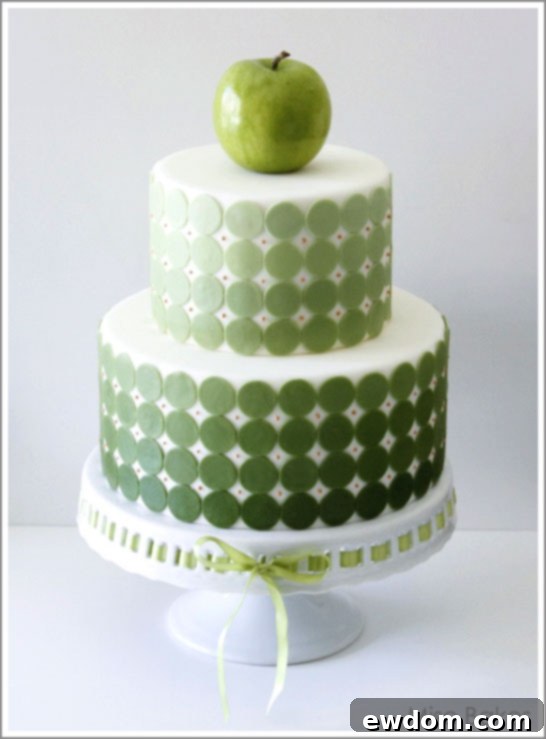
Miso’s second ombre creation presented a striking contrast, brilliantly showcasing the adaptability of the gradation technique. To achieve a lighter, more modern, and visually less ‘heavy’ appearance compared to her vibrant striped cake, she employed an entirely different methodology. Instead of bold colored strips, this cake featured a refined dot pattern, lending it a delicate texture and contemporary feel.
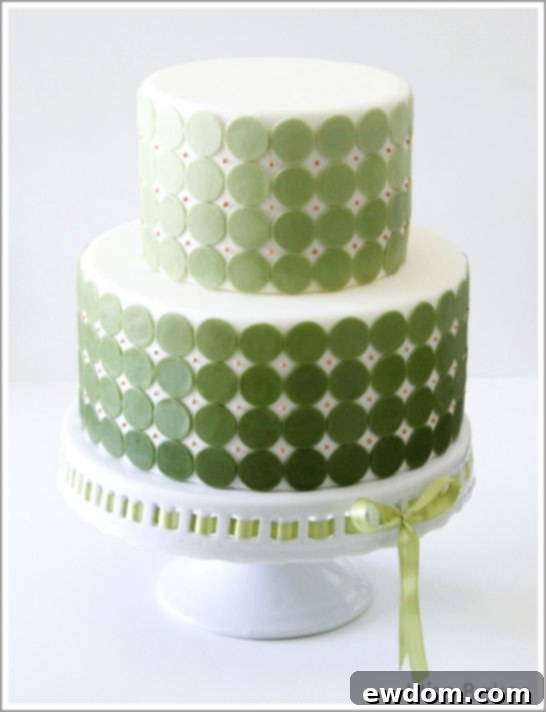
Initially, Miso considered the green cake complete in its state of subtle beauty. However, a spontaneous creative spark ignited within her – she pondered the visual impact of a vibrant green apple topper. Driven by curiosity and a touch of personal affection (as green apple green happens to be her absolute favorite color!), she decided to experiment with this unconventional addition.
Miso’s Essential Tips for Crafting Your Own Ombre Cake Masterpiece
While the visual impact of an exquisite ombre cake might suggest complex techniques, Miso assures us that the core principles are surprisingly straightforward. With a few fundamental techniques, a bit of patience, and some practice, anyone can achieve stunning gradient effects in their own kitchen.
Basic Ombre Technique for Fondant or Frosting:
- Select Your Dominant Color: Begin by choosing the primary hue for your cake. This will typically serve as your darkest shade and the starting point for your gradient.
- Progressive Lightening or Darkening: The key to ombre is gradual color change. For most ombre designs, you will start with a batch of your darkest colored fondant or frosting. Then, systematically incorporate small amounts of white fondant or white frosting into successive batches. This dilutes the color, creating progressively lighter shades. Alternatively, you could start with the lightest shade and incrementally add more food coloring to create darker batches.
Miso shares her personal, tried-and-true method for achieving the perfect gradient: “I usually start with a small amount of the darkest color and then gradually incorporate white into it as I go.” This particular approach offers several practical advantages for the home baker. Firstly, any leftover fondant or frosting from the lighter shades is easily re-tinted to a completely different color for future projects, effectively minimizing waste and maximizing creative versatility. Secondly, Miso finds it most comfortable and efficient to work from the bottom layer of the cake upwards when applying her gradient designs, a preference that naturally aligns with beginning with the darkest shade. However, she wholeheartedly emphasizes that this is merely her personal workflow; bakers are encouraged to experiment freely and discover the method that best suits their individual style, comfort, and the specific design they aim to achieve.
Advanced Ombre Baking Insights from Miso Bakes:
- Maintain Consistent Consistency: Whether you’re working with pliable fondant or smooth buttercream, it’s crucial that the consistency is uniform across all your colored batches. Inconsistent textures can make smooth blending challenging and lead to an uneven finish.
- Approach Color Mixing Gradually: When adding food coloring, always begin with a very minimal amount. It is significantly easier to intensify a color by adding more pigment than it is to lighten an overly dark shade. For lightening, remember to always add white fondant or frosting incrementally, observing the change with each addition.
- Strategic Color Palette Planning: Before you even begin mixing, take a moment to visualize your desired color transition. Will you be exploring a monochromatic gradient, featuring various shades of a single color? Or perhaps a transition between analogous colors, such as a graceful fade from blue to green? Thoughtful planning of your color scheme ensures a cohesive, harmonious, and visually appealing final presentation.
- Precise and Even Application: For designs involving striped or layered ombre effects, strive for impeccable evenness in the thickness of your fondant strips or frosting layers. This level of precision is paramount to achieving visual harmony and a professional-looking gradient.
- Embrace Patience and Practice: Ombre decorating, much like any artistic endeavor, is a skill that refines with practice. Do not be disheartened if your initial attempts aren’t absolutely perfect. Embrace the learning process, enjoy the journey of refinement, and celebrate each small improvement.
- Fondant Versus Buttercream: Both mediums are excellent for creating stunning ombre effects. Fondant provides crisp lines and a smooth, polished finish, making it ideal for geometric patterns or precise cut-outs. Buttercream, on the other hand, allows for softer, more blended transitions and offers the versatility for textural effects like rosettes, ruffles, or piped dots. Miso’s own examples beautifully showcase both sharp fondant designs and delicate piped patterns, underscoring the importance of choosing the right medium for your desired effect.
- Thoughtful Topper Selection: As elegantly demonstrated by the charming green apple on her subtle green cake, a simple yet thoughtfully chosen cake topper can dramatically enhance the cake’s overall personality and aesthetic appeal. Select an embellishment that perfectly complements your chosen color scheme and the overarching theme of your design.
Beyond the Cake: The Boundless Versatility of Ombre in Desserts
While Miso’s latest cake creations brilliantly showcase the profound potential of ombre in grand dessert forms, the application of this enchanting technique extends far beyond the traditional cake. Imagine the visual delight of stunning ombre macarons, delicately layered gradient cupcakes, or even captivating dessert parfaits that enthrall with their vibrant visual journey. The fundamental principles remain consistent across all these applications: careful, systematic color progression, meticulous and consistent application, and a fearless willingness to experiment with different textures and forms. The ombre trend is far more than just a play of colors; it’s about crafting a visual narrative, a gentle, captivating journey from one shade to another, transforming every culinary creation into an aesthetic pleasure.
We extend our sincerest gratitude to Miso for generously sharing her invaluable creative insights, her innovative techniques, and these truly beautiful ombre cake designs. Her unique ability to translate a simple concept into such varied, inspiring, and edible art is genuinely remarkable. Her personal journey, from discovering gradation in nail art to mastering it in cake decoration, serves as a powerful testament to the beauty of embracing new challenges and infusing them with one’s unique personal flair.
Now, it’s your turn to unleash your inner cake artist! Armed with Miso’s practical tips and boundless inspiration, why not embark on your own journey to craft an ombre masterpiece? Whether you envision a bold, vertical statement cake or a subtly elegant, fading design, the vibrant world of gradient baking eagerly awaits your unique touch. Don’t forget to share your beautiful creations with the world and let your culinary creativity shine!
Happy Caking,
Miso