Unlocking the Sweet Secrets of Cake: A Deep Dive into Sweeteners and Baking Science
Welcome back to the fascinating world of baking science, brought to you by our esteemed contributor, Summer Stone of
Cake Paper Party.
Today, we embark on an illuminating journey to explore the profound impact of various sweeteners on the characteristics of cakes.
Sweeteners are far more than just flavor enhancers in any cake recipe; they are fundamental architects of a cake’s structure, texture, and overall appeal.
While granulated sugar typically reigns supreme in cake baking, the culinary landscape offers a diverse array of alternatives, each presenting unique properties and implications for the final product.
Understanding these nuances is crucial for any baker striving for perfection, whether for dietary considerations or simply to achieve a specific cake profile.
In this comprehensive guide, we will meticulously examine how five distinct sweeteners—granulated sugar, superfine granulated sugar, brown sugar, fructose, and stevia—influence the essential properties of a cake.
Prepare to unravel the mysteries behind every delicious crumb!
The Fundamental Roles of Sugar in Cake Baking
Sugar’s contribution to a cake extends far beyond its inherent sweetness. It actively participates in a complex series of chemical and physical reactions that define the cake’s final attributes.
A true understanding of these roles empowers bakers to make informed decisions about sweetener choices. Let’s delve into the critical properties influenced by sugar:
- Taste and Flavor Profile: At its most basic, sugar provides the defining sweetness that transforms a baked good into a dessert. However, different sugars also carry their own unique flavor notes. Beyond just sweetness, sugar interacts with other ingredients, balancing flavors and enhancing the overall aromatic experience. For instance, sugar can temper the bitterness of chocolate or accentuate the fruitiness of berries, creating a harmonious palate.
- Tenderness and Crumb Structure: This is where sugar plays a pivotal structural role. Dissolved sugars interfere with gluten formation, limiting the development of a tough gluten network. They also inhibit starch gelation and protein coagulation, which are processes that contribute to firmness. This interference results in a “weak” or tender cake with a delicate crumb. Conversely, an excessive amount of sugar can over-tenderize a cake, weakening its structure to the point of collapse, leading to a gummy texture or even complete structural failure.
- Moisture Retention and Shelf Life: Sugar is inherently hygroscopic, meaning it readily attracts and holds onto water molecules. This natural affinity for water significantly increases the effective moisture level in a cake. A higher moisture content contributes to a softer, more succulent texture and, crucially, extends the cake’s shelf life by preventing it from drying out too quickly. This property is why sugar-rich cakes often remain fresh and palatable for longer periods.
- Browning and Aesthetic Appeal: The golden-brown crust that signifies a perfectly baked cake is largely thanks to sugar. During baking, sugars undergo caramelization—a process where sugars are heated to high temperatures, breaking down and creating complex flavor compounds and a characteristic brown color. Additionally, sugar participates in Maillard reactions, a chemical process between amino acids and reducing sugars, which contributes to the rich, savory, and “baked” flavors and the desirable golden hue of the cake crust.
- Leavening and Cake Volume: Sugar isn’t just a bystander in the leavening process; it’s an active participant. When sugar crystals are creamed with butter, their irregular shapes physically trap air bubbles. These tiny air pockets expand during baking, contributing to the cake’s rise and creating a lighter, more airy texture. The size and shape of the sugar crystals can influence the amount of air incorporated, directly affecting the cake’s final volume and crumb structure.
The specific characteristics of a sweetener—such as granule size, chemical composition, and inherent moisture content—will dictate precisely how these cake properties are influenced.
Now, let’s embark on a detailed exploration of how different sweeteners perform in action and the unique impact each has on the final baked good.
Sweetener Showdown: A Comparative Analysis
Granulated Sugar: The Unchallenged Benchmark
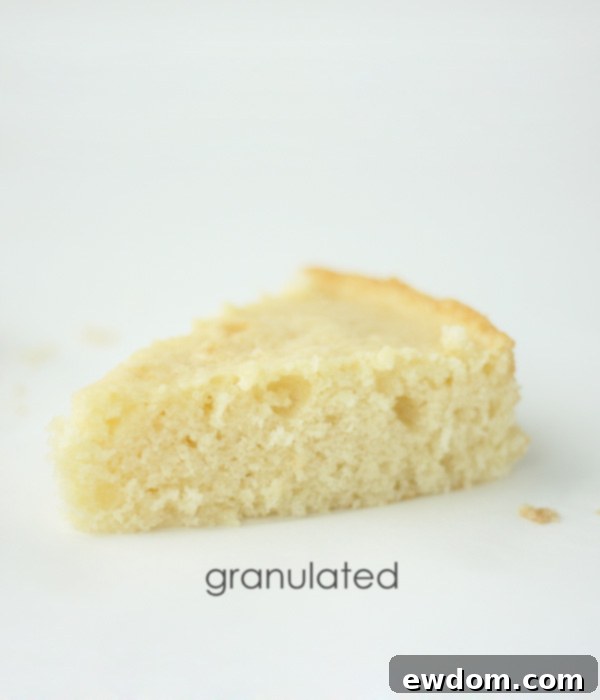
Granulated sugar, often referred to as white sugar or regular sugar, stands as the ubiquitous and undisputed standard sweetener in cake baking for very good reasons.
Its medium-sized, uniform crystals are ideal for creaming with butter, effectively trapping air bubbles that are crucial for leavening.
This precise interaction contributes significantly to a cake’s rise and overall volume, creating a light, airy, and consistently tender crumb.
Granulated sugar’s neutral flavor allows other ingredients to shine, while its reliable browning properties ensure an appealing golden crust.
It provides the perfect balance of sweetness, structural integrity, and texture, making it the go-to choice for achieving maximum height and a classic crumb structure in most cake layers.
Superfine Sugar: The Finer Touch
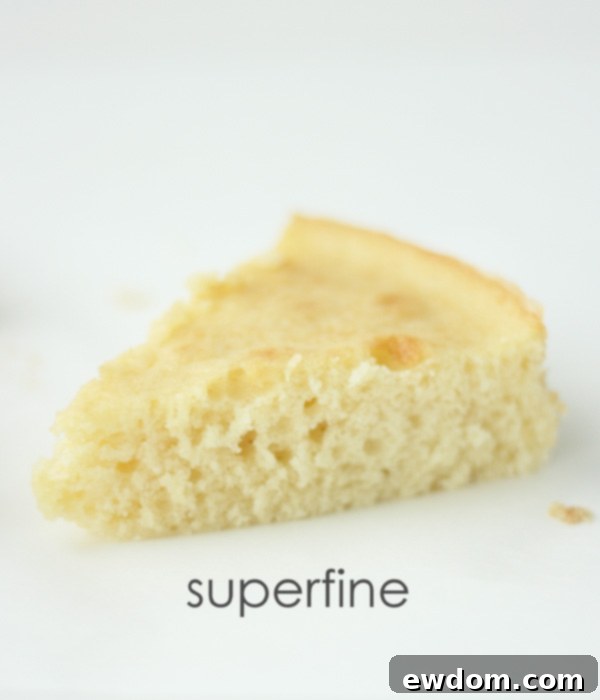
Superfine sugar, also known as caster sugar, is essentially granulated sugar that has been milled to a smaller crystal size.
This seemingly minor difference has notable consequences in baking. Due to their reduced size, superfine sugar crystals dissolve much faster than their coarser counterparts.
This rapid dissolution means they integrate more quickly into batters, leading to a faster and potentially more effective disruption of the structural components like gluten and starch.
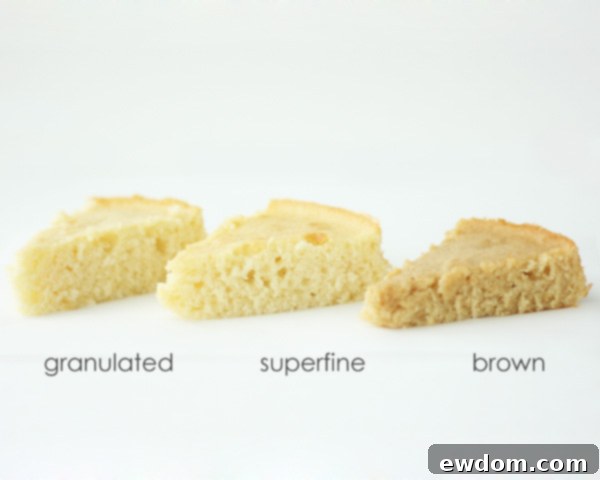
While this can result in a slightly finer, silkier crumb, it also tends to yield a cake layer that is marginally shorter than one made with granulated sugar, as the rapid dissolution might interfere with the initial air-trapping during creaming or the development of a strong enough structure before setting.
However, the smaller crystals can also contribute to creating smaller, more evenly distributed air cells, subtly influencing the cake’s leavening and texture.
Brown Sugar: Adding Depth and Moisture
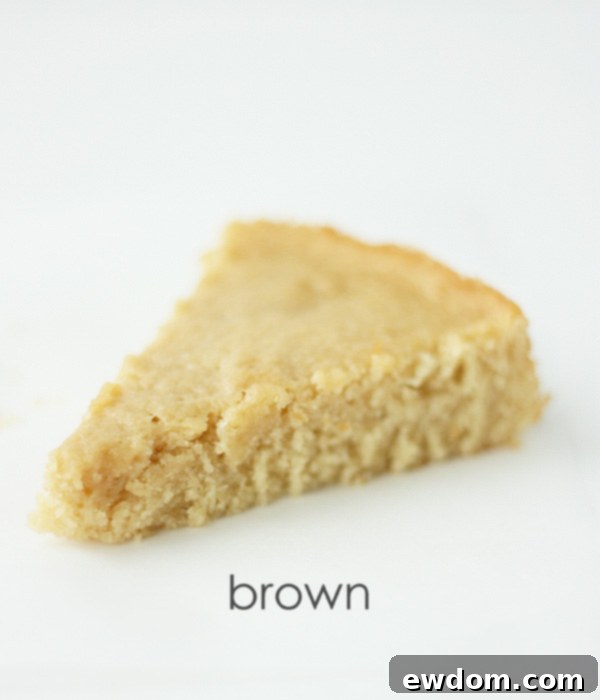
Brown sugar is fundamentally granulated sugar with the addition of molasses or refiner’s syrup, which lends it its characteristic moist texture, distinct flavor, and pale beige to dark brown color.
The presence of molasses is a game-changer; it imparts unique caramel, toffee, or butterscotch notes to baked goods, enriching their flavor profile.
Beyond flavor, molasses contains inverted sugars (fructose and glucose) which are highly hygroscopic.
This means brown sugar is excellent at attracting and retaining moisture, resulting in cakes that are exceptionally tender and moist, often with a chewier texture.
The ready-dissolved nature of some of the sugars in molasses also contributes to enhanced tenderness by more aggressively interfering with gluten development and starch gelatinization.
However, this increased tenderness and moisture can come at the cost of structure, often leading to a cake layer that is noticeably shorter and denser compared to those made with granulated or superfine sugars.
Fructose: The Fruit of Sweetness and Moisture
Fructose, a natural sugar found in fruits, is notably sweeter than granulated sugar, meaning less can be used to achieve a similar level of perceived sweetness.
It contributes a unique flavor profile to baked goods, often described as clean or slightly fruity.
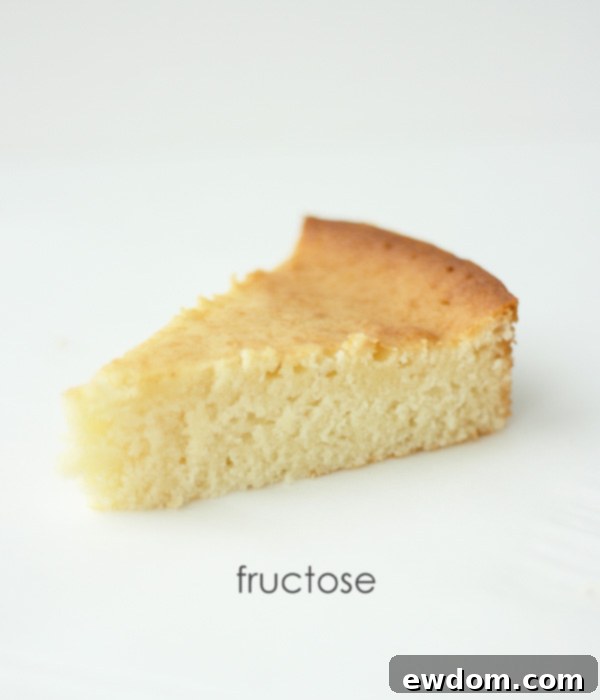
One of fructose’s most remarkable attributes in baking is its exceptional ability to promote browning; it accelerates Maillard reactions, resulting in a cake with a deeper, more pronounced “toasty” or caramelized flavor and a richer crust color.
Furthermore, fructose is highly hygroscopic, even more so than sucrose (granulated sugar). This potent water-attracting property ensures that cakes made with fructose retain moisture over a longer period, yielding a product that stays fresh and soft for days.
However, this intense moisture retention and faster browning can impact the cake’s structure, often leading to a tighter, denser crumb and a slightly shorter overall cake height compared to those baked with granulated sugar.
Stevia: The Structural Challenge of Sugar Alternatives
The experiment with stevia starkly highlights the multifaceted importance of sugar in cake baking, beyond just sweetness.
When used as a standalone sugar substitute, stevia, in my opinion, proves to be a poor substitute for sugar’s functional roles.
Unlike caloric sugars, stevia provides virtually no bulk, structural support, moisture retention, or browning capabilities.
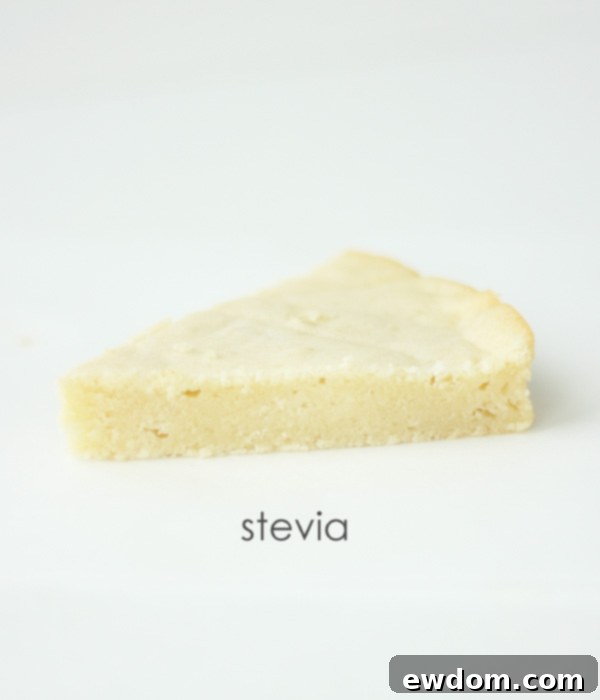
The resulting cake from this experiment was a clear testament to these deficiencies: it emerged pale, lacking the desirable golden hue of Maillard reactions and caramelization, and often exhibited a cracked top surface due to inadequate structural development.
The crumb was notably very tight, compact, and dense, failing to achieve the light and airy texture associated with traditional cakes.
Furthermore, the layers were consistently short, indicating a significant compromise in leavening and structural integrity.
Flavor-wise, stevia often imparts a distinct bittersweet aftertaste that can be undesirable in delicate cake recipes.
If the goal is to reduce sugar content, I would strongly recommend using stevia or similar alternate sweeteners in moderation, perhaps substituting no more than half of the total sugar. This allows some of the functional properties of sugar to remain, offering a better compromise between health and desired cake characteristics.
Key Takeaways and Recommendations
Based on these side-by-side comparisons and a deeper understanding of baking science, it becomes evident why granulated sugar has maintained its position as the gold standard for most cake applications.
It consistently delivers the ideal balance of sweetness, tenderness, moisture, browning, and structure, resulting in a beautifully risen cake with a perfect crumb.
- Superfine sugar offers a slightly finer crumb but may result in a marginally shorter cake due to its rapid dissolution. It can be a good choice for delicate cakes where a very fine texture is desired.
- Brown sugar is excellent for adding a warm, rich butterscotch or caramel flavor and significant moisture, making cakes wonderfully tender and often chewier. However, be prepared for a slightly denser crumb and reduced height compared to cakes made with granulated or superfine sugars. It’s perfect for spice cakes, carrot cakes, or anything where a deeper flavor profile is sought.
- Fructose is a compelling option for those seeking enhanced browning and superior moisture retention, potentially extending a cake’s freshness. Its unique sweetness and browning characteristics can lead to interesting flavor developments, though it might result in a tighter crumb and shorter cake. It could be beneficial for certain dietary needs or specific recipe goals.
- Stevia, when used alone, struggles to replicate the functional attributes of sugar. Its lack of bulk, structural contribution, browning, and moisture retention capacity leads to noticeable flaws in cake quality. While useful for extreme sugar reduction, it’s best used in conjunction with other caloric sugars or in very limited quantities to mitigate its negative impacts on texture and appearance.
We hope this comprehensive exploration helps you make more informed and confident decisions about the sweeteners you choose for your cake recipes.
Understanding the science behind each ingredient empowers you to become a more skilled and creative baker.
Happy baking!
To further enhance your baking prowess, dive into more baking science insights from Summer Stone.
Discover how precise mixing techniques can elevate your cakes.
First, unlock the secrets to perfect creaming:
Read my article, Mixing Up The Perfect Cake.
See exactly how long to mix butter and sugar together for optimal results!
Next, challenge your assumptions about ingredient preparation:
See If Sifting Makes a Better Cake.
I think you’ll be surprised by my results and learn a new trick!
And don’t miss my article, exploring innovative techniques for classic recipes:
The Meringue Buttercream Myth!
It’s a unique new way to make Swiss Meringue Buttercream, simplifying a beloved classic.
Finally, revolutionize your cake preparation method:
Now check out the Reverse Creaming Method
and see what it can do for your cake recipes, creating unbelievably tender results!