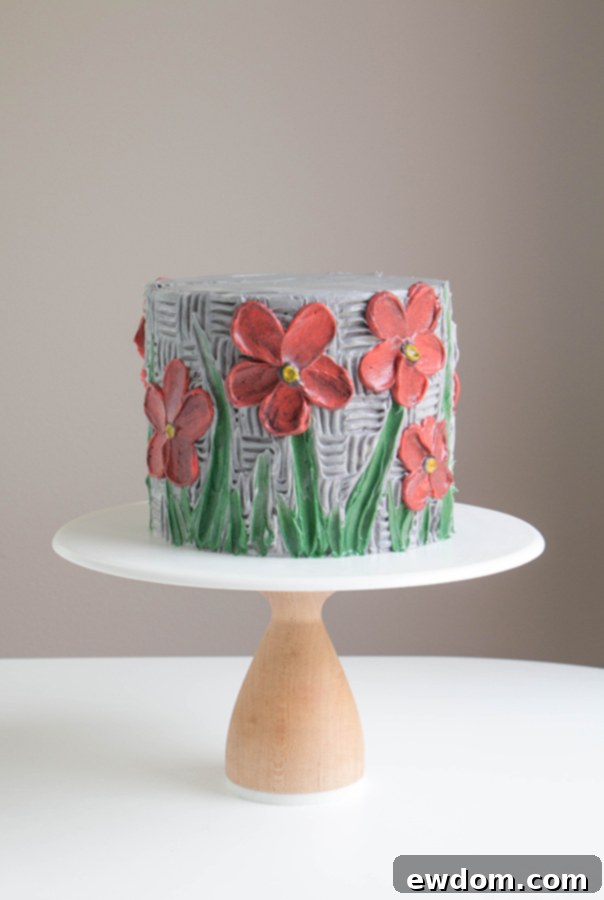
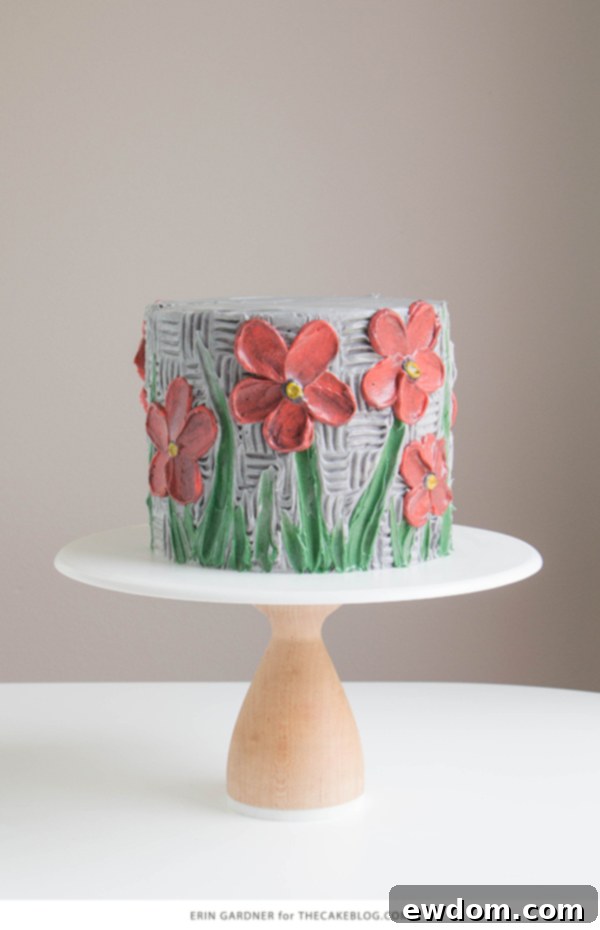
Transform your cakes into stunning edible art with the captivating technique of buttercream palette knife painting. In this detailed tutorial, our esteemed contributor Erin Gardner guides you through using buttercream frosting and simple spatulas to create breathtaking oil painting-inspired designs.
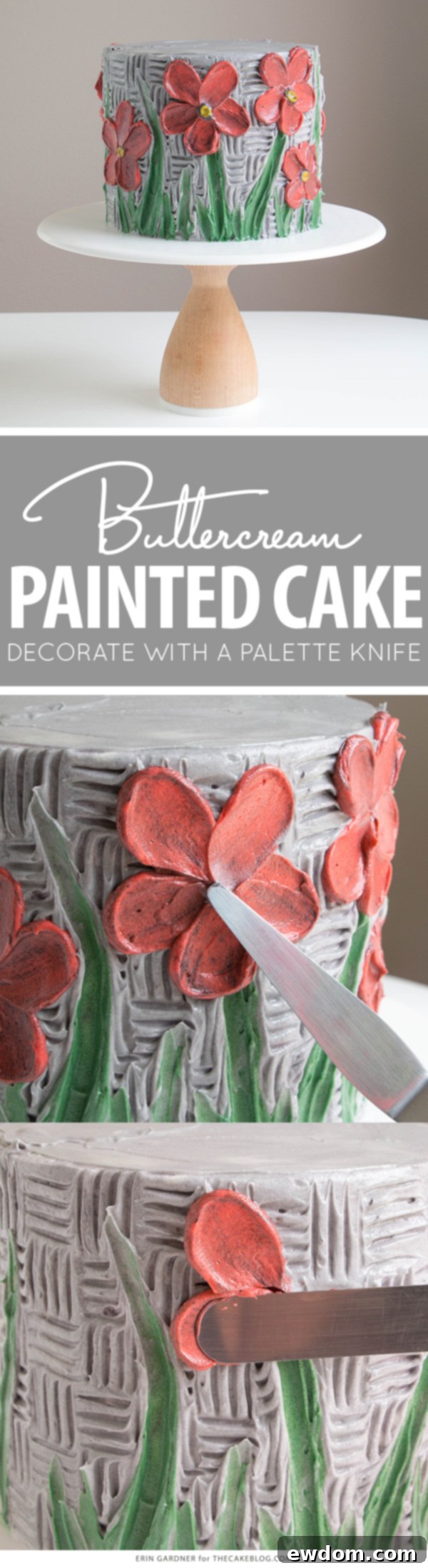
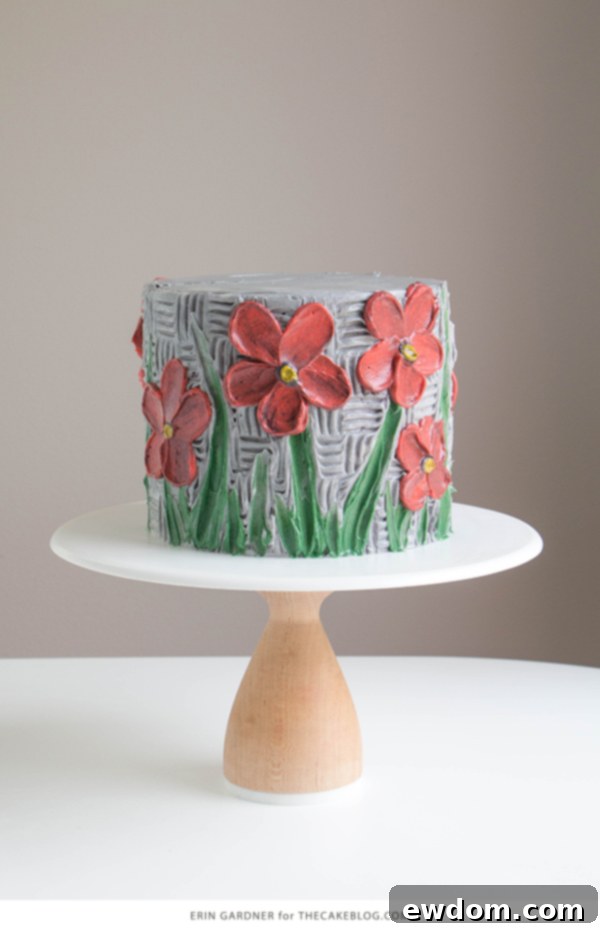
The Art of Buttercream Palette Knife Painting: A Comprehensive Cake Tutorial
Palette knife painting is an artistic technique traditionally employed by painters who use the blade of a palette knife to apply thick dabs of oil-based paint onto canvases or wooden surfaces. This method creates a rich, textured, and highly dimensional finish – a visual effect that strikingly resembles the luscious consistency of buttercream! It’s no wonder that this captivating art form has found its way into the world of cake decorating, quickly becoming a beloved trend. Visionary cake artists such as Sweet Bloom Cakes and Queen of Hearts Couture Cakes have played a pivotal role in popularizing this stunning technique within the baking community, enchanting audiences with their magnificent and intricate floral designs.
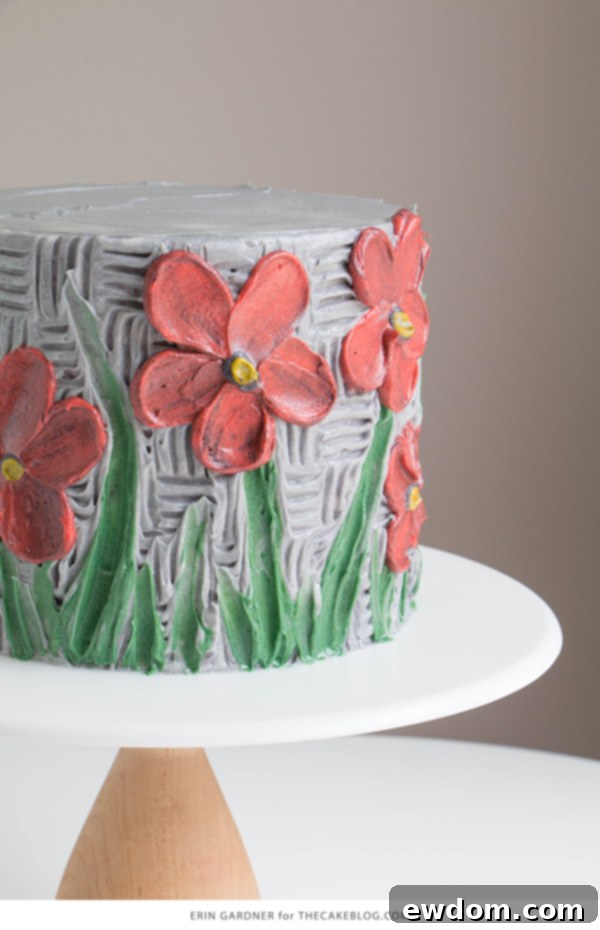
In this in-depth guide, we’ll explore how to master this exciting trend using tools that are likely already staples in most cake decorators’ arsenals: a simple fork, an everyday icing spatula, and that versatile tapered spatula you might have acquired but weren’t quite sure how to utilize effectively until now. If the idea of embarking on this artistic journey feels a bit daunting, cast your fears aside! The true beauty of the palette knife style lies in its celebration of controlled imperfection – a captivating blend of spontaneous artistry and thoughtful placement. It offers a wilder, more free-form, and surprisingly accessible alternative to more structured techniques like brush embroidery. This tutorial invites you to unleash your creativity, whether you choose to recreate Erin’s modern and stylized poppies, craft vibrant and bold florals reminiscent of Queen of Hearts Couture Cakes, or whip up magnificent oversized pastel textural blooms akin to the signature style of Sweet Bloom Cakes. Get ready to transform your cake into a true canvas!
Choosing the Right Buttercream for Your Painted Cake
When it comes to spreading and smearing with a palette knife, nearly any type of buttercream can technically be used. However, achieving specific aesthetic and textural results often depends on your choice of frosting. After thorough experimentation with both Swiss Meringue Buttercream (SMBC) and American Buttercream (ABC), we can confidently say that both perform beautifully, albeit with distinct characteristics that are crucial to consider for your design.
Swiss Meringue Buttercream (SMBC): This sophisticated buttercream colors and spreads wonderfully, offering a smooth, luxurious application. Its primary challenge lies in its tendency to warm up more quickly, which can make it slightly trickier to handle for prolonged periods. As SMBC warms, it can also develop a beautiful, almost translucent quality. This isn’t a drawback but rather a unique characteristic to keep in mind, especially if you’re aiming for a softer, more delicate effect. Erin found SMBC to be particularly effective when working with pastel color palettes, where its subtle translucency can enhance the ethereal quality of the design.
American Buttercream (ABC): In contrast, American Buttercream offers a longer workable time, making it a favorite for many decorators. It sets up with a thicker consistency and consistently retains a lovely matte finish, which can be advantageous for bolder designs. For this specific tutorial, Erin opted for American Buttercream precisely because she was working with deep, vibrant colors and desired a more pronounced, thicker texture in the final painted look. Its robust nature allows for clearer, more defined strokes and maintains its shape exceptionally well, which is perfect for capturing the essence of palette knife art.
Ultimately, your choice of buttercream should align with the specific aesthetic you’re striving for. Consider the color intensity, desired texture, and the overall feel you wish to convey with your edible painting.
Buttercream Palette Knife Painted Cake: Step-by-Step Tutorial
A stunning tutorial by Erin Gardner
Essential Supplies:
- A 6-inch round cake, pre-coated with a crumb layer.
- Approximately 6 cups of American Buttercream (or your chosen alternative).
- High-quality gel food coloring in black, green, red, orange, and yellow.
- An icing smoother or a large straight icing spatula for even coating.
- A standard kitchen fork.
- A tapered offset spatula (also sometimes called a small angled spatula).
- A small icing spatula (often a straight, thin blade).
- Small bowls for coloring buttercream.
- Clean cloth or paper towels for wiping spatulas.
Step 1: Preparing the Cake’s Artistic Base Layer
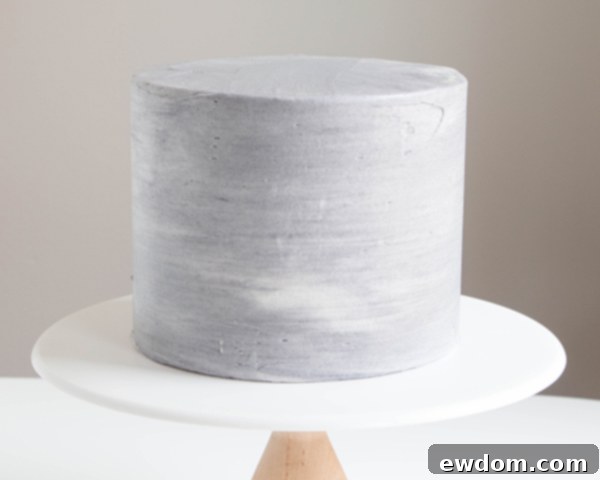
To begin, take a portion of your plain buttercream – roughly a cup – and add a few drops of black gel food coloring. Instead of mixing it until it’s a solid, uniform color, fold the coloring gently into the buttercream, intentionally leaving distinct streaks of black and white/gray. This streaky effect will add incredible depth and character to your background, mimicking the nuanced tones found in traditional paintings. Use this beautifully streaky buttercream to apply a thicker, final finishing coat to your crumb-coated cake. Carefully smooth the top and sides using your large icing spatula or a bench scraper. For this technique, perfection isn’t the goal; aim for a surface that is “smooth enough” – don’t stress over achieving perfectly sharp edges or flawless lines. The slight imperfections will only enhance the artistic, hand-painted feel of the finished cake. Be sure to reserve any leftover streaky buttercream; it will be essential for painting your upcoming flowers and leaves.
Step 2: Crafting the Background Texture with a Fork
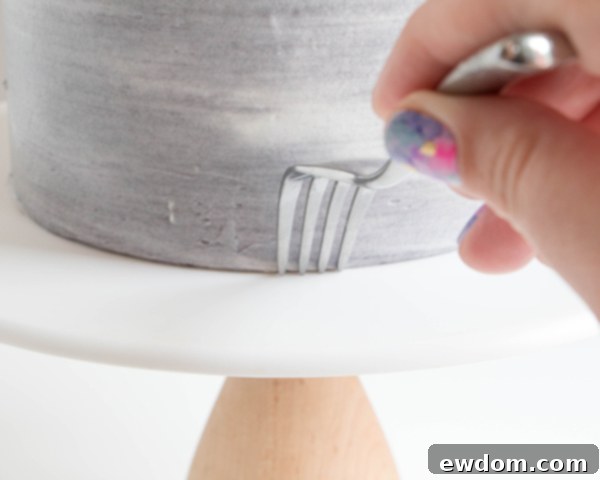
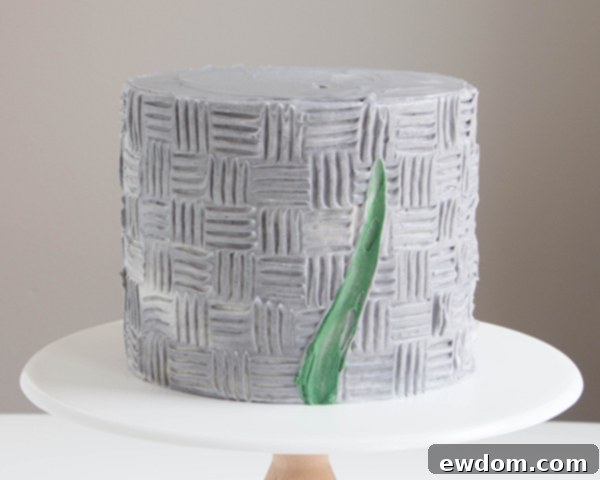
Now, let’s create an intriguing background texture that will elevate your painted design. Take your fork and gently place its tines at the very base of the cake, ensuring they just penetrate the buttercream surface – be careful not to press so deeply that you touch the actual cake beneath. Drag the fork upwards about an inch, then smoothly pull it away. Next, position the tines of the fork horizontally above the first set of vertical lines, all the way to the left side of your initial stroke. Drag the fork horizontally to the right, through the buttercream, stopping when you reach the other side of the first set of lines below. Repeat this engaging pattern upwards along the side of the cake until you reach the top edge. For the subsequent row, begin with a new set of horizontal lines, starting on the opposite side of your first set. Continue this alternating pattern all the way around the cake. While it might sound intricate in writing, the process is far simpler in practice – think of it as a rhythmic back-and-forth motion, creating a woven or basket-weave texture that adds incredible visual interest.
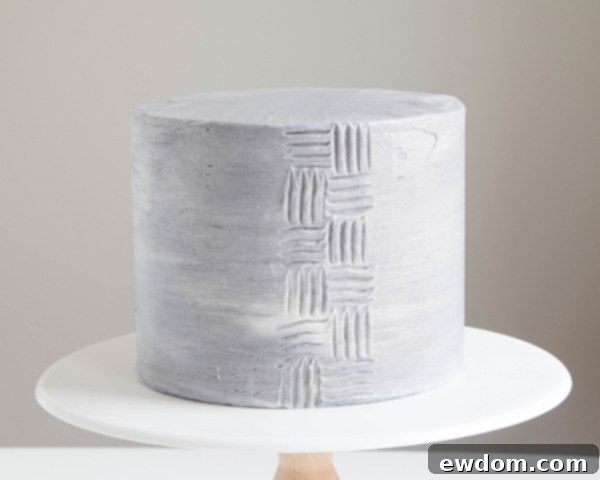
Step 3: Bringing Life with Stems and Grass
Next, we’ll introduce vibrant greenery. Scoop about a cup of your reserved streaky gray buttercream into a small, separate bowl. Add a few drops of green gel food coloring. Just as you did with the gray base, mix the color into the buttercream in a streaky fashion, avoiding a completely uniform hue. This will create natural-looking variations in your greens.
Now, let’s form the stems. Starting from the base of the cake, use the very tip of your tapered offset spatula. Gently drag it upwards through the buttercream to sculpt the desired shape of a stem. Similar to the forking technique, ensure you pull the spatula deeply enough to create a distinct channel, but not so deep that you make contact with the actual cake beneath. Don’t hesitate to go back over the line as many times as necessary to achieve the perfect shape and thickness you envision. Remember to clean the blade of your spatula diligently after each pass to maintain crisp lines and prevent color mixing.
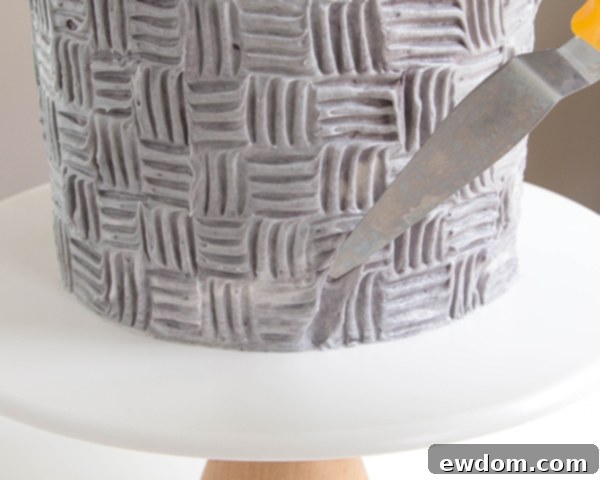
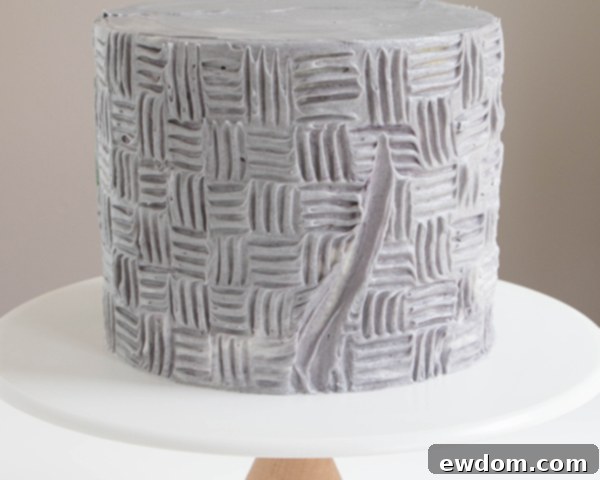
With your green buttercream ready, dip the tip of your tapered spatula into it, scooping up a small dollop. This next step is tiny but absolutely vital for achieving clean, rounded lines in your painting: gently run your immaculately clean finger over the very top of the blade. This action smooths out any scraggly edges that naturally form when you scoop buttercream from the bowl, ensuring your painted elements have a refined, professional look. Now, carefully go back over the channel you previously created with the green buttercream. Swipe as much or as little as you need to build up the desired shape and achieve the vibrant green color you like for your stems.
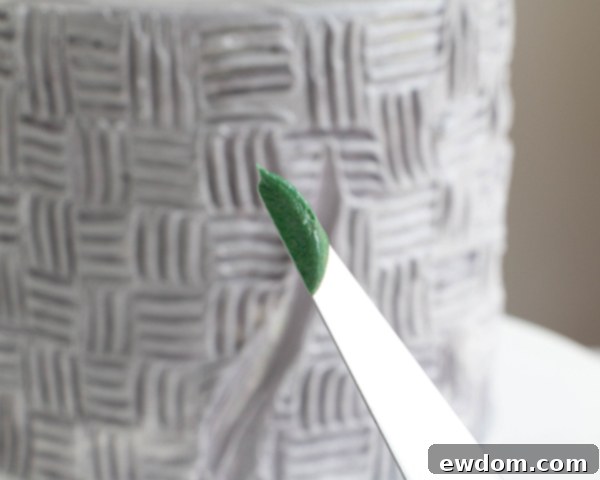
Continue this process, creating various stems and branches, all the way around the circumference of your cake, envisioning a natural, flowing composition.
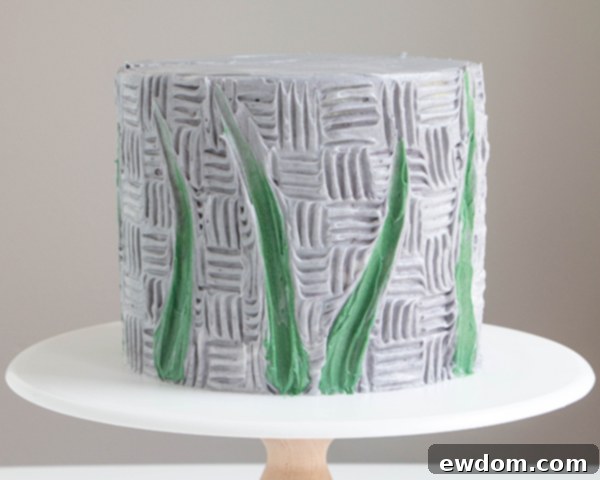
Once your main stems are complete, it’s time to add delicate blades of grass to fill out the lower section of your design. Using the tapered spatula, make tiny, quick swipes of green buttercream upwards from the bottom edge of the cake. For these smaller blades, there’s no need to create a channel beforehand; simply apply the buttercream with light, flicking motions to mimic natural grass. This adds a beautiful sense of depth and organic movement to your landscape.
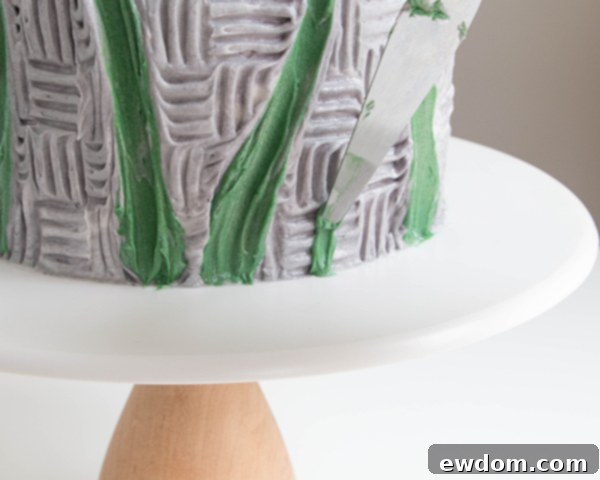
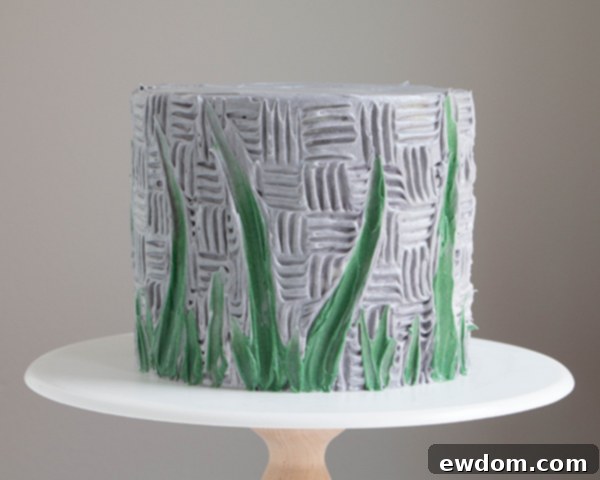
To ensure your buttercream elements are firmly set before moving on to the more intricate floral details, place the cake into the refrigerator for approximately 30 minutes. This chilling period will firm up the buttercream, preventing accidental smudges and making the next steps much easier and cleaner.
Step 4: Painting Exquisite Buttercream Flowers
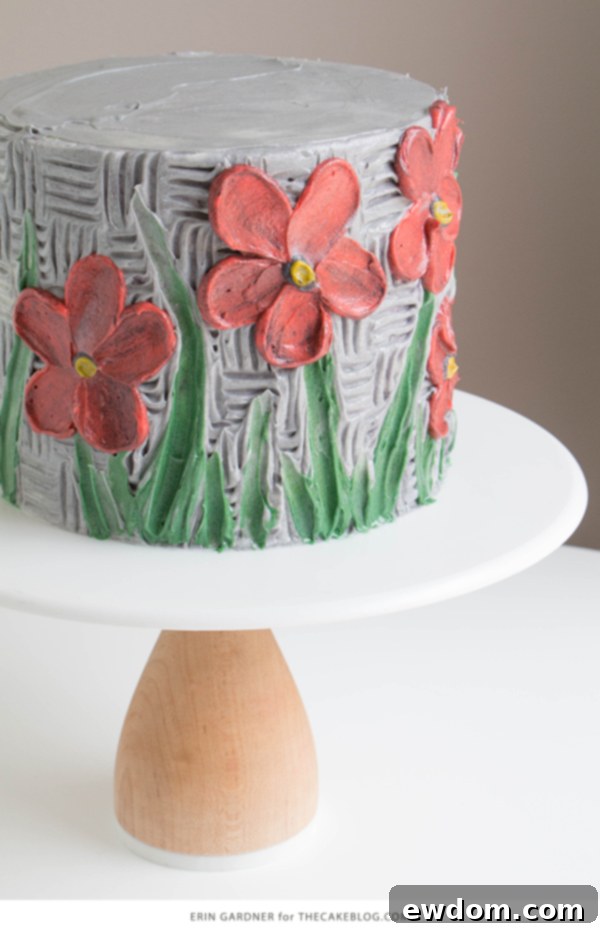
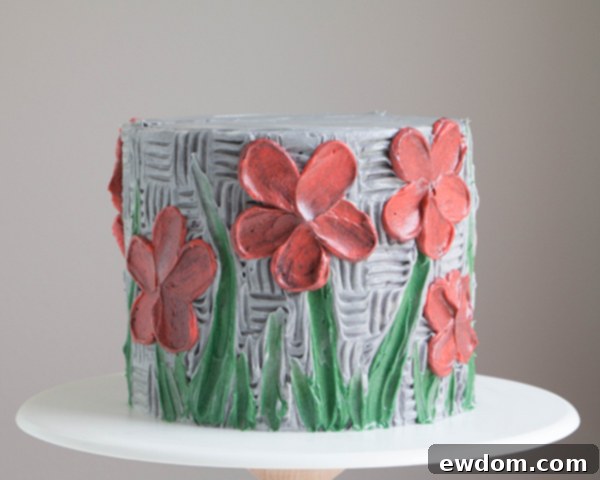
With your base and greenery set, it’s time for the show-stopping flowers. Take about a cup of the gray buttercream you initially reserved and transfer it to a clean, small bowl. Add a few drops of red and orange gel food coloring, along with just a single drop of black. Critically, as you mix, leave plenty of streaks – do not mix until fully blended. This marbling of colors is what gives the petals their authentic, painterly depth. Now, scoop up a grape-sized dollop of this vibrant, streaky buttercream onto the tip of your small icing spatula. Remember that vital smoothing step? Use your finger to gently smooth over the rounded top edge of the buttercream dollop on your spatula. This creates a beautifully defined and rounded edge for your petals.
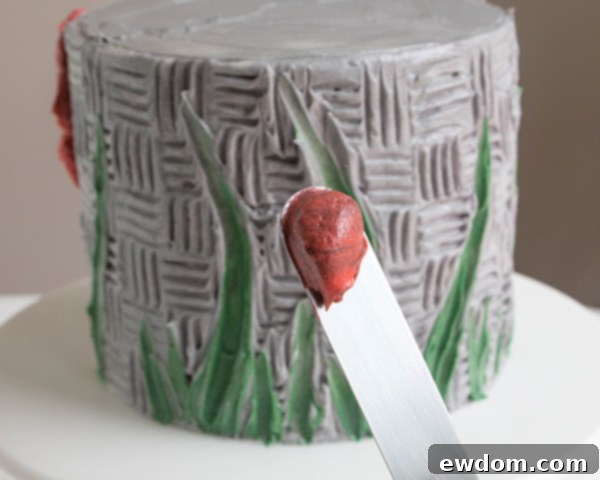
To create your first petal, gently press the prepared dollop of buttercream onto the cake surface. Apply soft, controlled pressure, then fluidly pull the spatula downwards and away from the cake. This motion will leave behind a beautifully textured, individual petal with organic edges, reminiscent of a brushstroke on canvas.
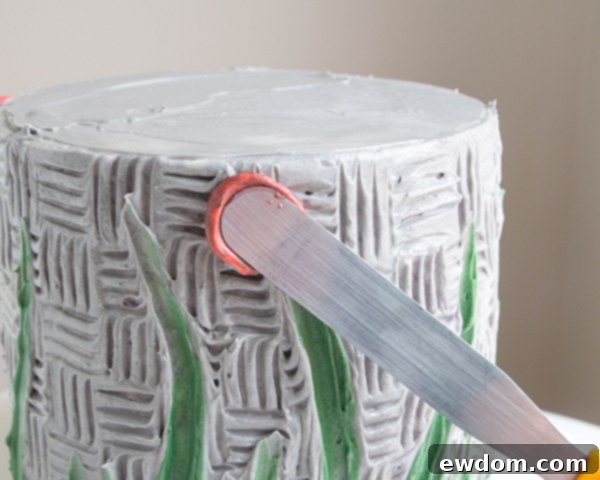
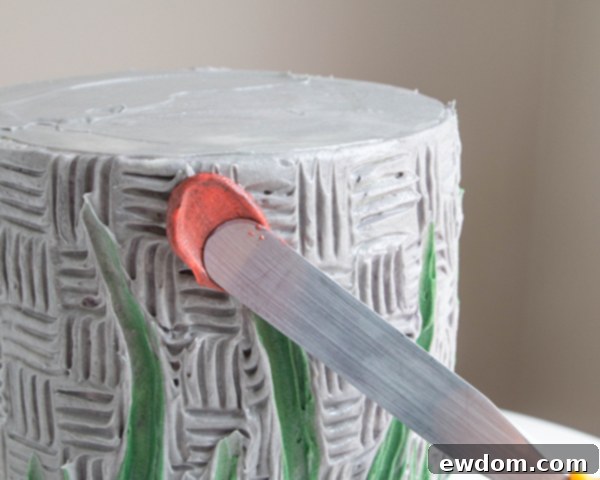
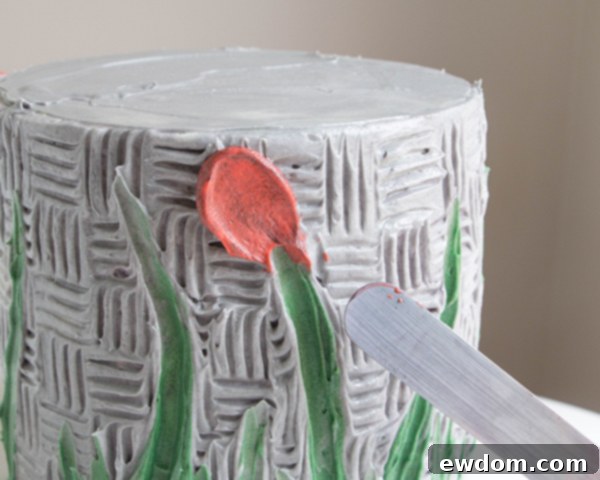
After each petal, wipe your spatula completely clean. This is crucial to prevent colors from muddling and to maintain sharp, distinct petal shapes. Scoop up another dollop of the streaky red/orange buttercream and smooth its rounded edge with your finger. Position this new spatula load to the side of your first petal. Press the dollop onto the cake and, with a smooth, continuous motion, pull the spatula downwards and away, allowing it to slightly overlap the end of the previous petal. This overlapping creates a natural, layered effect, giving your flowers depth and realism.
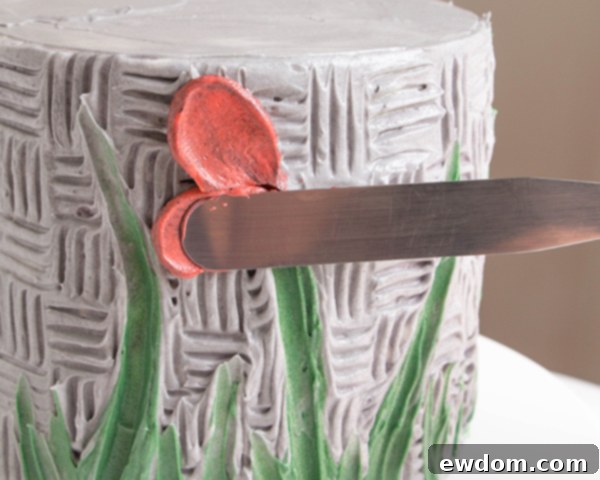
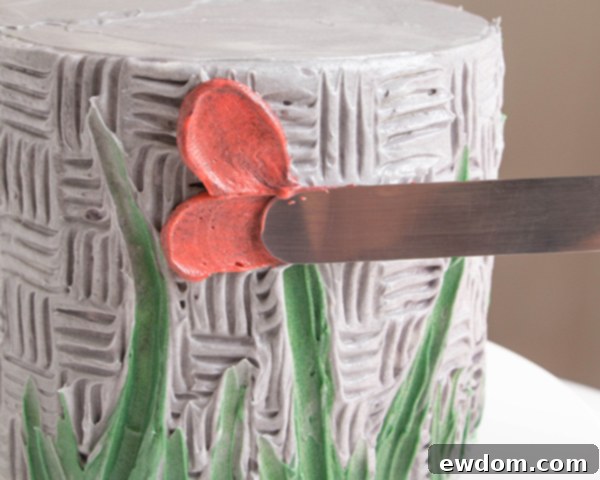
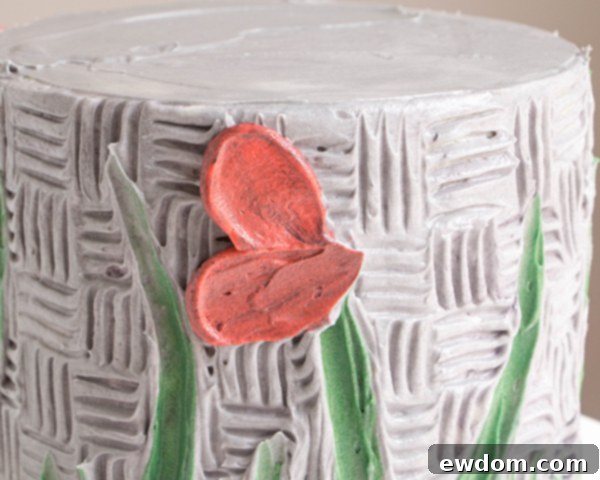
Continue to wipe your spatula clean, scoop, smooth, and apply petals 3-4 more times in a circular arrangement to fully form a beautiful flower. The number of petals can vary based on your desired look and flower size.
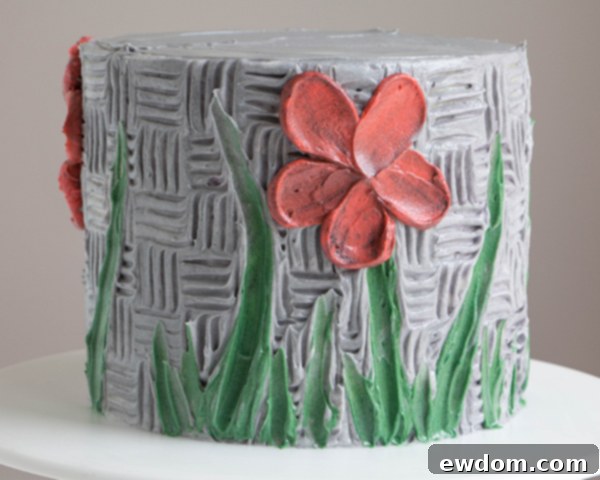
Repeat this entire flower painting process around the sides of the cake as many times as you like, arranging them organically among your stems and grass. Embrace the artistic freedom; there’s no need to strive for absolute neatness or precision. The charm of this technique lies in its raw, painterly quality. If at any point your buttercream becomes too soft to work with effectively, simply return the cake to the refrigerator for a few minutes to allow it to firm up before continuing. This patience will be rewarded with sharper, more distinct petals.
Step 5: Adding the Finishing Touches to Your Flowers
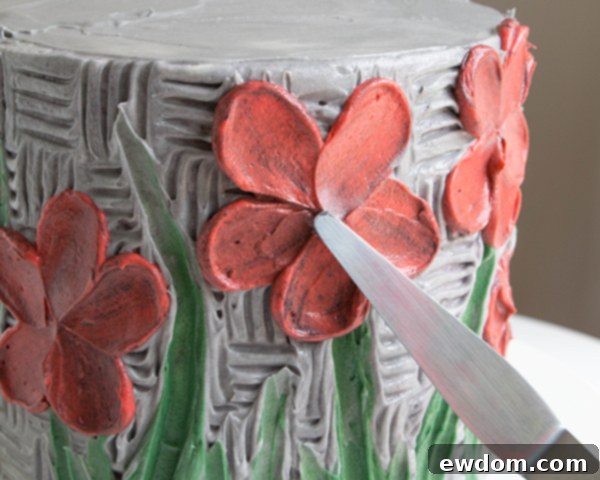
To give your flowers captivating depth, let’s add their centers. Transfer a few tablespoons of your remaining gray buttercream into a small bowl. Add a few drops of black buttercream and mix it thoroughly until you achieve a rich, consistent black hue. Using your tapered spatula, scoop up a smaller, pea-sized dollop of this black buttercream. Smooth its rounded edge with your finger, just as you did with the petals. Carefully press this dollop into the very center of each painted flower. This dark core will create a beautiful contrast and focal point. Repeat this step for all your flowers.
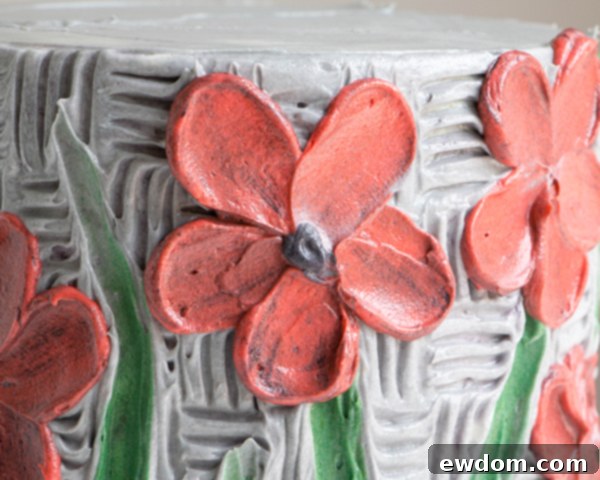
For an extra touch of realism and brightness, we’ll add a final highlight to the flower centers. Add a few drops of yellow gel food coloring to the remaining gray buttercream (or a fresh small amount if you prefer, ensuring it’s not fully mixed, leaving streaks). Mix the color in, purposefully leaving streaks for a natural variation. Once again, use the tapered spatula to scoop up an even smaller, pea-sized dollop of this yellowish buttercream and smooth its rounded edge. Gently press this dollop into the absolute middle of each black flower center. This bright pop of yellow will bring your flowers to life, simulating the stamen and adding a vibrant finishing detail. Repeat this process for every flower all the way around your edible masterpiece.
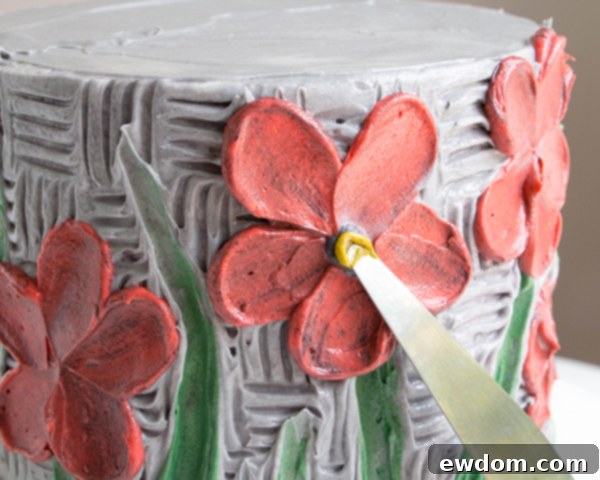
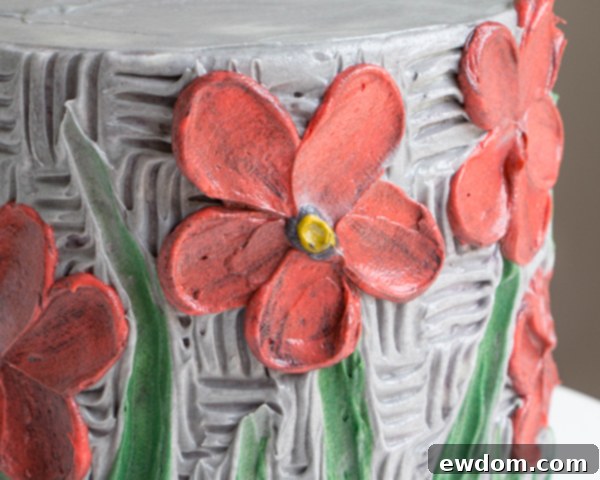
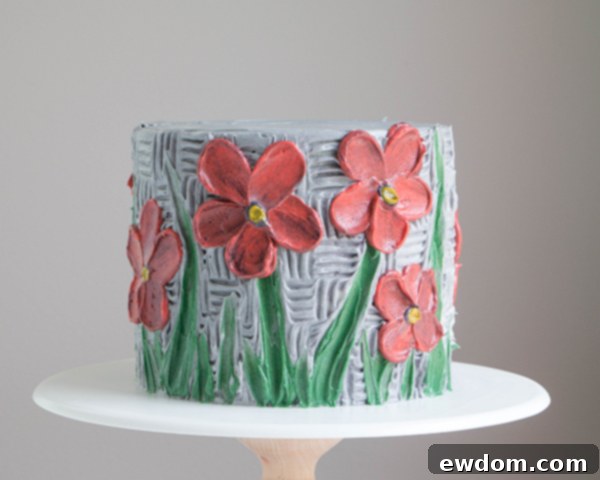
Your Buttercream Painted Masterpiece is Complete!
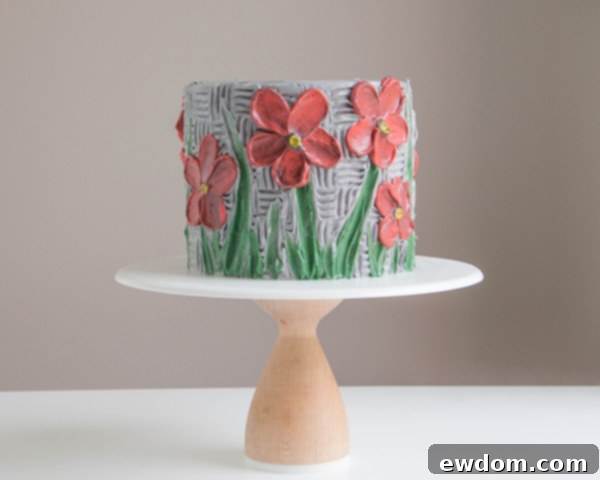
Congratulations! You have successfully created a breathtaking buttercream palette knife painted cake. This technique not only transforms a simple cake into a stunning work of art but also offers an incredibly satisfying creative outlet. Each cake becomes a unique canvas, reflecting your personal artistic flair. Don’t be afraid to experiment with different color palettes, flower shapes, and background textures to develop your own signature style. This method beautifully marries the culinary arts with visual artistry, proving that cakes can be as much a feast for the eyes as they are for the palate.
Explore More Painted Cake Techniques:
If you’ve enjoyed mastering the art of buttercream palette knife painting, you might be interested in delving into other exciting painted cake techniques. Expand your decorating repertoire with these fantastic tutorials:
- Chocolate Painted Cake
- Stencil Painted Rose Cake
- Watercolor Buttercream Painted Cake
- Watercolor Heart Cake (with Video)
- How to Paint a Watercolor Cake