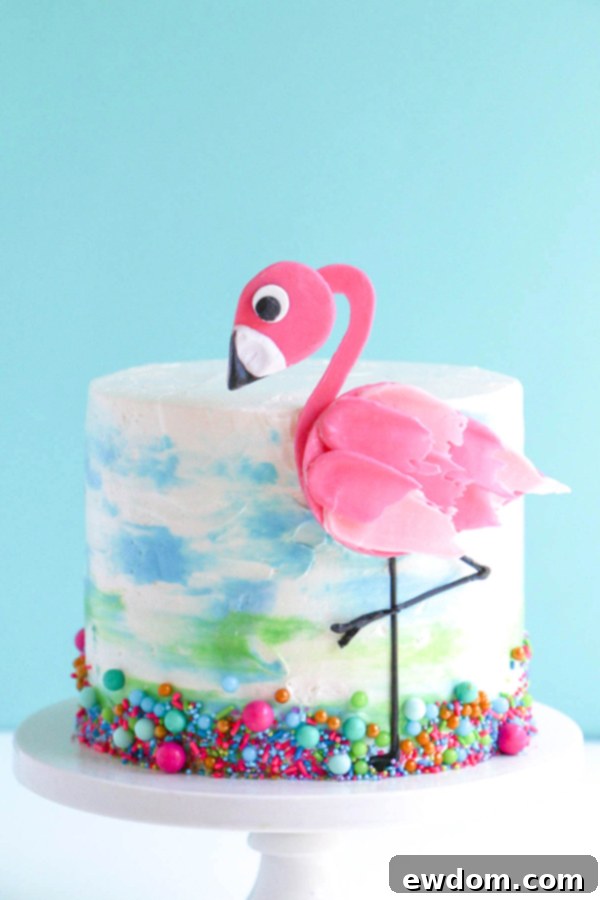
Craft a Tropical Masterpiece: Your Guide to the Stunning Flamingo Cake with Chocolate Brushstroke Feathers
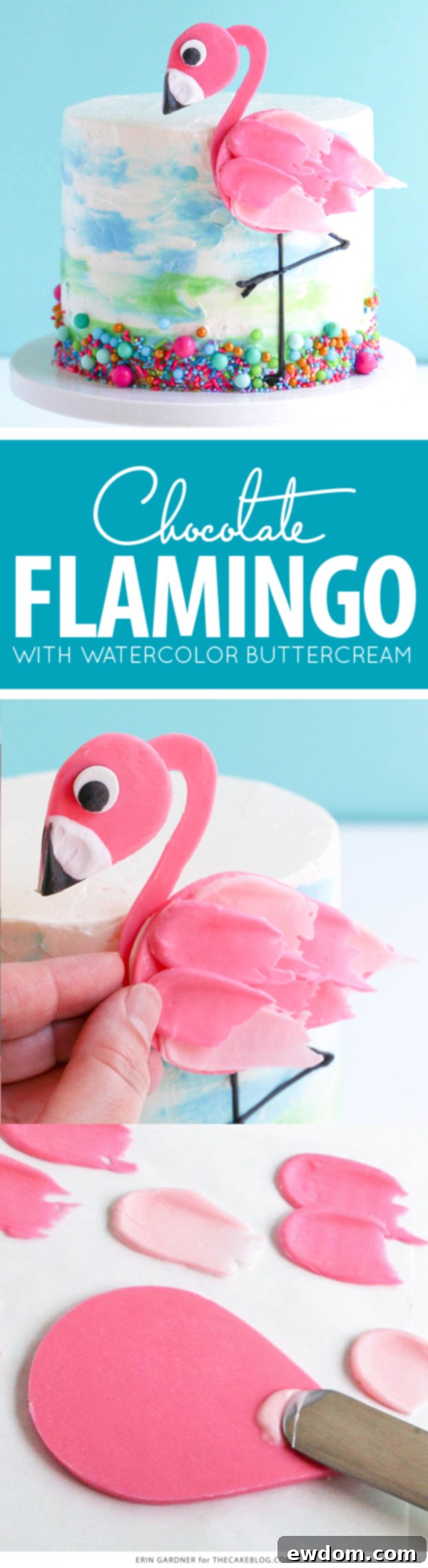
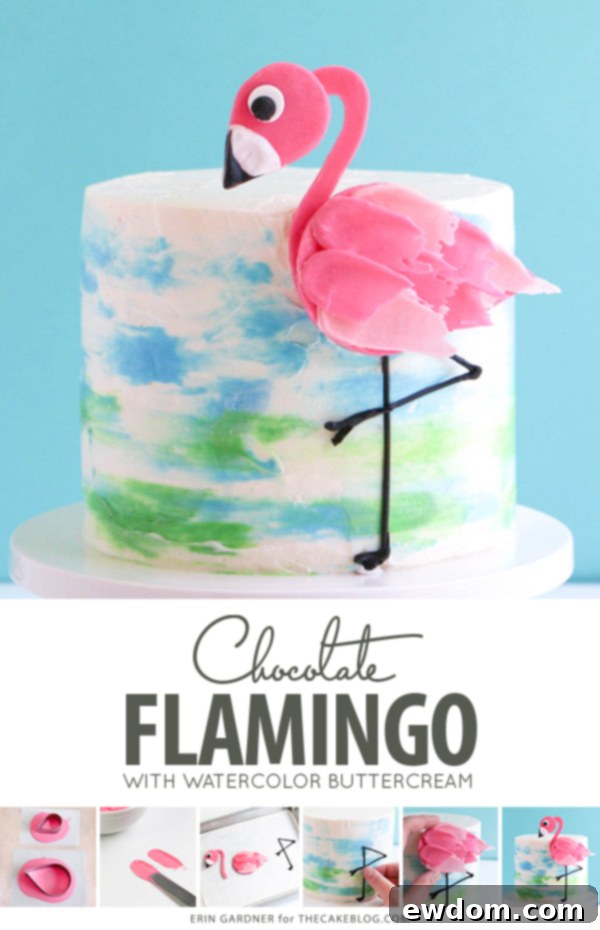
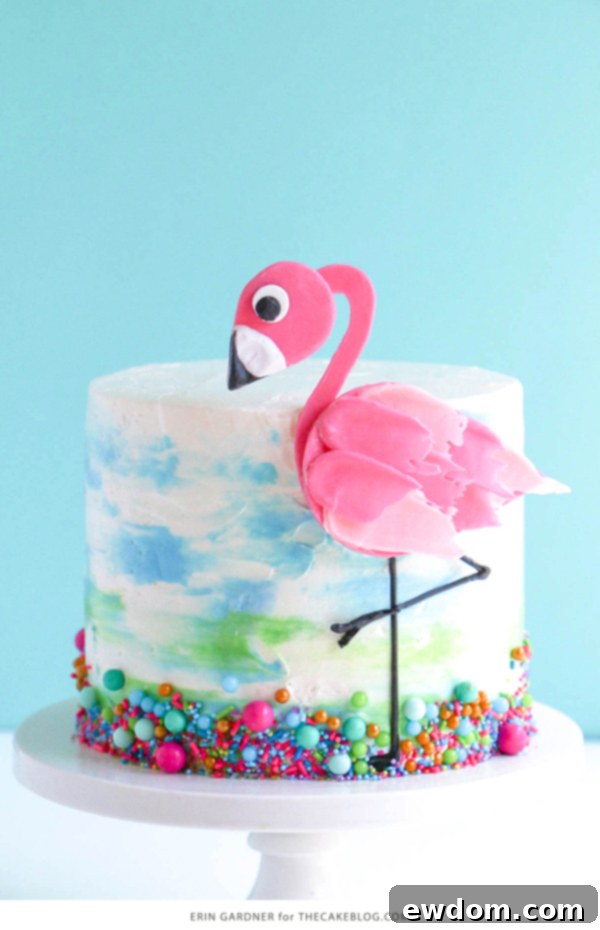
Flamingos have undeniably captured our hearts and imaginations, becoming the quintessential emblem of tropical elegance and playful sophistication. With their striking pink plumage, graceful long legs, and a penchant for sun-drenched, serene waters, it’s no wonder these magnificent birds are a constant source of design inspiration. This captivating allure translates beautifully into the world of confectionery, and what better way to celebrate their charm than with an exquisite cake? Imagine a stunning centerpiece featuring a majestic flamingo, meticulously crafted from delicious chocolate, perched atop a watercolor buttercream cake that evokes serene sunsets and lush landscapes. This comprehensive tutorial, brought to you by our talented contributor, Erin Gardner, will guide you through every step to create a breathtaking pink flamingo cake topper using the popular chocolate candy melts and an innovative brushstroke feather technique.
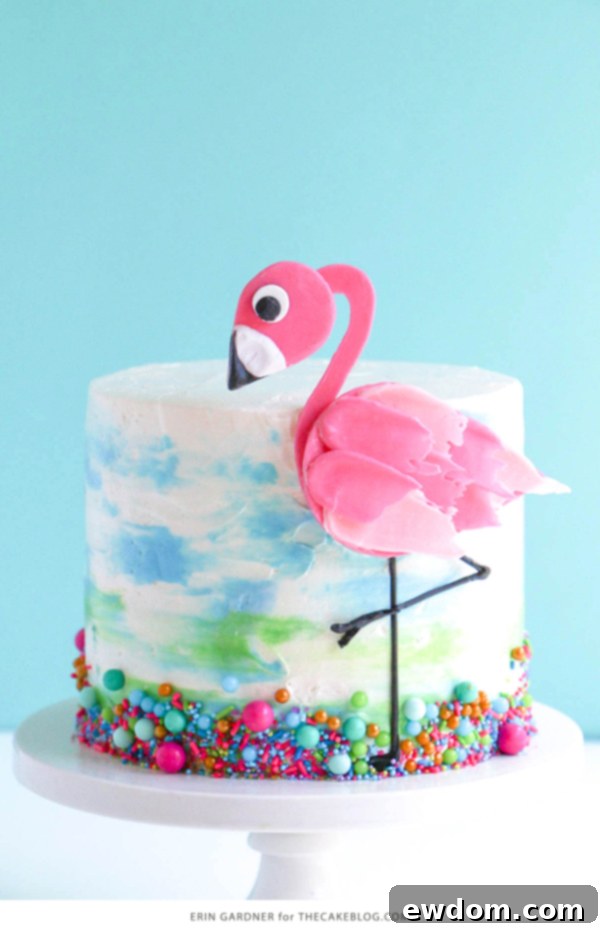
The concept for this unique chocolate flamingo cake was born from a delightful collaboration. When Erin first presented the idea of a chocolate flamingo, Carrie from The Cake Blog instantly recognized the potential to integrate the captivating brushstroke/feather technique. This brilliant suggestion was a game-changer! The brushstroke method, celebrated for its ability to create delicate, ethereal textures, is surprisingly effective with chocolate. The slightly jagged, painterly edges give the illusion of soft, fluffy feathers, a remarkable achievement given the inherently rigid nature of chocolate. While this tutorial primarily utilizes vibrant coating chocolate (candy melts) for their ease of use and bright colors, these techniques are equally adaptable for tempered white chocolate that has been colored to your desired shades. Get ready to transform simple ingredients into an edible work of art that will impress at any celebration!
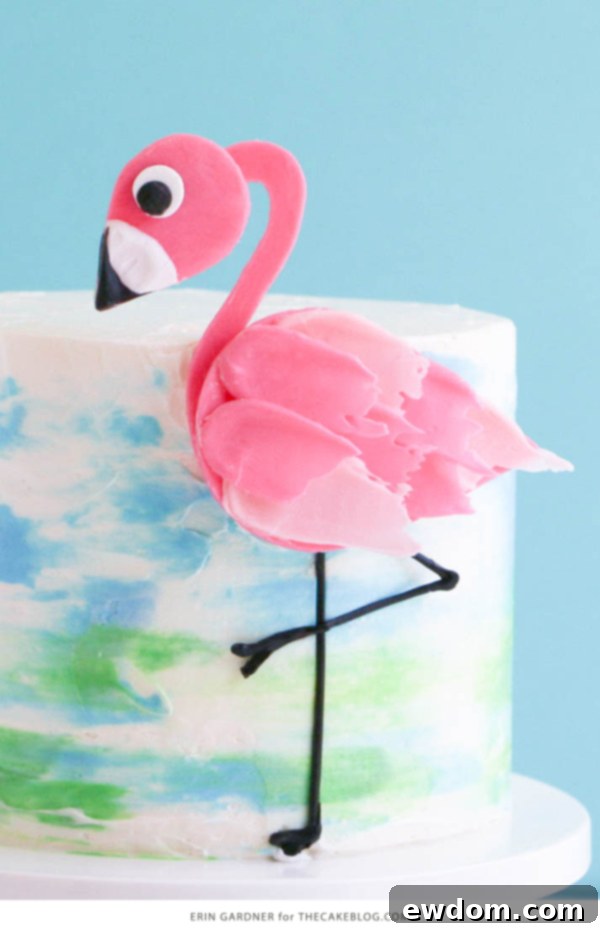
DIY Flamingo Cake: A Step-by-Step Tutorial
Crafted by Erin Gardner
Embark on this exciting cake decorating adventure. Below is a detailed list of supplies you’ll need, followed by comprehensive instructions to bring your flamingo cake to life. Precision and patience are your best tools!
Essential Supplies for Your Chocolate Flamingo Cake
- Coating Chocolate (Candy Melts):
- Bright Pink: For vibrant feather details and structural elements.
- Light Pink: To add depth and variation to the flamingo’s plumage.
- Black: For the distinctive beak tip, legs, and eye.
- White: Essential for the base of the beak and the flamingo’s eye.
- (Alternatively, use tinted and tempered white chocolate for a gourmet touch.)
- Parchment Paper: Crucial for working with chocolate and preventing sticking.
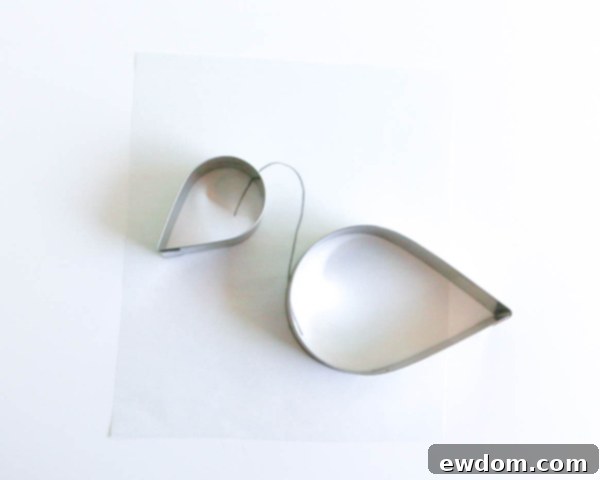
- Tear Drop Cutters:
- Small (approx. 1 1/2” long): Ideal for shaping the flamingo’s head.
- Large (approx. 4” long): Perfect for creating the flamingo’s body.
- Small Round Circle Cutter or Round Piping Tip: (approx. 1/2” in diameter) For the flamingo’s eye base.
- Baking Tray or Cookie Sheet: For chilling chocolate pieces quickly and efficiently.
- Small Offset Spatula: Your go-to tool for spreading chocolate and creating brushstroke feathers.
- Paper Cones or Piping Bags: For controlled piping of chocolate details.
- 6-inch Round Cake: Fully finished and frosted with a smooth layer of white buttercream, serving as your canvas.
- Revolving Cake Turntable: Indispensable for achieving a flawless watercolor buttercream effect.
- Extra White Buttercream: For assembling the flamingo and minor touch-ups.
- Blue Buttercream: To create the stunning “sky” effect on your watercolor cake.
- Green Buttercream: For the “land” or “water” base of your tropical scene.
- Icing Smoother or Large Straight Icing Spatula: For blending the watercolor buttercream seamlessly.
- Assorted Sprinkles: In blue, green, pink, purple, and gold, for a festive and vibrant finish.
- Toothpick or Chopstick: Handy for removing small chocolate pieces from cutters.
- Optional: Floral Wire or Lollipop Stick: For reinforcing the flamingo’s neck, especially in warmer climates or for transport.
Step 1: Crafting the Flamingo Body Base
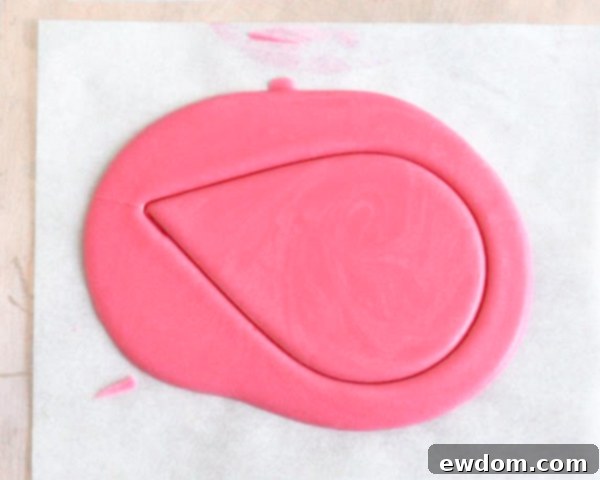
Begin by preparing the main components of your flamingo. Melt the bright pink coating chocolate in a heatproof bowl, following package instructions for best results (usually in a microwave at short intervals, stirring frequently). Line a baking tray with parchment paper, ensuring the paper extends a few inches beyond the tear-drop cutters you will use. Pour generous puddles of the melted bright pink chocolate onto the parchment. Gently tap the tray against your work surface. This crucial step helps to release any trapped air bubbles, ensuring a smooth, flawless finish for your chocolate pieces. Carefully place your large tear drop cutter (approximately 4 inches long) and your small tear drop cutter (approximately 1.5 inches long) onto the chocolate puddles. Allow the chocolate to set firmly, which typically takes about 5 minutes at room temperature. For quicker results, pop the tray into the refrigerator for a few minutes until the chocolate is completely solid.
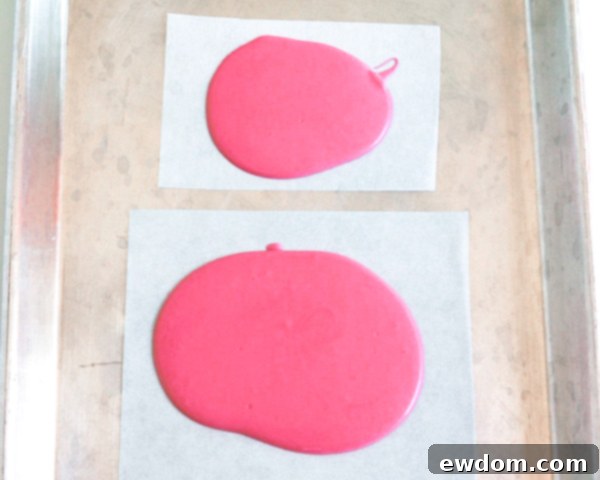
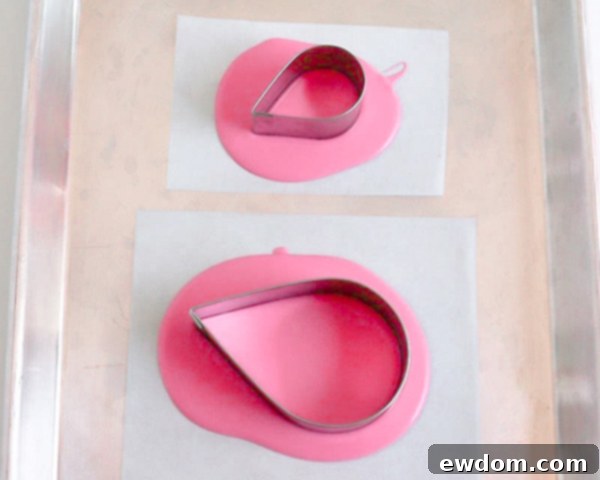
Step 2: Creating the Iconic Brushstroke Feathers
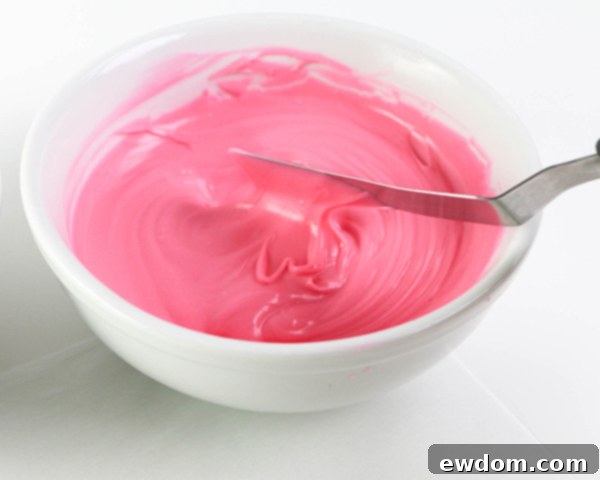
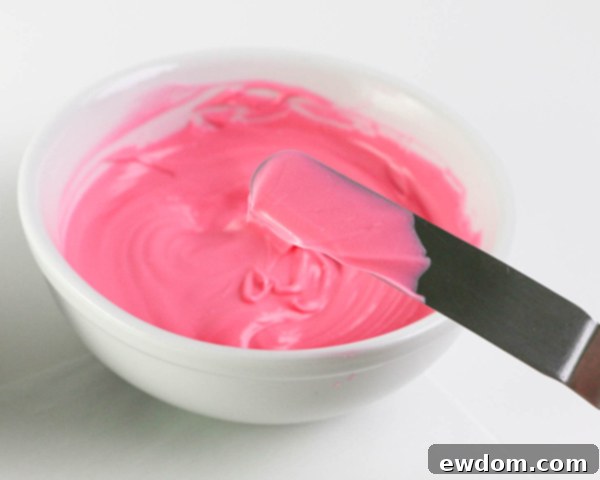
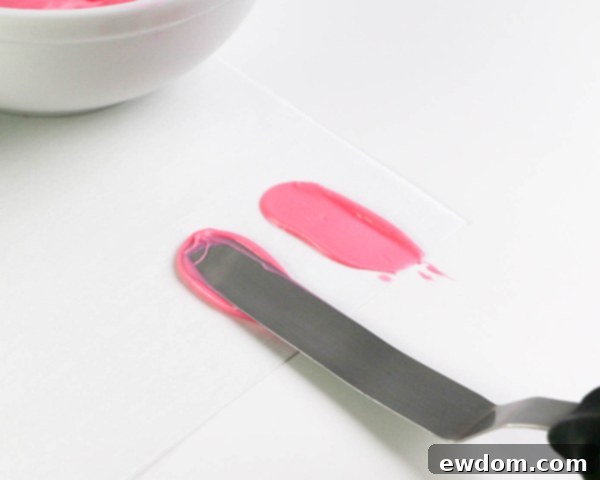
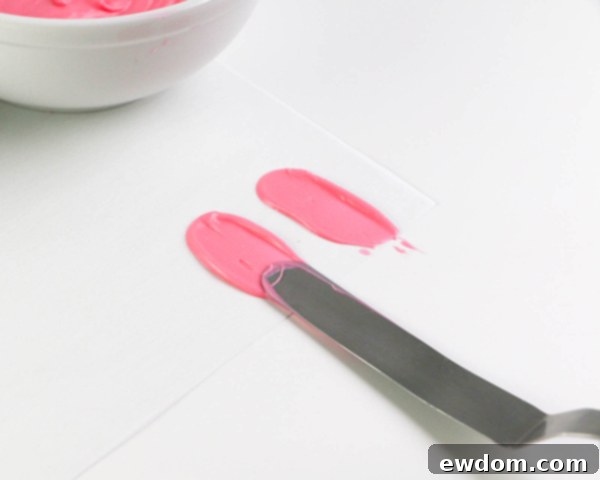
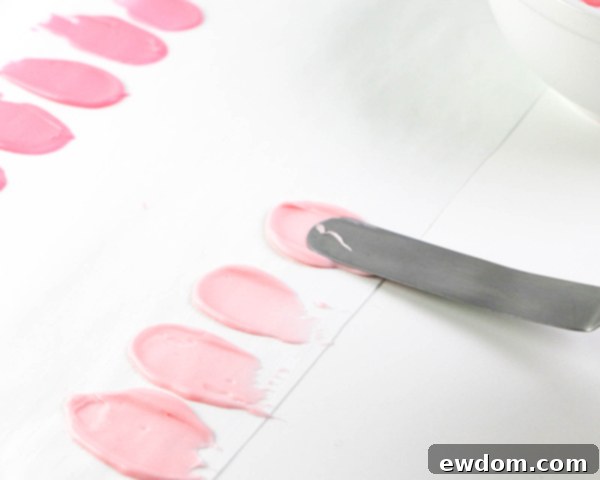
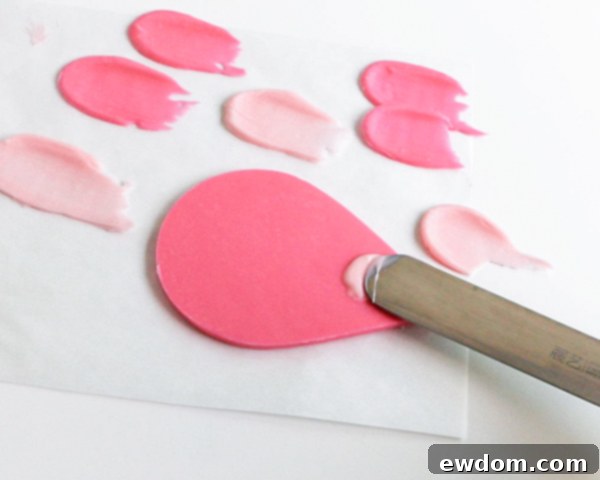
Now for the artistic touch that gives your flamingo its distinctive feathery texture. Melt the light pink coating chocolate in a separate heatproof bowl. If your bright pink chocolate from Step 1 has started to firm up, give it a quick re-melt to bring it back to a workable consistency. Dip the flat bottom of a small offset spatula into the bright pink chocolate, getting a good, even coating. Position the chocolate-dipped side of the spatula against a piece of clean parchment paper, about 1 to 2 inches away from the edge. With a confident, fluid motion, smear the chocolate onto the paper, pulling the spatula away from the edge. This action will create a unique, brushstroke-like shape with a beautifully textured, feathered edge. Repeat this process, alternating between bright pink and light pink coating chocolates, to create an array of “feathers.” Aim to create more feathers than you think you’ll need (perhaps 10-12 in total), as some may break during handling. Allow all the feathers to set completely on the parchment paper, typically around 5 minutes, ensuring they are firm and crisp before proceeding.
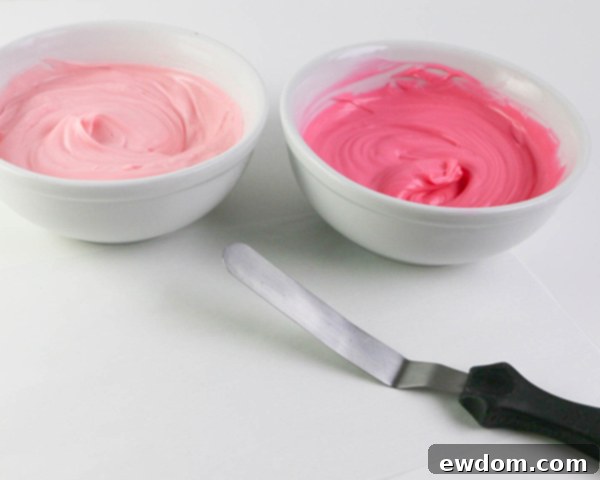
Step 3: Shaping the Flamingo’s Graceful Neck
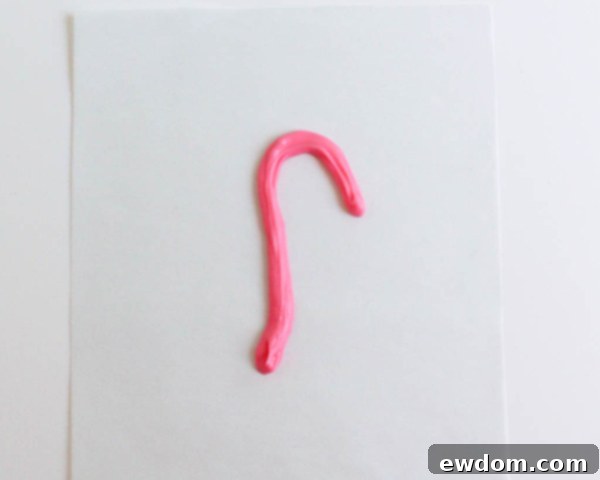
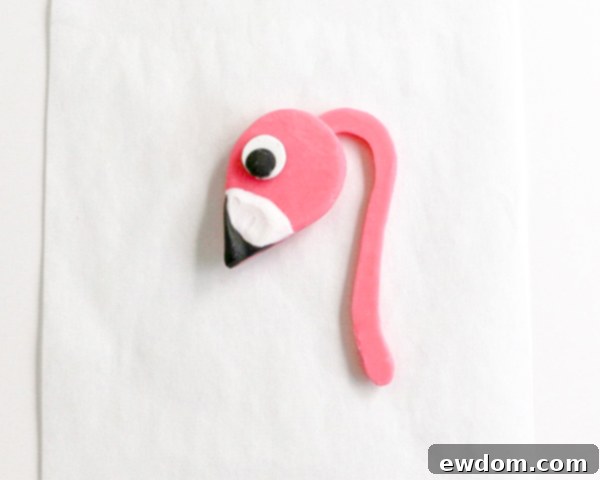
Return to the tear drop shapes that have now set. Carefully lift the cutters off the parchment paper, revealing your perfectly molded chocolate pieces. Gently remove any excess chocolate from around the edges and return it to the melted pink chocolate bowl for later use. Next, prepare for the neck. Flip the parchment paper over or grab a fresh piece. Using the tear drop shapes as a reference for proportion, draw the flamingo’s neck onto the parchment. You can opt for a simple, elegant curve or a more dramatic candy cane shape for that classic flamingo pose. Once satisfied with your drawing, set the tear drops aside. Fill a piping bag or a sturdy paper cone with melted pink coating chocolate (either bright or light pink, depending on your preference). Carefully trace over your drawn line, piping a chocolate line that is approximately 1/2 inch wide. The thickness is important – it needs to be substantial enough to support the head but not so thick that it distorts the elegant curve. Don’t worry if the piped line isn’t perfectly smooth; we will flip the neck over to use the smoother, untouched underside as the top surface.
IMPORTANT NOTE ON SUPPORT: For those in warmer climates or if your cake will be transported, reinforcing the flamingo’s neck is advisable. Before the chocolate hardens, carefully insert a pre-shaped piece of floral wire (or a lollipop stick for a straight neck) into the piped chocolate. When using non-edible supports, extreme caution is necessary. Always coat the wire or stick entirely with chocolate before inserting it into the cake, and inform all guests that non-edible elements are present. The supported flamingo head and neck should NOT be consumed.
Step 4: Constructing the Flamingo’s Distinctive Head
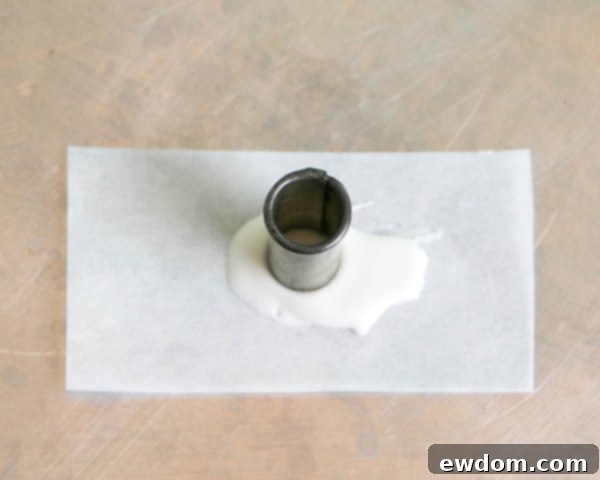
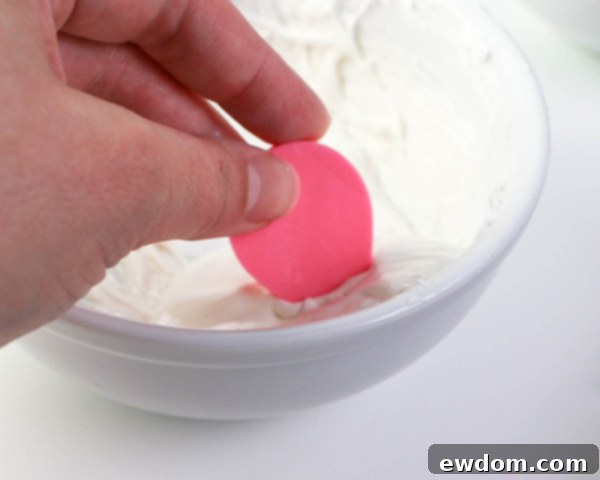
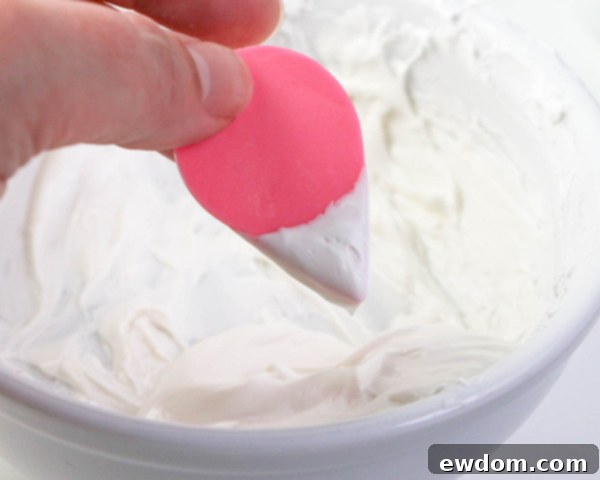
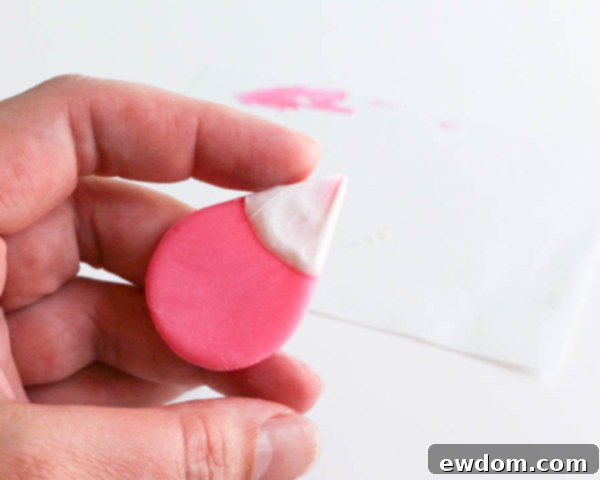
Let’s focus on the flamingo’s elegant head and beak. Melt the white coating chocolate in a small, heatproof bowl. Pour a small puddle of this melted white chocolate onto a fresh piece of parchment paper. Tap the tray gently to smooth out the chocolate and eliminate any air bubbles. Place your small round circle cutter (or the wider end of a round piping tip) onto the white chocolate, allowing it to set firmly for about 5 minutes. This will be the white base of the flamingo’s beak. Once set, pick up the small pink tear drop (from Step 1) by its rounded end. Dip the pointed end of this pink tear drop into the melted white coating chocolate, submerging it about 1/2 inch deep. Gently use your immaculately clean fingers to carefully smooth off any excess chocolate from the edges, creating a crisp, clean line for the beak. Allow the white chocolate to harden completely, which usually takes only a minute or two.
Step 5: Adding the Black Beak Tip and Assembling Head & Neck
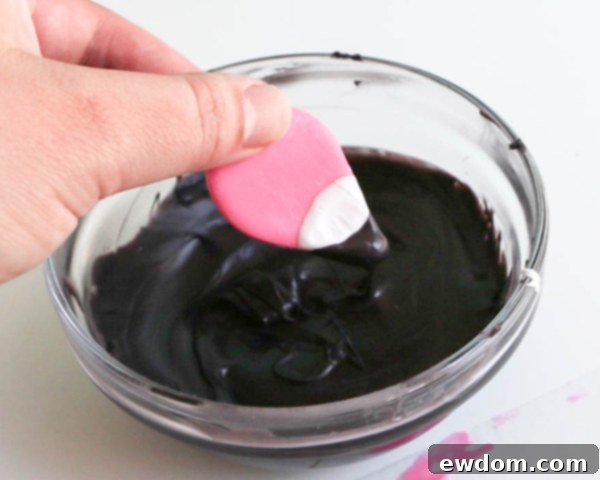
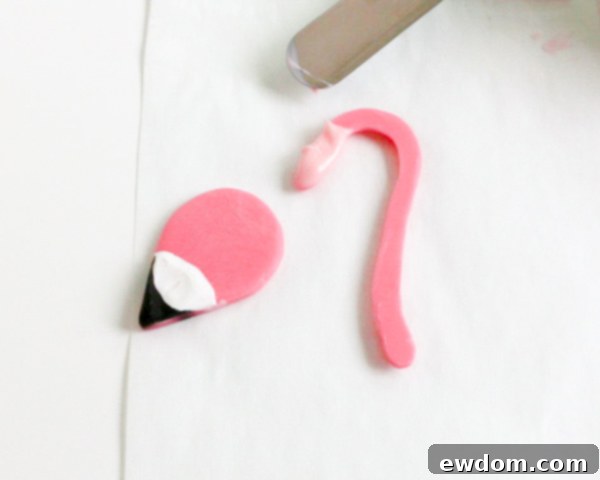
Now, let’s add the signature black tip to the flamingo’s beak. Melt the black coating chocolate in a small heatproof bowl. Once the white chocolate on the beak is fully set, dip the very tip of the tear drop into the melted black coating chocolate, submerging it about halfway up the white section. Gently clear away any excess black chocolate to maintain a clean line. Place the beak on parchment paper to set completely. After both the head (pink tear drop with white and black beak) and the neck (from Step 3) are fully hardened, carefully lift the neck off the parchment paper and flip it over so the smoother side is facing up. Use your offset spatula to apply a dab of melted pink coating chocolate to one end of the neck. This will act as your edible adhesive. Carefully place the finished flamingo head onto this melted chocolate, positioning it securely. Set the assembled head and neck aside to harden for approximately 5 minutes before handling further.
Step 6: Creating the Flamingo’s Eye
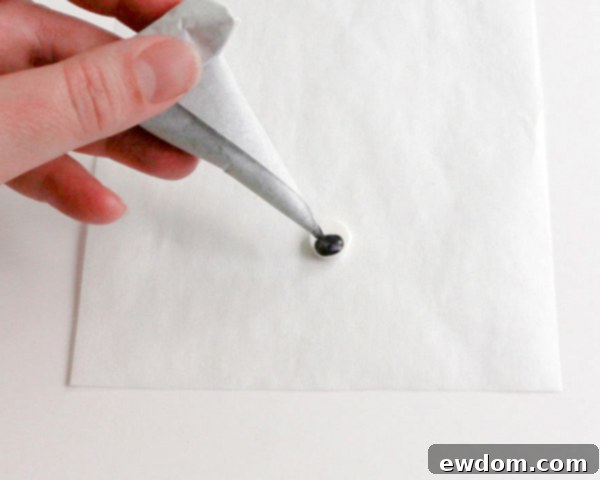
While the head and neck are setting, let’s create the flamingo’s watchful eye. Gently remove the white chocolate circle that you made in Step 4 from the parchment paper. If it’s a bit stubborn, a toothpick or the blunt end of a chopstick can help to pop it out of the cutter. Fill a small piping bag or paper cone with a tiny amount of melted black coating chocolate. Carefully pipe a small, neat black dot onto the center of the white chocolate circle to create the pupil and iris of the flamingo’s eye.
Step 7: Attaching the Eye and Finalizing the Head
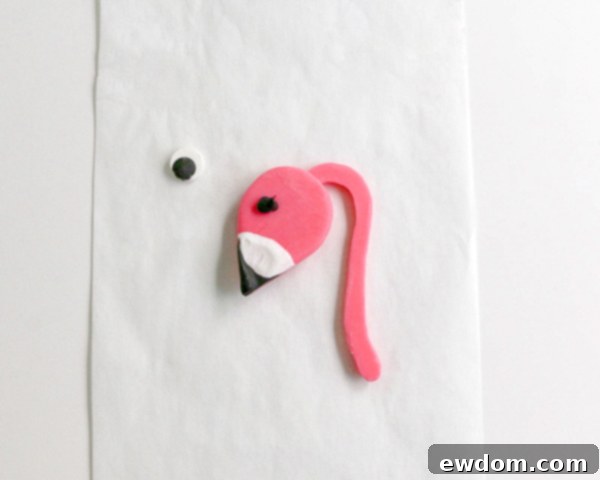
Once the eye is ready, use another tiny dot of melted black coating chocolate as an adhesive to carefully attach the eye to the side of the flamingo’s head. Choose a spot that looks natural and gives your flamingo personality. Once the eye is in place, set the entire head assembly aside again, allowing everything to harden completely. This typically takes another 5 minutes, ensuring all parts are securely fused.
Step 8: Designing the Flamingo’s Long Legs
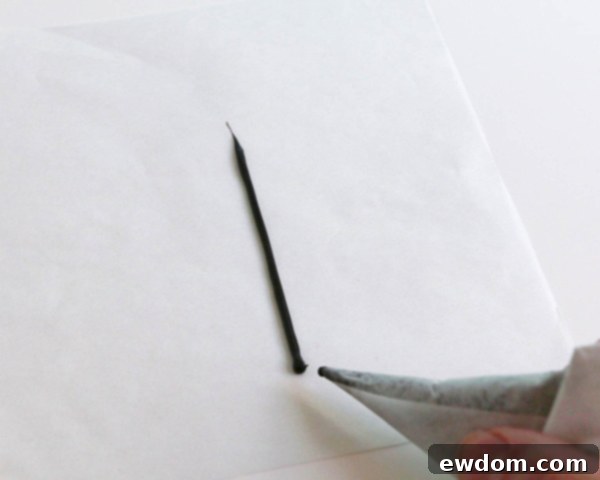
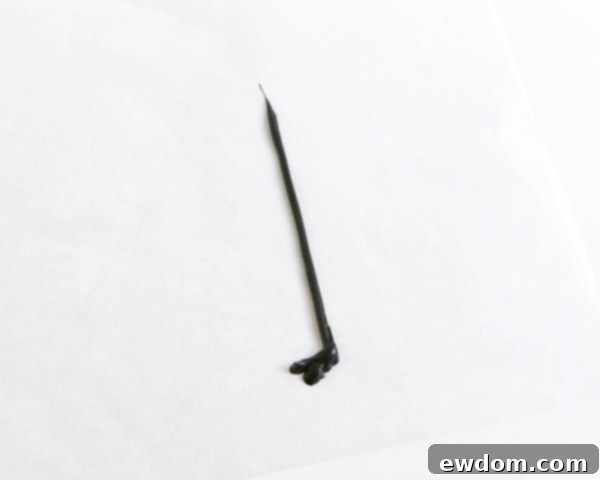
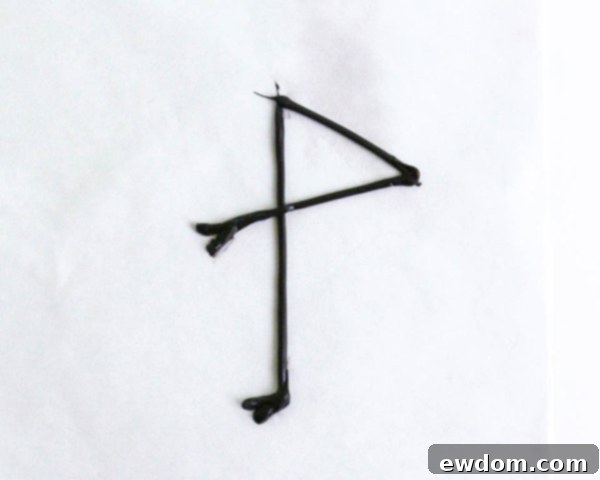
Flamingos are renowned for their long, elegant legs. Let’s create them! Re-warm your black chocolate if it has started to solidify. On a fresh piece of parchment paper, use the actual height of your cake as a guide to draw the flamingo’s legs. It’s best to draw them slightly longer than you anticipate needing, as you can always trim them later to fit perfectly beneath the flamingo’s body. For one leg, draw a simple straight line. For the other, freehand a bent leg, perhaps resembling a backward number “4,” to mimic the classic flamingo pose. Fill a piping bag or paper cone with a small amount of melted black coating chocolate. First, pipe over your drawn straight leg, making it a consistent thickness. Add two small, distinct lines at the bottom to form the flamingo’s foot. Next, pipe over your bent leg outline, again adding two small lines for its foot. Allow these delicate chocolate legs to harden completely on the parchment paper, which should only take a few minutes.
Step 9: Assembling the Feathered Flamingo Body
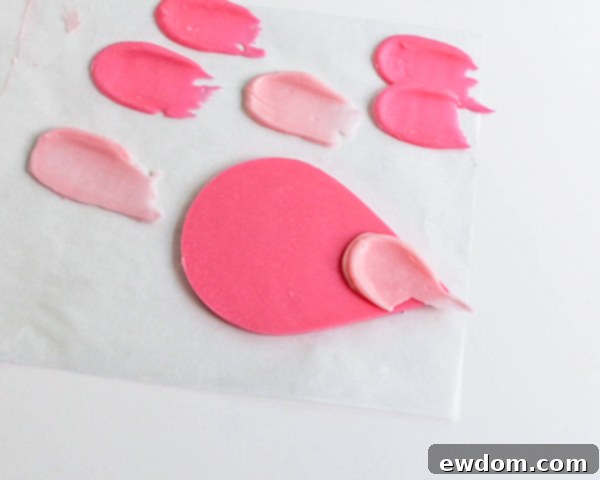
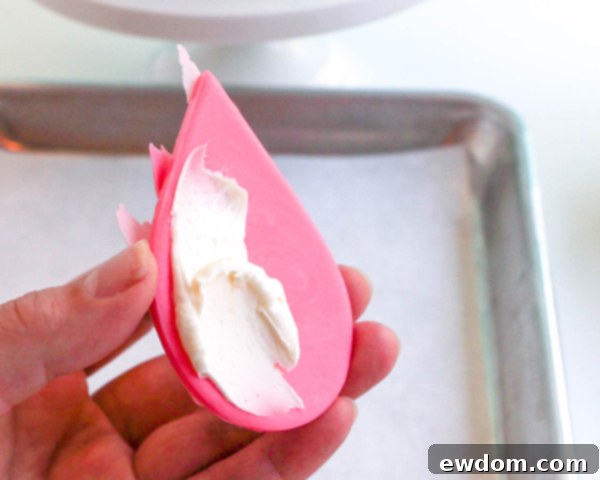
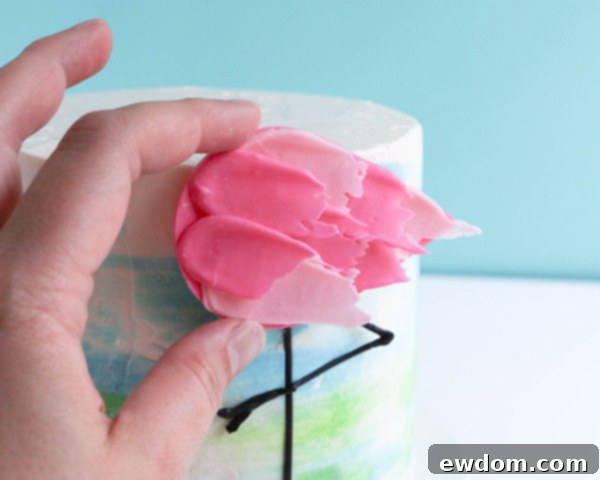
Now it’s time to give the flamingo its lush plumage! Carefully lift the hardened brushstroke feathers from the parchment paper. If needed, use an offset spatula to gently release them. Always handle the feathers by their thicker, rounded end to minimize the risk of breakage. Re-warm a small amount of either bright pink or light pink coating chocolate. Use your offset spatula to smear a dab of this melted chocolate towards the pointed end of the large tear drop (the flamingo’s body base). Carefully place one of your brushstroke feathers onto this melted chocolate, ensuring the beautifully jagged, feathered end extends slightly beyond the tip of the tear drop, creating a realistic tail effect. Continue adding more feathers, working from the pointed end towards the rounded end of the tear drop, layering them slightly to build volume and dimension. Alternate between your bright and light pink feathers to create a rich, varied texture. Once all feathers are in place, set the fully feathered body aside to harden completely, approximately 5 minutes, before it’s ready to be placed on the cake.
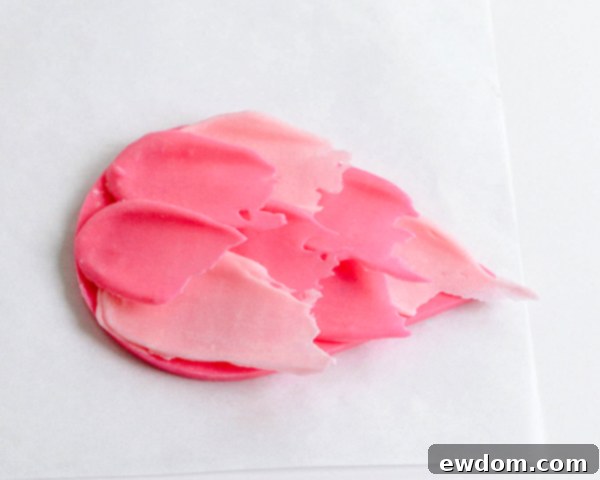
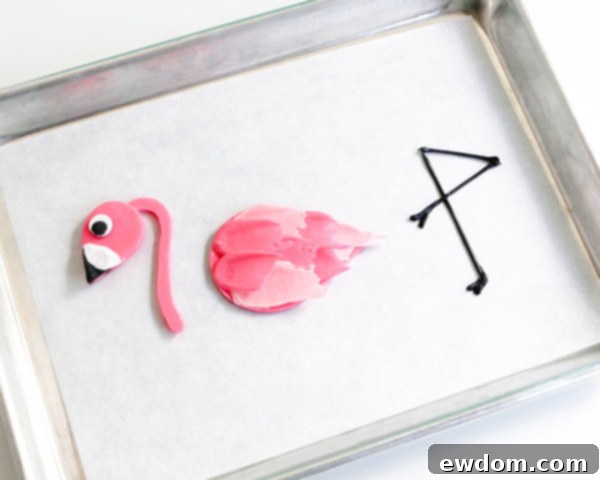
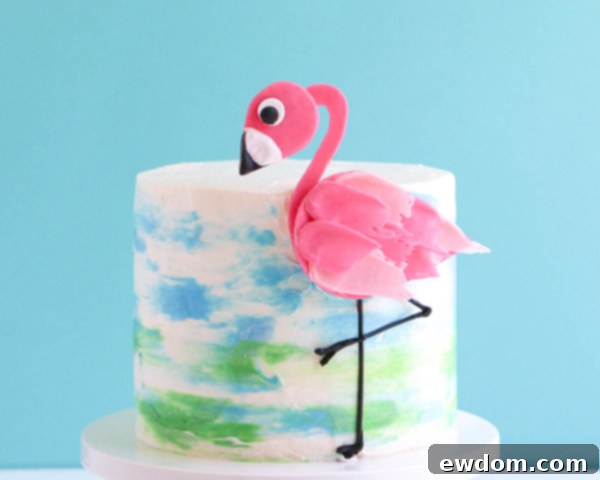
Congratulations! Your chocolate flamingo is now complete, divided into three main, stunning parts: the head and neck assembly, the feathered body, and the elegant legs. It’s time to bring these elements together on your cake.
Step 10: Crafting the Watercolor Buttercream Cake
Place your 6-inch round cake, already finished with a smooth layer of white buttercream, onto your revolving cake turntable. Now for the beautiful watercolor effect! Using a small offset spatula or a knife, gently smear dots and irregular patches of green buttercream and blue buttercream all around the sides of the cake. For a realistic land-meets-sky effect, apply more of both colors towards the bottom of the cake and gradually less towards the top, creating a natural gradient. Once your colors are dotted on, hold the long edge of an icing smoother or a large straight icing spatula firmly against the side of the cake. Begin to slowly and steadily spin the turntable, allowing the blade of your tool to smoothly blend and smear the dots of buttercream as the cake revolves. Continue spinning and smoothing, adding a bit more color here and there if needed, until you achieve a beautiful, painterly watercolor effect that perfectly complements your tropical flamingo.
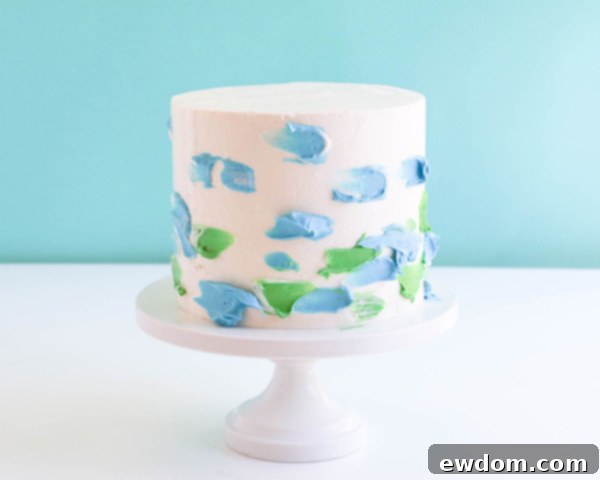
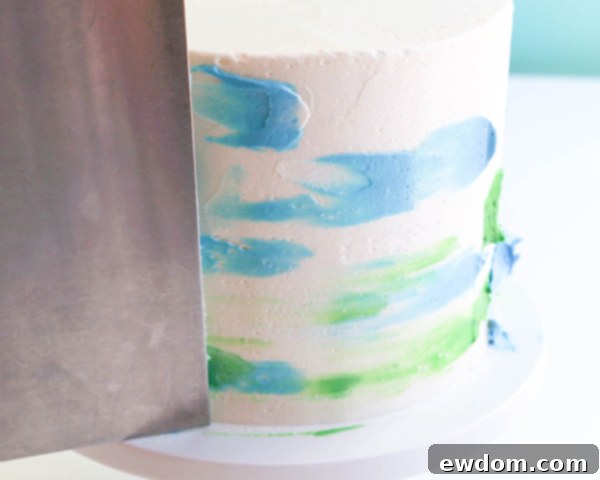
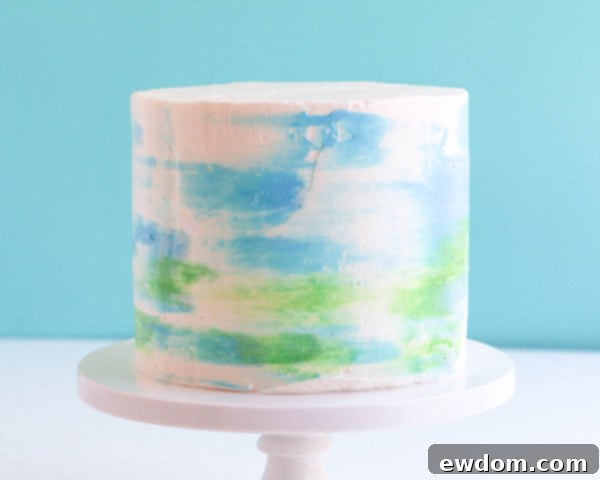
Step 11: Assembling the Flamingo on the Cake
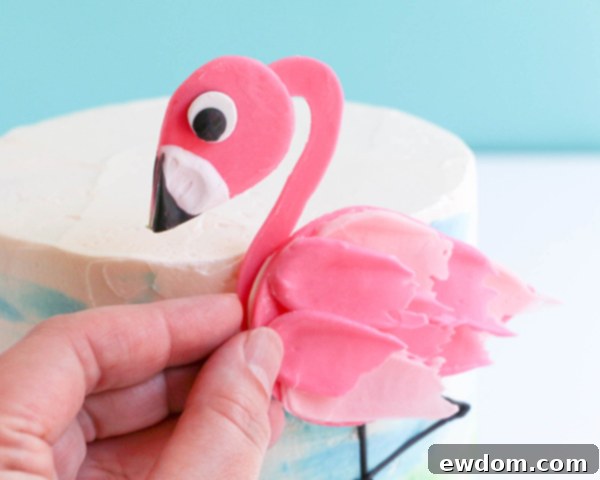
Now for the grand finale – bringing your flamingo to life on its tropical stage. Start by carefully placing the hardened chocolate legs onto the cake. Gently press them into the buttercream so that the flamingo’s foot or feet are touching the bottom edge of the cake, making it appear as if the flamingo is standing gracefully. Next, use a generous dab of extra plain white buttercream on the back of the flamingo’s feathered body. Carefully adhere the flamingo’s body to the cake, positioning it just above where the legs are placed. Apply a bit more buttercream to the rounded, top edge of the body; this will serve as a secure anchor for the head and neck. Finally, slide the neck of the flamingo in behind this rounded edge of the body. The buttercream will help hold it firmly in place. If there are any noticeable gaps between the body and the cake, use a little more buttercream to fill them in and create a seamless look.
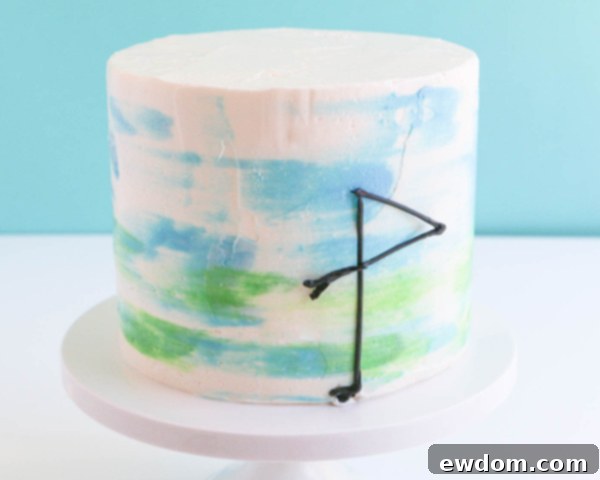
Step 12: Adding a Touch of Sparkle with Sprinkles (Optional)
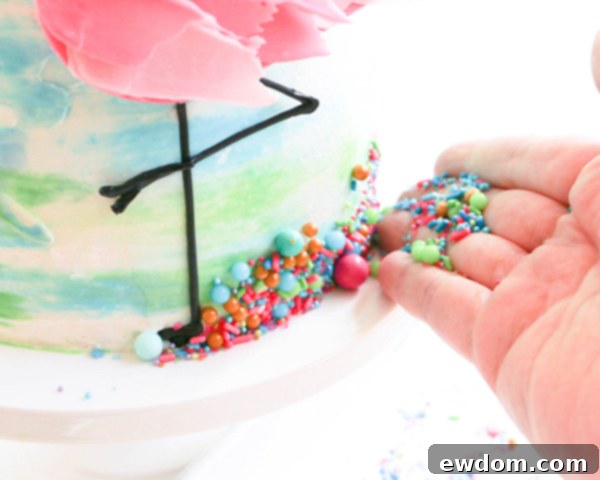
At this point, your cake is already a showstopper. If you prefer a minimalist, elegant look, you can consider your masterpiece complete. However, if you’re a fan of “more is more” and love a dazzling finish, let’s add some festive sprinkles! A carefully selected mix of blue, green, pink, purple, and gold sprinkles can mimic sparkling water, sandy beaches, or vibrant tropical flora around the base of your cake, enhancing the overall scene.
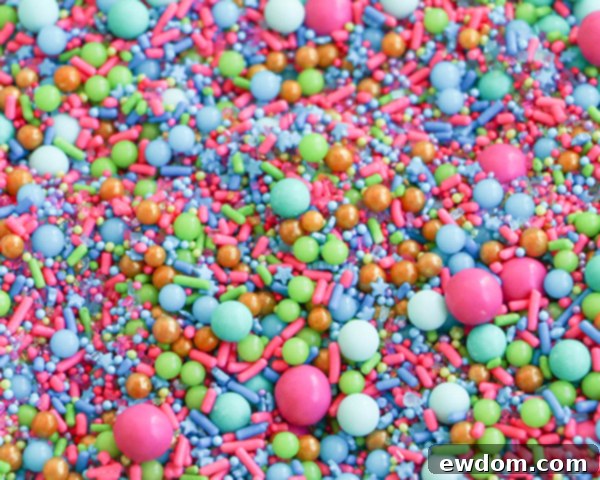
Scoop up a small amount of your mixed sprinkles in your hand. Gently press these sprinkles against the bottom edge of the cake, allowing them to adhere to the buttercream. Work your way all around the cake, ensuring an even and delightful distribution of sprinkles. This step adds texture, color, and an extra layer of tropical festivity!
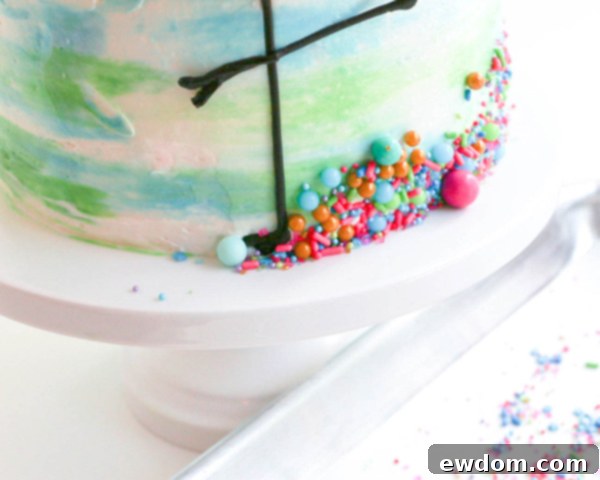
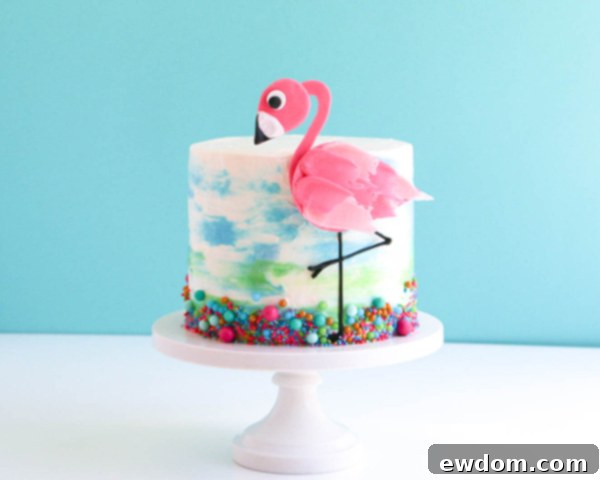
Your Flamingo Cake is Complete!
Step back and admire your incredible creation! You’ve successfully crafted a magnificent tropical flamingo cake, complete with delicate chocolate brushstroke feathers and a stunning watercolor buttercream backdrop. This cake is not just a dessert; it’s a statement piece, perfect for birthdays, summer gatherings, or any occasion that calls for a touch of vibrant, edible artistry. Get ready to flamin-go wild over the joy and admiration your cake will surely receive!
Explore More Cake Decorating Ideas:
If you loved creating this flamingo cake, you’ll surely enjoy these other innovative tutorials:
- Kissing Flamingos Cake
- Brushstroke Cake
- Giant Chocolate Flower Cake
- Striped Buttercream Cake
- Mod Polka Dot Cake