Mastering the Art of the Speckled Easter Egg Cake: A Delightful Spring Baking Tutorial
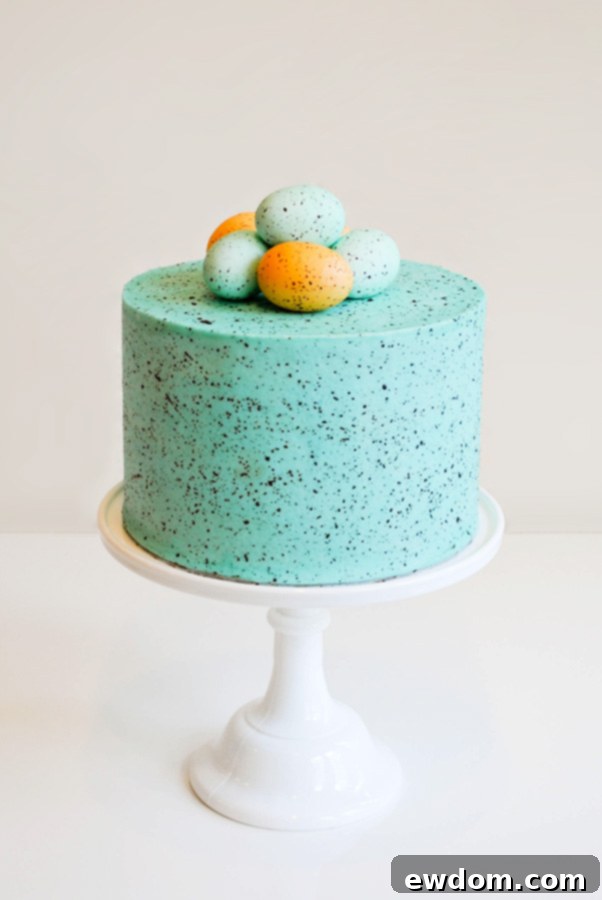
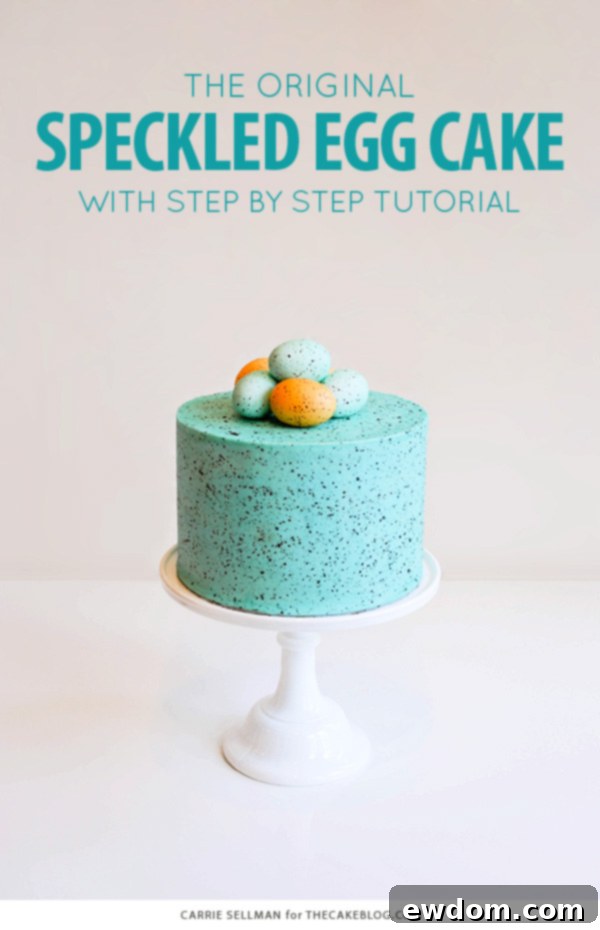
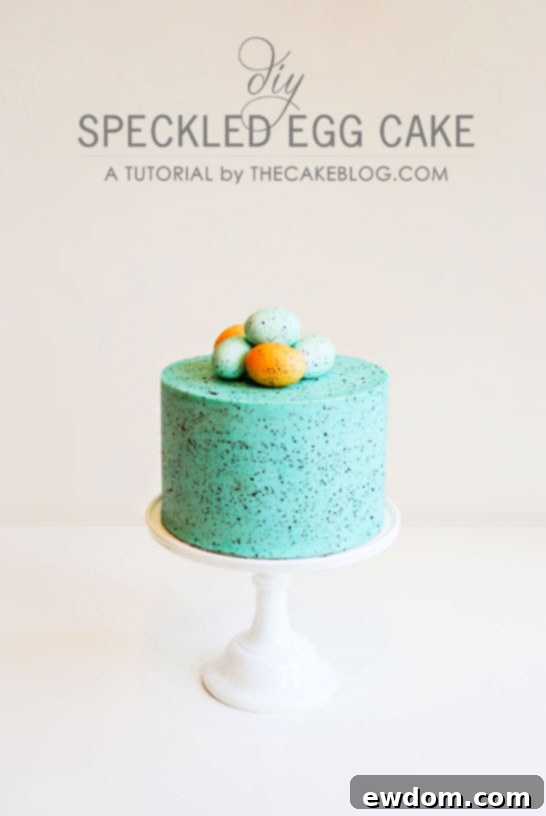
As the last chill of winter fades, nature awakens, painting the world in fresh hues of green and vibrant blossoms. Spring is undeniably in the air, bringing with it the joyous anticipation of Easter – a season of renewal, family gatherings, and, of course, delicious treats. This year, elevate your Easter celebration with a truly enchanting dessert that captures the essence of spring: a stunning Speckled Easter Egg Cake. Inspired by the captivating beauty of robin’s eggs, this cake is not only visually striking but also incredibly fun to create. Whether you’re a seasoned baker or just starting your culinary journey, this tutorial offers a step-by-step guide to achieving a masterpiece that will impress your guests and delight your loved ones, including your favorite little egg-hunters. Get ready to embrace the magic of spring in your kitchen!
Why a Speckled Easter Egg Cake? The Perfect Spring Centerpiece
The Speckled Easter Egg Cake isn’t just a dessert; it’s a celebration of the season itself. Eggs have long been a symbol of new life and rebirth, making them a central motif for Easter. The robin’s egg, with its unique pale blue hue and delicate speckles, evokes a sense of natural beauty and whimsical charm. This cake transforms that simple beauty into an edible work of art. Imagine the gasps of delight as you present this unique creation, its vibrant color and intricate details making it the undisputed centerpiece of your Easter table. It’s a dessert that tells a story, a testament to the warmth and renewal that spring brings, and a testament to your creativity in the kitchen. Plus, the process of making it is an enjoyable activity, perfect for getting into the festive spirit.
Preparing for Your Baking Adventure: The Foundations of Your Masterpiece
Before diving into the fun speckling technique, let’s lay the groundwork for your cake. A successful cake starts with careful preparation and choosing the right components. Don’t feel rushed; this project can easily be spread out over several days, making it ideal for busy schedules or if you want to involve little helpers in stages.
The Cake Base: Choosing and Preparing Your Layers
For this tutorial, a Classic Vanilla Cake provides a perfect, neutral canvas, allowing the robin’s egg aesthetic to truly shine. We recommend baking it as four layers to create an impressive height and a beautiful cross-section when sliced. However, you can adapt this to three layers or even a two-layer sheet cake if preferred. The key is to have a sturdy, flavorful base.
- Flavor Choices: While vanilla is classic, consider other spring-inspired flavors like lemon cake for a zesty twist, or even a light carrot cake for a more traditional Easter feel. Ensure your chosen recipe yields a cake that is moist and holds its shape well.
- Baking Ahead: To simplify your baking timeline, cakes can be baked several days in advance. Once completely cooled, wrap them tightly in plastic wrap and either freeze them or store them in the refrigerator. This method not only saves time but also often makes the cakes easier to handle and level when assembling.
- Leveling: For a neat presentation, gently level your cake layers with a serrated knife or a cake leveling tool. This ensures even layers and a stable structure for frosting.
The Buttercream: Your Blank Canvas
A smooth, delicious buttercream is essential for the visual appeal and taste of your Speckled Easter Egg Cake. A basic buttercream recipe, known for its versatility and ease of use, is perfect. You’ll want enough to crumb coat your cake and then apply a generous final layer.
- Recipe: If you don’t have a go-to recipe, many excellent “basic buttercream icing” recipes are available online, offering a smooth, pipeable consistency. You can find a reliable recipe here.
- Consistency is Key: Ensure your buttercream is smooth and free of lumps. If it’s too stiff, add a tiny bit of milk or cream; if too soft, chill it for a bit and then re-whip. This consistency is crucial for both frosting and later for creating the “glue” for your eggs.
- Flavor Pairing: Consider adding a hint of almond extract or lemon zest to your vanilla buttercream to complement your cake flavor and enhance the spring theme.
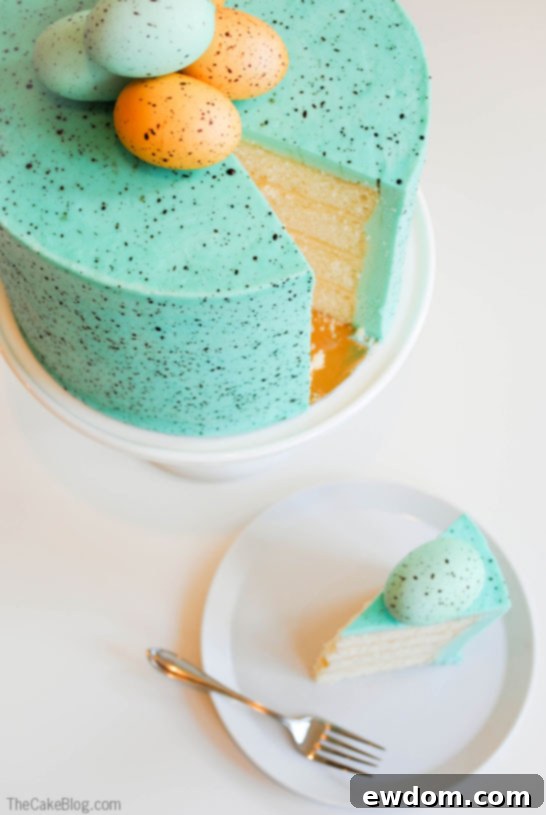
Crafting Your Easter Eggs: The Charming Details
The decorative eggs atop your cake are as integral to the design as the speckles themselves. You have several creative options for these, and your choice will influence the overall aesthetic and flavor profile of your cake.
- Chocolate Eggs: Use an egg-shaped candy mold to create white chocolate eggs. You can tint the white chocolate with food coloring to match your desired color scheme (light blue, pastel pink, yellow). These are delicious and add another layer of sweetness.
- Real Eggs (Blown Out or Hard Boiled): For a more authentic look, you can use real eggshells that have been carefully blown out and cleaned, then dyed. Alternatively, hard-boiled eggs can be dyed, but ensure they are food-safe if they will be directly touching the cake for prolonged periods. *Important: Never use raw eggs for decoration; this poses a significant health risk.*
- Fondant or Gumpaste Eggs: For a completely edible and customizable option, shape eggs from fondant or gumpaste. These can be colored any shade and will hold their shape beautifully.
- Store-Bought Candy Eggs: For ultimate convenience, simply purchase speckled candy eggs from your local confectionery or grocery store. Many brands offer charming robin’s egg-like candies that are perfect for this project.
Whichever method you choose, remember that these eggs set the initial color palette for your cake, so select or create them with your final vision in mind.
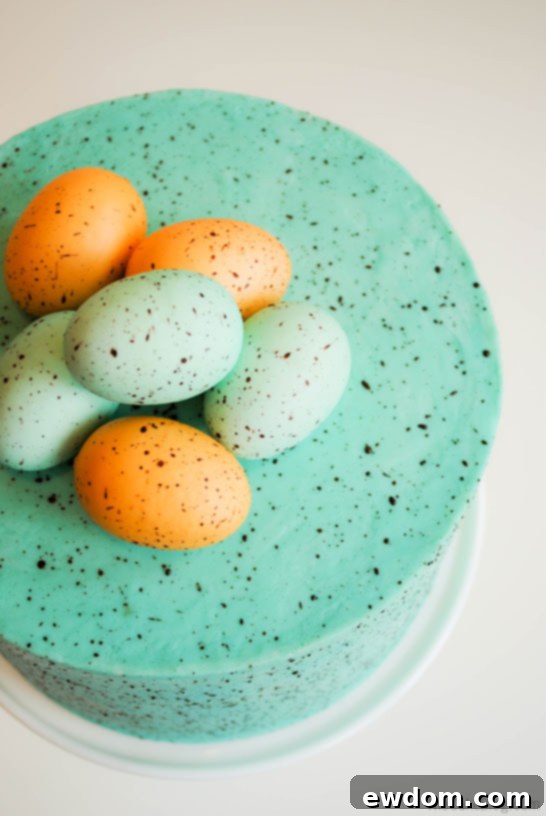
The “Scientific” Speckling Technique: A Fun & Messy Process
Now for the truly exciting part: the speckling! This technique is incredibly satisfying and yields stunning results, but it does come with a fair warning: it can be a bit messy. Embrace the splatters as part of the creative process! You might find cocoa splatters on your counter, your floor, and even unexpected places like your refrigerator. But fear not, the clean-up is manageable. Protect your workspace with wax paper or newspaper, and have paper towels ready. This isn’t the time for your most treasured apron, but any apron will wash up just fine. With that disclosure out of the way, let’s gather our specialized tools and get started!
Gather Your Essential Supplies
To successfully execute this charming Speckled Easter Egg Cake, you’ll need the following items:
- Your chosen cake, already assembled and crumb-coated
- Generous batch of basic buttercream icing
- Sky blue food color (gel colors work best for vibrant hues)
- 1 tablespoon unsweetened cocoa powder
- 1 1/2 tablespoons vanilla extract (or other clear extract like almond)
- A small bowl for mixing the speckle paint
- A dedicated food-grade paintbrush (new or meticulously clean and never used for non-food items)
- Wax paper, parchment paper, or old newspaper to protect your work surface
- Plenty of paper towels for quick clean-up
- Your prepared or purchased speckled eggs for decoration
Step-by-Step Guide to Your Speckled Masterpiece
STEP 1: Achieving the Perfect Robin’s Egg Blue
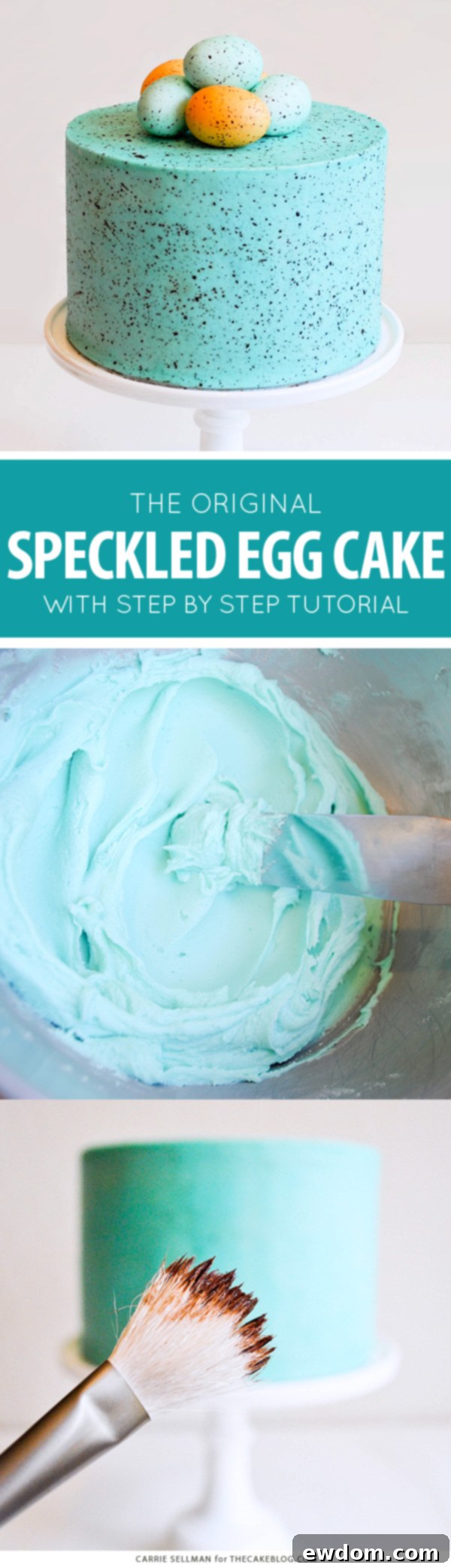
Begin by tinting your basic buttercream frosting. For a classic robin’s egg shade, use 2-3 drops of Americolor Sky Blue gel food coloring. When adding color, always proceed gradually, incorporating one drop at a time and mixing thoroughly. This allows you to control the shade and prevent over-coloring, which can be difficult to correct. If in doubt, err on the lighter side; buttercream often deepens slightly in color as it sets and the colors develop over time. Mix until the color is uniformly distributed and you’ve achieved your desired tranquil blue.
STEP 2: Frosting Your Canvas
With your beautifully colored blue buttercream, generously frost your assembled and crumb-coated cake. Apply an even layer, smoothing and shaping it to your preference. Don’t strive for absolute perfection in smoothness; the upcoming speckling technique will add texture and character, camouflaging any minor imperfections. Focus on creating a relatively smooth and uniform base that is completely covered with your vibrant blue icing. A bench scraper can help achieve smooth sides, and an offset spatula is great for the top.
STEP 3: Concocting the Edible Speckle Paint
In a small bowl, combine 1 tablespoon of unsweetened cocoa powder with 1 1/2 tablespoons of vanilla extract. Stir these ingredients thoroughly until the cocoa powder is completely dissolved and you’re left with a thin, liquid chocolate mixture. This “paint” should be fluid enough to splatter easily but not so watery that it runs. If it’s too thick, add a tiny bit more vanilla extract (or water, sparingly). If it appears too thin, a pinch more cocoa powder can thicken it, but be careful not to make it clumpy. The goal is a consistent, smooth chocolate liquid.
STEP 4: Mastering the Art of the Flick
Ensure your work area is fully protected with wax paper or similar covering. Lightly dip your clean, food-grade paintbrush into your chocolate paint. Avoid overloading the brush; a little goes a long way. Before approaching the cake, practice your flicking technique on the wax paper. Hold the paintbrush in one hand and gently flick the bristles with your other index finger, observing how the chocolate paint splatters. Experiment with distance and force until you achieve the desired speckle size and density. Once you’re confident, hold the paintbrush fairly close to your cake (about 6-12 inches away) and begin to gently splatter the chocolate paint onto the blue surface. Start with a light touch and build up the speckles.
STEP 5: Embrace the Splatter
Continue splattering the chocolate paint all over the cake, moving the paintbrush up, down, and around to ensure complete and even coverage. Vary your flicking technique slightly to create a natural, organic look with different sized speckles. Remember, the beauty of this cake lies in its rustic charm, so don’t aim for perfect uniformity. If your paintbrush becomes “clogged” with paint and isn’t splattering nicely, rinse it thoroughly with water, dry it completely with a paper towel, and then redip lightly to continue. This ensures a consistent splatter pattern.
NOTE: It’s natural to occasionally get a splatter larger than intended or accidentally bump the cake with your brush. Don’t panic! You have two simple options: either embrace these minor imperfections—they often add to the handmade charm and uniqueness of your cake—or, if it truly bothers you, quickly and gently wipe off the wet splatter with a lightly water-dampened paper towel, then resume speckling. With careful execution, these small corrections can be nearly undetectable, blending seamlessly into your design.
STEP 6: Speckling Your Eggs and Final Assembly
Once you’ve finished speckling the cake to your satisfaction, turn your attention to the decorative eggs you prepared earlier. Use the same flicking technique to add delicate chocolate speckles to their surfaces, creating a cohesive look with the cake. While both the cake and eggs dry slightly (this takes only a few minutes), take a moment to wipe away any stray splatters from your cake stand or pedestal. Once both elements are completely dry to the touch, carefully arrange your speckled eggs on top of the cake. For added stability and to keep them exactly where you want them, use a tiny dab of leftover buttercream under each egg to secure it in place.
STEP 7: Cut, Eat, and Enjoy!
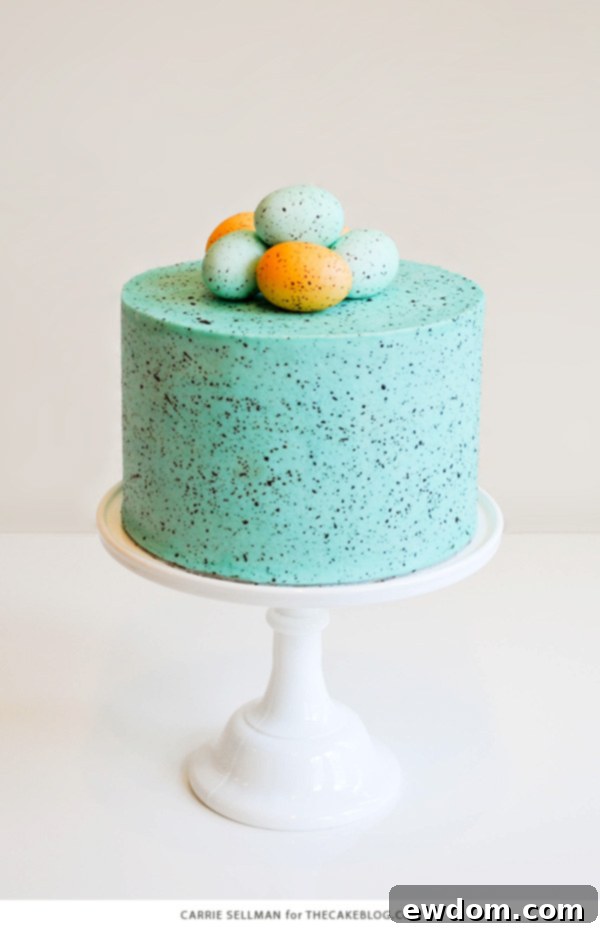
Your magnificent Speckled Easter Egg Cake is now complete! Take a moment to admire your creation. Then, it’s time to slice into this spring masterpiece and savor the flavors. The delicate vanilla cake, the smooth buttercream, and the subtle chocolate speckles create a delightful experience for both the eyes and the palate. Serve with a smile and enjoy the compliments!
Tips for Success and Variations
Flavor Combinations to Explore
While classic vanilla is wonderful, feel free to experiment with other flavor pairings:
- Lemon Zest & Raspberry Filling: A light lemon cake with a tangy raspberry jam filling and lemon-flavored buttercream offers a refreshing burst of spring flavors.
- Carrot Cake & Cream Cheese Frosting: For a more traditional Easter dessert, a spiced carrot cake with a rich cream cheese frosting can be adapted by coloring the cream cheese frosting light blue (use a small amount of gel color to avoid thinning the frosting).
- Almond Delight: Add almond extract to both your cake batter and buttercream for a sophisticated, nutty flavor.
Color Palette Creativity
Don’t limit yourself to robin’s egg blue! You can adapt this technique to any spring color palette:
- Pastel Perfection: Use a soft pink, pale yellow, or light lavender buttercream with white chocolate speckles for a different look.
- Gold Flecks: Instead of cocoa, mix edible gold luster dust with a clear extract (like vodka or lemon extract) to create elegant gold speckles on any colored frosting.
- Rainbow Eggs: Create eggs in various pastel colors and arrange them atop a white or very pale blue cake for a vibrant display.
Kid-Friendly Baking
This cake is an excellent project for involving children. They can help with:
- Making the Eggs: If using fondant or chocolate molds.
- Coloring Buttercream: Under supervision, they can add drops of food coloring.
- The Speckling: This is arguably the most fun part for kids! Ensure they wear old clothes and protect the area thoroughly. Supervise closely to avoid paint ending up everywhere but the cake!
Storage and Serving Suggestions
To keep your beautiful cake fresh:
- Storage: Store the cake in an airtight container at room temperature for up to 2-3 days, or in the refrigerator for up to 5 days. If refrigerated, allow it to come to room temperature for at least an hour before serving for optimal flavor and texture.
- Presentation: Serve on a lovely cake stand surrounded by fresh spring flowers like daffodils or tulips for an even more festive display.
More Easter Cakes to Inspire Your Baking
If you loved creating this Speckled Easter Egg Cake, here are more delightful Easter-themed cake tutorials to explore:
- Chocolate Easter Bunny Cake
- Mini Easter Egg Cakes
- Easter Nest Cake
- Marbled Chocolate Easter Eggs
- Easter Basket Cake
- Spring Wreath Cake with Buttercream Birds’ Nest