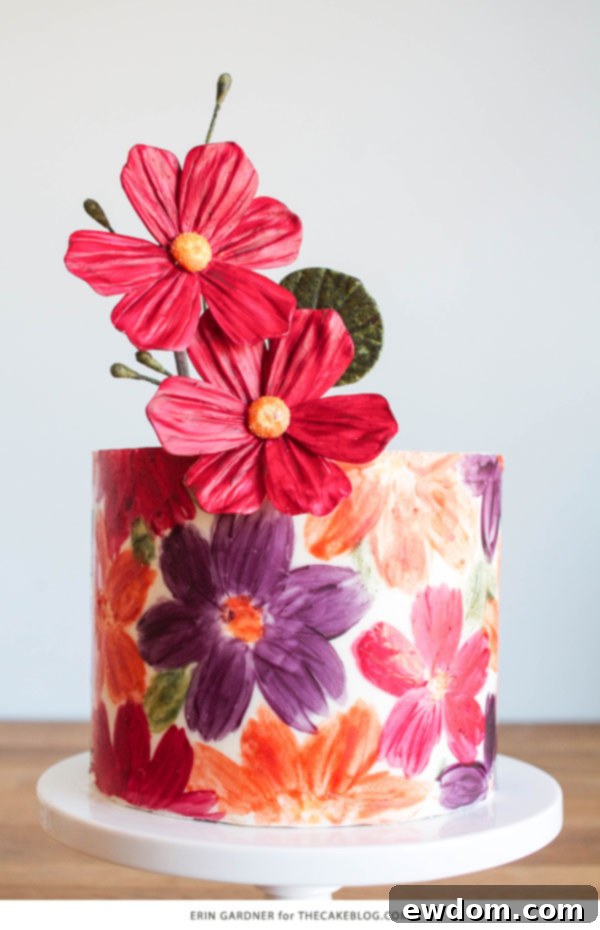
Welcome to an exciting journey into the world of edible art! Our newest tutorial by acclaimed contributor, Erin Gardner, unveils the secrets behind creating a breathtaking Chocolate Wrapped Cake, adorned with a delicate hand-painted floral pattern.
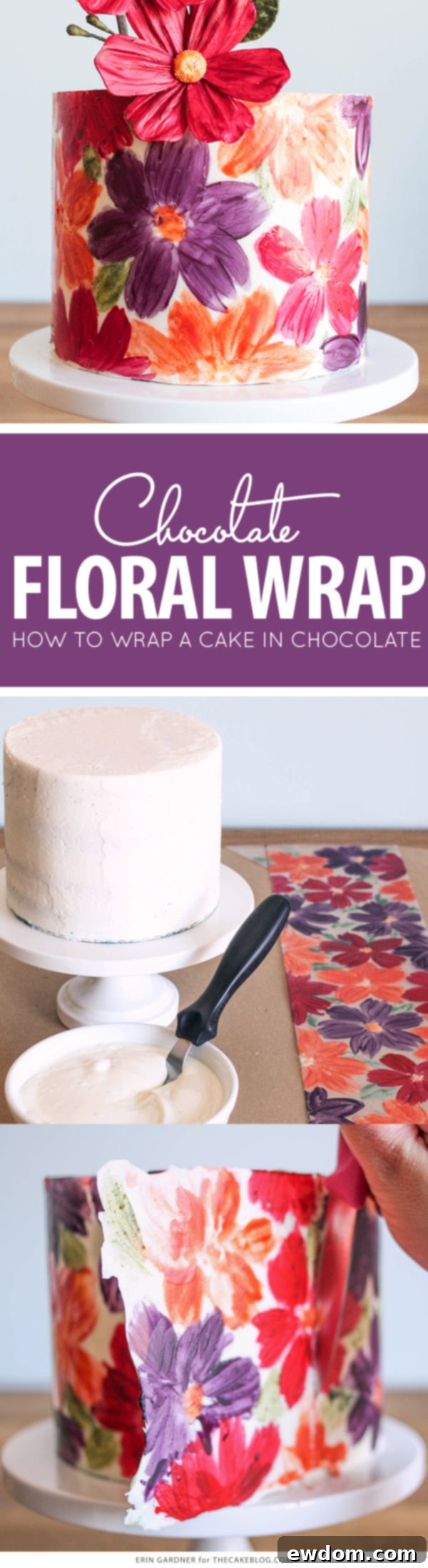
Elevate Your Cake Decorating with a Chocolate Wrap
For many home bakers and professional decorators alike, working with chocolate can seem a daunting task. However, with a dash of courage, a sprinkle of patience, and the right guidance, it transforms into an incredibly rewarding and enjoyable experience! Crafting a chocolate cake wrap is a time-honored pastry technique, beloved for its elegant finish and surprising versatility. Once you’ve mastered the basic method, a universe of design possibilities opens up before you.
Imagine your cakes transformed with intricate hand-painted motifs, bold piped patterns, captivating swirls, or even artistic splatters. This technique offers an effortlessly sophisticated and custom cake finish that not only looks spectacular but tastes absolutely divine. Today, Erin Gardner will guide you through the process of creating a vibrant hand-painted chocolate floral wrap, perfect for adding a touch of personalized elegance to any celebration – be it a birthday, baby shower, Valentine’s Day, or Mother’s Day.
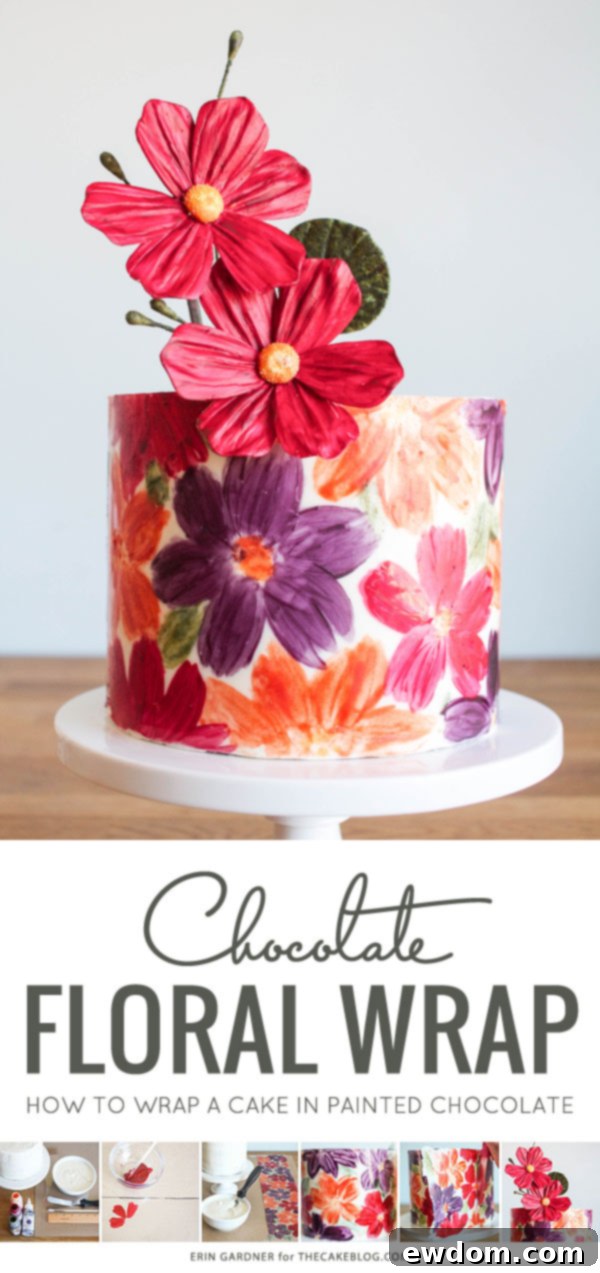
Essential Tools for Your Chocolate Wrap Project
The secret to a flawless chocolate wrap often lies in the materials you choose. When it comes to achieving that professional, glossy sheen and crisp detail, acetate sheets are undeniably the material of choice for working with chocolate. Acetate offers several key advantages: it’s incredibly flexible yet sturdy, provides a beautiful shine to your finished chocolate, and its transparency allows you to see your artistic progress as you work. You can readily find high-quality acetate sheets online or at specialized cake decorating supply stores.
While acetate is highly recommended for optimal results, don’t despair if you don’t have it on hand. You can still create a beautiful chocolate wrap using parchment paper as an alternative. However, there are a few considerations: parchment paper will typically yield a more matte finish compared to acetate’s glossy shine. Furthermore, we advise against painting delicate cocoa butter designs directly onto parchment, as the colors may not transfer as cleanly or vibrantly. For parchment wraps, sticking to solid color chocolate applications or piped designs will give you the best outcome.
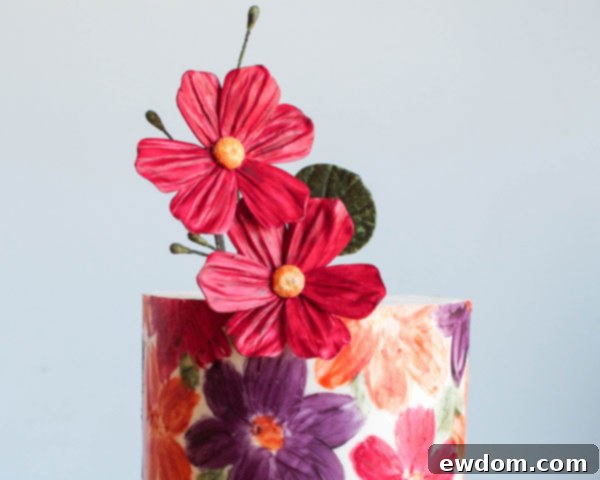
Chocolate Floral Wrapped Cake: Step-by-Step Tutorial
A detailed guide by Erin Gardner
Gather Your Supplies:
- Cake of Choice: Ensure it’s frosted with a thin, even layer of buttercream or ganache and thoroughly chilled. A firm, cold cake provides the best surface for wrapping.
- White Chocolate: High-quality melting wafers or compound chocolate are recommended for ease of use as tempering isn’t strictly necessary for this method.
- Colored Cocoa Butters: For the vibrant floral pattern, Erin recommends Chef Rubber’s natural collection in shades like red, orange, purple, and green. These specialized cocoa butters are fat-soluble and designed for painting on chocolate.
- Offset Spatula: Essential for smoothly spreading chocolate across the acetate.
- Fine Paint Brushes: A selection of small, clean brushes for detailed cocoa butter painting.
- Ruler: For precise measurements of your cake and acetate strip.
- Acetate Sheet: The star material for a shiny, professional finish.
- Sturdy Piece of Cardboard: To provide a stable, movable surface for working on your chocolate wrap.
- Sharp Scissors: For cutting the acetate precisely.
- Small, Sharp Knife: For trimming the finished chocolate wrap.
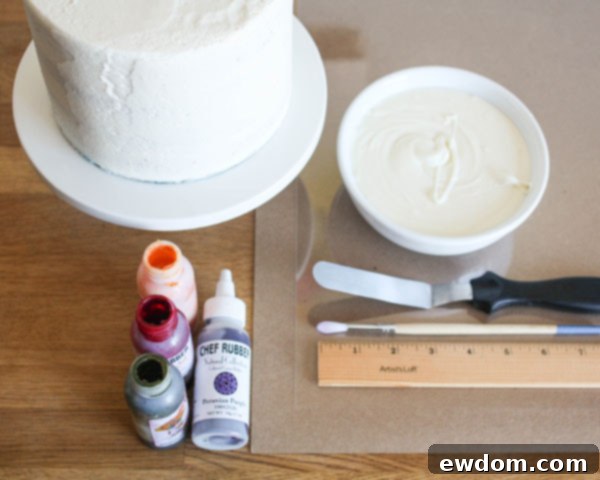
Step 1: Prepare Your Cake and Measure the Acetate
Before you begin creating your chocolate masterpiece, ensure your cake is ready. It should be fully frosted with a thin, even layer of your chosen frosting and, critically, well-chilled in the refrigerator. A cold, firm cake will help the chocolate wrap adhere perfectly and prevent melting or smudging.
Next, you’ll need to determine the precise dimensions for your acetate strip. Begin by finding the circumference of your cake. This is calculated by multiplying the cake’s diameter by Pi (approximately 3.14). For instance, if you’re using a 6-inch round cake, your circumference would be 6 inches x 3.14, resulting in approximately 18.84 inches. Then, measure the exact height of your cake using your ruler.
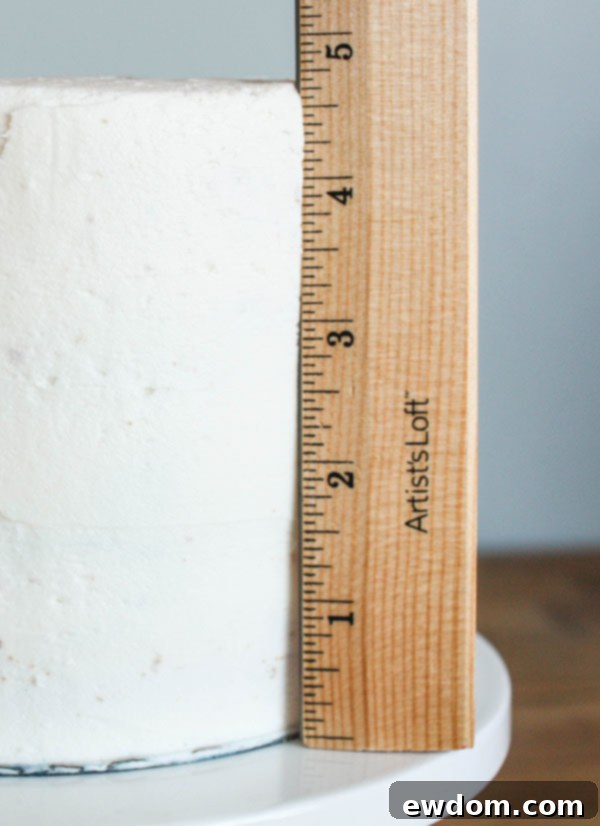
Step 2: Cut and Prepare Your Acetate Strip
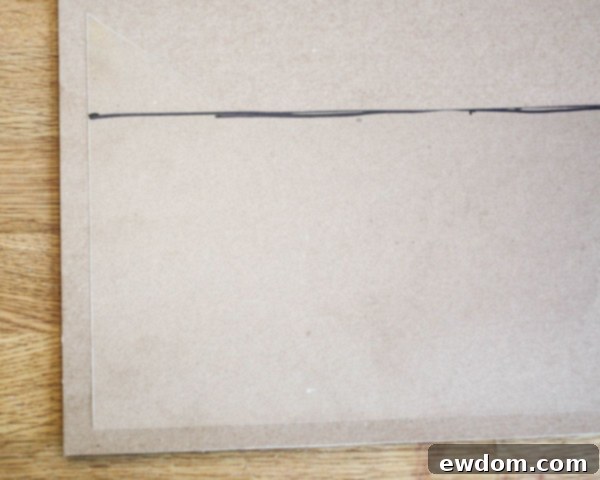
Using your measurements, carefully cut your acetate strip. For optimal coverage and ease of application, the strip should be approximately 1/4-inch wider than the height of your cake and 2 to 3 inches longer than its circumference. This extra length provides overlap for a seamless closure, and the added height ensures your wrap sits beautifully at the base of the cake without falling short.
To facilitate handling, especially once coated in chocolate, create small triangular flaps at both ends of the acetate piece. These will serve as convenient tabs for maneuvering the strip. If your single acetate sheet isn’t long enough to encompass your cake, simply tape multiple pieces together securely until you achieve the required length. Once cut, flip the acetate over to ensure you’re working on the cleanest side and place it onto a piece of sturdy cardboard. This cardboard base is invaluable; it provides stability, makes it easy to move your chocolate creation, and simplifies cleanup.
Step 3: Hand-Paint Your Floral Design with Cocoa Butter
Now for the artistic part! Gently melt your colored cocoa butters. You can do this in a microwave in short bursts, stirring frequently, or using a double boiler, ensuring they are fluid but not scorching hot. With your fine paint brushes, begin painting your desired design directly onto the acetate. For this tutorial, Erin demonstrates charming, free-hand daisies and simple leaves. Don’t feel pressured to be a master painter; embrace simplicity or use a template!
For those who prefer a guide, you can place a printed pattern or template underneath the transparent acetate and trace the design. Alternatively, for a quick and impressive shortcut, consider using a pre-printed chocolate transfer sheet. These sheets come with pre-printed designs that transfer onto your chocolate when applied. The beauty of this technique lies in its adaptability!
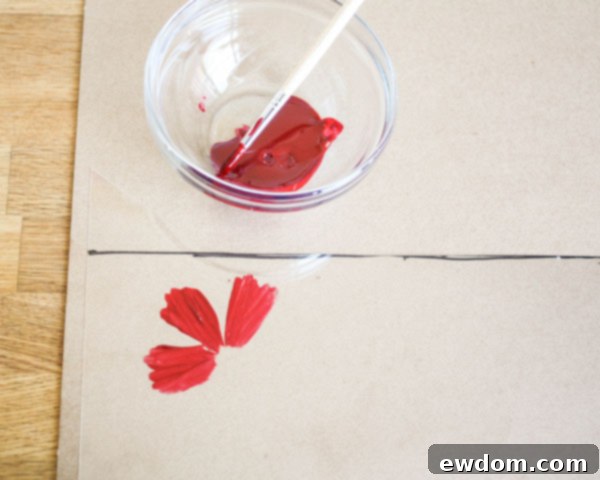
Step 4: Prepare Your Cake for Wrapping
Just before you proceed to the next step, retrieve your chilled cake from the refrigerator. Place it securely onto the cake stand or serving plate you intend to use for presentation. This pre-positioning is crucial, as moving the wrapped cake later could damage the delicate chocolate. A cake stand with a smooth, flat surface and no raised lip will make the wrapping process significantly easier.
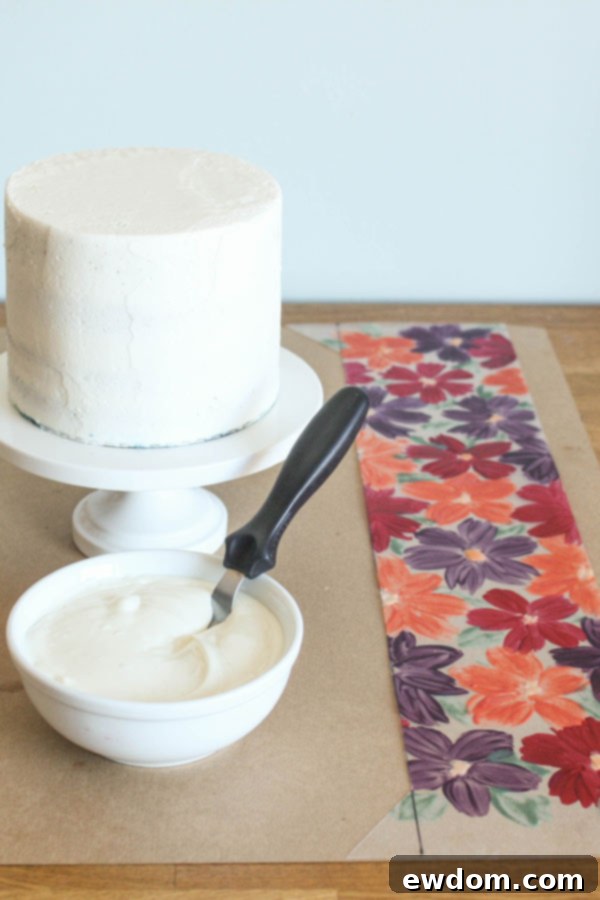
Step 5: Apply the White Chocolate Layer
Once your cocoa butter design has set (which usually happens quickly), it’s time to apply the main chocolate layer. Pour your melted white chocolate generously over your hand-painted design on the acetate. Using your offset spatula, swiftly and evenly spread the chocolate all the way to the edges of the acetate strip. Aim for a consistent thickness, not too thin that it becomes brittle, and not too thick that it’s overly cumbersome.
An important note for this particular technique: you do not need to temper the white chocolate. While tempering is essential for creating snap and shine in molded chocolates, for a chocolate wrap that needs to remain flexible enough to bend around a cake and be easily cut later, untempered chocolate is actually preferred. This offers you a more extended working time and results in a wrap that’s simpler to slice through when serving. Rest assured, the acetate itself will still contribute a lovely shine to your untempered chocolate wrap!
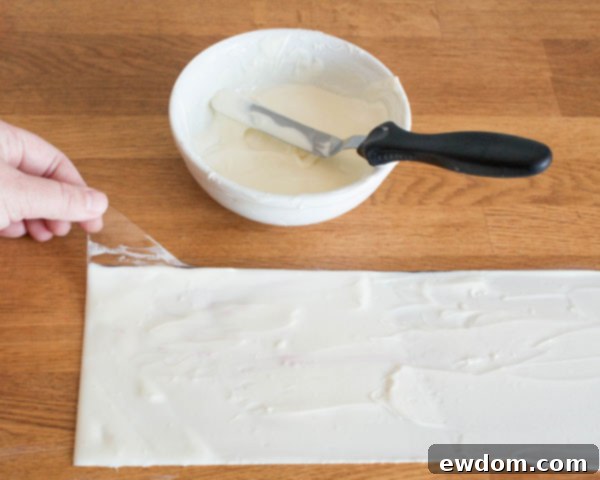
Step 6: The Critical “Sweet Spot” – Allowing the Chocolate to Set
This is arguably the most crucial step for a successful chocolate wrap. Allow the chocolate to set up for a brief period – anywhere from a few seconds to a few minutes, depending largely on the ambient temperature and humidity in your workspace. The goal is to hit the “sweet spot” where the chocolate is firm enough that it won’t run, smear, or ruin your beautiful design, but still flexible and pliable enough to gracefully bend around the curved surface of your cake without cracking.
You’ll know you’ve reached this perfect consistency when the surface of the chocolate transitions from a visibly wet and highly shiny appearance to a slightly duller, yet still sticky, texture. If you wait too long, the chocolate will become too brittle and crack when you try to wrap it. If you wrap too soon, the chocolate might drip or distort your cocoa butter art. Observe carefully and trust your instincts; a little practice makes perfect in identifying this ideal stage.
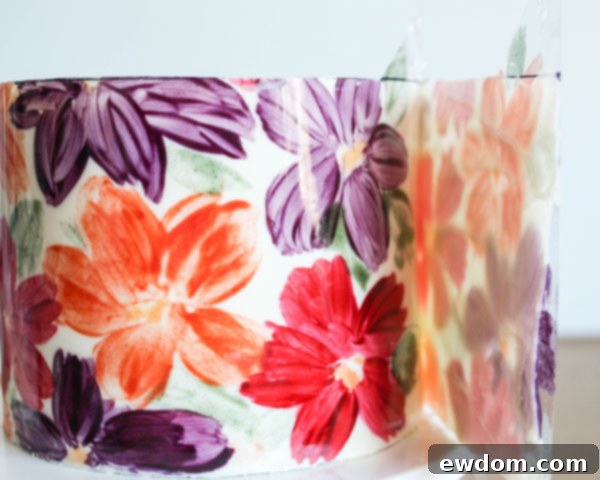
Step 7: Gently Wrap Your Cake
Once your chocolate reaches that perfect flexible-yet-set consistency, it’s time to wrap. Carefully pick up the acetate strip by the small triangular flaps you created at the ends. Position one end of the strip against the side of your chilled cake, aligning the bottom edge of the chocolate wrap with the base of your cake. Then, with a gentle and steady motion, lay the remainder of the wrap around the cake. Avoid pressing the wrap onto the cake with your bare hands, as this can easily smudge your design or crinkle the acetate, creating imperfections.
Instead, use the small flaps to delicately pull and guide the wrap into its final position. To close the seam, allow the excess chocolate at one end to slightly overlap the beginning edge of the wrap, pressing it firmly but gently against the cake to create a neat join. Let any remaining overhang of the acetate extend over the edge of the cake stand. Carefully place your wrapped cake into the refrigerator for approximately 20 minutes, or until the chocolate is completely set and firm.
Step 8: Peel Away the Acetate
Once the chocolate is thoroughly chilled and hardened, retrieve your cake from the fridge. At this stage, the acetate should have released cleanly from the set chocolate. Starting from one of the seam ends, gently peel back the acetate sheet. You’ll find it should lift away very easily, revealing your beautifully finished, glossy chocolate wrap with its vibrant hand-painted design. This is often the most satisfying moment of the entire process!
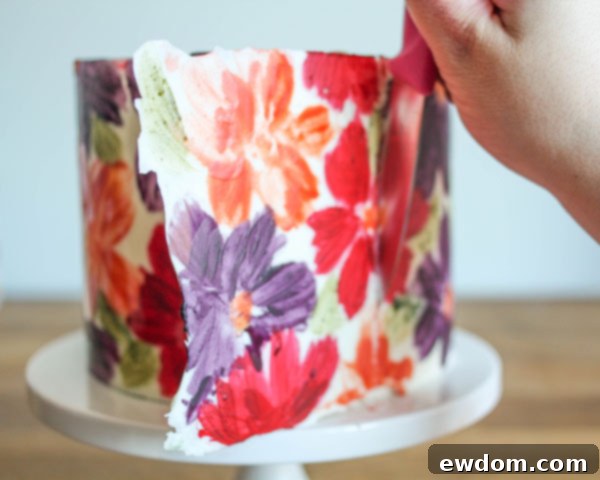
Step 9: Trim the Excess Chocolate for a Perfect Edge
For a clean and professional presentation, you’ll want to trim any excess chocolate from the top edge of your wrap. To do this, warm up a small, sharp knife. You can achieve this by running it under very hot water and wiping it dry, or by gently heating the blade with a blow dryer (be careful not to overheat). The warm blade is key; it allows for a smooth cut through the chocolate without causing it to crack or chip.
Carefully score a line along the desired trim point with your hot knife. Then, gently run the warm blade back over this line repeatedly, applying light pressure, until the chocolate is cleanly cut all the way through. Patience is paramount here to avoid cracking your beautifully finished wrap. Should any tiny part of your design chip or not transfer perfectly from the acetate to the cake, don’t worry! You can easily go back in with a fine paintbrush and a touch more melted cocoa butter to carefully touch up any imperfections.
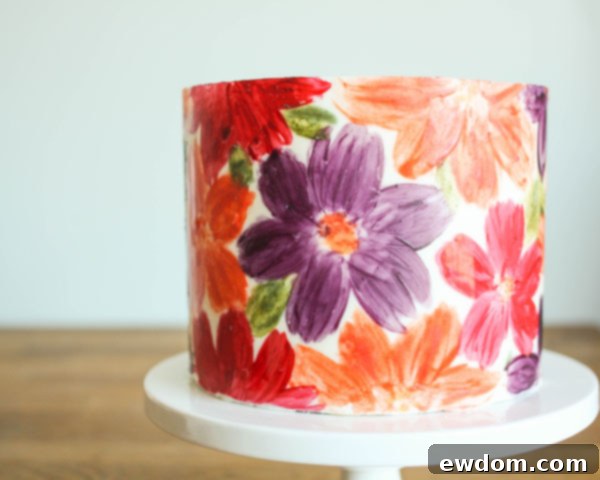
Step 10: Add Your Finishing Touches
With your gorgeous chocolate wrap in place, the final step is to fill in the exposed top surface of your cake. You can use more buttercream, a luxurious ganache, or even a contrasting layer of chocolate. The choice is yours and offers another opportunity for customization! Just be absolutely certain that whatever you choose to fill the top with is not warm enough to melt or soften your delicate chocolate wrap. A room-temperature or slightly cooled filling is ideal.
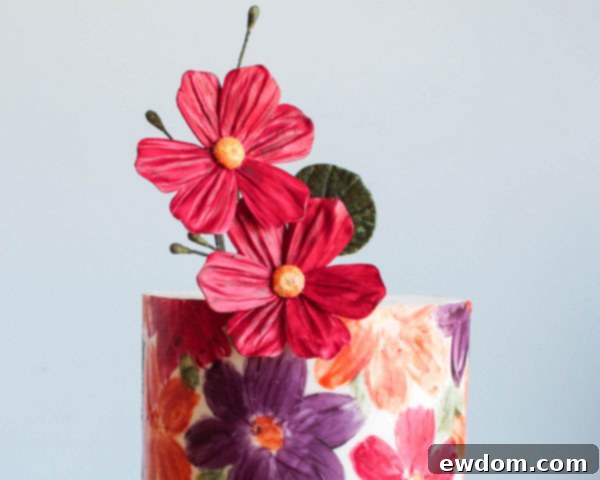
Embrace the Endless Possibilities
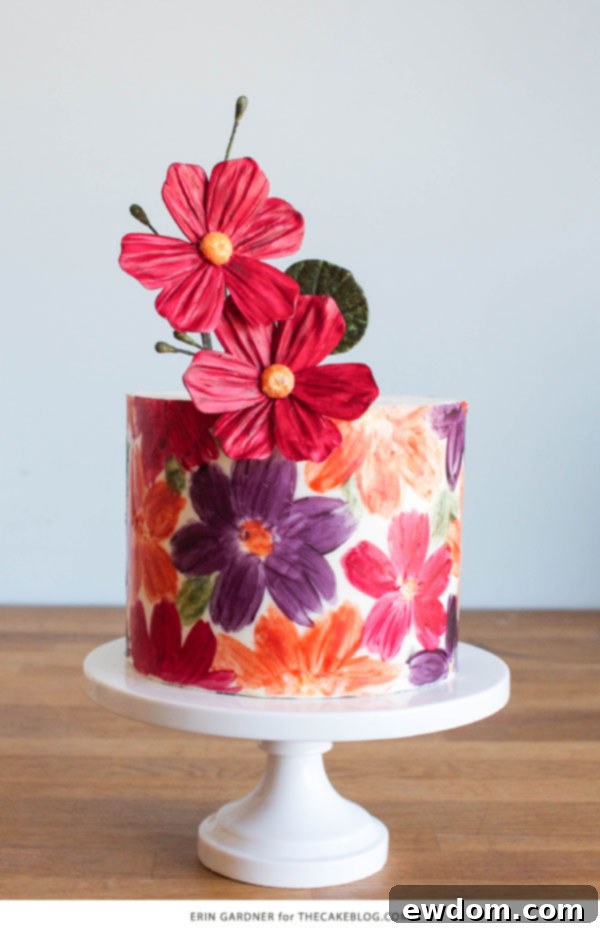
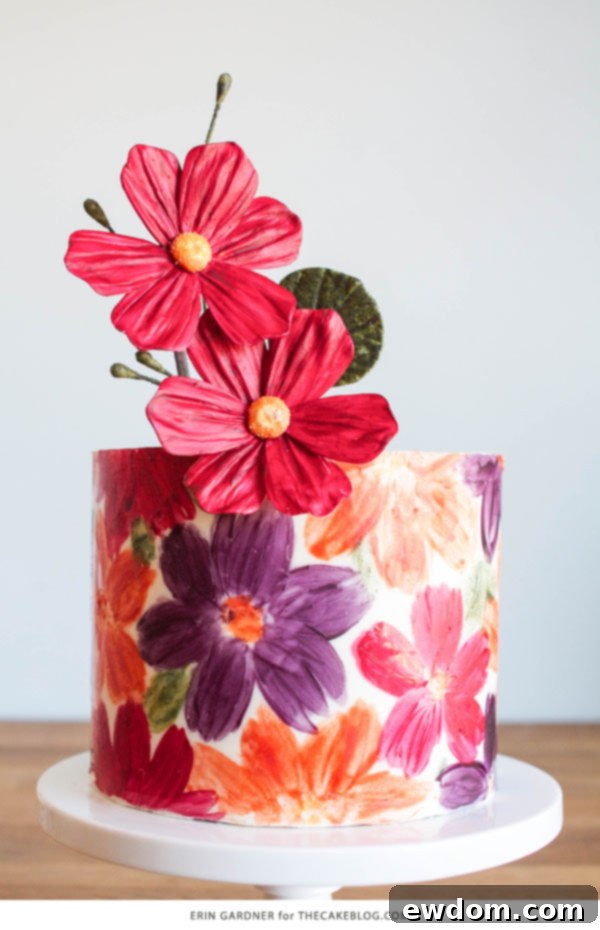
Erin finished her vibrant, cheery cake with a few additional chocolate and cocoa butter blossoms on top, perfectly complementing the wrap. However, this stunning hand-painted cake would be absolutely gorgeous as-is, letting the intricate floral design shine as the main feature. For another captivating option, you could adorn the top with one of Erin’s signature chocolate flowers. The versatility of this technique means the decorative possibilities are truly endless, allowing you to create unique and memorable desserts for any occasion.
This chocolate wrapped cake technique is more than just decorating; it’s about transforming a simple cake into a stunning piece of edible art. We encourage you to try this tutorial, experiment with different colors and designs, and unleash your creativity. Share your beautiful creations, and most importantly, enjoy the process and the delicious results!
You May Also Enjoy These Related Cake Decorating Tutorials:
- Drippy Chocolate Cake: Achieve that Perfect Drip Effect
- Chocolate Flower Cake: Crafting Edible Blooms
- DIY Chocolate Daffodils Cake: Springtime Elegance
- Chocolate Sunflower Cake: A Sunny Touch to Your Baking
- Chocolate Poinsettia Cake: Festive Holiday Designs