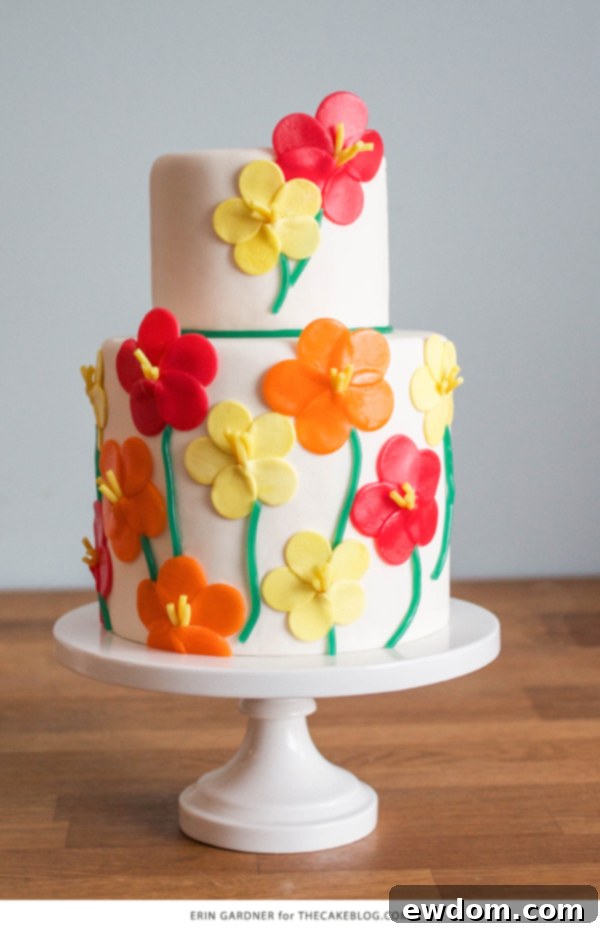
DIY Candy Flower Cake: A Vibrant Airheads & Laffy Taffy Tutorial by Erin Gardner
Spring is a season of renewal, vibrant colors, and blooming flowers. While we might still be waiting for the real blossoms to emerge from beneath lingering snow, there’s no need to delay the joy of a floral display – especially when it comes in the form of delicious, edible candy! Today, we’re thrilled to present an exclusive tutorial from our talented contributor, Erin Gardner of Erin Bakes, who will guide you through creating a stunning Candy Flower Cake using everyone’s favorite chewy treats: Airheads and Laffy Taffy.
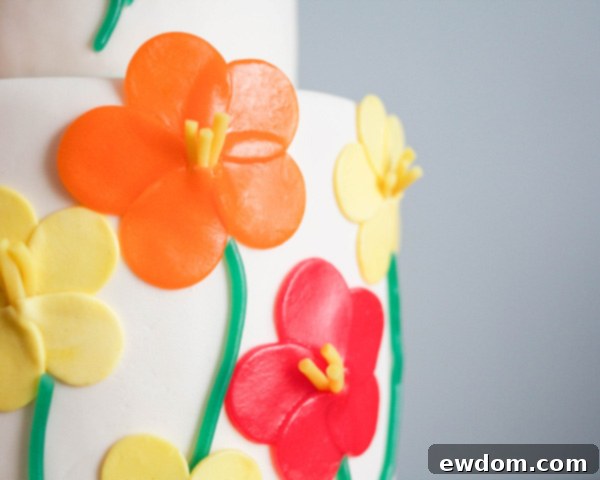
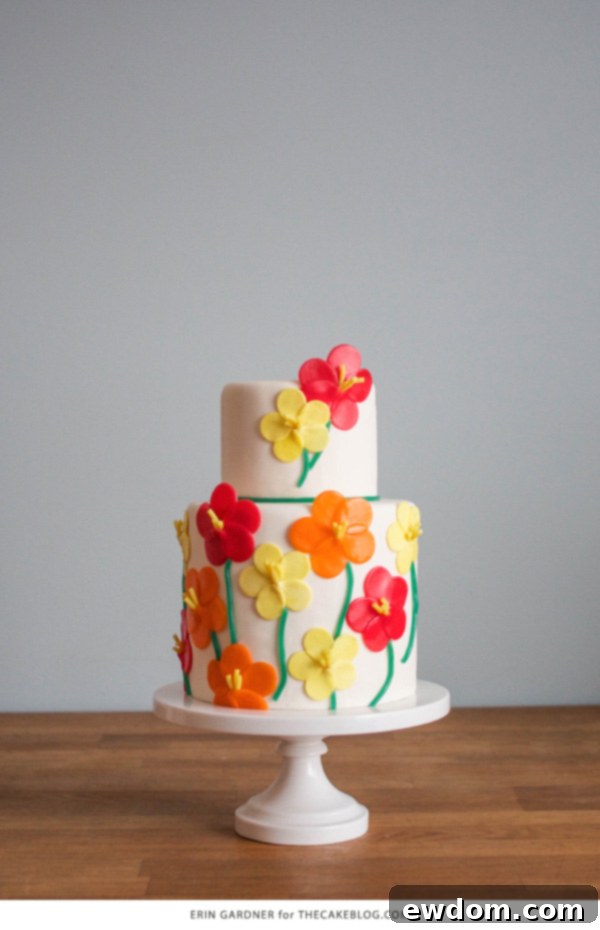
Imagine a cake adorned with bright, bold, and delightfully chewy flowers that are not only a feast for the eyes but also a treat for the taste buds. This project is surprisingly simple, incredibly fun, and yields professional-looking results that will impress anyone. Whether you’re a seasoned baker looking for a fresh decorating idea or a beginner eager to try something new and exciting, Erin’s step-by-step instructions will make this creative endeavor a sweet success. Get ready to transform ordinary candies into extraordinary edible art!
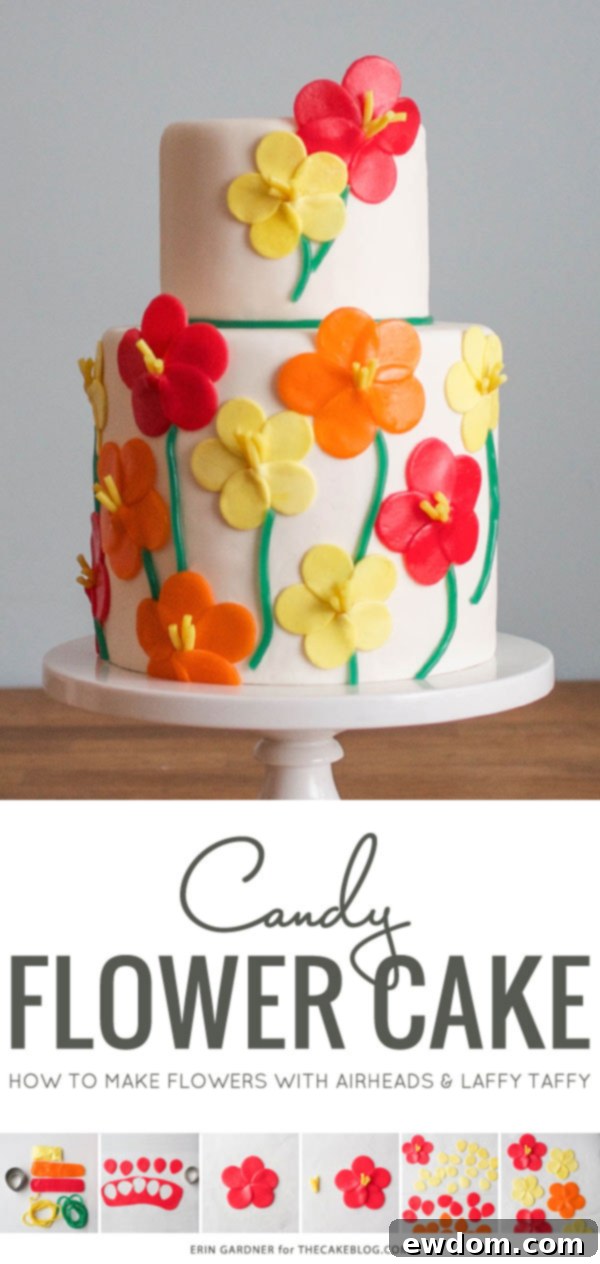
Why Choose Chewy Candy for Your Cake Decorations?
When it comes to cake decoration, the options are endless, but candy flowers offer a unique blend of visual appeal, ease of creation, and deliciousness. Unlike traditional sugar flowers made from gum paste or fondant, which often require extensive drying time and intricate sculpting skills, these chewy candy blooms come together quickly and are immediately ready for display. Their inherent vibrant colors mean no need for messy food coloring, making the process cleaner and more enjoyable for home bakers and professionals alike.
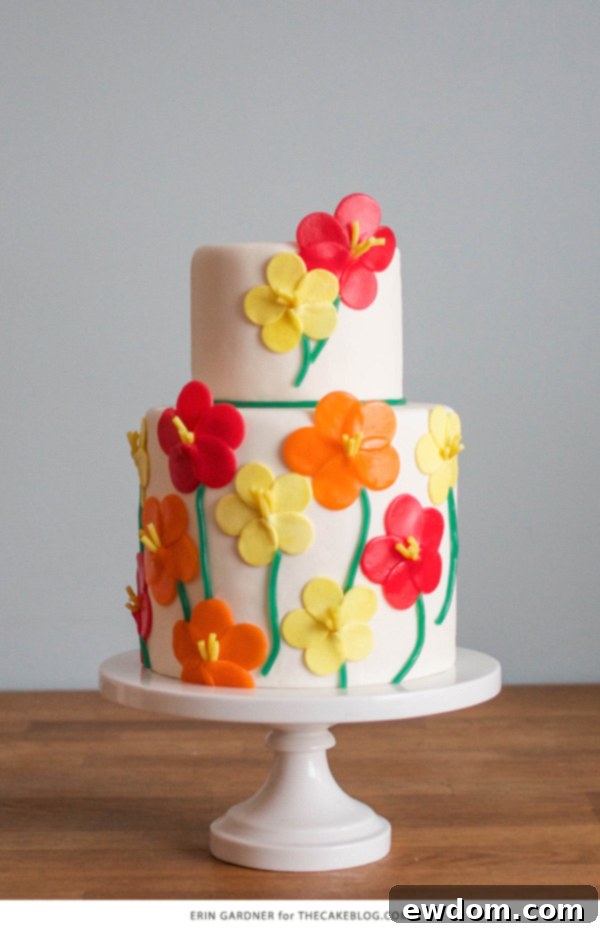
Airheads and Laffy Taffy, the stars of this tutorial, are particularly well-suited for this craft. Their pliable texture when gently warmed allows for easy rolling and cutting, and once shaped, they hold their form remarkably well. This makes them a fantastic, forgiving medium for decorators of all skill levels, allowing for intricate designs without the frustration often associated with delicate sugar work. Furthermore, they are incredibly affordable, costing mere cents per piece, which means you can create a lavishly decorated cake without breaking the bank. Each piece of candy can yield approximately 13 petals, making it a very cost-effective way to add a burst of color and whimsy to your desserts. For instance, a two-tiered cake (like the 6-inch base and 4-inch top tier shown) can be beautifully adorned with just a few pieces of each color, making this a budget-friendly decorating solution.
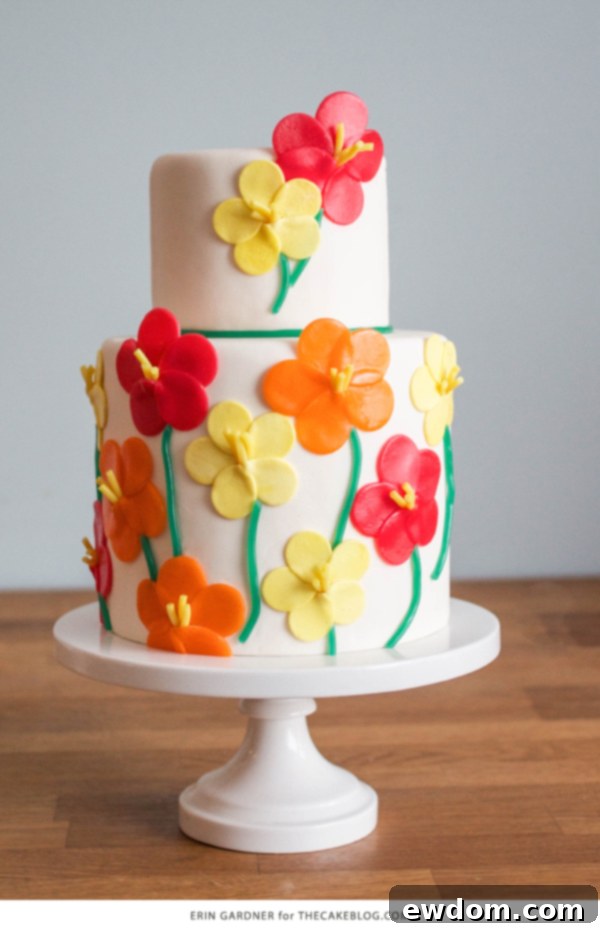
Another significant advantage of candy flowers is their versatility. While this tutorial showcases them on a fondant-finished cake, they are equally stunning and perfectly adaptable for buttercream-iced cakes, adding a delightful texture contrast that will surprise and please your guests. They also make adorable and easy cupcake toppers, transforming simple cupcakes into miniature works of art, ideal for birthdays, school events, or any casual gathering. Their sturdy nature means they can withstand handling better than delicate sugar paste flowers, making them perfect for parties and events where durability is a plus, and young hands might be involved!
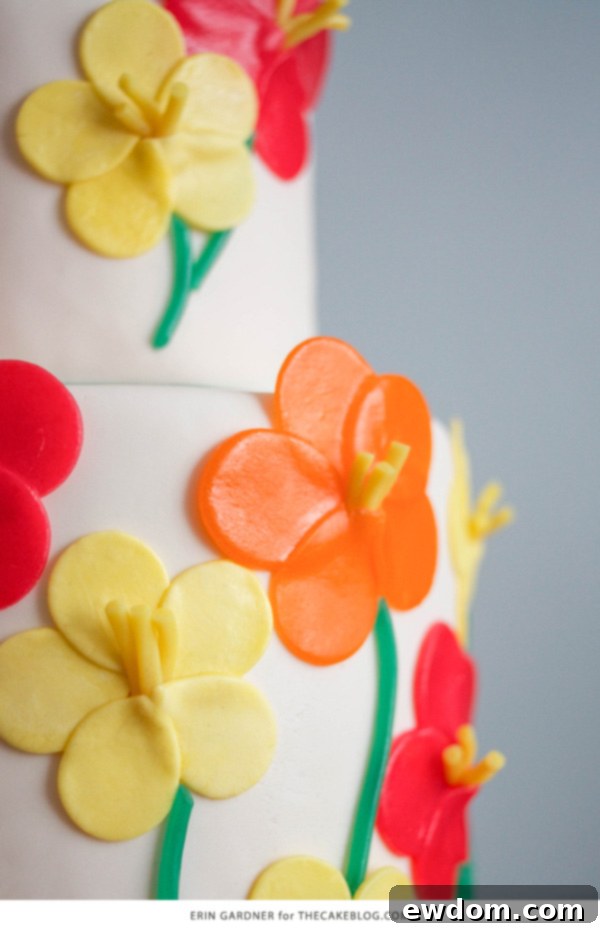
Gathering Your Sweet Supplies: What You’ll Need
Before diving into the creative process, ensure you have all your materials ready. The beauty of this project lies in its simplicity and accessibility, requiring only a few basic items you might already have in your kitchen or can easily pick up at any grocery store or craft supply shop. No specialized equipment is necessary, making this an ideal project for spontaneous creativity.
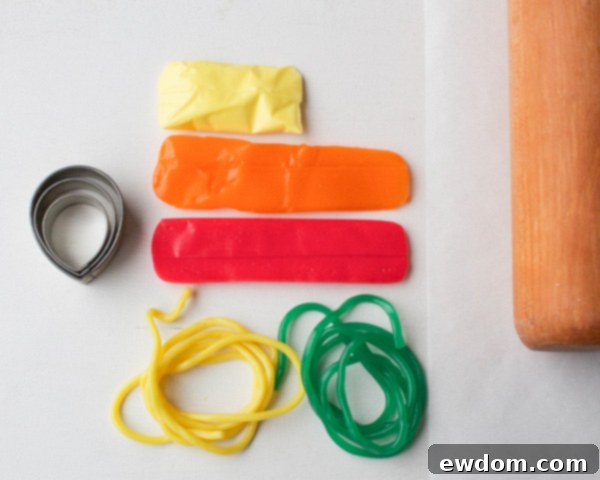
Essential Supplies for Your Candy Flower Cake:
- Airheads: Opt for vibrant colors like Cherry and Orange to create striking petals. These candies are known for their strong color, fruity flavor, and excellent pliability when warmed.
- Laffy Taffy: Banana Laffy Taffy provides a wonderful contrast in color and texture, expanding your palette for diverse floral creations. Its slightly softer consistency contributes beautifully to the petal effect.
- Yellow and Green Licorice Ropes: These will be your secret weapon for crafting realistic flower centers (pistils) and elegant stems, adding a professional and natural touch to your edible blooms.
- Small Knife: Essential for precise cuts, especially when preparing your licorice pieces and for trimming any candy edges if needed. A sharp paring knife works perfectly.
- Rose Petal Cutter Set: While a dedicated set offers perfect, uniformly shaped petals that mimic natural rose or flower petals, small round cutters can also work effectively for creating simpler, more whimsical flower styles. You can find excellent options on platforms like Amazon.
- Parchment Paper: Crucial for preventing sticking while microwaving and rolling your candy. Have several sheets ready to keep your workspace clean and your candy manageable. This non-stick surface is key to easy handling.
- Rolling Pin: A standard kitchen rolling pin will help you achieve an consistent and even 1/8-inch thickness for your candy petals, which is vital for them to hold their shape and look elegant.
- Water, Piping Gel, or Frosting: These will serve as the “glue” to adhere your finished flowers securely to the cake surface. The choice depends on your cake’s frosting type and desired adherence strength.
Step-by-Step Tutorial: Crafting Your Chewy Candy Flowers
Let’s get started on bringing these delightful candy blossoms to life! This process is straightforward and incredibly rewarding, transforming simple candies into exquisite cake embellishments with just a few easy steps. Follow along carefully, and you’ll be amazed at what you can create!
Step 1: Prepare Your Candy for Rolling
Begin by unwrapping one piece of your chosen candy (Airhead or Laffy Taffy). Lay it flat on a piece of parchment paper. Microwave the candy for approximately 5-7 seconds. The goal here is to make the candy warm and pliable, not hot or melted. Be mindful that microwave wattages vary significantly, so it’s always best to start with less time (e.g., 5 seconds) and add more if needed, in 1-2 second increments, until the candy is soft enough to roll easily without being sticky or gooey. It should feel warm and flexible to the touch.
Step 2: Roll Out Your Candy Petals to Perfection
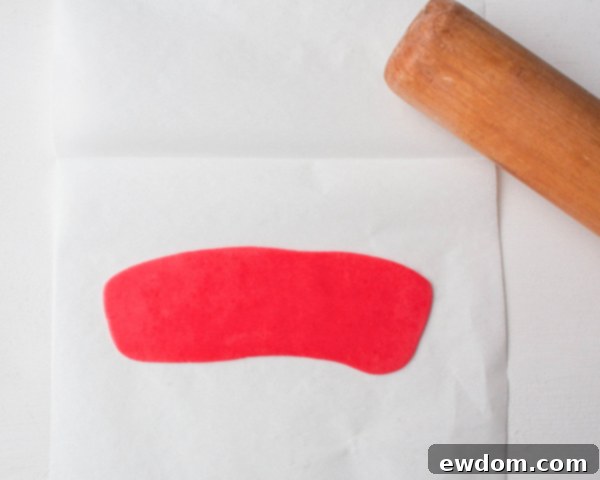
While the candy is still delightfully warm and flexible, immediately place another piece of parchment paper on top of it. Using your rolling pin, roll the candy evenly between the two sheets of parchment paper until it’s about 1/8-inch thick. This precise thickness is ideal for creating sturdy yet delicate-looking petals that will hold their intricate shape beautifully once cut. Rolling between parchment prevents the candy from sticking to your rolling pin or work surface, ensuring a smooth, effortless process and a clean, uniform sheet of candy.
Step 3: Cut Out Your Beautiful Flower Petals
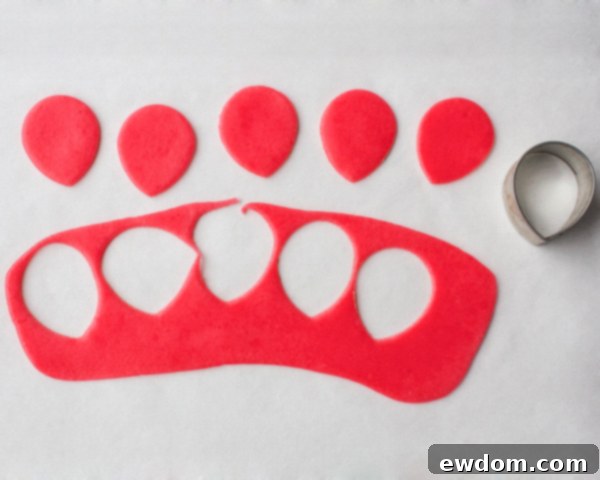
Using your chosen rose petal cutter or a small round cutter, carefully cut out five individual petals for each flower you plan to create. Press the cutter firmly into the rolled candy and gently lift the cut shape. Don’t discard the candy scraps! These are incredibly useful and an excellent way to minimize waste. You can gather them, gently squish them back together into a ball, microwave them for a few more seconds to soften, and then re-roll them to cut out even more petals. This ensures maximum efficiency from each piece of candy.
Step 4: Assemble Your Candy Flowers with Care
Now for the fun and artistic part: assembling your blossoms! Arrange the five cut petals into a beautiful flower shape. Start by placing one petal, then slightly overlap the next petal over the edge of the first, continuing in the same direction around the intended center of the flower. The natural tackiness of the candy should help them adhere to each other. If you find the petals aren’t sticking well, a tiny dab of water on the overlapping edges will act as a gentle, edible adhesive, helping them bond securely. Ensure a small, open gap remains in the very center where the flower’s pistil will be placed.
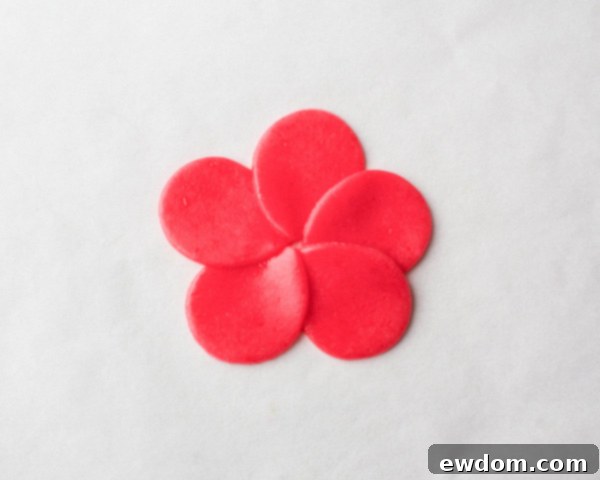
Step 5: Create and Add the Distinctive Flower Centers
To give your flowers a realistic and charming finish, use yellow licorice rope for the centers, mimicking the appearance of stamens. Cut three small pieces of yellow licorice rope, each about 1/2-inch long. Gather these three small pieces together, pinching one end to create a small, neat bundle. Gently tuck the pinched end into the open center of your assembled candy flower, pressing it lightly so it stays securely in place. The vibrant yellow licorice will beautifully contrast with your petals, adding depth, texture, and a touch of botanical authenticity to your edible creations.
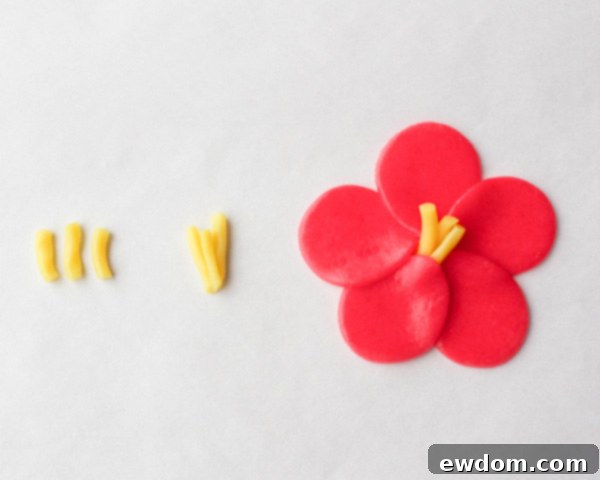
Step 6: Repeat the Process for an Abundance of Blooms
Continue this delightful process – warming, rolling, cutting, assembling, and adding centers – until you have a sufficient number of flowers to fully decorate your cake to your liking. The exact quantity will, of course, depend on the size of your cake tiers and your desired design density. It’s often helpful to make a few extra in case of any mishaps, or simply for last-minute additions to fill small gaps in your design. Once made, these candy flowers are quite robust and can be gently moved or adjusted as needed before final placement.
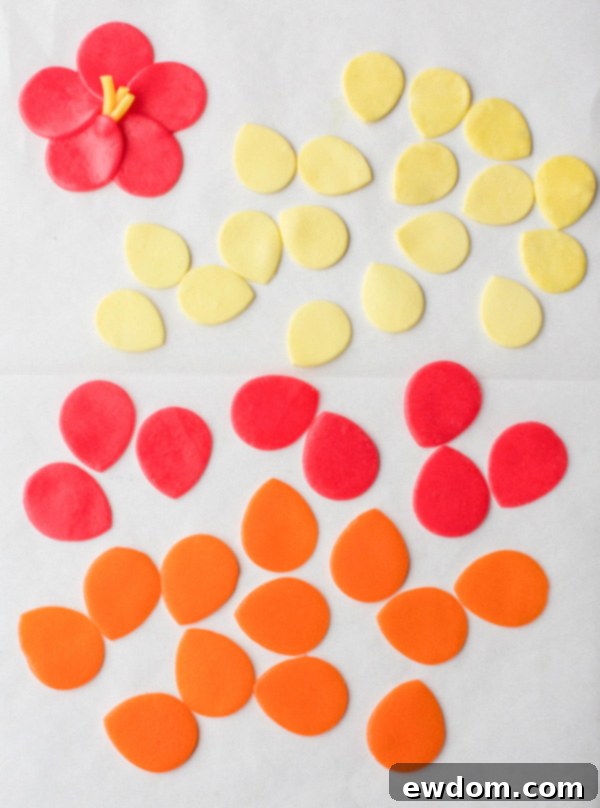
Step 7: Add Stems for a Garden-Fresh Look (Optional)
For an even more whimsical garden effect, or to create a cascading floral design, you can add green licorice rope stems to some of your flowers. Simply cut pieces of green licorice to your desired stem length, varying them for natural appeal. These can be attached directly to the base of your candy flowers with a tiny dab of water or piping gel before placing them on the cake, or they can be strategically placed on the cake first and the flowers attached on top, creating an integrated, lifelike look that flows beautifully.
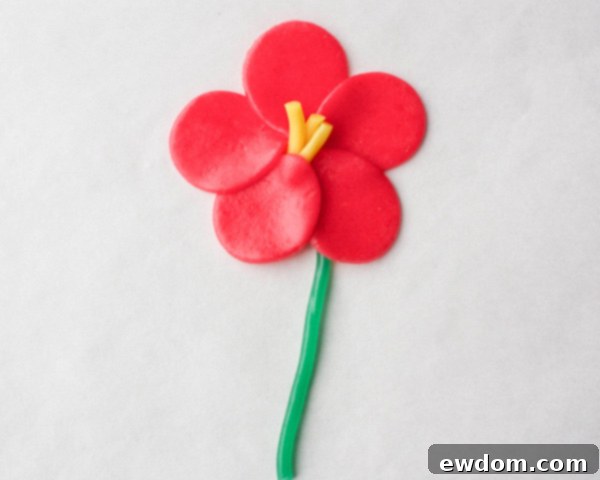
Step 8: Decorate Your Cake with Your Candy Creations!
The final and most exciting step is to attach your beautiful candy flowers to your cake! If your cake is covered in fondant, a small amount of water or piping gel will work wonderfully to secure the flowers in place, creating a strong bond. For buttercream-iced cakes, a tiny dot of fresh buttercream, royal icing, or piping gel will provide the necessary adhesion, ensuring your flowers stay put. Arrange your flowers creatively around the sides, clustered on the top, or even cascading down the tiers of your cake. Experiment with different placements, colors, and sizes to create your perfect floral masterpiece, bringing a burst of joyful spring to your dessert!
Expert Tips for Candy Flower Success
To ensure your candy flower project goes smoothly and yields the best possible results, keep these handy tips in mind:
- Maintain Optimal Warmth: The key to success is keeping your candy pliable. If it cools and hardens while you’re working, simply pop it back in the microwave for a few seconds (1-2 second bursts) to soften it up again. Avoid overheating, which can make it excessively sticky and difficult to handle.
- Parchment Paper is Your Best Friend: Always use parchment paper for both microwaving and rolling. It prevents sticking to surfaces and ensures a clean, smooth surface for your petals. Wax paper can also work effectively as an alternative.
- Embrace Creative Experimentation: While this tutorial suggests specific colors, feel free to mix and match Airheads and Laffy Taffy colors to create unique and vibrant floral palettes that match your theme or personal preference. You can even try marbling colors by pressing two different shades together before rolling.
- Consistency in Thickness: Aim for an even 1/8-inch thickness when rolling your candy. This ensures your petals are uniform in appearance and have the structural integrity to hold their delicate shape beautifully.
- Practice Makes Perfect (and it’s delicious!): If your first few flowers aren’t exactly as you envisioned, don’t worry! Candy is a forgiving medium. You can gather the scraps, re-roll, and try again. Each attempt will improve your technique.
- Proper Storage for Longevity: Once made, your candy flowers can be stored in an airtight container at room temperature for several days, even up to a week, maintaining their freshness and shape. If adding to a cake that requires refrigeration, it’s often best to attach the flowers closer to the serving time, as humidity in fridges can sometimes affect the candy’s texture.
Creative Variations and Beyond the Cake
This candy flower technique is incredibly versatile and can be adapted for a multitude of creative projects. Here are a few ideas to spark your imagination and extend the use of your new skill:
- Explore Different Flower Shapes: Don’t limit yourself to classic petals. Use various small cookie cutters (think hearts, stars, or tiny squares) to create abstract or whimsical flower designs that add a unique touch.
- Incorporate Greenery: Roll out green Airheads or Laffy Taffy and use small leaf-shaped cutters or a knife to cut out delicate leaf shapes to accompany your flowers, creating a more complete and natural botanical arrangement.
- Design Two-Tone Petals: For an artistic flair, briefly press two different colored pieces of warmed candy together before rolling. This technique creates beautiful marbled or distinct two-tone petals, adding depth and visual interest to your blooms.
- Perfect Cupcake Toppers: These candy flowers are perfectly sized and ideal for decorating individual cupcakes, transforming a simple dessert into a charming, personalized treat for any party or gathering.
- Delightful Cookie Decoration: Apply them to sugar cookies iced with royal icing or even a simple glaze for a delightful spring-themed snack or party favor.
- Whimsical Gift Embellishments: Use smaller versions of these candy flowers to decorate gift tags, embellish small boxes, or add a personalized, edible touch to party favor bags.
Frequently Asked Questions About Candy Flowers
- Can I use other types of chewy candy for these flowers?
- While Airheads and Laffy Taffy are highly recommended for their ideal texture, pliability, and color vibrancy, other chewy candies like Starbursts or generic fruit chews can work as alternatives. However, they might require slightly different microwave times and may be stickier or harder to roll to an even thickness. Always test a single piece first to understand its specific properties.
- How long do the candy flowers last once made?
- Once created and allowed to cool, the candy flowers are quite stable and can last for several days, even up to a week, when stored in an airtight container at room temperature. On a decorated cake, their freshness and texture will largely depend on the cake’s storage conditions and ambient humidity.
- Will the candy flowers melt or lose their shape on the cake?
- No, once shaped and cooled, the candy flowers are quite stable at typical room temperatures. They are designed to hold their form. Direct heat, such as prolonged exposure to direct sunlight or a very hot room, could cause them to soften slightly, so it’s best to keep your decorated cake in a cool, dry place.
- Is this a suitable project for children to help with?
- Absolutely! This is a fantastic, engaging project for children to participate in, especially the fun rolling and cutting steps. Adult supervision is highly recommended for the microwaving process and any use of a sharp knife for cutting licorice.
- What if my candy gets too sticky to handle after microwaving?
- If the candy becomes excessively sticky after microwaving, it might be slightly overheated. Allow it to cool for a moment or two. You can also lightly dust your parchment paper or rolling pin with a tiny bit of cornstarch or powdered sugar, but use sparingly as too much can dry out the candy and make it brittle.
Conclusion: A Sweet Touch of Spring for Any Occasion
Creating these vibrant candy flowers is more than just a decorating technique; it’s an enjoyable and accessible way to infuse personality, charm, and a burst of edible color into your baked goods. Erin Gardner’s ingenious use of readily available Airheads and Laffy Taffy demonstrates that beautiful cake artistry doesn’t require expensive tools or years of advanced skills. All it takes is a little creativity, some patience, and a handful of sweet treats to transform your desserts into memorable masterpieces.
Whether you’re celebrating a birthday, a seasonal holiday, or simply indulging in a weekend baking project, these delightful edible blooms promise to bring smiles and a touch of whimsical beauty to your table. So, gather your supplies, embrace the simplicity and fun of working with chewy candy, and let your imagination bloom! We encourage you to try this delightful tutorial and share your magnificent candy flower cake creations with us. Happy decorating, and enjoy the sweet success!
VENDORS & CREDITS
Tutorial: Erin Gardner of Erin Bakes
Learn More From This Baker: For more incredible baking and decorating insights and to expand your skills, explore Online Cake Classes with Erin Gardner on Craftsy.