Unlocking Edible Art: Your Guide to Painting a Stunning Watercolor Cake
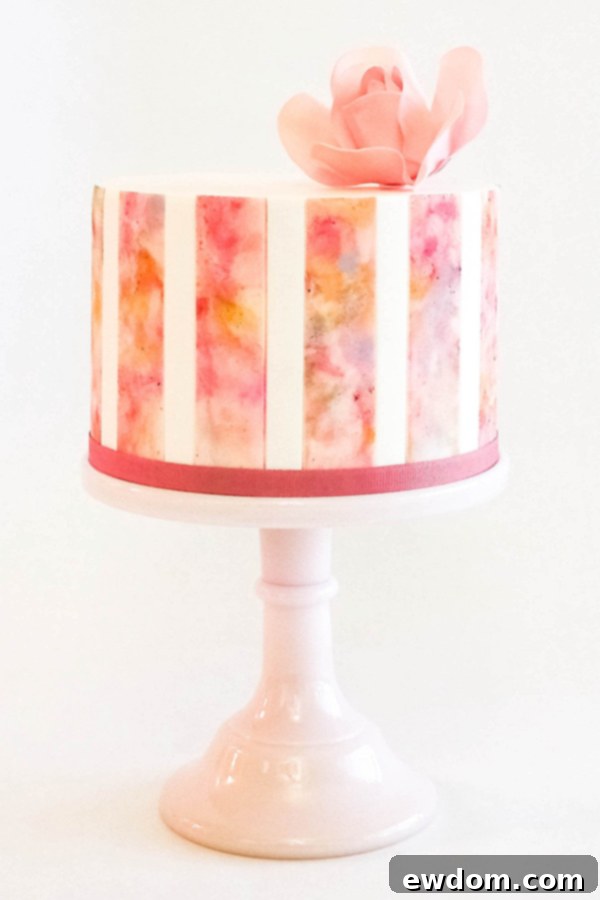
Embark on a delightful journey into the world of edible art with this comprehensive guide to creating breathtaking watercolor cakes. In collaboration with our talented contributor, Allison Kelleher, we’re diving deep into a unique creative process that uses edible paints and a touch of lemon extract to transform a simple cake into a vibrant masterpiece. Forget traditional paper and water; we’re bringing the fluidity and beauty of watercolor painting directly to your fondant-covered canvas, offering a fresh, artistic twist to cake decorating that’s both engaging and incredibly rewarding.
The allure of watercolor cakes lies in their ability to capture a sense of effortless beauty and organic flow, making each creation truly one-of-a-kind. This technique breaks away from rigid structures, inviting decorators of all skill levels to embrace spontaneity and intuition. Whether you’re an experienced baker looking to expand your decorating repertoire or a beginner eager to try something new, this method offers a liberating approach to cake design.
The Inspiration Behind the Edible Masterpiece
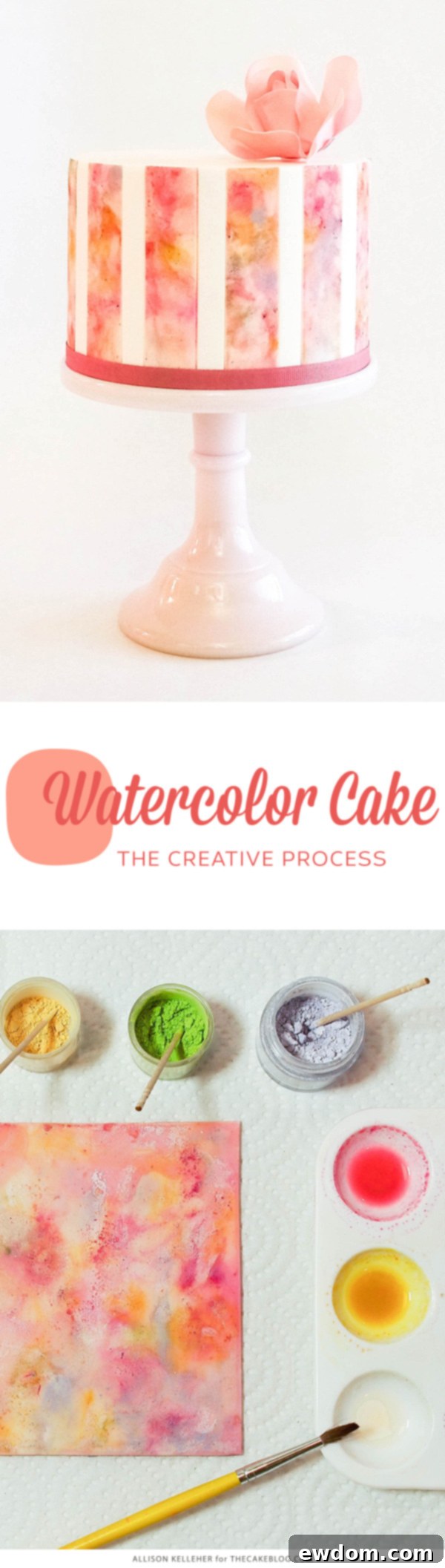
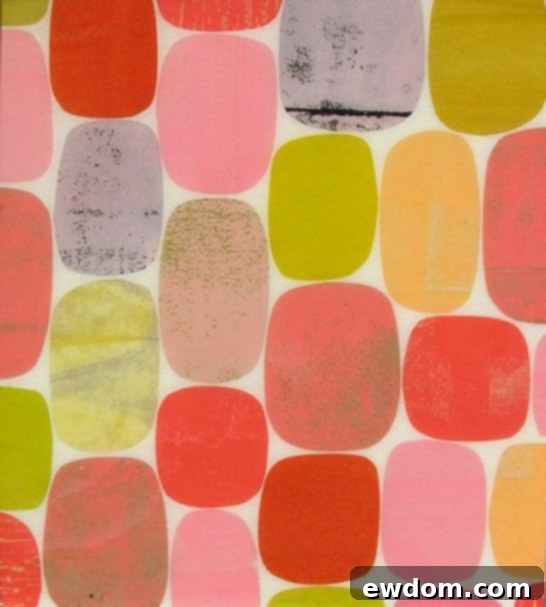
Every great piece of art starts with inspiration, and for this particular watercolor cake, Allison Kelleher found her muse in the captivating works of Rex Ray. The vibrant colors, dynamic compositions, and seamless blending in Ray’s paintings provided the perfect blueprint for an edible interpretation. The goal was to translate that fresh, pretty aesthetic and the beautiful interplay of colors onto a fondant surface, demonstrating how fine art principles can be applied to cake design.
Discovering how to replicate this painterly effect on fondant involved a fair bit of experimentation. The initial trials presented challenges, but through persistent exploration, a crucial element emerged as the linchpin of success: drying time. This seemingly simple factor proved to be the absolute key to achieving the desired watercolor effect without smudging or excessive blending, allowing each layer of color to shine through distinctly yet harmoniously.
Essential Materials for Your Watercolor Cake
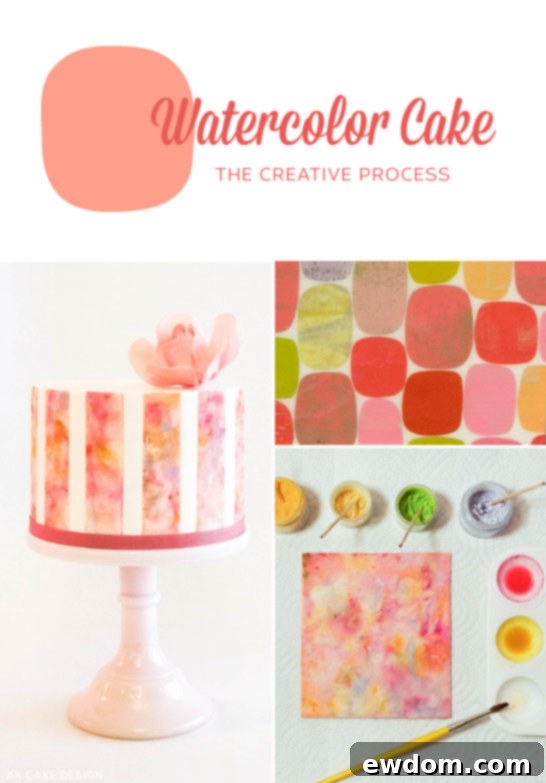
Before you dive into painting, gathering the right materials is crucial. Here’s what you’ll need to set up your edible art studio:
Fondant: Your Canvas
- High-Quality Fondant: Choose a brand that is pliable and easy to work with.
- Rolling Pin: To achieve an even thickness.
- Cornstarch or Powdered Sugar: For dusting your work surface to prevent sticking.
The foundation of your watercolor cake is a piece of fondant, rolled out relatively thin. This thinness allows for a more delicate application of color and helps with flexibility when you’re ready to cut and apply the painted sections to your cake. After rolling, it’s essential to let the fondant sit out for a bit, allowing it to firm up slightly. This initial drying time prevents the fondant from becoming too soft and sticky when you begin painting, which can lead to tearing or over-saturation.
Edible Paints: Your Palette
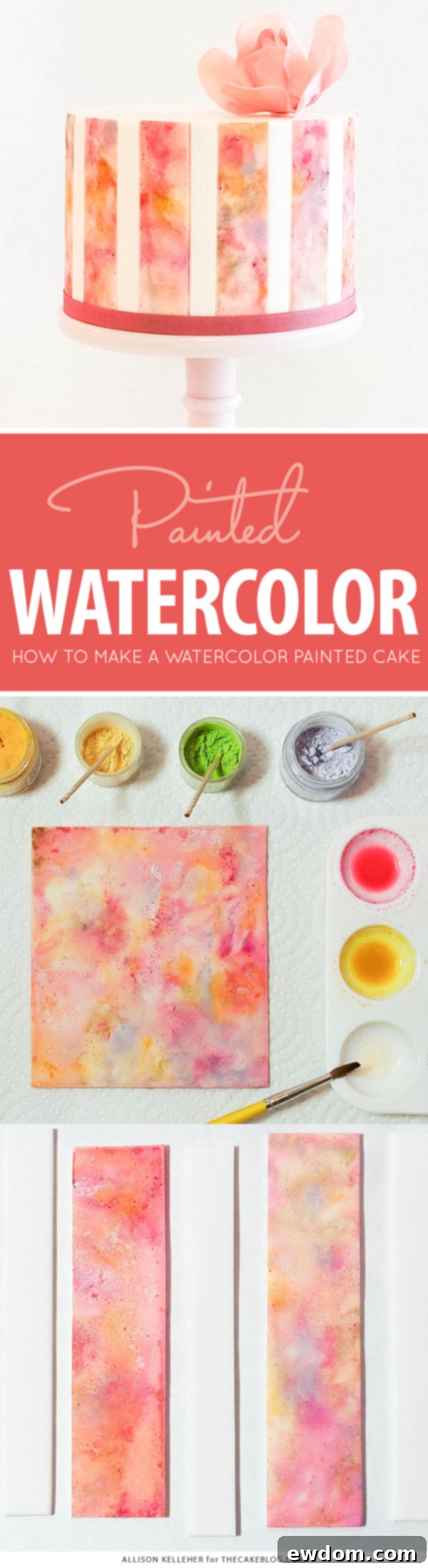
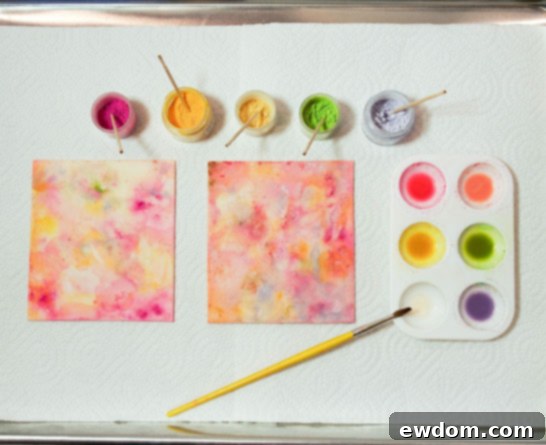
- Edible Petal Dust: These finely milled powders are perfect for creating translucent, buildable watercolor effects. Allison used shades of fuchsia, two tones of yellow, bright green, and a subdued lavender.
- Clear Extract/Alcohol: This acts as your solvent. Lemon extract is an excellent choice due to its quick evaporation, but any clear extract or clear, high-proof alcohol like vodka works just as well. The key is its evaporative quality, which aids in the crucial drying process.
- Small Mixing Palette or Bowls: For diluting and mixing your petal dusts.
Mixing your edible petal dust with lemon extract (or your chosen clear liquid) is where the magic begins. The ratio is key here; a more concentrated mixture will yield more opaque colors, while more extract will create lighter, more translucent washes, perfect for layering and blending. Experiment with different ratios on a scrap piece of fondant to find your desired consistency and color intensity.
Tools for Application and Design
- Food-Safe Paint Brushes: A variety of sizes, from fine-tipped for details to wider flat brushes for washes, will be beneficial. Ensure they are clean and dedicated solely to edible projects.
- Paper Towels: For blotting brushes and cleaning up any spills.
- Sharp Knife or Craft Blade: For cutting your painted fondant into desired shapes.
Step-by-Step Guide to Painting Your Watercolor Cake
Step 1: Prepare Your Fondant Canvas
Roll out your fondant evenly to a thin but manageable thickness, ideally about 1/16 to 1/8 inch. Once rolled, transfer it to a flat surface dusted with cornstarch or powdered sugar, or even parchment paper. Allow it to sit exposed to the air for at least 30 minutes to an hour. This initial drying step is crucial; it creates a slightly firmer surface that is less likely to absorb too much liquid and allows for better blending without the colors sinking deep into the fondant.
Step 2: Mix Your Edible Paints
In your mixing palette, place a small amount of each chosen edible petal dust. Add a few drops of lemon extract (or vodka) to each pile, stirring gently to create a liquid paint. Start with less liquid and gradually add more until you achieve a consistency similar to traditional watercolor paints – fluid enough to spread, but not overly watery. Remember, more extract means lighter, more transparent washes, while less creates more vibrant, opaque colors. Prepare all your colors before you start painting so they are readily available.
Step 3: Begin Painting Your Fondant
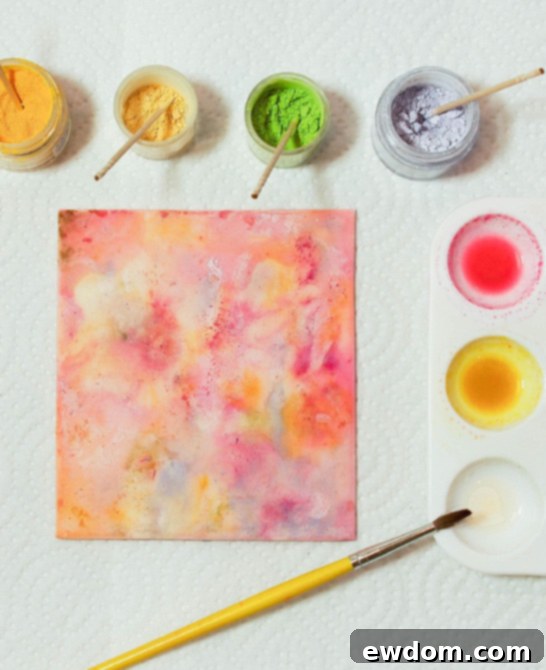
Dip your brush into your desired color and begin applying it to the semi-dried fondant. The beauty of this technique lies in its free-form nature. Don’t be afraid to experiment with different strokes, swirls, and dabs. Embrace the organic aesthetic, allowing colors to blend naturally where they meet. Use a generous amount of lemon extract with your paints to encourage interesting shapes and a beautiful, translucent watercolor effect. Layer colors, allowing previous layers to partially dry for distinct yet harmonious transitions. The goal isn’t precision, but expression.
Step 4: The Crucial Drying Phase
This is arguably the most critical step and one that requires patience. After applying your paint, the fondant must dry completely. Depending on the amount of liquid used and the humidity of your environment, this can take several hours, or even overnight. It’s imperative that the fondant is dry enough to handle without smudging the paint or causing the colors to bleed when cut. A good test is to gently touch an inconspicuous area; if it’s still tacky or cool, it needs more time. Air circulation can help speed up the process, but avoid direct heat, which can crack the fondant.
Step 5: Cut and Apply Your Painted Fondant
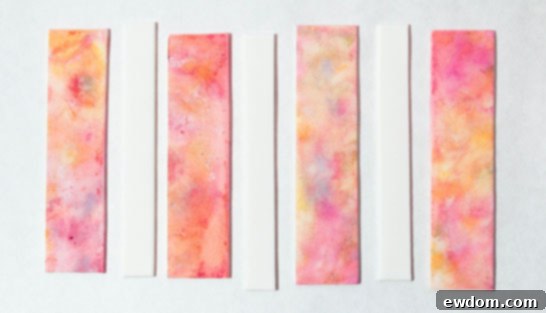
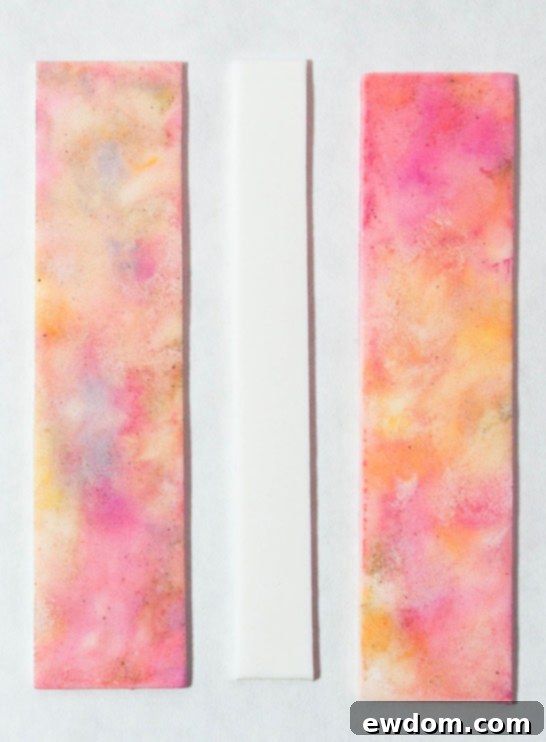
Once the painted fondant is completely dry and easy to handle, you can begin cutting it into shapes. Allison chose a free-form, organic aesthetic for her painted pieces, which beautifully complements the fluid nature of watercolor. Use a sharp knife or a craft blade to cut out your desired shapes. These can be abstract blobs, geometric patterns, or anything that inspires you.
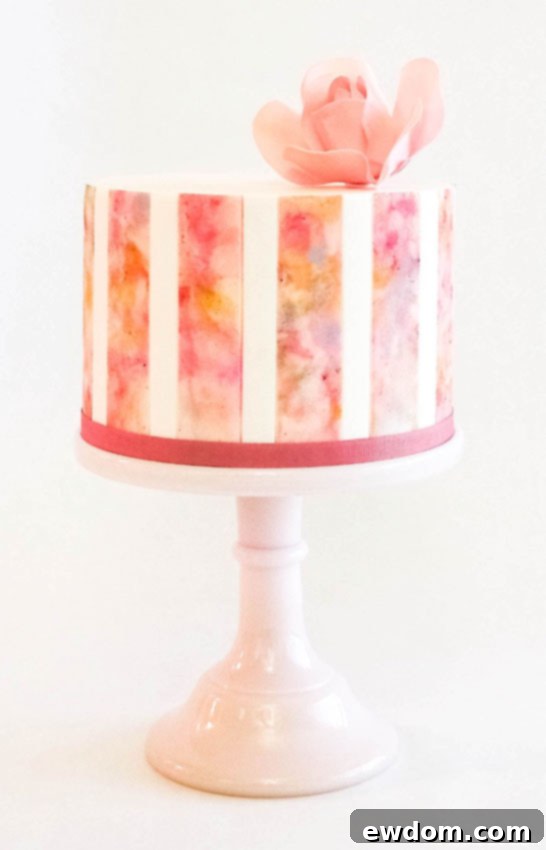
To apply the painted fondant pieces to your cake, use a very small amount of edible glue, clear piping gel, or even a tiny dab of water on the back of each piece. Gently press them onto the prepared cake (which should ideally be covered in a layer of buttercream or plain fondant). For a striking contrast, Allison suggests containing these organic forms within a more structured design, such as clean stripes on the cake, creating a captivating visual balance between free-flowing art and defined lines.
Tips for Watercolor Cake Success
- Patience is Your Best Friend: Especially with the drying time. Rushing this step will compromise the final look.
- Start Small: If you’re new to this, practice on a small piece of fondant before tackling your main cake.
- Embrace Imperfection: The beauty of watercolor is often found in its unpredictable nature. Don’t strive for perfection; let the colors flow.
- Control Your Liquid: Less liquid creates bolder colors, more liquid creates softer washes. Find the balance that suits your vision.
- Consider Your Environment: High humidity can significantly extend drying times. If possible, work in a cool, dry environment.
- Food-Safe Tools Only: Ensure all brushes and palettes used are clean and designated for edible purposes.
- Experiment with Colors: Don’t limit yourself to Allison’s palette. Explore different color combinations and see what stunning effects you can achieve.
Troubleshooting Common Watercolor Cake Challenges
- Colors Bleeding Together Excessively: This usually means the fondant wasn’t dry enough before painting, or you applied too much liquid in one go. Allow initial layers to dry more thoroughly before adding new ones.
- Fondant Tearing When Handled: Either the fondant was rolled too thin, or it hasn’t dried enough after painting. Ensure proper thickness and adequate drying time.
- Paint Appears Dull/Transparent: Your paint mixture might be too diluted with extract. Add more petal dust to achieve a richer pigment.
- Paint Appears Streaky/Chalky: This could indicate too much petal dust and not enough liquid, or the fondant surface was too dry or unevenly prepped. Adjust your paint consistency.
Beyond Fondant: Creative Variations
While this tutorial focuses on painting directly onto fondant, the concept of watercolor can be adapted. For instance, you can achieve beautiful watercolor effects using tinted buttercream, as seen in many related techniques. However, painting on fondant offers a distinct level of detail and control, allowing for intricate designs and longer drying times that contribute to the unique translucence of the petal dust method. Feel free to explore other mediums once you’ve mastered this fundamental technique.
Allison truly enjoyed the process of painting this watercolor cake. It offered a refreshing departure from her more structured designs, like her acclaimed Modern Mosaic Cakes. The freedom from rigid rules, the absence of a “right” or “wrong” way, and the lack of a need for absolute precision made it a truly liberating creative experience. This technique encourages intuitive expression, making it accessible and enjoyable for everyone. We sincerely hope you are inspired to give this captivating watercolor cake technique a try!
Frequently Asked Questions About Watercolor Cakes
- Q: What kind of brushes should I use for edible painting?
- A: Use soft, food-safe brushes specifically designated for edible art. A variety of sizes, from fine-tipped detail brushes to wider flat brushes, will allow for different stroke effects.
- Q: Can I use gel food coloring instead of petal dust?
- A: While gel food coloring can be diluted for painting, petal dust mixed with clear extract provides a more translucent, true watercolor effect. Gel colors tend to be more opaque. Experiment to see which finish you prefer!
- Q: How long does the painted fondant last?
- A: Once dried and applied to the cake, the painted fondant will last as long as the cake itself, provided it’s stored properly (typically at room temperature or refrigerated depending on cake filling). The colors are stable once dry.
- Q: Is lemon extract the only liquid I can use?
- A: No, clear high-proof alcohol like vodka or gin works very well because it evaporates quickly, allowing the colors to dry faster. Other clear extracts like vanilla (if you don’t mind the color) or almond can also be used, but lemon extract is popular for its quick drying and pleasant aroma.
- Q: Can I paint directly onto buttercream?
- A: While you can achieve watercolor effects with buttercream (using tinted buttercream directly), painting with petal dusts and extract works best on a dry, smooth surface like fondant. Buttercream is more absorbent and can cause colors to bleed or soak in differently.
Explore More Watercolor Cake Creations!
If you’ve enjoyed learning about this technique, you might also be interested in exploring other magnificent watercolor cake designs and related decorating ideas:
- DIY Buttercream Watercolor Painted Cake
- 10 Beautiful Watercolor Cakes for Inspiration
- Add Sparkle with a Metallic Watercolor Cake
- Pink Grapefruit Cake with Watercolor Buttercream
- Chocolate Bourbon Pecan Cake with Watercolor Buttercream