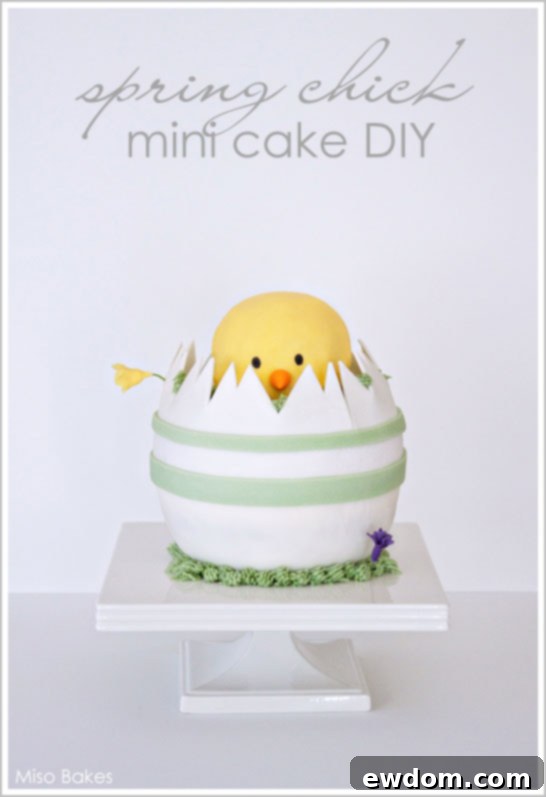
Our incredibly talented contributor, Miso of Miso Bakes, is delighted to share a fabulous new tutorial with us, just in time for the joyful arrival of Easter and spring! Get ready to infuse some extra cuteness into your holiday baking.
DIY Spring Chick Mini Cake: An Adorable Easter Dessert Tutorial
Chirp chirp! Tweet tweet! The glorious days of spring are finally here, and with them comes an abundance of inspiration for delightful crafts and treats. Hello, lovely bakers! It’s Miso from Miso Bakes, and I couldn’t be more excited to guide you through this enchanting Spring Chick Mini Cake tutorial. This charming little egg cake, surprisingly substantial at about the size of a small bowling ball, promises to be a fantastic and memorable project for the entire family. Its adorable appearance makes it almost too cute to eat – almost! I truly hope you enjoy creating this festive centerpiece as much as I enjoyed designing it for you.
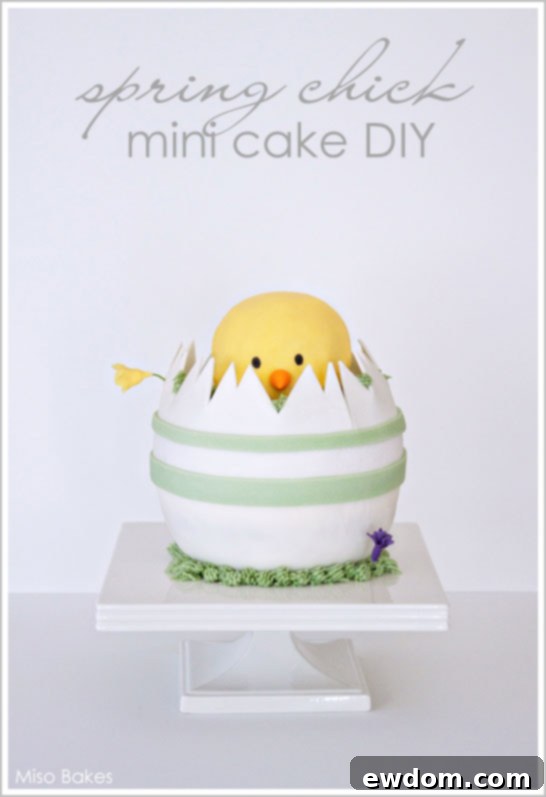
Crafting Your Perfect Easter Centerpiece: The Spring Chick Mini Cake
Easter brings with it a season of renewal, joy, and often, delightful culinary creations. This tutorial is designed to help you craft a truly unique and heartwarming dessert: a delightful mini cake shaped like a cracked egg, complete with a sweet little chick peeking out. It’s more than just a cake; it’s a charming edible sculpture that will undoubtedly be the star of your Easter table. Whether you’re an experienced baker or looking for a fun new project to tackle with your family, this comprehensive guide breaks down each step into easy-to-follow instructions, ensuring a successful and satisfying baking adventure. Prepare to impress your guests with this utterly adorable and delicious creation!
What You’ll Need: Essential Tools & Ingredients for Your Easter Baking Project
Before diving into the creative process, let’s gather all the necessary supplies. Having everything prepared beforehand will make your decorating experience much smoother and more enjoyable, allowing you to focus on the artistry of your Spring Chick Mini Cake.
For the Egg Cake Structure:
- Cake Base: One 6-inch dense cake. Pound cake is highly recommended for its stability and firm crumb, which holds up beautifully to shaping and covering. It’s less prone to tearing and crumbling, making the decorating process much easier.
- Semi-Sphere Cake: One semi-sphere cake. This can be achieved using a specialized sports ball cake pan (such as the popular Wilton Sports Ball Pan). Alternatively, for those who enjoy freehand sculpting, you may carefully carve a semi-sphere shape from a larger, round cake.
- Frosting: Approximately 2-3 cups of your favorite buttercream or ganache. This will be used for filling the cake layers, creating a crucial crumb coat, and potentially for decorating the top surface.
- Fondant: Roughly 1 to 1.5 lbs of white or a very light pastel-colored fondant to cover the entire egg cake, plus an additional 0.5 lb for the distinct cracked shell strip.
- Essential Baking & Decorating Tools: A reliable cake leveler or a long serrated knife for precise trimming, an offset spatula for smooth frosting application, a cake turntable (optional but highly recommended for even decorating), a small rolling pin for fondant, and a pastry brush for applying water or edible glue.
For the Adorable Rice Krispie Treat Chick:
- Marshmallow Rice Treats: A batch of homemade marshmallow rice treats (ensure they are fresh and pliable) or a few store-bought pre-made treats for convenience. These are perfect for molding due to their sticky, shape-holding consistency.
- Buttercream: A small amount (about ¼ cup) of buttercream to coat the rice treat ball, providing a smooth canvas for the fondant.
- Fondant: Small quantities of yellow (or any desired chick color) fondant for the body, black fondant for the eyes, and orange fondant for the beak.
- Modeling Tools: Small fondant modeling tools, a sharp paring knife for delicate cuts, and a toothpick or fine paintbrush for intricate details and applying edible glue.
Step-by-Step Guide: Decorating Your Egg-Shaped Cake for Easter
This section will meticulously walk you through transforming your baked cake components into the perfect egg canvas for our little spring chick. Precision, patience, and attention to detail are key here for achieving a professional and beautiful finish that will delight everyone.
Prepare Your Cake Bases with Care
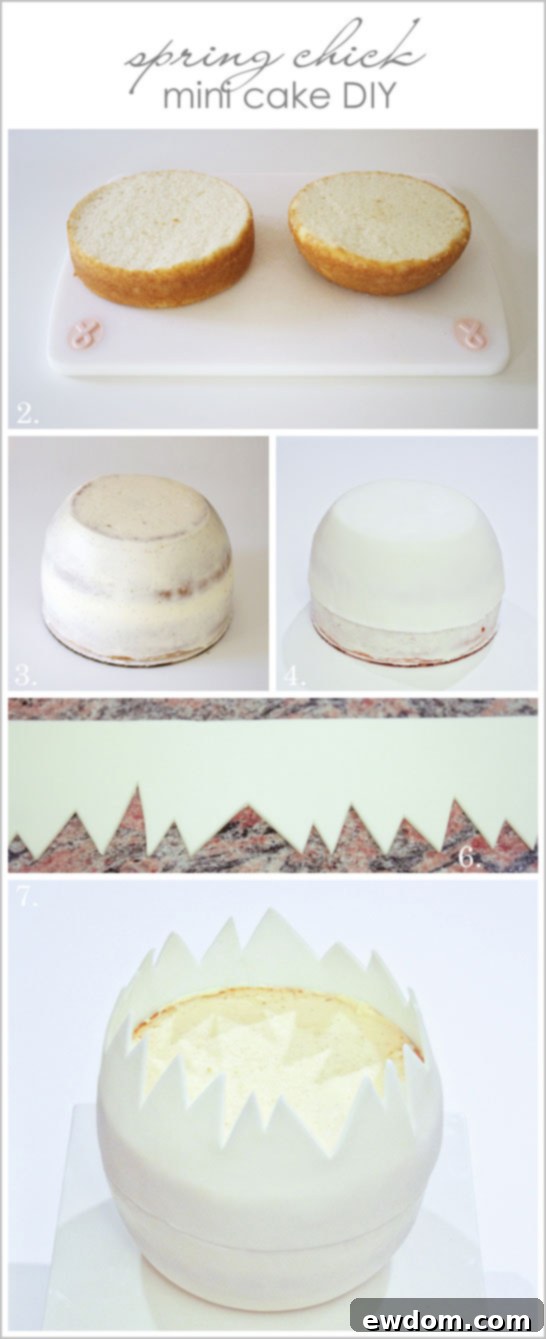
Begin by ensuring you have your baked 6-inch dense cake and your semi-sphere cake. As mentioned, a pound cake recipe for the 6-inch base is highly recommended. Its inherent sturdy structure is indispensable for a cake that will be handled, shaped, and covered, as it resists crumbling far better than lighter sponge cakes. For the semi-sphere, using a dedicated sports ball cake pan, such as the reliable Wilton pan, simplifies the shaping process immensely. Should you choose to carve, select a firm cake and proceed with utmost care. The most critical step here is to ensure both cakes are completely cooled before you begin trimming or frosting. Warm cakes are a baker’s nemesis when it comes to structural integrity and smooth frosting application.
Trim and Shape for Optimal Stability and Aesthetics
Once your cakes are cool to the touch, direct your attention to the semi-sphere. Using a cake leveler or a long, sharp serrated knife, carefully trim the rounded top part of the sphere cake. The objective is to create a perfectly flat, even surface. This newly flattened base is paramount for stable stacking; it prevents your final egg cake from wobbling or tilting. While achieving a flat base, be judicious with your cuts. You want to preserve as much of the beautiful, graceful rounded curves as possible, as these are fundamental to the authentic egg-like appearance of your cake. Think of it as creating a solid foundation without sacrificing the aesthetic integrity.
Assemble, Fill, and Master the Crumb Coat Technique
Now, it’s time to bring your cake components together. Position the 6-inch dense cake as your stable base. Carefully place your trimmed semi-sphere cake on top, aligning them to form an elongated egg shape. If your 6-inch cake has layers, fill them with your chosen buttercream or ganache. The next crucial step is the crumb coat: apply a thin, even layer of frosting over the entire assembled cake. This initial layer is magical; it traps any loose cake crumbs, preventing them from contaminating your final, smooth fondant layer. Here’s a professional secret: it’s significantly easier to apply this crumb coat with the entire cake positioned upside down. This uses gravity to help you achieve an incredibly flat and sharp top edge (which will become the bottom when the cake is flipped), creating a crisp foundation for your fondant. Trust this technique – it truly elevates the final appearance!
Chill Thoroughly and Expertly Cover with Fondant
After the crumb coat is applied, the cake must be chilled in the refrigerator for a minimum of 30 minutes, or ideally, an hour. This chilling period allows the buttercream to firm up completely, effectively locking in any remaining crumbs and providing a much firmer structure, which is absolutely essential before applying fondant. Once thoroughly chilled and firm, roll out your chosen fondant (white or a delicate pastel shade will best mimic an eggshell) to an even thickness. Carefully drape the fondant over the chilled cake, working gently to smooth it down, starting from the top and progressing downwards. Eliminate any air bubbles or wrinkles by gently stroking and lifting the fondant as needed. Once the cake is completely covered and smooth, take a sharp tool and trim approximately 1.5 inches of fondant off the bottom edge. This edge will actually be the top of the egg if you followed the “wrong side up” crumb coat tip. Don’t stress over making this cut perfectly straight; any minor imperfections will be cleverly and beautifully concealed later on.
Carefully Flip and Prepare the Egg’s Top
With the fondant beautifully smoothed and trimmed, it’s time for the big reveal! Carefully flip your cake over so it stands right-side up. You should now have a stunning, perfectly shaped, and covered egg cake as your canvas. At this juncture, you have an artistic decision to make regarding the top of your cake – the area from which our adorable chick will emerge. You may choose to ice this top portion with an additional layer of buttercream, perhaps tinted a vibrant green to simulate a patch of spring grass or a soft blue to suggest a sky. Alternatively, you can leave it bare, as I often prefer. Leaving it bare provides a clean slate, allowing you the creative freedom to fill the cavity later with textured buttercream grass, which adds a delightful contrast and playful element to the finished design.
Crafting the Distinctive “Cracked Shell” Fondant Strip
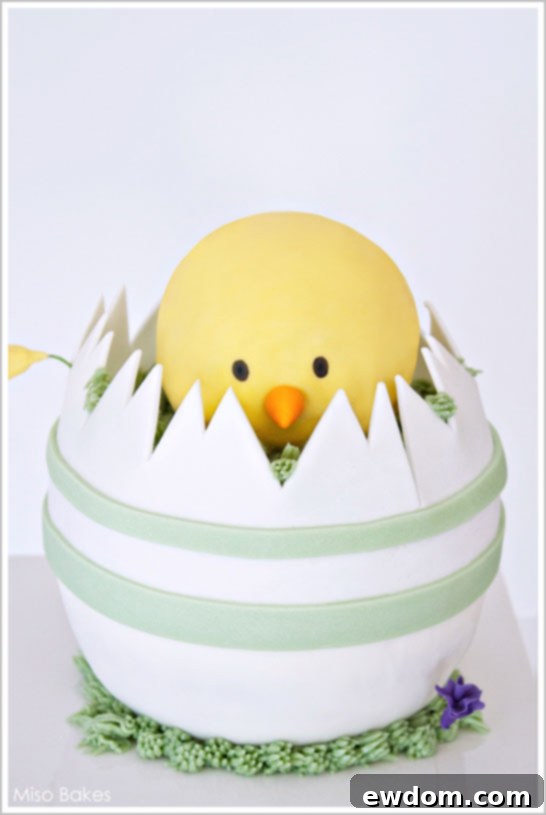
To infuse your egg cake with that realistic, charming “cracked eggshell” effect, you’ll need to prepare a special fondant strip. Roll out a fresh piece of fondant into a long, even strip, aiming for a thickness of about 4 inches. Use a ruler and a sharp, clean knife to ensure one of the long edges is perfectly straight and crisp. This will be the clean base of your cracked shell. For the opposing long edge, this is where your artistic freedom comes into play! Use your knife to create an irregular, organic zig-zag pattern. The key here is not perfection; rather, it’s embracing asymmetry. Vary the thickness and depth of your zig-zags to genuinely mimic the natural, imperfect break of an eggshell. This playful step allows for true personal expression and adds immense character to your creation.
Allow to Dry and Gently Adhere the Cracked Edge
Once your zig-zag patterned strip is meticulously cut, set it aside to dry for approximately thirty minutes to an hour. This crucial drying period allows the fondant to firm up slightly, becoming easier to handle and ensuring it maintains its intricate shape once applied to the cake. When the fondant strip is firm enough to be gently rolled without distorting its shape, carefully pick it up. Begin by gently adhering one end of the strip to the base of your egg cake. You can use a tiny brush of water or edible glue to secure it. Then, slowly and methodically unravel the strip, gently pressing it into place all the way around the cake’s base. This technique is quite similar to how one would apply a decorative ribbon or band to the bottom of a traditional fondant-covered cake, ensuring a seamless, polished, and professional finish that truly captures the essence of a cracked egg.
Apply Final Touches and Embellishments to the Egg Base
With the captivating cracked shell band meticulously in place, the primary structure and artistic foundation of your egg cake are now complete. This is the moment to unleash your creativity and revel in the joy of embellishment! Feel absolutely free to decorate to your heart’s desire. To elegantly conceal any seams, meeting points, or subtle ‘creases’ where the fondant band joins the main cake covering, you might consider adding an additional, very thin band of fondant, perhaps in a contrasting color for visual pop, or delicately piping a fine border with buttercream. This not only serves to hide any minor imperfections but also introduces an additional layer of visual interest and sophistication to your beautiful egg cake. Consider adding small, delicate fondant flowers, tiny piped dots, or even subtle textures to further enhance the overall spring theme and make your creation truly unique.
Bringing Your Chick to Life: Creating the Adorable Figurine
No charming spring chick cake would be complete without its utterly adorable inhabitant! This section will meticulously guide you through the process of creating the sweet, tiny rice crispy treat chick that will playfully peek out from your cracked eggshell, bringing the entire scene to life.
Prepare Your Marshmallow Rice Treats for Sculpting
The delightful foundation of our little chick will be marshmallow rice treats. You have the flexibility to either whip up a fresh batch from scratch (there are countless straightforward and delicious recipes readily available online) or, for maximum convenience, opt for store-bought pre-made treats. The inherently sticky and pliable nature of rice treats, especially when slightly warm, makes them an absolutely excellent and forgiving medium for sculpting. They hold their shape remarkably well once they’ve cooled and set, which is crucial for our chick’s structure. Ensure they are still malleable enough to work with comfortably.
Molding the Chick’s Perfectly Proportioned Head
Take a suitable portion of the prepared rice treats and begin to mold it meticulously into a tight, smooth ball. This carefully shaped ball will form the primary structure of your chick’s head. As you progress with the molding, it is vital to frequently compare the size of your growing ball to the top opening of your egg cake. The key here is achieving perfect proportionality – you want the chick’s head to be neither overwhelmingly large nor disproportionately small for the aperture of the cracked egg. Aim for a size that appears naturally nestled within the cake, creating that utterly delightful and charming peeking-out effect that brings the entire cake to life.
Ice with Buttercream for a Flawlessly Smooth Finish
Once you are fully satisfied with the precise shape and size of your rice treat ball, proceed to apply a thin, impeccably even layer of buttercream over its entire surface. This crucial step serves a dual and significant purpose: firstly, it acts as an exquisite smoothing agent, helping to cleverly fill in any subtle bumps, indentations, or imperfections inherent in the rice treat, thereby creating a more refined and polished base. Secondly, and equally important, this buttercream layer functions as a highly effective adhesive, ensuring that your subsequent layer of fondant adheres securely and beautifully to the chick’s head, preventing any slippage or unevenness.
Cover with Fondant and Artfully Add Detailed Features
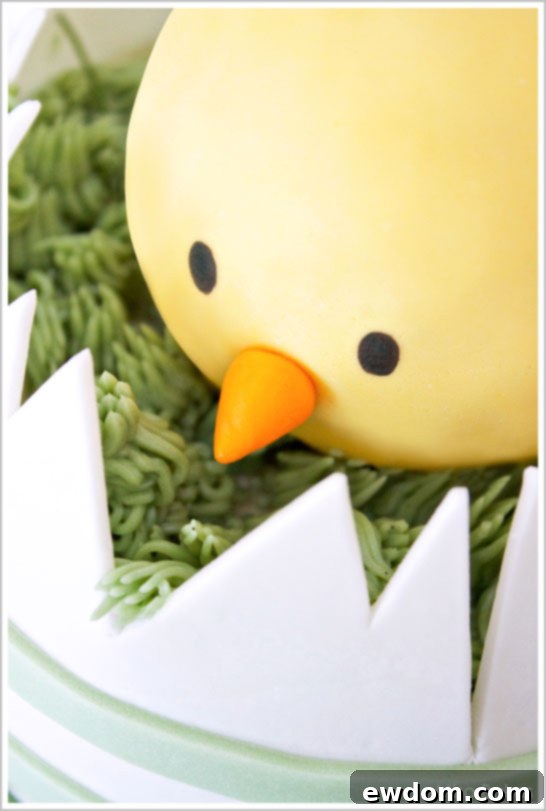
Roll out a small piece of yellow fondant (or any other color you’ve chosen for your chick) to an appropriate, even thickness. With careful hands, drape this fondant over the buttercream-coated rice treat ball and gently smooth it out, utilizing the same techniques you employed when covering the main cake. Once the head is seamlessly covered, it’s time for the most enchanting part: bringing your chick to vibrant life! Use tiny, carefully shaped pieces of black fondant for the eyes, gently pressing them into place with a touch of edible glue or water. For the beak, roll a very small cone of orange fondant, flatten it slightly, and attach it to the face. A toothpick or a small modeling tool can be invaluable here to create a subtle indentation for the mouth, adding to the chick’s expressive charm. Small fondant tools can greatly assist you in refining these delicate, intricate features, ensuring a lifelike and endearing result.
Embrace Creative Variations and Delightful Embellishments
While a traditional spring chick is undeniably charming, do not hesitate to let your imagination soar and get wonderfully creative with your design! If adorable bunnies resonate more with your personal style, you can effortlessly mold two small, elongated oval shapes from fondant and attach them as sweet bunny ears to your rice treat head, transforming your chick into a delightful bunny. Another truly enchanting idea is to utilize the hollow cavity of the egg cake – the space from which the chick emerges – to fill with a delightful assortment of small candies, colorful jelly beans, or delectable chocolates. This creates a wonderful, unexpected surprise for when the cake is finally cut, adding an extra layer of joy. Consider adding tiny, delicate fondant wings to your chick, or even a whimsical small flower crown for an extra touch of irresistible spring charm. The possibilities for personalizing your creation are truly endless, limited only by your imagination!
Expert Tips for a Seamless Easter Baking Experience
To ensure your Spring Chick Mini Cake project unfolds smoothly and achieves spectacular results, here are a few additional invaluable tips and tricks directly from the kitchen of Miso Bakes:
- Strategize and Work Ahead: Many components of this elaborate cake can be masterfully prepared in advance, significantly reducing stress on the main decorating day. You can bake the cake bases a day or two before and securely freeze them (wrapped tightly). Similarly, your marshmallow rice treats can be made and even covered with fondant a day prior. This smart planning breaks down the entire project into highly manageable, enjoyable steps.
- Mastering Fondant Handling: The key to working with fondant is understanding its consistency. If your fondant feels overly sticky and adheres to your hands or workspace, lightly dust your surface and hands with a minimal amount of cornstarch or powdered sugar. Conversely, if it feels too firm, stiff, or resistant to rolling, knead it vigorously for a few minutes to warm it up with the heat from your hands, which will make it pliable and easier to work with.
- Achieving Ideal Buttercream Consistency: For both the crucial crumb coating and for applying to the chick, your buttercream must possess a perfectly smooth and easily spreadable consistency. If your buttercream is too stiff or thick, incorporate a tiny amount of milk, cream, or water, a teaspoon at a time, until it reaches the desired texture. If, however, it becomes too thin or runny, gradually beat in a bit more powdered sugar until it thickens appropriately.
- Involve the Little Helpers: This delightful project is an absolutely fantastic opportunity to get children involved in the kitchen! Kids can enthusiastically assist with safe tasks such as kneading fondant, carefully cutting the zig-zag pattern (always with close adult supervision), or even molding the rice treat chick. It’s a wonderfully engaging and memorable way to create cherished family memories and foster a love for baking.
- Optimal Storage Practices: Once your magnificent Spring Chick Mini Cake is fully assembled and decorated, it can be stored elegantly at room temperature in a cool, dry place within an airtight container for approximately 2-3 days. If your specific buttercream recipe contains ingredients that necessitate refrigeration (such as fresh cream or cheese), then refrigerate accordingly. Always remember to bring the cake back to room temperature for about an hour before serving to ensure the best possible flavor and texture experience.
Share Your Beautiful Creations!
We absolutely adore seeing the beautiful and unique creations that spring from our tutorials! Please don’t forget to share your finished Spring Chick Mini Cakes on your favorite social media platforms. Be sure to tag Miso Bakes! Your unique interpretations and artistic flair are always an incredible source of inspiration and joy for our vibrant baking community.
Happy Spring and Happy Baking to all!
Warmly,
Miso from Miso Bakes