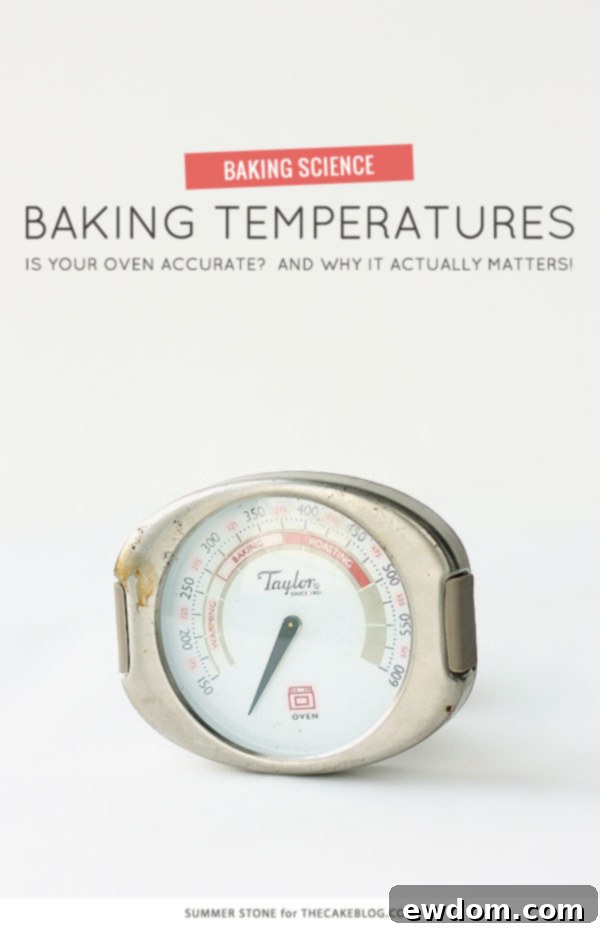
Our esteemed contributor, Summer Stone of Cake Paper Party, returns today with an insightful exploration into baking science.
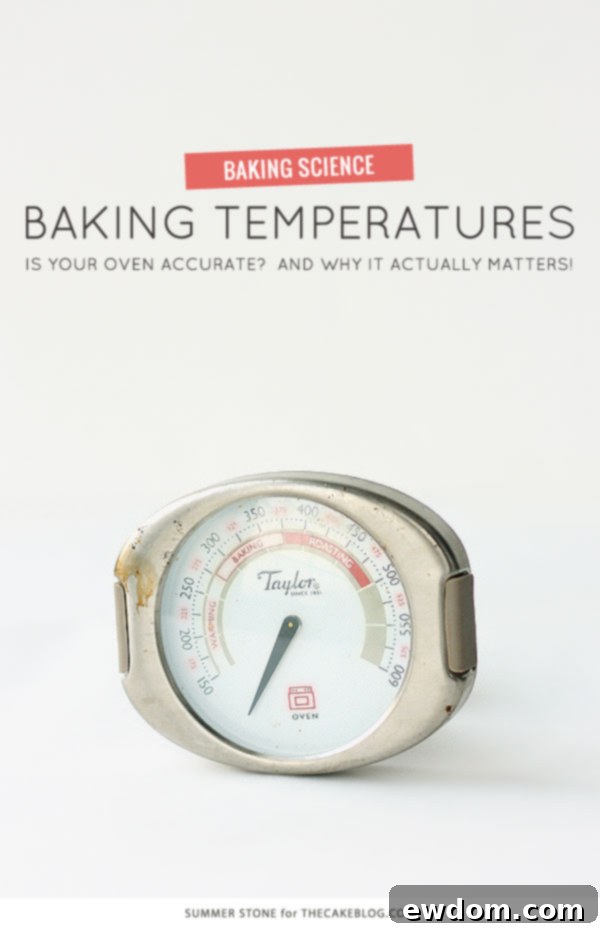
The Secret to Perfect Cake: Mastering Oven Temperature for Flawless Baking
Have you ever pondered the universal consensus around baking most cakes at 350°F? Or perhaps wondered why professional bakers and cherished cookbooks vehemently stress the importance of an accurately calibrated oven? It’s more than just a random number; the precise temperature inside your oven orchestrates a magnificent culinary transformation. This seemingly mystical setting is the bedrock of successful baking. But what truly happens if this critical temperature is amiss? What if your oven’s dial tells a slight, but significant, fib? Today, we’re diving deep into the profound impact of oven temperature on the intricate baking process, equipping you with the thermal know-how to take absolute control of your baked goods’ destiny.
The Astonishing Science Behind Baking Temperatures
Beneath the seemingly simple act of baking lies a complex ballet of chemical and physical reactions. A humble cake batter, a liquid mélange of ingredients, undergoes a dramatic metamorphosis when exposed to heat, evolving into the light, fluffy, and delectable delight we all adore. Each of these crucial actions unfolds as the batter ascends to specific temperatures, with the speed and efficiency of these transformations directly proportional to the oven’s heat intensity. Understanding this sequence is key to appreciating the role of temperature precision. Let’s illuminate the sequence of activities that turn batter into a perfectly baked cake:
- Fats Melt: As the oven heats up, solid fats like butter or shortening begin to melt, releasing trapped air and forming pockets that will later contribute to the cake’s tenderness and structure. This initial melting phase also integrates the fat more thoroughly with the other ingredients, smoothing the batter’s consistency.
- Gases Expand and Form: Leavening agents, such as baking powder and baking soda, react with moisture and heat to produce carbon dioxide gas. Simultaneously, air incorporated during mixing expands. This expansion is vital for the cake’s rise, creating a light and airy texture. The rate of gas expansion is highly sensitive to temperature – too fast, and the structure might set before gases fully expand; too slow, and the leavening power might be lost.
- Sugar Dissolves: Granulated sugars fully dissolve into the liquid components of the batter. This not only contributes to the cake’s sweetness but also plays a crucial role in moisture retention, tenderness, and later, the browning of the crust through caramelization.
- Proteins Coagulate: Proteins from eggs and flour are responsible for building the cake’s structural framework. As the batter warms, these proteins denature and coagulate, creating a stable network that traps the expanding gases. This process is essentially what gives the cake its final shape and crumb structure. The speed of coagulation directly influences the cake’s texture – rapid coagulation can lead to a tougher, denser crumb.
- Starches Gelatinize: Starches, primarily from flour, begin to absorb moisture from the batter and swell, a process known as gelatinization. This adds to the cake’s structural integrity, contributing to its firmness and overall stability. It also helps to bind moisture within the cake, preventing it from drying out prematurely.
- Gases Evaporate: Water and other volatile compounds within the batter turn into steam and gases, which then evaporate from the cake’s surface. This process contributes to the setting of the crust and influences the final moisture content of the cake.
- Caramelization Occurs: On the surface of the cake, sugars undergo caramelization, a complex chemical reaction that results in the distinctive golden-brown color and rich, toasted flavors of the crust. Alongside caramelization, the Maillard reaction (the browning of proteins and sugars) also contributes significantly to the crust’s flavor profile.
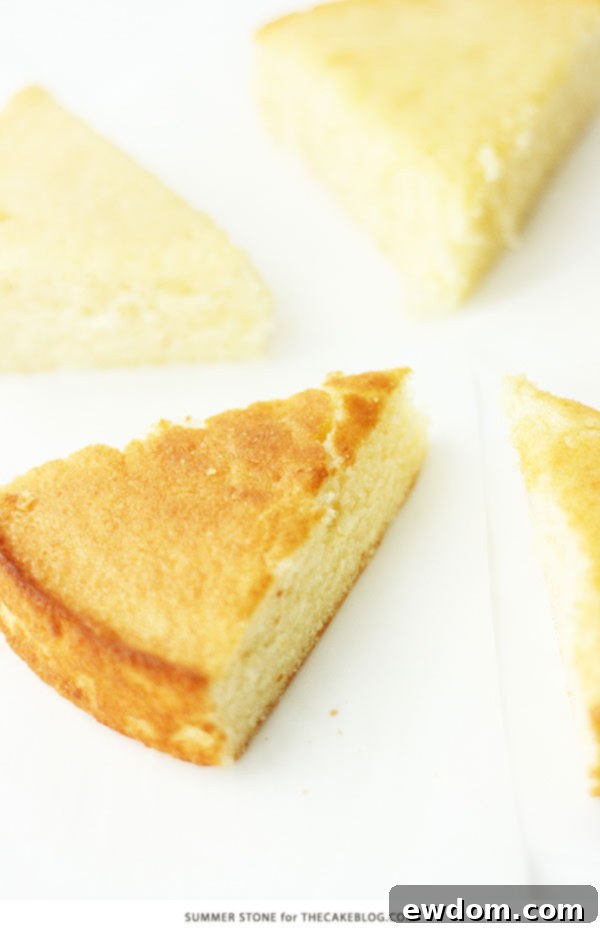
The Tale of Two Temperatures: Low vs. High Heat Baking
The rate at which these seven critical steps occur dictates the final characteristics of your cake. An oven’s temperature acts as the conductor of this intricate orchestra, influencing everything from the cake’s rise to its crumb texture and crust development.
Baking at a Relatively Low Temperature (e.g., 300°F)
When a cake is baked at a gentler, relatively low temperature, the chemical and physical processes unfold more slowly and uniformly throughout the batter. This gradual rise in temperature allows the internal structure of the cake to set at a pace similar to its external crust. The slower evaporation rate at the surface often results in a paler, more uniformly colored crust that can retain a slightly gummy texture due to less moisture loss. The slower protein coagulation leads to an exceptionally soft and smooth crumb, often resulting in a lighter, fluffier cake. While this method can yield an incredibly tender cake, it may lack the robust caramelized flavors on the crust and require a longer baking time.
Baking at a High Temperature (e.g., 400°F)
Conversely, placing batter into a high-temperature oven triggers a rapid, almost frantic succession of processes, often in an uneven distribution. The high heat causes the cake’s exterior to set and brown very quickly, forming a dark, often ledged, and more dried outer crust. This rapid crust formation can “trap” the internal batter, forcing it to rise in a more abrupt and sometimes uneven manner. While the quick evaporation on the surface enhances caramelization and Maillard reactions, this speed can also lead to an overly dark or even burnt, acrid taste if not carefully monitored. The accelerated protein coagulation often results in a slightly rougher, denser crumb with a less delicate mouthfeel. High-temperature baking risks a cake with dry edges and a potentially undercooked center, despite appearing done on the outside.
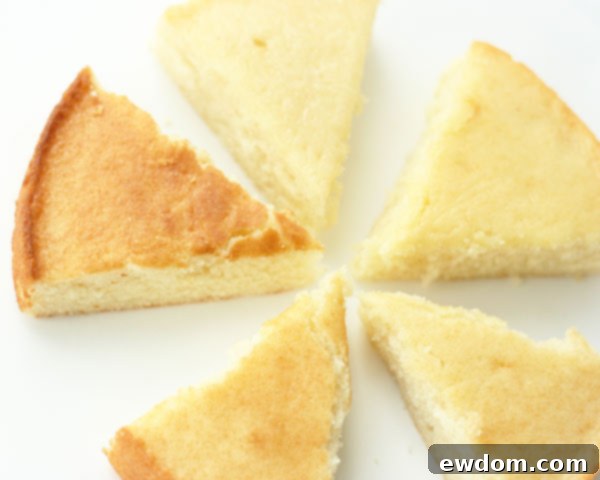
A Practical Demonstration: The 300°F vs. 400°F Cake Showdown
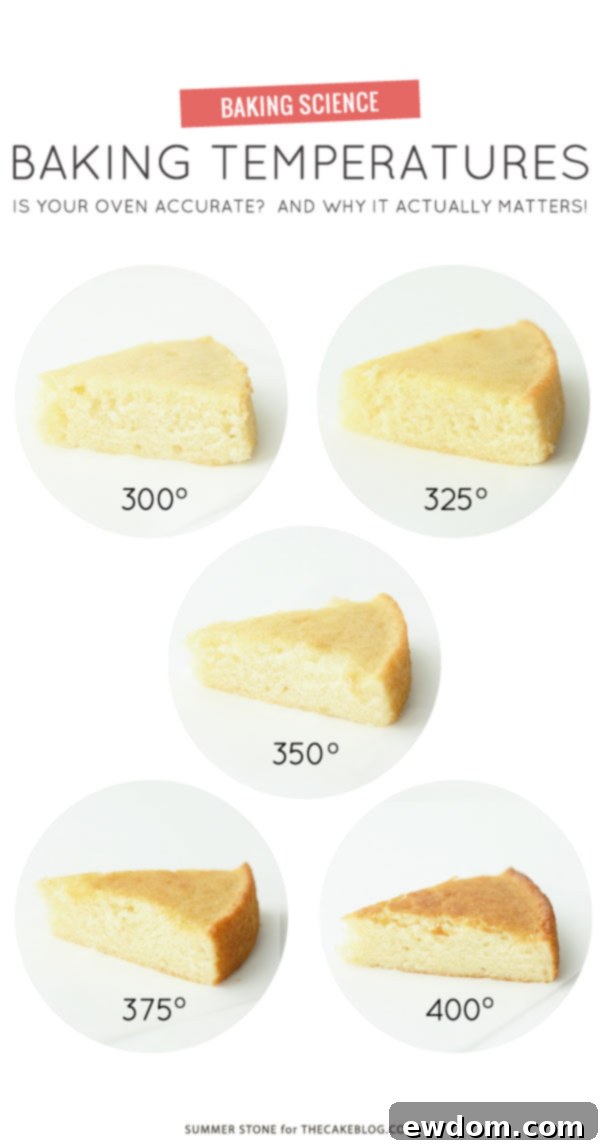
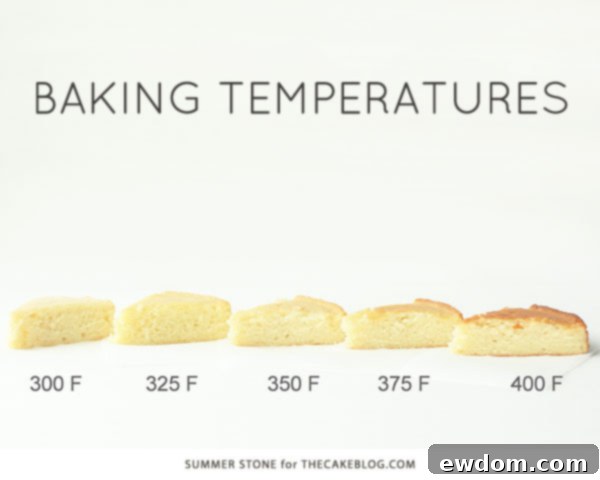
To vividly illustrate the profound impact of oven temperature, I conducted a series of baking experiments, preparing identical cake batters and baking them across a spectrum of temperatures ranging from 300°F to 400°F. The results were remarkably distinct and offered compelling insights into the science at play.
The cake baked at 300°F consistently emerged lighter and noticeably fluffier compared to its counterpart baked at 400°F. Its outer crust was evenly pale and delicate, a direct consequence of the reduced degree of water evaporation at the cake’s surface, which in some cases, contributed to a slightly gummy texture on the very exterior. In stark contrast, the 400°F cake boasted a significantly darker, more pronounced ledged outer crust. This dramatic browning and firmer texture were due to the accelerated evaporation of water from the surface, allowing intense caramelization and Maillard reactions to occur. While caramelization introduces delightful depth of flavor, pushing it too far, as can happen at high temperatures, risks imparting a harsh, even burnt or acrid taste.
Another striking difference was observed in the internal consistency, or crumb, of the cakes. The cake baked at 300°F presented an incredibly soft, uniformly smooth crumb. This fine texture is largely attributed to the slower, more gentle coagulation of proteins, allowing for a more delicate and tender internal structure to form. Conversely, the cake baked at 400°F exhibited a slightly more rough-textured mouthfeel. This coarser crumb is a direct result of the rapid protein coagulation under intense heat, which creates a tighter, less yielding network within the cake.
The Goldilocks Zone: Why 350°F is Your Cake’s Best Friend
As we observe cakes baked across the entire temperature range between 300°F and 400°F, we see a fascinating spectrum of gradual variations, each leaning towards one of these two extremes. This leads us to the sweet spot, the quintessential baking temperature: 350°F. This setting is truly a happy medium, a harmonious balance that meticulously orchestrates all the complex chemical and physical reactions occurring within your batter. At 350°F, the cake enjoys the best of both worlds.
It allows for sufficient time for leavening gases to fully expand, creating a wonderful lightness and an airy texture. Proteins coagulate steadily, forming a robust yet tender crumb structure that is neither too dense nor too fragile. Starches gelatinize effectively, contributing to the cake’s moistness and stability. Meanwhile, the surface reaches the ideal temperature for the perfect degree of caramelization and Maillard reaction, developing a beautiful golden-brown crust with rich, complex, and irresistible flavors, without any hint of bitterness or dryness. The even heat distribution at 350°F ensures that the interior cooks thoroughly at the same rate as the exterior, eliminating concerns about raw centers or burnt edges. It’s the precise temperature where all elements converge to create a cake with optimal rise, tender crumb, perfect moisture, and exquisite flavor development.
Taking Control: The Indispensable Role of an Accurate Oven Thermometer
There you have it! The temperature at which you bake exerts a profound and undeniable influence on the final outcome of your cake. Understanding this is the first step towards consistent baking success. However, merely knowing the ideal temperature isn’t enough; you must also be certain that your oven is actually delivering that temperature.
This brings us to a crucial, yet often overlooked, fact: most home ovens are not calibrated accurately. They can run hotter or cooler than the temperature displayed on their dial, sometimes by a significant margin of 25-50 degrees Fahrenheit. This unseen inaccuracy is often the culprit behind a myriad of baking disappointments – cakes that sink, come out too dry, or remain stubbornly raw in the middle, despite meticulously following a recipe. If you’ve ever baked a recipe that “failed” and wondered what went wrong, your oven’s true temperature is an excellent place to start your investigation.
To truly master your baking and ensure predictable, delicious results every single time, purchasing an affordable and reliable oven thermometer is an absolute game-changer. This simple tool is arguably the most essential gadget for any serious baker. Place it in the center of your oven and allow your oven to preheat for at least 20-30 minutes to ensure it reaches a stable temperature. Once preheated, check the thermometer. If your oven’s dial reads 350°F but your independent thermometer shows 325°F or 375°F, you’ve identified a discrepancy. You can then adjust your oven’s dial accordingly – setting it higher or lower than the recipe specifies to achieve the *actual* desired temperature inside the baking chamber.
Furthermore, this knowledge empowers you to subtly manipulate the height and texture of your cake. For instance, if you desire a slightly denser, chewier cake with a more pronounced crust, you might intentionally increase your oven’s temperature by a small margin (e.g., 10-15°F) from the standard 350°F, and reduce baking time slightly. Conversely, for an exceptionally delicate, soft, and moist cake with a paler crust, a slight reduction in temperature could be beneficial, alongside an extended baking time. Armed with an accurate oven thermometer and a deeper understanding of baking science, you transform from a recipe follower into a true baking alchemist, capable of predicting and controlling the final outcome with remarkable precision.
Happy baking!
YOU MAY ALSO ENJOY OUR RELATED ARTICLES:
- Baked to Perfection
- Does Ingredient Temperature Matter?
- Can You Overmix A Cake?
- Does Sifting Make a Better Cake?
- How to Bake Without Eggs